
There’s something heartwarming about the smell of roasted peppers filling your kitchen, reminding you of summer barbecues and family gatherings. This Canned Peppers Recipe captures that essence, allowing you to enjoy the sweet, smoky flavor of peppers all year round.
Not only is this recipe easy to make, but it also offers versatility in your meals, whether you’re tossing them into salads, sandwiches, or pasta dishes. Let’s get started on preserving those vibrant peppers so you can savor their flavor anytime you desire.
Why You’ll Love This Recipe
This recipe is a keeper for several reasons.
- Preserves the delicious flavor of peppers for months.
- Perfect for adding to various dishes.
- Simple process with minimal ingredients.
- Great way to use up an abundance of fresh peppers.
- Can be customized with spices and herbs for added flavor.
My Experience Making This Recipe
I remember the first time I canned peppers; I was amazed at how easy it was and how satisfying it felt to create something so flavorful. The vibrant colors of the peppers as they roasted brought a sense of joy to my kitchen.
When I finally opened a jar months later, the aroma was like a hug from summer, and I couldn’t help but smile as I added them to a simple pasta dish. Canned peppers can truly elevate your meals in unexpected ways.
Recipe Overview
- Recipe Name: Canned Peppers
- Servings: Approximately 4 pints
- Prep Time: 15 minutes
- Cook Time: 15 minutes
- Total Time: 30 minutes
- Course: Preserving
- Cuisine: American
- Calories per Serving: 50
Equipment You Will Need
- Canning jars (pint-sized)
- Lid and band for each jar
- Large pot for boiling
- Canning funnel
- Jar lifter or tongs
- Cutting board and knife
Ingredients for Canned Peppers
- Bell peppers (any color, about 2 pounds)
- Vinegar (white or apple cider, 2 cups)
- Water (2 cups)
- Salt (1 tablespoon)
- Sugar (optional, 1 tablespoon for sweetness)
- Garlic cloves (optional, 2-4 cloves, peeled)
Ingredient Notes and Substitutions
- Bell peppers: These are sweet and versatile, perfect for canning. If you prefer heat, try jalapeños.
- Vinegar: It adds acidity for preservation. You can substitute it with lemon juice, but the flavor will change.
- Salt: This enhances flavor and helps preserve. You can use kosher salt if you prefer.
- Sugar: It balances the acidity, but you can skip it if you want a tangier flavor.
- Garlic: This adds aromatic depth. If you’re not a fan of garlic, feel free to omit.
How to Make Canned Peppers
Step 1: Prepare the Jars
Start by sterilizing your jars and lids in boiling water for 10 minutes. This ensures that your peppers stay safe and fresh.
Step 2: Roast the Peppers
Preheat your oven to 400°F (200°C). Roast the peppers whole on a baking sheet for about 20 minutes, turning them halfway through, until the skins are blistered. This enhances their flavor and makes peeling easier.
Step 3: Peel the Peppers
Once roasted, let the peppers cool slightly, then peel off the skins. The skins should come off easily, leaving you with tender, flavorful flesh.
Step 4: Cut the Peppers
Chop or slice the peeled peppers into strips or cubes, depending on your preference. This will make them easier to fit in the jars and use later.
Step 5: Prepare the Brine
In a large pot, combine the vinegar, water, salt, and sugar (if using). Bring to a boil, stirring until the salt and sugar dissolve.
Step 6: Pack the Jars
Using a canning funnel, pack the cut peppers into the sterilized jars. Leave about half an inch of headspace at the top.
Step 7: Add the Brine
Pour the hot brine over the packed peppers, ensuring they are fully submerged. Again, leave half an inch of headspace to allow for expansion during processing.
Step 8: Seal and Process the Jars
Wipe the rims of the jars with a clean cloth. Place the lids on and screw on the bands until they are fingertip tight. Process in a boiling water bath for 15 minutes to seal.
Pro Tip: Make sure your jars are hot before filling them with the brine to prevent cracking.
Tips for the Best Canned Peppers
- Choose fresh, firm peppers for the best texture.
- Experiment with different types of peppers for unique flavors.
- Add herbs like oregano or thyme to the brine for a twist.
- Make sure to use a proper boiling water bath to ensure safe preservation.
- Label jars with the date so you know when to use them.
Common Mistakes to Avoid
- Not sterilizing jars properly can lead to spoilage.
- Overpacking jars can prevent proper sealing.
- Skipping the boiling water bath can result in unsafe food.
- Using old or soft peppers might affect the taste and texture.
- Not leaving enough headspace can cause jars to break during processing.
Serving Suggestions
Canned peppers can brighten up many dishes, making them more delicious and colorful.
- Add them to salads for a fresh crunch.
- Top pizzas or flatbreads with roasted peppers.
- Mix into pasta dishes for added flavor.
- Use in sandwiches or wraps as a zesty filling.
- Serve alongside grilled meats for a tasty side.
Variations to Try
- Use different colors of peppers for a colorful mix.
- Try adding spices like crushed red pepper for heat.
- Add onions or carrots to the jars for extra flavor.
- Experiment with different vinegars for unique taste profiles.
- Incorporate fresh herbs directly into the jars before sealing.
Dietary Adaptations
- Gluten-Free: This recipe is naturally gluten-free.
- Dairy-Free: No dairy ingredients are used.
- Vegan/Vegetarian: Perfect for both diets as it contains no animal products.
- Low-Carb/Keto: Low in carbs, making it a great choice for keto diets.
Storage and Reheating
Refrigerator
Once opened, store canned peppers in the refrigerator for up to a week.
- Keep them in an airtight container.
- Use a clean utensil to scoop them out.
Freezer
If you want to freeze opened jars, transfer peppers to a freezer-safe container.
- Label with the date before freezing.
- Use within 6 months for the best quality.
Reheating
Reheat canned peppers in a skillet over medium heat or in the microwave.
- Heat until warmed through.
- They can be added directly to hot dishes as well.
Nutrition Information
| Nutrient | Amount |
|---|---|
| Calories | 50 |
| Total Fat | 0g |
| Saturated Fat | 0g |
| Carbohydrates | 12g |
| Fiber | 2g |
| Sugar | 3g |
| Protein | 2g |
| Sodium | 400mg |
| Cholesterol | 0mg |
This nutrition information is an estimate and may vary based on ingredients used.
Frequently Asked Questions
Can I use other types of peppers?
Yes, you can use any type of pepper, but the flavor and heat level will vary.
How long will canned peppers last?
Properly sealed jars can last for up to a year in a cool, dark place.
Can I make these ahead of time?
Absolutely! You can prepare them well in advance and store them for later use.
What if my peppers are too crunchy after canning?
If they are too crunchy, try cooking them longer next time to soften them before packing.
Can I adjust the vinegar level?
Yes, but be cautious; lowering vinegar might affect preservation safety.
Final Thoughts
Canning peppers is a rewarding process that lets you enjoy summer flavors all year. Give this recipe a try, and you might just find yourself wanting to can everything in sight.
If you’re looking for more delicious pepper recipes, check out my Poblano Peppers Recipe or the tasty Unstuffed Peppers Recipe for great ideas!
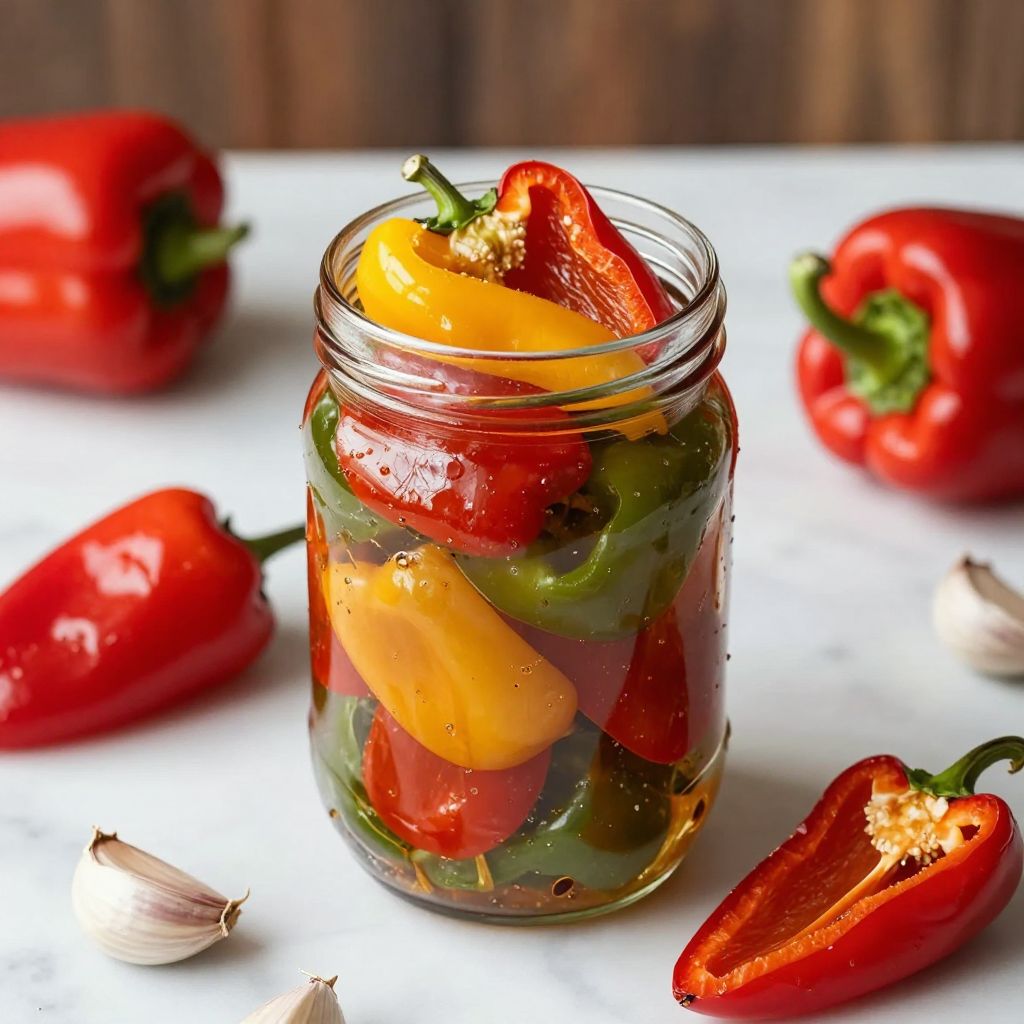
Canned Peppers
Ingredients
Equipment
Method
- Sterilize jars and lids in boiling water for 10 minutes.
- Preheat oven to 400°F (200°C) and roast the peppers whole on a baking sheet for about 20 minutes, turning halfway through.
- Let the roasted peppers cool slightly, then peel off the skins.
- Chop or slice the peeled peppers into strips or cubes.
- In a large pot, combine vinegar, water, salt, and sugar (if using). Bring to a boil, stirring until dissolved.
- Using a canning funnel, pack the cut peppers into sterilized jars, leaving half an inch of headspace.
- Pour the hot brine over the packed peppers, ensuring they are fully submerged, leaving half an inch of headspace.
- Wipe the rims of the jars, place the lids on, and screw on the bands until fingertip tight.
- Process in a boiling water bath for 15 minutes to seal.