
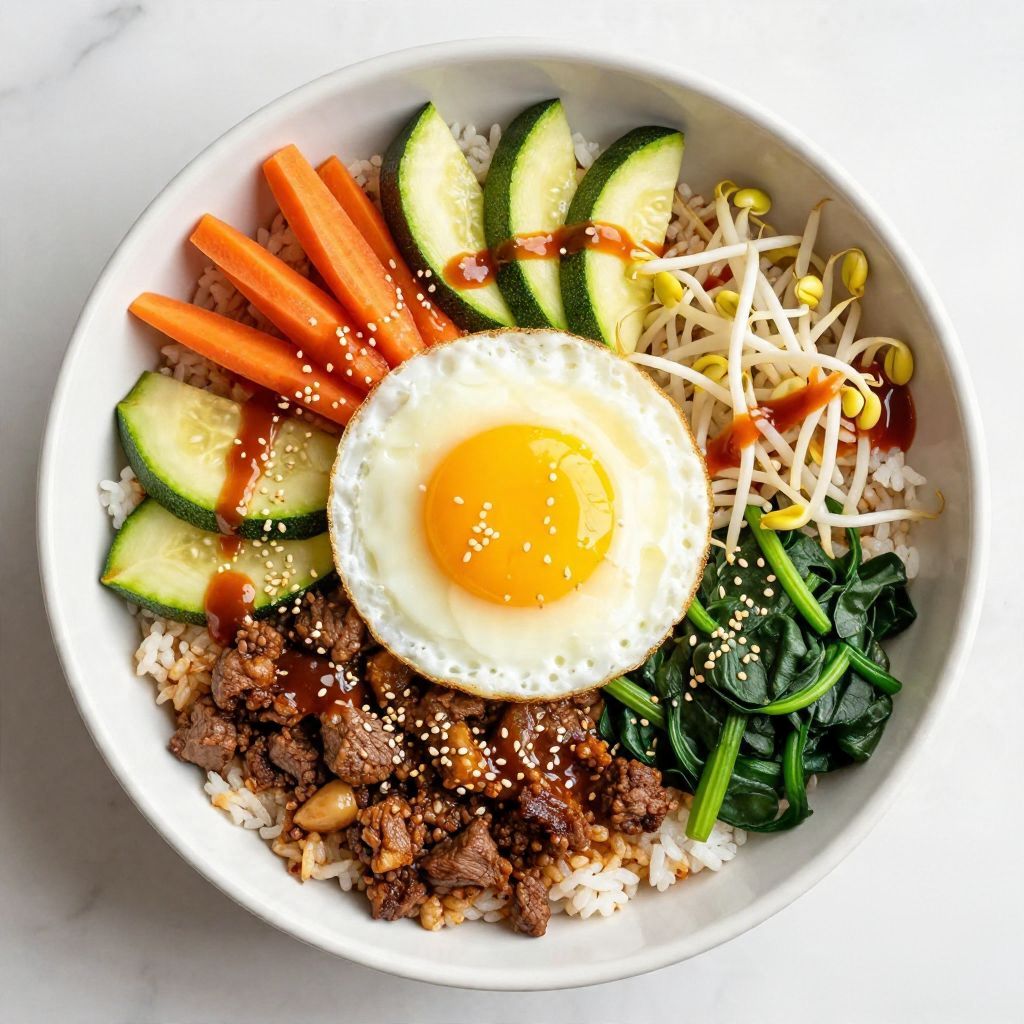
Picture this: a vibrant bowl filled with colorful veggies, perfectly seasoned beef, and a sunny-side-up egg, all resting atop a bed of warm rice. That’s the magic of Beef Bibimbap, a beloved Korean dish that’s not only a feast for the eyes but also a flavor explosion in every bite. This recipe is special because it combines a variety of textures and tastes, making it both satisfying and versatile for any weeknight dinner or special occasion.
With its bold flavors and the delightful crunch from fresh vegetables, you can customize it to suit your taste. Let’s gather our ingredients and dive into making this delicious dish!
Why You’ll Love This Recipe
This Beef Bibimbap recipe is a standout for several reasons.
- Quick and easy to prepare, perfect for busy weeknights.
- Customizable with your favorite vegetables and proteins.
- Packed with flavor, thanks to the marinade and gochujang sauce.
- Nutritious, featuring a balance of protein, veggies, and carbs.
My Experience Making This Recipe
Making Beef Bibimbap at home has become a cherished ritual in my kitchen. The aroma of sizzling beef and the vibrant colors of fresh vegetables create an inviting atmosphere that fills my home with warmth.
When I served it to friends, they were amazed by the beautiful presentation and bold flavors. Watching them mix everything together was a joy in itself, and the satisfied smiles said it all!
Recipe Overview
- Recipe Name: Beef Bibimbap
- Servings: 4
- Prep Time: 20 minutes
- Cook Time: 15 minutes
- Total Time: 35 minutes
- Course: Main Course
- Cuisine: Korean
- Calories per Serving: 550
Equipment You Will Need
- Large skillet or wok
- Medium pot for rice
- Cutting board
- Sharp knife
- Measuring cups and spoons
- Spatula or wooden spoon
Ingredients for Beef Bibimbap
- 1 pound ground beef
- 2 cups cooked rice (white or brown)
- 2 tablespoons soy sauce
- 2 tablespoons sesame oil
- 1 tablespoon gochujang (Korean chili paste)
- 4 eggs
- 1 cup spinach, blanched
- 1 cup carrots, julienned
- 1 cup zucchini, julienned
- 1 cup bean sprouts, blanched
- 2 tablespoons sesame seeds
- 1 clove garlic, minced
Ingredient Notes and Substitutions
- Ground beef: Provides rich flavor and protein; substitute with ground turkey or tofu for a lighter option.
- Gochujang: Adds heat and depth; use sriracha if unavailable, but adjust to taste.
- Spinach: Adds nutrition; kale or Swiss chard can be good alternatives.
- Rice: Acts as the base; cauliflower rice is a great low-carb option.
How to Make Beef Bibimbap
Step 1: Prepare the Rice
Start by cooking your rice according to package instructions. This will act as the hearty base for your bibimbap.
Step 2: Marinate the Beef
In a bowl, combine the ground beef with soy sauce, sesame oil, and minced garlic. This marinade enhances the beef’s flavor and tenderness.
Step 3: Sauté the Beef
In a large skillet, cook the marinated beef over medium-high heat until browned and cooked through, about 5–7 minutes. This step brings out the savory flavors of the beef.
Step 4: Prepare the Vegetables
While the beef cooks, blanch the spinach and bean sprouts in boiling water for 1–2 minutes. This keeps them vibrant and tender.
Step 5: Sauté the Carrots and Zucchini
In the same skillet, add a bit more sesame oil and sauté the julienned carrots and zucchini until just tender, about 3–4 minutes. This adds a lovely crunch to your bibimbap.
Step 6: Fry the Eggs
In a separate pan, fry the eggs sunny-side up, keeping the yolks runny. The runny yolk will mix beautifully with the other ingredients, enriching the dish.
Step 7: Assemble the Bibimbap
In four bowls, divide the cooked rice as the base. Top with the sautéed beef, vegetables, and a fried egg on each.
Step 8: Serve with Gochujang
Drizzle gochujang over each bowl and sprinkle with sesame seeds. This final touch adds a spicy kick and nutty flavor.
Pro Tip: For the best flavor, let the gochujang sauce sit on the table, allowing guests to adjust the spice level to their liking.
Tips for the Best Beef Bibimbap
- Use day-old rice for better texture; it holds up better against moisture.
- Don’t overcrowd the pan when sautéing vegetables; it ensures even cooking.
- Experiment with different veggies to suit your taste; bell peppers and mushrooms work well.
- Add more or less gochujang based on your heat preference; it can be quite spicy.
- For a richer flavor, use a mix of sesame oil and olive oil for cooking.
Common Mistakes to Avoid
- Skipping the marinade; it adds essential flavor to the beef.
- Overcooking the vegetables; they should be tender yet crisp.
- Using fresh rice; it can make the dish mushy instead of fluffy.
- Ignoring the egg; a runny yolk elevates the dish significantly.
Serving Suggestions
Beef Bibimbap is fantastic on its own, but it can be paired with some delightful sides.
- Korean pickled radish for a refreshing crunch.
- Kimchi to add a spicy and tangy kick.
- Steamed dumplings for a hearty addition.
- A light cucumber salad to balance the flavors.
Variations to Try
- Swap the beef for grilled chicken or shrimp for a different protein profile.
- Try adding avocado slices for a creamy texture.
- For a vegetarian version, use mushrooms and tofu instead of beef.
- Incorporate different sauces like teriyaki for a twist on flavors.
Dietary Adaptations
- Gluten-free: Use tamari instead of soy sauce.
- Dairy-free: The dish is naturally dairy-free, so no changes needed!
- Vegan/Vegetarian: Replace beef with tofu and use a vegan-friendly gochujang.
- Low-carb/Keto: Substitute rice with cauliflower rice for fewer carbs.
Storage and Reheating
Refrigerator
Store any leftovers in an airtight container in the fridge for up to 3 days.
- Separate the components if possible to maintain texture.
- Reheat the beef and vegetables in a skillet for best results.
Freezer
You can freeze the cooked beef and vegetables for up to 2 months.
- Make sure to cool them completely before freezing.
- Rice does not freeze well, so prepare it fresh when serving.
Reheating
Reheat the bibimbap in a skillet over medium heat for even warming.
- Add a splash of water to steam the veggies and avoid dryness.
- Microwave is an option, but it can make the rice chewy.
Nutrition Information
| Nutrient | Amount |
|---|---|
| Calories | 550 |
| Total Fat | 32g |
| Saturated Fat | 10g |
| Carbohydrates | 40g |
| Fiber | 4g |
| Sugar | 5g |
| Protein | 30g |
| Sodium | 800mg |
| Cholesterol | 200mg |
Nutrition values are approximate and may vary based on specific ingredients used.
Frequently Asked Questions
Can I make this bibimbap ahead of time?
Yes, you can prepare the beef and vegetables ahead of time, then assemble the dish when ready to serve.
What can I substitute for gochujang?
If you don’t have gochujang, sriracha or chili paste can work, but adjust the amount based on your spice preference.
How do I store leftovers?
Store leftovers in an airtight container in the fridge for up to three days, reheating before serving.
The rice is mushy; what did I do wrong?
This usually happens if fresh rice is used; letting it cool or using day-old rice helps prevent mushiness.
Can I use another type of protein?
Absolutely! You can easily substitute the beef with chicken, shrimp, or even a plant-based protein like tofu.
Final Thoughts
Beef Bibimbap is more than just a meal; it’s an experience filled with flavors and colors. I encourage you to try making this dish at home and enjoy the satisfaction of creating something so beautiful and delicious.
Don’t forget to explore more exciting recipes like this bibimbap sauce recipe or try out some hearty beef tips and rice next time!
Beef Bibimbap
Ingredients
Equipment
Method
- Cook rice according to package instructions.
- In a bowl, combine ground beef with soy sauce, sesame oil, and minced garlic.
- In a large skillet, cook the marinated beef over medium-high heat until browned and cooked through, about 5–7 minutes.
- Blanch spinach and bean sprouts in boiling water for 1–2 minutes.
- In the same skillet, add more sesame oil and sauté julienned carrots and zucchini until just tender, about 3–4 minutes.
- Fry the eggs sunny-side up in a separate pan.
- In four bowls, divide the cooked rice as the base, top with sautéed beef, vegetables, and a fried egg on each.
- Drizzle gochujang over each bowl and sprinkle with sesame seeds.