
The aroma of caramelized onions simmering in a silky cream sauce fills your kitchen with pure comfort, and suddenly you understand why this vintage side dish never goes out of style.
Creamed onions are a timeless classic that brings elegance and warmth to any dinner table without demanding complicated techniques or exotic ingredients. This dish combines tender, naturally sweet onions with a luxurious cream sauce that tastes restaurant-quality yet comes together in under an hour. Whether you are serving holiday dinner, Sunday roast, or a casual weeknight meal, creamed onions add the kind of understated sophistication that makes people ask for seconds.
Why You’ll Love This Recipe
Creamed onions deliver comfort food at its finest: simple ingredients, straightforward steps, and results that feel fancy but never fussy.
- Rich, velvety sauce coats sweet caramelized onions beautifully
- Takes under 45 minutes from start to finish
- Works perfectly as a side for roasted meats, poultry, or holiday meals
- Naturally vegetarian and gluten-free with simple substitutions
- Tastes even better made ahead and reheated gently
My Experience Making This Recipe
The first time I made creamed onions, I approached them skeptically because caramelizing onions felt like it would take forever. Once I tasted the finished dish, I became a believer instantly and now make them at least twice a year.
My family’s favorite moment comes when the onions hit the hot butter and fill the kitchen with that toasty, caramel-like scent. The cream sauce comes together in minutes, transforming humble onions into something that tastes like it took all day to prepare.
I love serving these alongside beef tenderloin or roasted turkey, and guests always ask for the recipe. The creamy texture and subtle sweetness remind people why they loved creamed vegetables as kids, except this version feels grown-up and refined.
Recipe Overview
- Recipe Name: Creamed Onions
- Servings: 6
- Prep Time: 15 minutes
- Cook Time: 35 minutes
- Total Time: 50 minutes
- Course: Side Dish
- Cuisine: American/European
- Calories per Serving: 185
Equipment You Will Need
- Large heavy-bottomed skillet or saucepan
- Sharp chef’s knife and cutting board
- Wooden spoon or silicone spatula
- Measuring spoons and cups
- Small bowl for mixing cornstarch slurry
- Whisk
- Medium saucepan for cream sauce
- Serving spoon
Ingredients for Creamed Onions
- 3 pounds yellow onions, peeled and sliced into rings about 1/4 inch thick
- 4 tablespoons butter, divided
- 1 teaspoon salt, plus more to taste
- 1/2 teaspoon black pepper
- 2 tablespoons all-purpose flour
- 2 cups whole milk or heavy cream, warmed
- 1/2 teaspoon dry mustard powder
- Pinch of nutmeg
- 2 tablespoons fresh parsley, chopped for garnish
- 1 tablespoon cornstarch, mixed with 2 tablespoons cold water if a thicker sauce is desired
Ingredient Notes and Substitutions
- Yellow onions provide natural sweetness when caramelized and soften beautifully. Substitute with sweet onions or red onions, though cooking times may vary slightly.
- Butter creates the rich base and helps onions brown evenly. Use olive oil mixed with a bit of ghee for a lighter version, though the flavor profile changes.
- All-purpose flour acts as a thickener for the sauce base. Cornstarch works but may produce a slicker texture; use the same amount.
- Whole milk creates a classic creamy sauce that is not too heavy. Heavy cream yields richer results; half-and-half splits the difference nicely.
- Dry mustard powder adds subtle depth and prevents the sauce from tasting one-dimensional. Omit if you prefer pure cream flavor.
- Nutmeg brightens the sauce with a whisper of warmth. A pinch goes a long way; too much overpowers the delicate onion flavor.
How to Make Creamed Onions
Step 1: Prepare Your Onions
Slice all onions into uniform rings about 1/4 inch thick, keeping the layers slightly separated. Uniform thickness ensures even cooking and prevents some pieces from becoming mushy while others remain firm.
Step 2: Caramelize the Onions in Butter
Heat 3 tablespoons of butter in a large heavy-bottomed skillet over medium-high heat until foaming subsides and the pan is noticeably hot. Add all sliced onions, sprinkle with salt and black pepper, and stir to coat evenly with the butter.
Step 3: Cook the Onions Low and Slow
Reduce heat to medium and cook, stirring occasionally, for 25 to 30 minutes until the onions become deeply golden brown and very tender. Patience here pays off; rushing this step produces pale, sharp onions instead of sweet, caramelized ones.
Step 4: Make the Roux Base
Once onions are caramelized, push them to the side of the skillet and add the remaining 1 tablespoon of butter to the cleared space. Sprinkle flour over the butter and stir constantly for 1 to 2 minutes until the mixture turns light golden and smells nutty.
Step 5: Add Milk Gradually
Pour warmed milk in a slow stream while whisking constantly to prevent lumps from forming in the sauce. Whisk smoothly and steadily, incorporating each addition of milk fully before adding more.
Step 6: Blend and Season the Sauce
Stir the caramelized onions back into the cream sauce and add mustard powder and a pinch of nutmeg. Cook for 2 to 3 minutes over medium heat, stirring gently, until the sauce reaches a smooth, silky consistency.
Step 7: Adjust Thickness if Needed
If you prefer a thicker sauce, mix cornstarch with cold water to form a slurry and whisk it into the creamed onions. Simmer for 1 minute more, stirring constantly, until the sauce reaches your desired thickness.
Step 8: Taste and Adjust Seasoning
Taste the creamed onions and add more salt, pepper, or nutmeg as needed to suit your preference. Remember that flavors develop and settle as the dish rests, so season conservatively first.
Step 9: Garnish and Serve
Transfer creamed onions to a serving dish and scatter fresh chopped parsley over the top for color and freshness. Serve warm as a side dish alongside your favorite proteins or holiday meal.
Pro Tip: The key to exceptional creamed onions lies in patience during the caramelization step; resist the urge to rush or increase heat, as slow cooking draws out the natural sugars and transforms ordinary onions into something truly special.
Tips for the Best Creamed Onions
- Cut onions into uniform thickness so they cook at the same rate and produce consistent texture throughout the dish.
- Do not skip the low-heat caramelization step; this transforms raw onion sharpness into sweet, complex flavor that makes all the difference.
- Warm your milk before adding it to the roux to help create a smooth sauce without lumps that require straining.
- Stir the creamed onions gently to avoid breaking up the tender onion pieces or creating a mushy texture.
- Make the recipe ahead and store in the refrigerator; reheating gently over low heat refreshes the texture beautifully.
- Use high-quality butter and fresh cream for the richest, most luxurious flavor that justifies the minimal ingredient list.
Common Mistakes to Avoid
- Slicing onions too thin causes them to cook unevenly and break apart into mush; aim for roughly 1/4 inch thickness.
- Rushing the caramelization produces pale, slightly sharp-tasting onions that lack the sweetness and depth the recipe needs.
- Adding cold milk to a hot roux creates lumps that make the sauce grainy and require straining to fix.
- Over-thickening the sauce with too much flour produces a gluey, pasty texture that coats your mouth unpleasantly.
- Cooking at too high a temperature after adding cream can cause the milk to separate and break, creating a curdled mess.
Serving Suggestions
Creamed onions shine brightest alongside rich, savory proteins that benefit from their silky sweetness. These elegant little onions elevate ordinary meals into special occasions.
- Roasted beef tenderloin or prime rib for holiday celebrations
- Herb-roasted chicken or turkey for Sunday dinner
- Pan-seared lamb chops for elegant entertaining
- Mashed potatoes or creamed spinach as complementary sides for a vegetable-forward meal
- Crusty bread for soaking up every drop of the luxurious sauce
Variations to Try
- Add crispy bacon bits and sharp cheddar cheese to transform this into a loaded creamed onion casserole that serves a crowd.
- Stir in fresh thyme or rosemary during caramelization for herbaceous depth that pairs beautifully with poultry.
- Use beef broth instead of milk for a savory onion sauce that complements beef and root vegetables.
- Mix in caramelized garlic or a splash of brandy for sophisticated flavor that impresses dinner guests.
- Top with breadcrumb mixture and broil briefly for a gratin-style crust that adds textural interest.
Dietary Adaptations
- Gluten-free: Replace all-purpose flour with cornstarch or a one-to-one gluten-free flour blend, using the same amount.
- Dairy-free: Substitute whole milk with unsweetened oat or cashew milk and use vegan butter; the sauce will be lighter but still creamy.
- Vegan: Follow dairy-free instructions above and use nutritional yeast for a subtle umami note without animal products.
- Low-carb or keto: Use heavy cream instead of milk and reduce onion quantity by half; the resulting sauce will be richer and lower in carbohydrates.
Storage and Reheating
Refrigerator
Store creamed onions in an airtight container for up to 4 days in the refrigerator. The sauce may thicken as it cools; this is normal and actually helps during reheating.
- Let the container come to room temperature for 15 minutes before reheating for even warming
- Cover loosely with foil to prevent the top from drying out
Freezer
Creamed onions freeze well for up to 3 months when stored in freezer-safe containers or heavy-duty freezer bags. Thaw overnight in the refrigerator before reheating.
- Leave 1/2 inch headspace in containers to allow for expansion during freezing
- Label containers with the date and contents for easy identification
Reheating
Warm creamed onions gently over low to medium-low heat on the stovetop, stirring frequently and adding a splash of milk if the sauce has thickened too much. Avoid high heat, which can cause the cream to separate or the onions to toughen.
- Stovetop reheating (best method): Heat in a saucepan over medium-low heat for 8 to 10 minutes, stirring occasionally
- Microwave reheating: Use 30-second intervals on 50 percent power, stirring between intervals
- Oven reheating: Cover with foil and warm at 325 degrees Fahrenheit for 15 to 20 minutes
Nutrition Information
| Nutrient | Amount |
|---|---|
| Calories | 185 |
| Total Fat | 11g |
| Saturated Fat | 7g |
| Carbohydrates | 18g |
| Fiber | 2g |
| Sugar | 8g |
| Protein | 4g |
| Sodium | 340mg |
| Cholesterol | 28mg |
Nutrition values are approximations based on standard ingredients and serving size. Actual values may vary depending on specific brands and preparation methods used.
Frequently Asked Questions
Can I make creamed onions ahead of time?
Yes, creamed onions actually taste better when made a day ahead because the flavors meld and deepen overnight in the refrigerator. Simply reheat gently over low heat with a splash of milk to restore the sauce to its original consistency.
What type of onions work best for this recipe?
Yellow onions are the classic choice because they caramelize beautifully and develop natural sweetness. Sweet onions or Vidalia onions work well too, though they require less cooking time to become tender.
How do I fix a sauce that turned out too thick or too thin?
If the sauce is too thick, whisk in warm milk one tablespoon at a time until it reaches your preferred consistency. If it is too thin, mix cornstarch with cold water to form a slurry and stir it in slowly while simmering.
Can I use frozen onions instead of fresh?
Frozen onions have already released their moisture and do not caramelize the same way fresh onions do, resulting in a less flavorful dish. Fresh onions are worth the extra preparation time for superior results.
Is it necessary to add mustard powder and nutmeg?
These seasonings add subtle depth that prevents the sauce from tasting flat or one-dimensional. You can omit them if you prefer pure cream flavor, but they truly elevate the final dish.
How long does reheating take?
Stovetop reheating takes about 8 to 10 minutes over medium-low heat, while oven reheating requires 15 to 20 minutes at 325 degrees Fahrenheit. Microwave reheating is fastest at about 3 to 4 minutes in 30-second intervals.
Final Thoughts
Creamed onions prove that the simplest recipes often deliver the most satisfaction because they let quality ingredients shine without unnecessary fuss. This dish deserves a permanent spot in your dinner rotation, whether you serve it for everyday family meals or special holiday celebrations.
Give this recipe a try and watch how a few humble onions transform into something that tastes like you spent hours in the kitchen. Your family will thank you, and you will find yourself making creamed onions again and again.
Explore more classic side dish recipes on the site. Check out our Tennessee onions recipe for a different take on caramelized onions, and discover how to make creamed peas recipe using similar techniques to round out your vegetable repertoire.
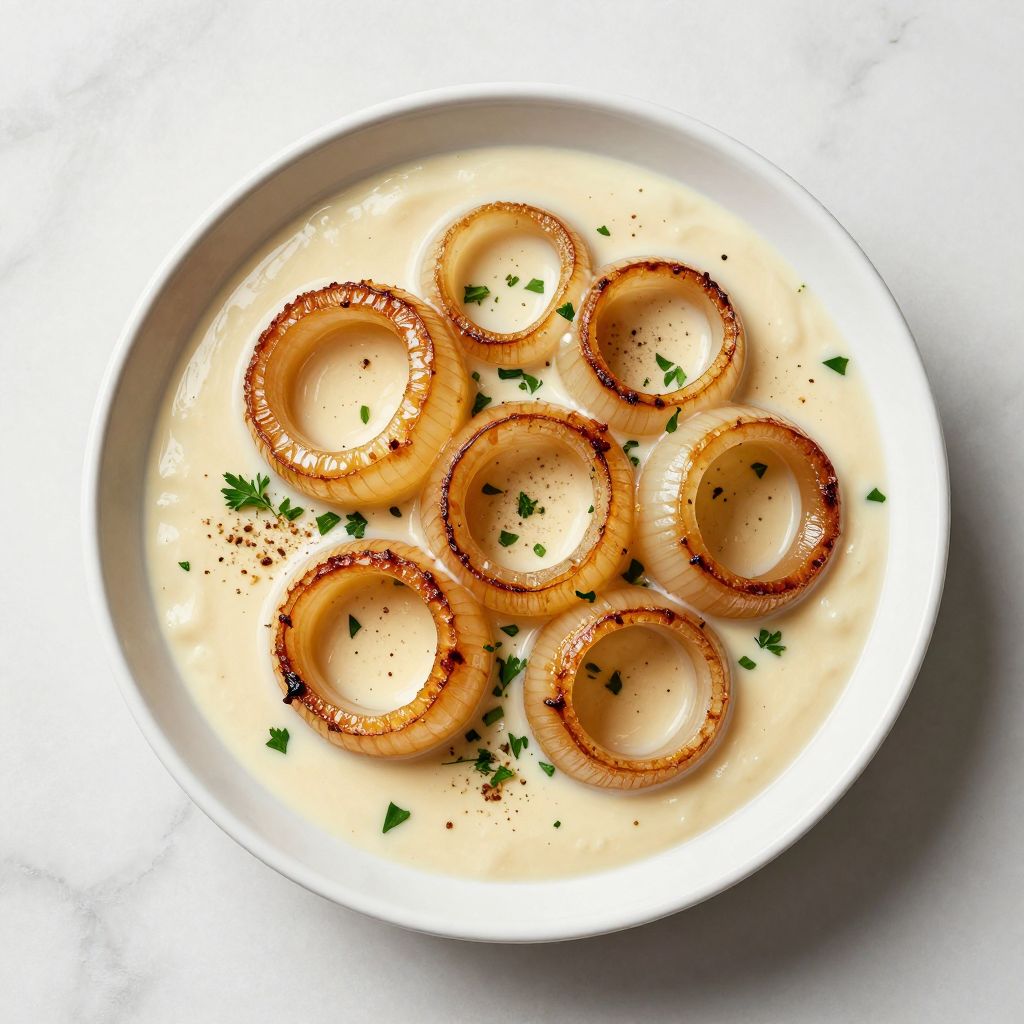
Creamed Onions
Ingredients
Equipment
Method
- Slice all onions into uniform 1/4 inch rings, separating the layers for even cooking.
- Heat 3 tablespoons of butter in a large heavy-bottomed skillet over medium-high heat until melted and foaming subsides. Add sliced onions, 1 teaspoon salt, and 1/2 teaspoon black pepper and stir to coat.
- Reduce heat to medium and cook the onions, stirring occasionally, for 25 to 30 minutes until deeply golden brown and very tender.
- Push the caramelized onions to one side of the skillet and add the remaining 1 tablespoon of butter to the cleared space. Sprinkle 2 tablespoons of flour over the butter and stir constantly for 1 to 2 minutes until light golden.
- Slowly pour the warmed milk or cream into the roux in a thin stream while whisking constantly to prevent lumps, fully incorporating the liquid.
- Stir the onions back into the sauce, add 1/2 teaspoon mustard powder and a pinch of nutmeg, and cook for 2 to 3 minutes over medium heat until smooth and silky.
- If a thicker sauce is desired, whisk in the cornstarch slurry and simmer for 1 minute more, stirring constantly until the sauce thickens.
- Taste the creamed onions and adjust seasoning with additional salt, pepper, or nutmeg as needed.
- Transfer the creamed onions to a serving dish, garnish with chopped parsley, and serve warm as a side dish.