
Imagine a table of friends gathered around a single pot of bubbling, garlicky oil, pulling warm bread and crisp vegetables through liquid gold and savory anchovy magic. Bagna cauda is that dish: a rustic Italian appetizer from Piedmont that transforms simple ingredients into something utterly addictive.
This recipe shines because it requires minimal cooking skill, comes together in under 15 minutes, and creates an interactive dining experience that brings people together. The warm anchovy-garlic sauce is rich, umami-packed, and pairs beautifully with everything from raw vegetables to crusty bread.
Best of all, bagna cauda feels fancy enough to impress guests but casual enough for a weeknight snack with family. Let me walk you through making this Piedmontese classic in your own kitchen.
Why You’ll Love This Recipe
Bagna cauda delivers impressive results with minimal effort and just a handful of pantry staples.
- Ready in 10 minutes with no complex techniques
- Anchovy-forward flavor that tastes restaurant-quality
- Interactive appetizer format keeps guests entertained and engaged
- Works for casual dinners, dinner parties, or holiday gatherings
- Naturally gluten-free and adaptable to dietary restrictions
My Experience Making This Recipe
I first made bagna cauda on a cold November evening when a friend brought a bottle of Piedmontese wine to dinner. We had anchovies, garlic, and butter in the pantry, so I threw together this sauce almost by accident, and it became the highlight of the night.
The smell alone filled the kitchen with warm, nutty garlic and briny anchovy notes that made everyone drift toward the stove. My skeptical husband, who normally avoids anchovies, grabbed a piece of bread, dipped it into that golden oil, and asked for seconds before I could even set the pot on the table.
What surprised me most was how the warm oil coated vegetables like bell peppers and radishes, making them taste completely different than raw. The sauce brought out subtle sweetness in carrots and earthiness in mushrooms, turning a simple spread into a genuine celebration of produce.
Recipe Overview
- Recipe Name: Bagna Cauda
- Servings: 4 as an appetizer
- Prep Time: 5 minutes
- Cook Time: 8 minutes
- Total Time: 13 minutes
- Course: Appetizer
- Cuisine: Italian (Piedmont)
- Calories Per Serving: 320
Equipment You Will Need
- Small heavy-bottomed saucepan or fondue pot
- Wooden spoon or silicone spatula
- Mincing knife and cutting board
- Measuring spoons
- Small serving spoon or ladle
- Cutting board for vegetables (separate from garlic)
Ingredients for Bagna Cauda
- Unsalted butter, 4 ounces (113 grams)
- Extra-virgin olive oil, 1/2 cup (120 milliliters)
- Anchovy fillets in oil, 8 to 10 fillets (about 2 ounces), drained and finely minced
- Garlic cloves, 6 to 8 medium, minced very fine
- Red pepper flakes, 1/4 teaspoon (optional but recommended)
- Sea salt, to taste (usually 1/4 teaspoon, adjust as needed)
- Black pepper, pinch
Ingredient Notes and Substitutions
- Anchovy fillets: They provide the deep umami backbone and briny richness. If you dislike anchovies, use anchovy paste sparingly (1 teaspoon) or swap for 2 tablespoons of miso paste for a milder umami hit.
- Extra-virgin olive oil: Quality oil flavors the entire dish since it’s the main component. Use a good bottle you would drizzle on salad; a cheaper oil will taste harsh and thin.
- Unsalted butter: Adds richness and helps emulsify the oil and anchovy mixture. You can replace it with additional olive oil (use 3/4 cup total oil) for a dairy-free version, though the sauce will taste less creamy.
- Garlic: Fresh, good-quality garlic makes a difference in flavor. Avoid pre-minced garlic in jars, which tastes metallic and sharp.
- Red pepper flakes: Add a subtle warmth that balances richness. Leave them out if you prefer a milder sauce, or add up to 1/2 teaspoon for more heat.
How to Make Bagna Cauda
Step 1: Mince Your Garlic and Anchovies
Cut your garlic cloves into thin slices, then mince them very finely until almost paste-like. This ensures they cook evenly and dissolve into the oil rather than remaining as chewy chunks.
Step 2: Drain and Prepare the Anchovies
If your anchovies are packed in oil, drain them well and pat dry with a paper towel to remove excess moisture. Mince them finely until they break into small flakes, which helps them incorporate smoothly into the butter and oil.
Step 3: Combine Butter and Olive Oil in the Saucepan
Place your saucepan over medium-low heat and add the butter and olive oil together. The low heat prevents the butter from browning and the oil from becoming too hot, which would turn the garlic bitter.
Step 4: Add Minced Garlic to the Pan
Once the butter foams gently, add your minced garlic and stir constantly with a wooden spoon. Cook for about 2 to 3 minutes, stirring often, until the garlic becomes fragrant and turns pale golden but never brown.
Step 5: Add the Minced Anchovies
Lower the heat to the absolute minimum and add your minced anchovies to the garlic-infused oil. Stir gently for 1 to 2 minutes until the anchovies dissolve completely into the oil and the mixture becomes smooth and cohesive.
Step 6: Season with Red Pepper Flakes
Add the red pepper flakes (if using) and stir to combine for about 30 seconds. This brief cooking releases the chili oil compounds and distributes the heat throughout the sauce.
Step 7: Taste and Adjust Seasoning
Remove the pan from heat and let it cool for 30 seconds before tasting on a small piece of bread. Add sea salt and black pepper to taste, remembering that anchovies and butter are already salty, so go easy on additional salt.
Step 8: Transfer to a Serving Vessel
Pour the warm bagna cauda into a fondue pot, small ceramic dish, or heatproof serving bowl. If the sauce cools and thickens before service, place it back over low heat to warm through and return it to pourable consistency.
Pro Tip: Keep your bagna cauda warm over a candle or small burner during serving so the oil stays liquid and inviting, preventing the butter from solidifying.
Tips for the Best Bagna Cauda
- Use the best-quality anchovies you can find, ideally packed in glass jars rather than tins, which often taste metallic. Spanish or Italian varieties deliver cleaner, less fishy flavor than cheaper brands.
- Mince your garlic by hand rather than using a food processor, which bruises the cloves and releases harsh, sulfurous compounds. Hand-minced garlic tastes sweeter and cleaner.
- Never let the mixture boil or even simmer vigorously, as high heat burns the garlic and makes the sauce taste bitter and harsh. Keep the flame low and the bubbles gentle.
- Prepare all your vegetables and bread before you start cooking, since the sauce comes together so quickly you won’t have time to chop once it’s on the stove.
- Serve bagna cauda immediately after cooking while the oil is warm and the flavors are at their peak. Cold bagna cauda loses its appeal as the butter solidifies.
Common Mistakes to Avoid
- Cooking the garlic too fast or too long turns it brown and bitter, ruining the entire sauce. Low heat and constant stirring prevent this.
- Using poor-quality olive oil or anchovy paste instead of whole anchovies results in a flat, one-dimensional flavor that tastes more like salt than savory depth.
- Adding the anchovies before the garlic is fully cooked causes them to burn slightly and taste fishy and harsh rather than rich and integrated.
- Forgetting to keep the sauce warm during service means it thickens as the butter cools, making it hard to dip into and less appetizing on the plate.
- Oversalting the sauce is easy to do since both anchovies and butter contain salt. Taste carefully and add salt gradually to avoid an unpleasantly salty finish.
Serving Suggestions
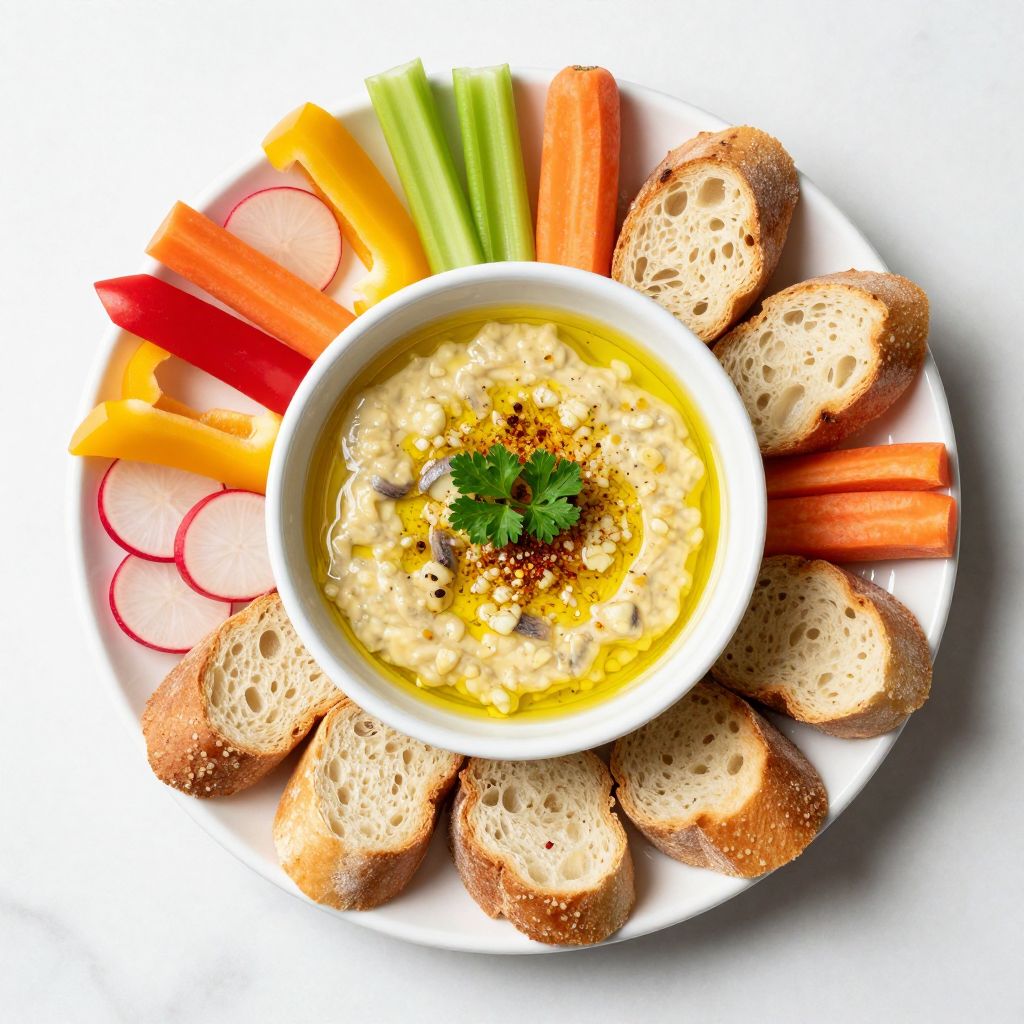
Bagna cauda shines as a warm dip for an array of vegetables and bread, turning simple produce into an interactive, hands-on appetizer. Set out everything at once so guests can dip at their own pace.
- Crusty bread, cut into cubes or thick slices, for dipping and soaking up the golden oil
- Raw vegetables like bell peppers (red, yellow, or orange), celery sticks, radishes, and carrots for bright acidity and crunch
- Blanched vegetables such as potatoes, cauliflower florets, or green beans for a softer texture that soaks up the sauce
- Mushrooms, both raw and lightly sauteed, which take on the sauce beautifully
- Hard-boiled eggs, halved, for a protein-rich option that the sauce coats wonderfully
Variations to Try
- Bagna Cauda with Cream: Add 2 to 3 tablespoons of heavy cream or creme fraiche after cooking for a richer, less oily sauce. This mellows the intensity and appeals to those who find straight oil too heavy.
- Walnut Bagna Cauda: Toast and finely chop 1/4 cup of walnuts and stir them in at the end for texture and nutty depth. This version tastes earthier and less purely anchovy-forward.
- White Wine Bagna Cauda: Add 1/4 cup of dry white wine (like Vermentino or Pinot Grigio) to the oil after cooking for subtle acidity and lighter flavor. Let it simmer gently for 1 minute to cook off the alcohol.
- Spicy Bagna Cauda: Double the red pepper flakes or add 1/2 teaspoon of cayenne pepper for guests who crave heat. This version works beautifully with bitter greens like radicchio and endive.
- Vegan Bagna Cauda: Replace butter with additional olive oil and swap anchovies for 3 tablespoons of miso paste (white or red) plus 1 tablespoon of soy sauce. Toast the garlic in oil, add the miso paste, and whisk until smooth for a plant-based version that tastes remarkably similar.
Dietary Adaptations
- Gluten-Free: Bagna cauda is naturally gluten-free, but serve it with gluten-free bread or crackers. The sauce itself contains no wheat or gluten in any form.
- Dairy-Free: Replace butter with additional olive oil (use 3/4 cup total) and proceed as normal. The sauce will taste lighter and more purely olive oil forward, but remains delicious and entirely dairy-free.
- Vegan: Use dairy-free butter or all olive oil, and replace anchovies with miso paste and soy sauce as mentioned in the variations section. This captures the umami depth while keeping the dish plant-based.
- Low-Carb or Keto: Bagna cauda fits perfectly into low-carb eating when served with vegetable dips instead of bread. Focus on bell peppers, celery, mushrooms, cauliflower, and leafy greens for a carb-light spread.
Storage and Reheating
Refrigerator
Store leftover bagna cauda in an airtight container in the refrigerator for up to 4 days. The butter will solidify, turning the sauce opaque and thick.
- Pour the cooled sauce into a glass jar or small container with a tight-fitting lid
- Cover the surface with plastic wrap before sealing to prevent odors from absorbing into the oil
- Label with the date so you remember when you made it
Freezer
Bagna cauda freezes surprisingly well for up to 3 months, though the texture becomes slightly grainy once thawed. Freeze it in ice cube trays and pop out individual portions for easy reheating.
- Pour into silicone ice cube trays and freeze until solid
- Pop out the frozen cubes and store in a freezer bag with the date marked
- Thaw in the refrigerator overnight before reheating
Reheating
Reheat bagna cauda gently over low heat, stirring constantly to prevent the garlic from scorching. Never use a microwave, which heats unevenly and can make the sauce separate.
- Place the chilled or frozen sauce in a saucepan over the lowest heat setting
- Stir constantly for 3 to 5 minutes until warm and pourable
- Add a splash of fresh olive oil if the sauce seems too thick or separated
Nutrition Information
| Nutrient | Amount |
|---|---|
| Calories | 320 |
| Total Fat | 35g |
| Saturated Fat | 9g |
| Carbohydrates | 2g |
| Fiber | 0g |
| Sugar | 0g |
| Protein | 3g |
| Sodium | 580mg |
| Cholesterol | 18mg |
Nutrition information is calculated per serving of sauce only, without vegetables or bread. Actual values vary based on specific brands and how much sauce each person uses for dipping.
Frequently Asked Questions
Can I Make Bagna Cauda Ahead of Time?
Yes, you can make it up to 4 days ahead and store it in the refrigerator in an airtight container. Reheat gently over low heat for 3 to 5 minutes, stirring often, and it tastes nearly as good as fresh.
What If I Really Dislike Anchovies?
Reduce the anchovies to 2 to 3 fillets or swap them for 1 to 2 tablespoons of miso paste for umami depth without the fishy taste. The sauce won’t taste quite the same, but it will still be delicious and more approachable.
How Do I Prevent the Garlic From Burning?
Cook over the lowest heat setting and stir constantly so the garlic toasts evenly rather than scalding in one spot. Never walk away from the pan, and pull it off heat as soon as the garlic turns pale golden.
Can I Use Jarred Minced Garlic Instead of Fresh?
I don’t recommend it, as jarred garlic tastes sharp, metallic, and one-dimensional compared to hand-minced fresh garlic. Fresh cloves mince in just a minute or two, making the small effort worthwhile.
What’s the Best Oil to Use?
Choose a high-quality extra-virgin olive oil with fruity, peppery notes that you would enjoy drizzling on salad. Cheap or refined olive oil tastes thin and harsh, and won’t create the rich, golden sauce that makes bagna cauda special.
Does Bagna Cauda Need to Stay Warm During the Meal?
Yes, warm bagna cauda is far more inviting and easier to dip into than cooled sauce with solidified butter. Keep it warm over a small candle, burner, or by reheating it in short intervals throughout service.
Final Thoughts
Bagna cauda proves that some of the most memorable dishes come from the simplest ingredients and techniques. Five minutes at the stove transforms butter, oil, garlic, and anchovies into something that tastes like it came from a Piedmontese trattoria.
Make this for your next gathering and watch your guests circle the pot, dipping and savoring and reaching back for one more piece of bread. This is the kind of recipe that sticks with people, not just because it tastes incredible, but because it brings everyone together in the most delicious way possible.
Explore More Recipes
If you loved making bagna cauda, check out more classic Italian appetizers and traditional dishes on our collection of family recipes. For a refreshing dessert or frozen treat to serve after your meal, try our homemade Italian ice recipe, which pairs beautifully with rich appetizers like this one.
Bagna Cauda
Ingredients
Equipment
Method
- Cut and finely mince the garlic cloves until almost paste-like.
- Drain the anchovy fillets on paper towel and finely mince them into small flakes.
- Combine butter and olive oil in a small saucepan over medium-low heat and heat until the butter melts and foams gently, about 1 minute.
- Add the minced garlic and stir constantly for 2 to 3 minutes until fragrant and pale golden, ensuring it does not brown.
- Reduce heat to the lowest setting and stir in the minced anchovies, cooking 1 to 2 minutes until they dissolve into the sauce.
- Add red pepper flakes and stir for 30 seconds to release heat into the sauce.
- Remove from heat, taste on a small piece of bread, and season with sea salt and black pepper as needed.
- Transfer the warm bagna cauda to a fondue pot or heatproof serving dish and keep warm over a small candle or burner while serving.