
There’s something magical about biting into a potato so perfectly seasoned it tastes like nothing else you’ve had before. Salt potatoes are a humble upstate New York tradition that transforms the simplest ingredient into pure comfort food with just salt, water, and a little patience.
Salt potatoes deserve a spot on your table because they’re ridiculously easy, deeply flavorful, and work alongside almost any main dish you can imagine. The secret lies in boiling small potatoes in heavily salted water, which seasons them from the inside out and creates a thin, crispy exterior that contrasts beautifully with the creamy center.
Why You’ll Love This Recipe
This recipe strips away the fuss and delivers maximum flavor with minimal effort. You get perfectly seasoned potatoes every single time with just three ingredients and one pot.
- Minimal ingredients and zero fancy techniques required
- Potatoes are seasoned throughout, not just on the surface
- Crispy, flavorful skin that you’ll actually want to eat
- Pairs perfectly with butter, sour cream, herbs, or eaten plain
- Budget-friendly and naturally gluten-free
My Experience Making This Recipe
I first made salt potatoes after a friend raved about them for ten minutes straight, and I was skeptical that boiling potatoes in salty water could be that special. The moment I tasted one, I understood the hype completely.
My kitchen filled with the most appetizing aroma, and the potatoes came out with skin you could actually bite through without falling apart. My family devoured them so quickly that I’ve made them at least twice a month ever since, often as a side to grilled chicken or roasted fish.
The best part is watching people’s reactions when they taste one for the first time and realize how good something this simple can be. It’s become my go-to potluck dish because they’re impressive yet require almost zero stress on my part.
Recipe Overview
- Recipe Name: Salt Potatoes
- Servings: 4 to 6 servings
- Prep Time: 5 minutes
- Cook Time: 15 to 20 minutes
- Total Time: 20 to 25 minutes
- Course: Side Dish
- Cuisine: American (New York)
- Calories per Serving: 120 calories
Equipment You Will Need
- Large pot (at least 4 quarts)
- Colander or fine mesh strainer
- Sharp chef’s knife
- Cutting board
- Measuring spoons
- Kitchen timer
- Wooden spoon for stirring
Ingredients for Salt Potatoes
- 2 pounds small potatoes (1 to 2 inches diameter, unpeeled)
- 1/4 cup kosher salt (or sea salt)
- Water (approximately 3 quarts)
Ingredient Notes and Substitutions
- Small potatoes: These cook evenly and quickly while developing that crucial crispy skin. If you can’t find small potatoes, cut larger ones into 1.5 to 2 inch pieces, though they won’t be quite as visually appealing.
- Kosher salt: It dissolves quickly and seasons potatoes evenly from the inside out. Regular table salt works but use about 3 tablespoons instead since it’s denser and more heavily processed.
- Water: Use tap water at room temperature. Mineral water doesn’t affect the recipe, but filtered water works just fine too.
How to Make Salt Potatoes
Step 1: Rinse and Prepare the Potatoes
Rinse your small potatoes under cold running water and scrub them gently with your fingers to remove any dirt. Don’t peel them, as the skin is where the magic happens and holds everything together during boiling.
Step 2: Fill the Pot with Water
Pour approximately 3 quarts of cold water into your large pot. You want enough water to cover the potatoes by about 2 inches, so adjust if needed based on your pot size.
Step 3: Add the Salt
Add 1/4 cup of kosher salt directly to the cold water and stir well until it dissolves completely. The water should taste quite salty, similar to seawater, which is your signal that you’ve got the right amount.
Step 4: Bring Water to a Boil
Place the pot over high heat and bring the salted water to a rolling boil. This usually takes 8 to 10 minutes depending on your stove and pot size.
Step 5: Add the Potatoes
Carefully add all the small potatoes to the boiling salted water once it reaches a full boil. Stir them gently with a wooden spoon to make sure they’re all submerged and not sticking to the bottom.
Step 6: Maintain a Gentle Boil
Reduce the heat to medium and maintain a gentle, rolling boil rather than a violent one. A gentle boil prevents the potatoes from breaking apart while cooking, which would let the salty water leak inside and over-season them unevenly.
Step 7: Cook Until Tender
Boil the potatoes for 15 to 20 minutes, depending on their exact size. Start checking them at the 15 minute mark by piercing the largest potato with a fork, it should go through easily with no resistance.
Step 8: Drain the Potatoes
Pour the potatoes into a colander to drain them completely, shaking gently to remove excess water. Let them sit in the colander for 1 to 2 minutes so they dry slightly and the skin becomes even crispier.
Pro Tip: Don’t skip letting the potatoes sit in the colander after draining. That brief rest allows residual heat to dry the skins, creating that signature crispy texture that makes salt potatoes irresistible.
Tips for the Best Salt Potatoes
- Choose potatoes of similar size so they cook evenly and finish at the same time. Sorting through them before cooking takes 30 seconds and prevents some from being mushy while others are firm.
- Taste the salted water before adding potatoes to confirm it’s salty enough. If you’re unsure, it’s better to go slightly under than over since you can’t remove salt once it’s absorbed.
- Don’t cover the pot while boiling because steam can condense and dilute the salt concentration. Keeping it uncovered maintains that perfect seasoning level.
- Keep potatoes in the colander rather than returning them to the pot. The residual heat and air circulation create that desirable crispy exterior.
- Serve salt potatoes while they’re still warm for the best texture and flavor. They lose some of their appeal once completely cooled, though leftovers reheat beautifully.
- Save any extra salt for future batches. You’ll develop a feel for the right amount once you’ve made them a couple times.
Common Mistakes to Avoid
- Using table salt instead of kosher salt without adjusting amounts leads to over-seasoning because table salt is denser and more concentrated. Always use the specified type or adjust the quantity accordingly.
- Peeling the potatoes removes the protective skin that keeps them intact and creates that crispy texture you’re after. Leave the skins on no matter how tempting it is to peel them.
- Boiling potatoes in already boiling water instead of starting in cold salted water can cause them to cook unevenly. Start with cold water so they cook gradually and evenly throughout.
- Cooking potatoes at too high a heat causes them to break apart and become waterlogged rather than fluffy inside. Gentle boiling is key to maintaining their shape and texture.
- Draining potatoes and immediately putting them back in a hot pot steams them rather than letting them dry and crisp up. Let them rest briefly in the colander for better results.
Serving Suggestions
Salt potatoes are incredibly versatile and work equally well as a casual weeknight side or at a formal dinner. They shine brightest when paired with proteins that let them take center stage rather than compete for attention.
- Serve alongside grilled salmon or trout with fresh lemon and herbs
- Pair with roasted chicken and garlic for a classic comfort meal
- Top with sour cream and fresh chives for a loaded potato experience
- Serve with butter and cracked black pepper for elegant simplicity
- Add to a seafood platter with steamed corn and clams
Variations to Try
- Herb Salt Potatoes: Add 2 tablespoons of fresh dill, parsley, or thyme to the boiling water for subtle flavor without overpowering the pure potato taste.
- Garlic Salt Potatoes: Add 4 to 5 smashed garlic cloves to the water for a savory twist that’s perfect with grilled meats.
- Lemon Salt Potatoes: Toss finished potatoes with lemon zest and a squeeze of fresh lemon juice for brightness and acidity that cuts through richness.
- Cajun Style: Add a bay leaf, 1/2 teaspoon cayenne pepper, and smashed garlic to the water for a spiced version that works great with seafood.
- Truffle Oil Finish: Drizzle finished potatoes with a small amount of truffle oil and sprinkle with sea salt flakes for an unexpected luxury touch.
Dietary Adaptations
- Gluten-Free: Salt potatoes are naturally gluten-free since they contain only potatoes, salt, and water. No modifications needed whatsoever.
- Dairy-Free: This recipe contains no dairy, making it perfect for dairy-free diets. Serve with olive oil or dairy-free butter if desired.
- Vegan: Salt potatoes are completely vegan as they contain no animal products. They’re an excellent side for plant-based mains.
- Low-Carb/Keto: Standard potatoes are too high in carbohydrates for strict keto diets. Substitute cauliflower florets using the same salt boiling method for a lower-carb alternative, though the texture will differ slightly.
Storage and Reheating
Refrigerator
Store cooled salt potatoes in an airtight container in the refrigerator for up to 5 days. They stay firm and flavorful throughout this window.
- Keep them in a single layer if possible to prevent them from compressing
- Don’t store them in water or they’ll become waterlogged and lose their texture
Freezer
Freezing salt potatoes isn’t recommended because the texture becomes mushy and mealy after thawing. They lose the crispy skin and fluffy interior that makes them special.
- If you must freeze them, use them in potato salads or soups rather than serving whole
- Frozen potatoes work well in hash or mashed potato dishes
Reheating
Reheat refrigerated salt potatoes by placing them in a dry skillet over medium heat for 3 to 5 minutes, shaking occasionally. This method restores some of the crispiness that’s lost during storage.
- Alternatively, microwave them covered with a damp paper towel for 2 to 3 minutes
- Avoid using a microwave if you want to preserve any crispiness
Nutrition Information
| Nutrient | Amount |
|---|---|
| Calories | 120 |
| Total Fat | 0.2g |
| Saturated Fat | 0.1g |
| Carbohydrates | 27g |
| Fiber | 2.5g |
| Sugar | 1.5g |
| Protein | 2.5g |
| Sodium | 890mg |
| Cholesterol | 0mg |
These values are estimates based on standard small potatoes and kosher salt. Nutrition may vary slightly depending on exact potato size and boiling time.
Frequently Asked Questions
Can I use larger potatoes?
You can cut larger potatoes into 1.5 to 2 inch pieces, but they won’t have the same visual appeal or crispy skin texture. Small potatoes are worth seeking out at farmers markets or specialty stores for the best results.
How do I know when the potatoes are done?
Pierce the largest potato with a fork at the 15 minute mark. It should slide through with zero resistance, indicating complete tenderness.
Can I make salt potatoes ahead of time?
You can cook them up to 5 days ahead and store them in the refrigerator. Reheat them in a dry skillet to restore some crispiness before serving.
Why are my potatoes soggy instead of crispy?
This usually happens from returning them to a hot pot after draining or covering them while cooling. Always let them rest uncovered in the colander for a couple minutes after draining.
Can I use sea salt instead of kosher salt?
Yes, sea salt works perfectly since it has a similar density to kosher salt. Use the same 1/4 cup amount for consistent seasoning.
Final Thoughts
Salt potatoes prove that sometimes the simplest recipes deliver the most satisfying results. There’s no complicated technique to master, no rare ingredients to hunt down, just good potatoes and patience.
Make a batch this week and taste why this upstate New York staple has become a beloved side dish across the country. Once you experience potatoes seasoned perfectly from the inside out, you’ll understand why people rave about them.
If you love simple potato recipes, check out our collection of Irish potatoes recipe and potato candy recipe for more creative ways to celebrate this humble vegetable.
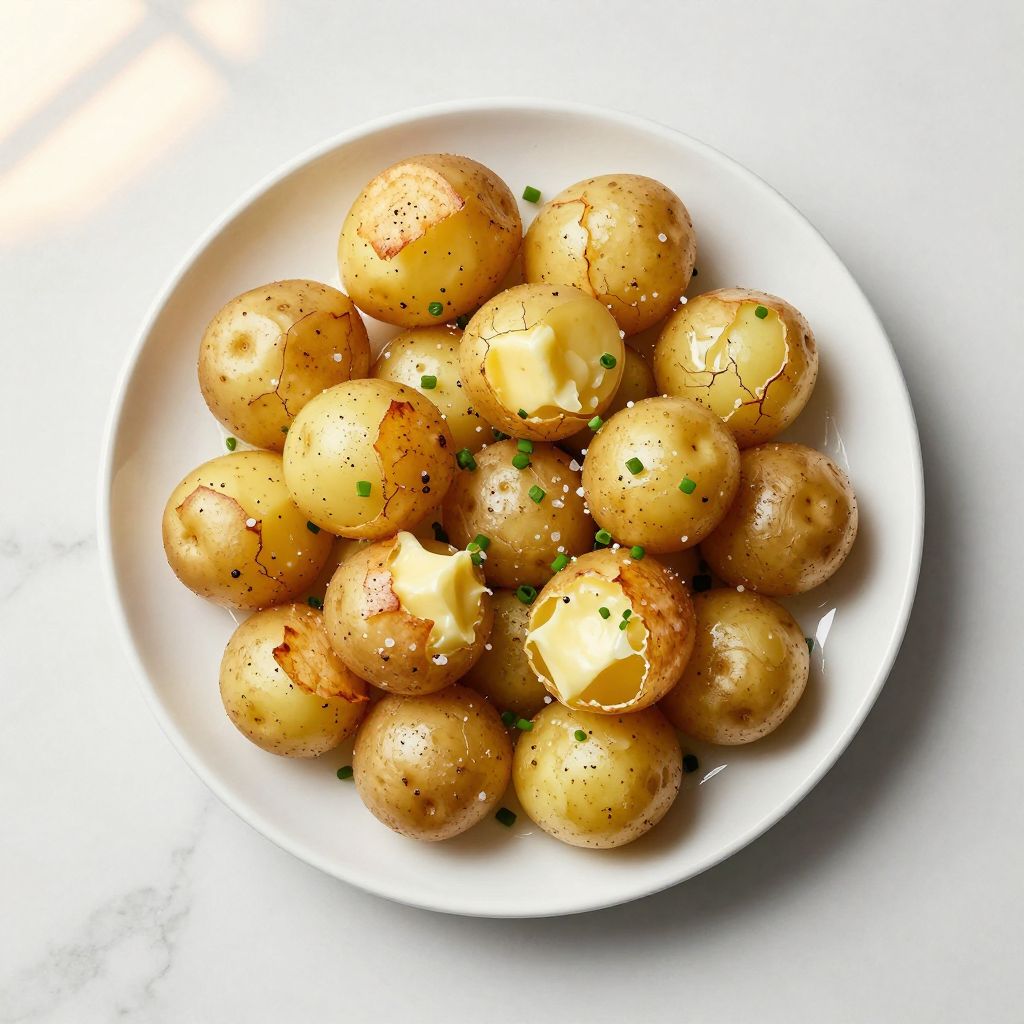
Salt Potatoes
Ingredients
Equipment
Method
- Rinse and scrub the small potatoes under cold running water without peeling them.
- Pour 3 quarts of cold water into a large pot, ensuring it will cover the potatoes by about 2 inches.
- Add 1/4 cup kosher salt to the water and stir until fully dissolved; the water should taste like seawater.
- Place the pot over high heat and bring the salted water to a rolling boil, about 8 to 10 minutes.
- Carefully add the small potatoes to the boiling water and stir gently to ensure they are all submerged.
- Reduce the heat to medium and maintain a gentle rolling boil to prevent the potatoes from breaking apart.
- Boil the potatoes for 15 to 20 minutes, or until a fork slides into the largest potato with no resistance.
- Drain the potatoes in a colander for 1 to 2 minutes, allowing them to dry slightly and the skins to crisp.