
There’s something magical about the way glass noodles catch the light in a hot wok, turning translucent and slippery as they absorb the flavors around them. Glass noodles are a versatile staple that cooks in minutes and soaks up whatever sauce you pair them with, making them the secret weapon for weeknight dinners that feel restaurant-quality.
These delicate noodles work just as well in a stir-fry as they do in a cold salad or a warm soup, which means one recipe idea can branch into a dozen variations. They’re naturally gluten-free, cook faster than most pasta, and deliver that satisfying chew that keeps you coming back for more. Whether you’re cooking for yourself or feeding a crowd, glass noodles deliver results without fuss.
Why You’ll Love This Recipe
This recipe gives you a complete, foolproof method for preparing glass noodles that taste vibrant and fully seasoned every single time. You get flexibility, speed, and genuine flavor in one simple dish.
- Ready in under 20 minutes from start to finish
- Naturally gluten-free and works for most dietary needs
- Absorbs flavors beautifully without becoming mushy
- Works hot, cold, or at room temperature for meal prep
- A blank canvas for whatever proteins or vegetables you have on hand
My Experience Making This Recipe
I first cooked glass noodles in a tiny apartment kitchen with limited equipment and zero confidence. The first batch turned into a clumpy mess because I didn’t know the noodles needed to be soaked, not boiled like regular pasta.
After a few attempts and some research, I nailed the technique, and it became my go-to when I needed dinner in a flash. The soy-ginger sauce coats every strand evenly, and the sesame oil adds that warm, toasty finish that makes people stop mid-bite and ask what you did differently. I’ve made this for weeknight family dinners and brought it to potlucks where it always disappears first.
What surprised me most was how forgiving the recipe is once you understand the basics. Swap the vegetables, change the protein, dial up the heat or the sweetness, and it still comes out delicious every time.
Recipe Overview
- Recipe Name: Stir-Fried Glass Noodles with Vegetables
- Servings: 4
- Prep Time: 10 minutes
- Cook Time: 8 minutes
- Total Time: 18 minutes
- Course: Main Dish
- Cuisine: Asian
- Calories per Serving: 285
Equipment You Will Need
- Large bowl for soaking noodles
- 14-inch wok or large skillet
- Wooden spoon or spatula for stirring
- Measuring spoons and cups
- Small bowl for mixing the sauce
- Tongs or cooking chopsticks
- Cutting board and sharp knife
Ingredients for Glass Noodles with Vegetables
- Glass noodles, 8 ounces
- Vegetable oil, 2 tablespoons
- Garlic cloves, 3 minced
- Fresh ginger, 1 tablespoon minced
- Bell peppers (red and yellow), 2 cups sliced
- Carrots, 1 cup julienned
- Green onions, 4 chopped
- Mushrooms (shiitake or cremini), 1 cup sliced
For the Sauce
- Soy sauce, 3 tablespoons
- Sesame oil, 1 tablespoon
- Rice vinegar, 1 tablespoon
- Honey, 1 teaspoon
- Red pepper flakes, 1/2 teaspoon (optional)
Ingredient Notes and Substitutions
- Glass noodles: These are made from tapioca or potato starch and cook by soaking rather than boiling, which keeps them from turning to mush. You can substitute with rice vermicelli if glass noodles are unavailable, though they’ll have a slightly different texture.
- Sesame oil: This adds an essential nutty, toasted flavor that defines the dish. Avoid using regular vegetable oil as a substitute since it won’t deliver the same depth; instead, reduce the oil and add a few drops of sesame oil for authenticity.
- Soy sauce: Use reduced-sodium soy sauce if you prefer less salt, and tamari if you need a gluten-free option. Fish sauce works in a pinch for umami depth, but use only 1 tablespoon.
- Fresh ginger: Ground ginger can replace fresh, but use only 1 teaspoon since it’s more concentrated and potent than the fresh version.
- Rice vinegar: White vinegar or apple cider vinegar can stand in, but rice vinegar offers a gentler acidity that won’t overpower the dish.
How to Make Glass Noodles with Vegetables
Step 1: Soak the Glass Noodles
Bring a large pot of water to a boil, then remove it from heat and add the glass noodles. Let them soak for 5 to 7 minutes until they turn translucent and tender but still have a slight chew when you bite one.
Soaking instead of boiling prevents the noodles from breaking apart and becoming gluey. You want them soft enough to eat but firm enough to hold their shape when you stir them in the wok.
Step 2: Drain and Set Aside
Pour the noodles into a colander and rinse them with cool water to stop the cooking process. Shake out as much excess water as possible, then spread them on a clean kitchen towel to dry slightly.
Excess moisture will cause splattering in the hot wok and prevent proper browning of the vegetables. A few minutes of air drying makes a real difference in the final texture.
Step 3: Prepare Your Vegetables
Slice the bell peppers into thin strips, julienne the carrots into matchsticks, chop the green onions into half-inch pieces, and slice the mushrooms into quarter-inch pieces. Keep all your prepped ingredients in separate small bowls near your stove.
Having everything prepped and organized before you start cooking is not optional if you want to avoid burning anything. Once the heat is on, things move fast.
Step 4: Mix the Sauce
Combine the soy sauce, sesame oil, rice vinegar, honey, and red pepper flakes in a small bowl and whisk until the honey dissolves completely. Taste the sauce and adjust the flavors as needed, adding more vinegar for tang or soy sauce for saltiness.
This step takes 30 seconds but determines the flavor of your entire dish, so don’t skip it or mix the sauce directly in the wok where you can’t taste it properly.
Step 5: Heat Your Wok or Skillet
Place the wok or large skillet over high heat until it’s smoking hot and a drop of water immediately evaporates. Pour in the vegetable oil and swirl it around to coat the entire surface.
High heat is crucial for a stir-fry because it cooks vegetables quickly while keeping them crisp and flavorful. Low heat steams them instead of caramelizing them, which ruins the whole effect.
Step 6: Cook the Aromatics
Add the minced garlic and ginger to the hot oil and stir constantly for 30 seconds until fragrant. You’ll know it’s ready when the smell hits you and turns the kitchen into an aromatherapy session.
Cooking garlic and ginger separately from the vegetables ensures they don’t burn while you’re waiting for other ingredients to cook. This short blast builds a flavor foundation that elevates everything else.
Step 7: Stir-Fry the Vegetables
Add the bell peppers, carrots, and mushrooms to the wok and stir constantly for 3 to 4 minutes until they’re tender but still have some crunch. The vegetables should smell sweet and slightly caramelized at the edges.
Constant stirring prevents sticking and ensures even cooking across all the vegetables. If you have a wooden spoon or cooking chopsticks, now’s the time to put them to work.
Step 8: Add the Glass Noodles
Pour the drained glass noodles into the wok and toss everything together with the sauce for 2 to 3 minutes until the noodles are heated through and coated evenly. Use tongs or a spatula to gently separate any clumps without breaking the noodles.
The noodles will absorb the sauce as they warm, so work quickly but gently to keep them intact. If the mixture seems dry, splash in a tablespoon of water at a time until you reach the right consistency.
Step 9: Finish and Serve
Turn off the heat and stir in the chopped green onions, reserving a small handful for garnish. Taste the dish and add more soy sauce, sesame oil, or vinegar to balance the flavors to your preference.
Green onions add a fresh, sharp note that brightens everything up. They also look beautiful scattered on top, so don’t underestimate the power of a good garnish.
Pro Tip: Keep your ingredients prepped and your sauce mixed before you turn on the heat, because once the wok is hot, everything moves fast and there’s no time to chop vegetables or measure spices mid-stir-fry.
Tips for the Best Glass Noodles
- Soak your glass noodles in hot water rather than boiling them to prevent them from turning into mush or sticking together in clumps.
- Cut all your vegetables into roughly the same size so they cook evenly and look professional on the plate.
- Don’t crowd the wok with too many ingredients at once or the temperature will drop and your vegetables will steam instead of stir-fry.
- Add a handful of fresh herbs like cilantro or basil at the very end to brighten the dish and add complexity.
- Use fresh garlic and ginger rather than jarred versions, which lose potency and can taste stale or off-putting.
- Keep the heat high throughout cooking so vegetables develop a slight char and the noodles warm through without turning mushy.
Common Mistakes to Avoid
- Boiling glass noodles instead of soaking them causes them to break apart and become pasty rather than tender with a slight chew.
- Adding sauce too early in the cooking process allows it to burn on the hot pan before coating the noodles evenly.
- Using low or medium heat steams the vegetables and noodles instead of stir-frying them, resulting in a soggy, bland dish.
- Overloading the wok with vegetables and noodles all at once causes everything to steam together rather than cook quickly over high heat.
- Skipping the ginger or garlic leaves the dish tasting flat and one-dimensional instead of deep and savory.
Serving Suggestions
Serve this dish hot straight from the wok, or chill it completely and serve as a cold noodle salad at room temperature or straight from the refrigerator. Either way, it’s a complete meal that works as a main course or a side dish for grilled proteins.
- Top with grilled chicken, shrimp, or beef for added protein and heartiness
- Sprinkle with chopped peanuts or cashews for crunch and richness
- Serve with sriracha or chili oil on the side for extra heat
- Add a squeeze of lime juice right before eating for brightness and acidity
- Pair with a simple miso soup or vegetable broth on the side for a complete meal
Variations to Try
- Protein Version: Add 8 ounces of sliced chicken breast, shrimp, or beef along with the garlic and ginger, cooking until just done before adding the vegetables. This transforms the dish from a vegetable side into a satisfying main course with minimal extra effort.
- Spicy Version: Increase the red pepper flakes to 1 full teaspoon and add a tablespoon of sriracha to the sauce for serious heat. The spice mellows slightly as it sits, so start with less than you think you need.
- Cold Noodle Salad: Let the cooked noodles cool completely, then add shredded cucumber, thinly sliced radishes, and extra green onions for a refreshing chilled salad. Drizzle with extra sesame oil and a squeeze of lime juice just before serving.
- Creamy Coconut Version: Replace half the soy sauce with coconut milk and add a tablespoon of curry paste to the sauce for a rich, aromatic twist. This version pairs beautifully with bell peppers and fresh basil.
- Seafood Version: Add diced squid, mussels, or crab meat during the final minute of cooking to incorporate seafood without overcooking it. Fish sauce can replace half the soy sauce for a more authentic seafood flavor.
Dietary Adaptations
- Gluten-Free: Glass noodles are naturally gluten-free, but verify your soy sauce is tamari or another gluten-free variety, as regular soy sauce contains wheat. The trade-off is minimal since tamari tastes nearly identical and keeps the dish completely safe for gluten-free diets.
- Dairy-Free: This recipe is already dairy-free, so you’re good to go without any substitutions or adjustments.
- Vegan and Vegetarian: The recipe is already vegetarian, and it’s vegan if you ensure your soy sauce and honey are from vegan-friendly sources. Replace honey with maple syrup or agave if you’re strictly vegan.
- Low-Carb or Keto: Replace glass noodles with zucchini noodles or shirataki noodles and double the vegetables to maintain portion size. This version is lower in carbs but loses the traditional chewy texture that makes glass noodles special.
Storage and Reheating
Refrigerator
Store leftover glass noodles in an airtight container for up to 4 days in the refrigerator. The noodles become firmer as they cool, which actually makes them easier to reheat without breaking apart.
- Keep the dish sealed tightly to prevent it from absorbing odors from other foods
- The noodles taste best within the first 2 days, though they stay safe longer
- Eat cold straight from the container as a noodle salad, or reheat gently
Freezer
Glass noodles freeze reasonably well for up to 2 months, though the texture becomes slightly softer when thawed. Freeze in a flat layer in a freezer bag for easy reheating and storage.
- Thaw overnight in the refrigerator before reheating for best results
- Alternatively, reheat from frozen by adding a splash of water to the pan
- The noodles will taste a bit softer than the original, but still delicious
Reheating
Reheat on the stovetop in a wok or skillet over medium heat with a splash of water, soy sauce, or sesame oil to prevent sticking. Stir frequently for 2 to 3 minutes until warmed through, or use the microwave for 1 to 2 minutes in a covered microwave-safe container.
- The stovetop method restores the best texture and flavor
- Add a tablespoon of water if the noodles seem dry
- Avoid high heat when reheating to prevent burning or breaking the noodles
Nutrition Information
| Nutrient | Amount |
|---|---|
| Calories | 285 |
| Total Fat | 8 grams |
| Saturated Fat | 1 gram |
| Carbohydrates | 48 grams |
| Fiber | 3 grams |
| Sugar | 5 grams |
| Protein | 5 grams |
| Sodium | 680 milligrams |
| Cholesterol | 0 milligrams |
These values are approximate and may vary depending on specific brands and preparation methods used. They represent a standard serving of the recipe as written without any optional additions or protein add-ons.
Frequently Asked Questions
Can I make this recipe ahead of time?
Yes, you can prep all your vegetables and mix the sauce up to 8 hours in advance, storing them separately in the refrigerator. The actual cooking takes only 10 minutes once you’re ready to eat, so it’s a great weeknight dinner strategy.
What’s the difference between glass noodles and rice noodles?
Glass noodles are made from tapioca or potato starch and turn translucent when cooked, while rice noodles are made from rice flour and stay white or opaque. Glass noodles have a chewier texture and absorb sauce differently, which is why this recipe specifically calls for them.
Can I substitute the sesame oil with something else?
Regular vegetable oil won’t give you the same nutty, toasted flavor that makes this dish special. If you must substitute, use a very small amount of sesame oil mixed with vegetable oil, or try a nut oil like walnut oil for a similar depth.
How do I prevent my glass noodles from sticking together?
Soak them in hot water rather than boiling them, and make sure to drain and slightly dry them on a towel before cooking. Tossing them with a tiny bit of sesame oil after soaking also prevents sticking without adding much fat.
What protein works best with this dish?
Chicken, shrimp, and beef all pair beautifully with glass noodles, but even tofu or tempeh work wonderfully for vegetarian variations. Cook your protein separately to your preferred doneness, then toss it in during the final minute of cooking to avoid overcooking.
Is this recipe naturally vegan?
The base recipe is vegan as long as you use soy sauce or tamari and replace honey with maple syrup or agave. Verify that all your ingredients are from vegan-friendly sources, and you’ll have a fully vegan dish.
Final Thoughts
Glass noodles might seem fancy, but they’re actually one of the easiest dishes you can make once you understand the basic technique. This recipe gives you a solid foundation to build on with whatever ingredients you have in your kitchen.
Try this tonight with whatever vegetables and proteins appeal to you, and don’t be afraid to adjust the sauce to your taste. You’ll find yourself making this again and again because it’s fast, delicious, and genuinely foolproof once you’ve done it once.
Explore more quick and satisfying noodle dishes on our site. Check out our creamy ramen recipe for a comforting alternative, or try our beef lo mein recipe for another Asian-inspired favorite that comes together in minutes.
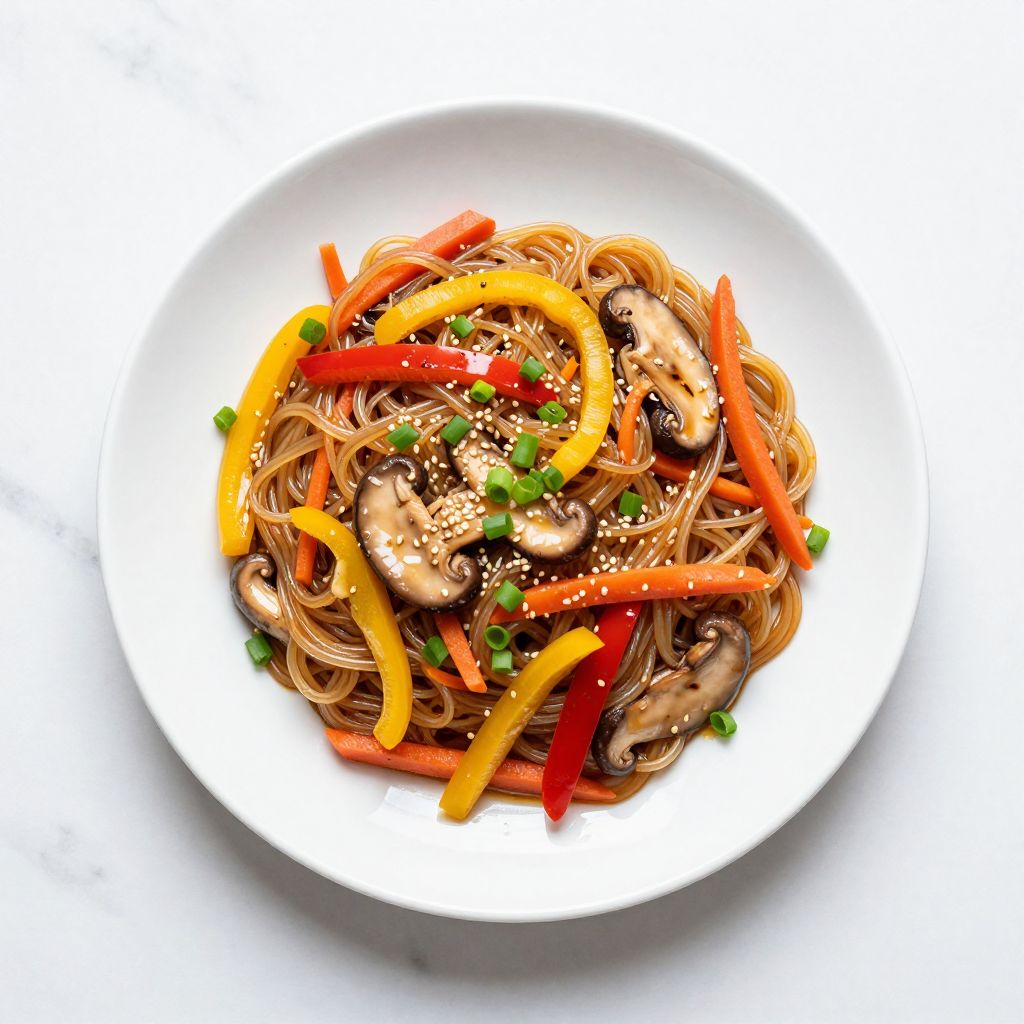
Stir-Fried Glass Noodles with Vegetables
Ingredients
Equipment
Method
- Step 1: Soak the glass noodles by placing them in hot water for 5 to 7 minutes until translucent and tender with a slight chew.
- Step 2: Drain the noodles in a colander, rinse with cool water, shake off excess, and spread on a towel to dry slightly.
- Step 3: Prepare vegetables by slicing bell peppers into thin strips, julienning carrots, chopping green onions, and slicing mushrooms.
- Step 4: Whisk together soy sauce, sesame oil, rice vinegar, honey, and red pepper flakes in a small bowl until combined.
- Step 5: Heat a wok or large skillet over high heat until smoking, add vegetable oil, and swirl to coat.
- Step 6: Add minced garlic and ginger, stir constantly for 30 seconds until fragrant.
- Step 7: Add bell peppers, carrots, and mushrooms, stir-fry for 3 to 4 minutes until tender-crisp.
- Step 8: Add the drained glass noodles and sauce, tossing for 2 to 3 minutes until noodles are heated and coated, adding water if needed.
- Step 9: Remove from heat, stir in chopped green onions, adjust seasoning with soy sauce, sesame oil, or vinegar, and serve immediately.