
The umami-rich aroma of oyster sauce simmering in a hot pan is something that transforms ordinary stir-fries and marinades into restaurant-quality dishes at home. Homemade oyster sauce beats the bottled version in flavor depth, cost, and the satisfaction of knowing exactly what went into your pantry staple.
This recipe delivers a silky, balanced sauce with authentic oyster essence without requiring any mysterious ingredients or complicated techniques. You’ll use pantry basics to create a condiment that works beautifully in Asian cooking, dipping sauces, and even Western dishes that need an umami boost.
Why You’ll Love This Recipe
Making your own oyster sauce gives you complete control over sweetness, saltiness, and depth, plus it costs a fraction of premium store-bought versions. The process takes under an hour and yields a sauce you’ll reach for constantly.
- Rich, savory umami flavor that transforms simple meals into something special
- Uses affordable, accessible ingredients you likely have on hand
- Ready in less than an hour from start to finish
- Lasts for weeks in the refrigerator, making batch cooking worthwhile
- Perfect for stir-fries, marinades, dipping sauces, and braised dishes
My Experience Making This Recipe
I first attempted homemade oyster sauce out of curiosity after spending too much on fancy bottles that never quite matched my favorite takeout. The moment that sauce hit the pan and the aroma filled my kitchen, I realized I’d stumbled onto something genuinely special.
My family noticed the difference immediately. They couldn’t quite name what made the sauce taste better, just that everything cooked with it seemed richer and more crave-worthy.
Now I make a batch monthly and keep it in a glass jar on my counter. It’s become the secret weapon in my stir-fries, and honestly, I’ve stopped buying the commercial stuff entirely.
Recipe Overview
- Recipe Name: Homemade Oyster Sauce
- Servings: Makes about 1 cup
- Prep Time: 10 minutes
- Cook Time: 30 minutes
- Total Time: 40 minutes
- Course: Condiment/Sauce
- Cuisine: Asian
- Calories per Serving: 15 calories (per tablespoon)
Equipment You Will Need
- Small saucepan
- Wooden spoon or silicone spatula
- Fine mesh strainer
- Measuring spoons and cups
- Glass jars for storage
- Whisk
Ingredients for Homemade Oyster Sauce
- Oysters, 8 ounces (fresh or canned in brine)
- Soy sauce, 1/2 cup
- Brown sugar, 3 tablespoons
- Cornstarch, 1 tablespoon
- Water, 1/4 cup
- Garlic, 2 cloves, minced
- Ginger, 1 teaspoon, grated
- Rice vinegar, 1 teaspoon
- Salt to taste
Ingredient Notes and Substitutions
- Oysters: The star ingredient that gives the sauce its signature depth and umami. If fresh oysters are unavailable, canned oysters in brine work wonderfully and cost less.
- Soy sauce: Provides saltiness and fermented complexity that balances the sweet and savory elements. Tamari works as a gluten-free swap with nearly identical results.
- Brown sugar: Adds mild sweetness that rounds out the strong flavors and prevents the sauce from tasting too salty. White sugar or honey can substitute, though they’ll shift the flavor slightly.
- Cornstarch: Creates the sauce’s signature silky thickness and helps it coat food evenly. Arrowroot powder works as a 1:1 replacement for a slightly lighter texture.
- Garlic and ginger: These aromatics add warmth and prevent the sauce from tasting one-dimensional. You can reduce either one if you prefer subtlety, or skip ginger entirely if you want pure oyster flavor.
How to Make Homemade Oyster Sauce
Step 1: Prepare Your Oysters
Drain your oysters through a fine mesh strainer, reserving the liquid (called liquor) in a bowl. If using fresh oysters, shuck them carefully over the strainer to catch all their briny juice, which contains massive flavor and some of the umami you’re after.
Step 2: Chop the Oysters
Roughly chop the drained oysters into small pieces, about the size of peas. This increases their surface area so they release more flavor into the sauce as it cooks.
Step 3: Combine Aromatics and Soy Sauce
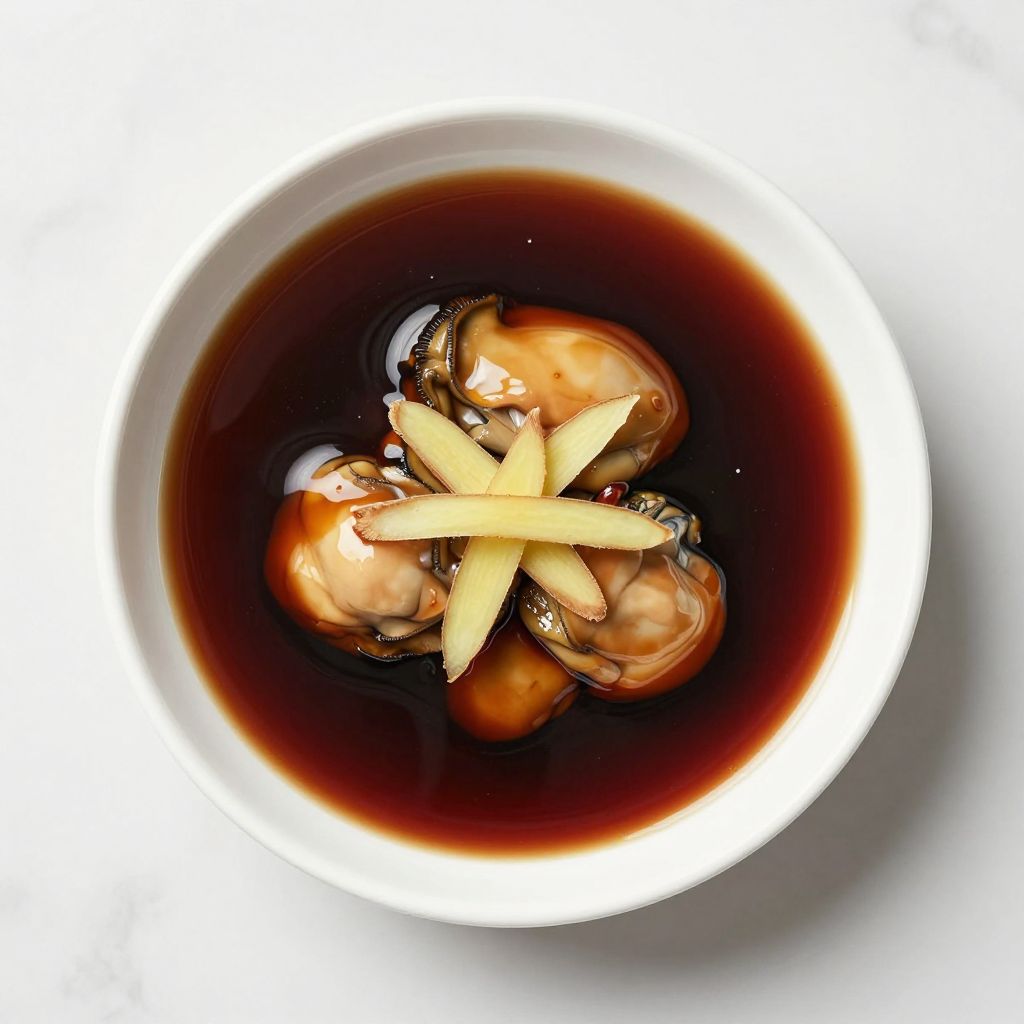
Pour the soy sauce into a small saucepan and add the minced garlic and grated ginger. Stir them together over medium heat for about 1 minute until fragrant, which toasts the aromatics slightly and mellows their sharpness.
Step 4: Add the Oysters and Their Liquid
Add the chopped oysters and reserved oyster liquid to the pan, stirring to combine. The briny liquid is liquid gold for umami, so never discard it.
Step 5: Create the Cornstarch Slurry
In a small bowl, whisk together the cornstarch and 1/4 cup water until completely smooth with no lumps. Lumps will create grainy texture in your finished sauce, so take 30 seconds to whisk this properly.
Step 6: Thicken the Sauce
Slowly pour the cornstarch slurry into the simmering sauce while whisking constantly. The sauce should begin thickening immediately, becoming glossy and clinging to your whisk.
Step 7: Add Sugar and Vinegar
Stir in the brown sugar and rice vinegar, then reduce the heat to low. The sugar dissolves and rounds out the sharp salty flavors, while the vinegar brightens everything without adding sourness.
Step 8: Simmer and Reduce
Let the sauce simmer gently for about 15 more minutes, stirring occasionally, until it thickens to a consistency slightly thinner than ketchup. The sauce will thicken a bit more as it cools, so don’t over-reduce it or you’ll end up with something too stiff.
Step 9: Strain and Season
For a silky-smooth sauce, pour everything through a fine mesh strainer into a bowl, pressing gently on the solids to extract every drop of liquid. Taste and add a pinch of salt if needed, though the soy sauce and oyster liquid likely provide plenty.
Step 10: Cool and Store
Let the sauce cool to room temperature, then transfer it to a clean glass jar. Refrigerate until ready to use; the sauce will thicken slightly more as it cools.
Pro Tip: Reserve the oyster liquid before draining the oysters, as it contains the most intense umami flavor and is essential to the sauce’s depth.
Tips for the Best Homemade Oyster Sauce
- Use fresh oysters if your budget allows, as they deliver more pronounced briny flavor than canned, though canned works beautifully too. The difference is noticeable but not deal-breaking.
- Don’t skip the straining step if you want restaurant-quality smoothness that clings to food perfectly. This five-minute extra step transforms the texture from gritty to silky.
- Simmer on low heat rather than boiling hard, which can cause the cornstarch to break down and lose its thickening power. Low, gentle heat gives you better control and a better sauce.
- Taste as you go and adjust sweetness or saltiness to your preference, adding a touch more brown sugar or soy sauce as needed. Everyone’s palate differs, so trust your own taste buds.
- Store in a glass jar rather than plastic, which can absorb the sauce’s aroma over time and make your jar smell permanently fishy. Glass keeps your sauce fresher-tasting longer.
- Make a double batch and freeze half in ice cube trays, then pop cubes out into a freezer bag for portion control. This saves time on future cooking nights.
Common Mistakes to Avoid
- Discarding the oyster liquid: This briny juice is packed with umami and saltiness, so throwing it away loses a huge part of what makes this sauce special. Always reserve and use it.
- Boiling the sauce too vigorously: High heat can break down the cornstarch and cause the sauce to thin out or become grainy. Keep it at a gentle simmer.
- Adding the cornstarch slurry too fast: Dumping it in all at once creates lumps that won’t cook out properly. Whisk slowly and steadily for a perfectly smooth sauce.
- Over-reducing the sauce: It’s tempting to cook it down thick, but remember it thickens more as it cools. Under-cook it slightly to avoid ending up with something too stiff for pouring.
- Skipping the straining step: This leaves grittiness from oyster fragments that doesn’t feel pleasant on the palate. The strainer is what separates homemade from mediocre.
Serving Suggestions
This sauce shines in stir-fries, works wonderfully as a marinade for meat and seafood, and elevates simple vegetables into something memorable. A spoonful changes everything from noodle dishes to roasted vegetables to grilled proteins.
- Drizzle over stir-fried broccoli, bok choy, or mushrooms for instant depth and umami richness
- Mix into ground beef or pork for flavorful burgers, meatballs, or dumpling filling
- Use as a glaze for grilled chicken, salmon, or pork chops in the last minute of cooking
- Stir into rice or noodles alongside scrambled eggs and cooked vegetables for a quick weeknight dinner
- Serve alongside steamed dumplings, spring rolls, or potstickers as a dipping sauce
Variations to Try
- Spicy Oyster Sauce: Add 1/2 teaspoon of red pepper flakes or a dash of hot sauce for heat that complements the umami beautifully. The spice brings out different flavor notes in the oyster base.
- Five-Spice Version: Mix in 1/4 teaspoon of Chinese five-spice powder while the sauce simmers for a warmer, slightly sweet angle. This version pairs wonderfully with pork and noodles.
- Mushroom-Oyster Sauce: Finely mince 2 ounces of dried mushrooms (shiitake or porcini) and add them to the pan with the oysters for extra umami layering. This creates an almost meaty depth.
- Lighter Version: Reduce soy sauce to 1/4 cup and increase water to 1/2 cup if you find the sauce too intense. This dilutes the saltiness without losing oyster flavor.
- Sesame Oyster Sauce: Finish with 1 teaspoon of toasted sesame oil after straining for nutty richness that pairs beautifully with Asian noodles and stir-fries. Add it at the very end to preserve its fragrant oils.
Dietary Adaptations
- Gluten-free: Use tamari or coconut aminos instead of regular soy sauce, as many soy sauces contain wheat. The flavor stays nearly identical and oyster sauce becomes safe for gluten-sensitive diets.
- Dairy-free: This recipe is already completely dairy-free since oysters and soy sauce contain no milk products. No adaptation needed.
- Vegan: Replace oysters with finely minced mushrooms (shiitake or porcini) and use vegetable stock instead of oyster liquid. The umami from mushrooms approximates the oyster flavor reasonably well.
- Low-carb/Keto: Reduce brown sugar to 1 tablespoon or replace it with monk fruit sweetener to lower carbs significantly. The sauce still tastes balanced and delicious.
Storage and Reheating
Refrigerator
Store your sauce in a clean glass jar with a tight-fitting lid in the refrigerator where it keeps for up to 3 weeks. The flavor actually deepens slightly over a week or two as ingredients meld together.
- Always use a clean spoon to scoop sauce out, never dip in twice with the same utensil
- If any mold appears on the surface, discard the entire batch
- The sauce may separate slightly on standing, which is normal; just stir well before using
Freezer
Freeze the sauce in ice cube trays, then transfer frozen cubes to a freezer bag for up to 3 months. This method gives you perfect portions for quick weeknight cooking.
- Label your freezer bag with the date so you remember how long it’s been frozen
- Thaw cubes in the refrigerator or add frozen directly to hot pans for immediate use
Reheating
Gently warm the sauce in a small saucepan over low heat, stirring occasionally, or add frozen cubes directly to your stir-fry or braising liquid. Avoid microwaving, which can cause uneven heating and slight flavor loss.
- If the sauce seems too thick after storage, thin it with a splash of water or soy sauce
- Taste before serving, as refrigeration can mute flavors slightly
Nutrition Information
| Nutrient | Amount |
|---|---|
| Calories | 15 |
| Total Fat | 0.2g |
| Saturated Fat | 0g |
| Carbohydrates | 3g |
| Fiber | 0g |
| Sugar | 2g |
| Protein | 1g |
| Sodium | 380mg |
| Cholesterol | 8mg |
Nutrition values are estimates based on a tablespoon serving size and may vary depending on exact ingredients and brand variations used.
Frequently Asked Questions
Can I make this sauce without oysters?
You can substitute mushrooms or add extra garlic and ginger, but the result won’t be true oyster sauce. The oyster liquid is what gives this condiment its signature umami punch that nothing else quite replicates.
What if I can’t find canned oysters?
Check Asian markets or seafood departments, where canned oysters are usually much cheaper than regular grocery stores. Online ordering also works if you’re willing to wait a few days for delivery.
How can I make the sauce sweeter or less salty?
Add more brown sugar for sweetness or reduce the soy sauce in your next batch if you found it too salty. Start with less and taste frequently, since you can always add more but can’t remove salt once it’s in.
Why does my sauce taste fishy rather than savory?
This usually means the oyster ratio is too high or you’re using very strong canned oysters. Balance by reducing oysters to 6 ounces in your next batch and increasing soy sauce slightly.
Can I use this sauce on non-Asian dishes?
Absolutely, this sauce works beautifully on roasted vegetables, grilled beef, mashed potatoes, and even burgers. The umami-rich flavor complements any savory dish that needs depth.
Does homemade oyster sauce taste better than store-bought?
Most people notice a cleaner, fresher taste with more pronounced oyster flavor when making it at home. You control the ingredients and avoid additives or preservatives found in commercial versions.
Final Thoughts
Making your own oyster sauce transforms how you cook, giving you a pantry staple that’s fresher, cheaper, and infinitely more satisfying than anything you’ll find in a bottle. The first time you taste the difference in a simple stir-fry, you’ll understand why this recipe is worth the minimal effort.
Give this homemade version a try and watch how it elevates your weeknight cooking with restaurant-quality depth. Your future self will thank you every time you reach for that jar on your shelf.
Want to explore more seafood-focused recipes for your kitchen? Try our seafood boil sauce recipe for another way to bring bold, briny flavors to your table, or check out our oyster dressing recipe for a completely different take on using oysters in your cooking.
Homemade Oyster Sauce
Ingredients
Equipment
Method
- Drain oysters through a fine mesh strainer, reserving the oyster liquid in a bowl.
- Roughly chop the drained oysters into pea-sized pieces.
- Combine soy sauce, minced garlic, and grated ginger in a small saucepan and cook over medium heat for 1 minute until fragrant.
- Add chopped oysters and reserved oyster liquid to the pan and stir to combine.
- In a small bowl, whisk together cornstarch and 1/4 cup water until completely smooth.
- Slowly pour the cornstarch slurry into the simmering sauce while whisking constantly until the sauce thickens and becomes glossy.
- Stir in brown sugar and rice vinegar, then reduce heat to low.
- Simmer gently for 15 minutes, stirring occasionally, until the sauce is slightly thinner than ketchup.
- Strain the sauce through a fine mesh strainer into a bowl, pressing on solids to extract all liquid, then season with salt to taste.
- Allow the sauce to cool to room temperature, transfer to a glass jar, and refrigerate; sauce will thicken further as it cools.