
There’s something almost magical about watching a pot of water transform into a rich, hearty soup through the simple act of adding stones and patience. Stone soup carries the warmth of an old folktale while delivering genuine comfort in every spoonful.
This recipe celebrates the folk wisdom that even the most humble ingredients, when combined with intention and creativity, create something nourishing and satisfying. Whether you’re feeding a crowd or just yourself, stone soup adapts beautifully to whatever vegetables you have on hand.
The beauty lies in its flexibility and the meditative rhythm of chopping, simmering, and building flavor layer by layer. What starts as a seemingly impossible broth becomes a deeply satisfying meal that tastes like it took hours, even if it didn’t.
Why You’ll Love This Recipe
Stone soup rewards creativity while keeping preparation straightforward and forgiving. It’s the kind of dish that teaches you something about cooking every single time you make it.
- Adaptable to whatever vegetables you have leftover in your kitchen
- Budget-friendly and naturally stretches across multiple servings
- Builds complex flavor through layering rather than fancy techniques
- Makes your kitchen smell incredible without any fussing
- Teaches you the fundamentals of vegetable cookery in one pot
My Experience Making This Recipe
I first made this soup on a Tuesday when my vegetable crisper drawer looked like a puzzle nobody wanted to solve. Half a zucchini, some sad carrots, and an onion that had seen better days all found their way into my pot.
Within thirty minutes, I had something I’d confidently serve to guests, which honestly surprised me. The transformation from scattered vegetables to a unified, flavorful broth felt like a small kitchen miracle.
What impressed me most was how the soup improved my intuition about flavor building. By the end, I understood why cooks have sworn by this humble formula for generations.
Recipe Overview
- Recipe Name: Stone Soup
- Servings: 6 to 8
- Prep Time: 15 minutes
- Cook Time: 35 minutes
- Total Time: 50 minutes
- Course: Soup
- Cuisine: European Folklore
- Calories per Serving: 120
Equipment You Will Need
- Large Dutch oven or heavy-bottomed soup pot
- Sharp chef’s knife
- Cutting board
- Wooden spoon for stirring
- Vegetable peeler
- Measuring cups and spoons
- Ladle for serving
- Small stone (cleaned thoroughly, optional but traditional)
Ingredients for Stone Soup
- 1 small cleaned stone (symbolic, optional)
- 2 tablespoons olive oil
- 1 large onion, diced
- 3 large carrots, cut into half-moons
- 3 medium potatoes, cut into bite-sized cubes
- 2 stalks celery, sliced
- 1 medium zucchini, diced
- 1 can diced tomatoes (14 ounces)
- 6 cups vegetable broth
- 1 teaspoon dried thyme
- 1 teaspoon dried oregano
- Salt and black pepper to taste
- 2 cloves garlic, minced
- Handful of fresh parsley for garnish
Ingredient Notes and Substitutions
- Onion: Forms the aromatic base that all other flavors build upon. Yellow onions work best for their sweetness, though red onions add earthiness if that’s what you have.
- Carrots: Bring natural sweetness and texture that grounds the soup. Parsnips offer a similar structure with a slightly nuttier flavor profile.
- Potatoes: Create body and help thicken the broth naturally without cream. Celery root or turnips provide comparable starch and earthy depth.
- Vegetable broth: Anchors all the flavors together in one cohesive liquid. Chicken broth works if that’s your preference, though it shifts the flavor slightly more savory.
- Dried herbs: Deliver consistent seasoning throughout the cooking process. Fresh herbs added at the end brighten the soup but won’t distribute as evenly.
- Tomatoes: Add acidity and umami that prevent the soup from tasting flat. Tomato paste diluted with water serves as a concentrated alternative.
How to Make Stone Soup
If you’re using a cleaned stone, place it in the bottom of your pot to honor the folktale tradition. The stone serves as a symbolic reminder that even the simplest starting point can become something wonderful.
Step 1: Place the Stone in the Pot
If you’re using a cleaned stone, place it in the bottom of your pot to honor the folktale tradition. The stone serves as a symbolic reminder that even the simplest starting point can become something wonderful.
Step 2: Heat Oil and Prepare the Aromatics
Pour olive oil into your pot over medium heat and let it warm for about one minute until it shimmers slightly. Add your diced onion and let it cook for three to four minutes, stirring occasionally, until it softens and turns translucent at the edges.
Step 3: Build the Flavor Base
Add the minced garlic to your softened onions and cook for another minute until fragrant. This quick cooking prevents the garlic from burning while allowing its flavor to infuse into the oil that coats the other vegetables you’ll add next.
Step 4: Add the Root Vegetables
Stir in your carrots and potatoes, mixing them well with the onion and garlic mixture. These sturdy vegetables need the longest cooking time, so they go in now before the more delicate ones, allowing everything to finish at the right moment.
Step 5: Pour in the Broth and Tomatoes
Add your vegetable broth and canned tomatoes with their juice, stirring to combine everything evenly. The broth should just barely cover all the vegetables; if it doesn’t, add a bit more water to ensure even cooking.
Step 6: Season and Simmer
Stir in the dried thyme and oregano, then taste the broth and add salt and pepper as needed. Bring the soup to a gentle boil, then reduce heat to medium-low and let it simmer for about fifteen minutes until the potatoes and carrots are beginning to soften.
Step 7: Add the Remaining Vegetables
Add the celery and zucchini to the pot, stirring gently to combine. These vegetables cook faster than carrots and potatoes, so they join the party later to maintain their slight firmness and keep the soup from becoming mushy.
Step 8: Finish Cooking and Taste
Let the soup simmer for another eight to ten minutes until all the vegetables are tender but still hold their shape. Taste the broth again and adjust seasoning as needed, remembering that flavors deepen slightly as the soup cools.
Step 9: Serve and Garnish
Ladle the soup into bowls and top each serving with fresh parsley. If you used a stone, fish it out before serving and tell anyone who asks that it’s made from pure folklore and determination.
Pro Tip: Add your vegetables in stages based on cooking time, not all at once, and you’ll end up with layers of flavor and textures instead of a one-note mush.
Tips for the Best Stone Soup
- Cut vegetables into roughly similar sizes so they cook evenly and finish at the same time. Unevenly sized pieces mean some get mushy while others stay crunchy.
- Don’t skip the initial caramelization of your onions and garlic; this builds the foundation that makes the whole soup taste intentional rather than watery.
- Taste as you go and adjust seasoning in small increments rather than dumping everything in at once. You can always add more salt, but you can’t take it out.
- Let the soup cool slightly before serving if you’re in a hurry; flavors continue to marry and become more distinct as everything cools a bit.
- Save vegetable scraps in your freezer and use them to make your own broth for even deeper flavor. Carrot tops, celery ends, and onion skins all contribute something valuable.
- Make a double batch and freeze half for a night when cooking feels impossible but eating well still matters.
Common Mistakes to Avoid
- Adding all vegetables at once results in some being overcooked while others stay firm. This uneven texture makes the soup feel unfinished rather than intentional.
- Skipping the herb seasoning leaves the soup tasting like boiled water with vegetables floating in it. Dried herbs need time to bloom and distribute their flavor.
- Using low-quality broth as your base sets a ceiling on how good the finished soup can taste. Even if everything else is perfect, weak broth undermines the whole dish.
- Overcrowding the pot with too many vegetables means they steam rather than cook, turning mushy and releasing their water rather than caramelizing. More vegetables than broth is a guarantee for disaster.
- Forgetting to remove the decorative stone before serving creates a rather unpleasant surprise for whoever gets that spoonful.
Serving Suggestions
Stone soup reaches its full potential when paired with something substantial on the side that lets you create your own flavor combinations. The beauty is that it welcomes almost any accompaniment without complaint.
- Serve with crusty bread and soft butter for soaking up every last drop of broth
- Top with shredded cheese and a drizzle of olive oil for richness and visual appeal
- Pair with grilled cheese sandwiches cut into strips for dipping
- Add a dollop of sour cream or yogurt to each bowl for tang and creaminess
- Serve alongside roasted vegetables that echo the soup’s flavors in a new form
Variations to Try
- Creamy Stone Soup: Stir in half a cup of heavy cream or coconut milk in the last few minutes of cooking for richness. This transforms the soup into something more luxurious while maintaining its humble personality.
- Spiced Version: Add a half teaspoon of smoked paprika and a pinch of cayenne pepper for depth and gentle heat. The spices warm everything up without taking over or making the soup spicy.
- Bean-Loaded Stone Soup: Stir in a can of white beans or chickpeas with their liquid about five minutes before serving. Beans add protein and make the soup more filling without changing its basic character.
- Green Stone Soup: Substitute summer vegetables like green beans, peas, and spinach for the heartier roots. Cook spinach added in the final minute just until it wilts to maintain its color and delicate flavor.
- Minestrone-Inspired Version: Add small pasta shapes like ditalini or elbow pasta and increase the tomato content for an Italian spin. The pasta absorbs broth and turns the soup into a more complete one-bowl meal.
Dietary Adaptations
- Gluten-Free: This recipe is naturally gluten-free, but serve with gluten-free bread if offering any grain on the side. No substitutions needed for the soup itself.
- Dairy-Free: The base recipe contains no dairy, so it’s already dairy-free as written. If desired, use coconut milk instead of cream for a creamy variation.
- Vegan/Vegetarian: Stone soup is naturally vegetarian and vegan since it relies on vegetable broth and vegetables. No modifications needed for either dietary preference.
- Low-Carb/Keto: Reduce potatoes to just one small one and increase low-carb vegetables like zucchini, celery, and leafy greens. The soup becomes lighter but trades some body for reduced carbohydrate content.
Storage and Reheating
Refrigerator
Stone soup keeps beautifully in the refrigerator for up to four days in an airtight container. The vegetables soften further and flavors deepen as everything sits together.
- Let the soup cool to room temperature before refrigerating to prevent temperature fluctuations in your fridge
- Stir gently when reheating to distribute any separated liquids back into the vegetables
- Add fresh parsley or a squeeze of lemon juice when reheating to brighten the flavors
Freezer
Frozen stone soup lasts up to three months and actually makes future meals incredibly convenient. Freeze it in individual portions so you can thaw only what you need.
- Cool the soup completely before freezing to prevent ice crystal formation that breaks down texture
- Leave a half-inch of space at the top of containers since liquids expand as they freeze
- Label containers with the date so you remember how long they’ve been frozen
Reheating
Thaw frozen soup in the refrigerator overnight, then reheat gently on the stovetop over medium heat. Avoid rapid heating, which can break down the vegetables further and make them mushy.
- Stir occasionally as the soup heats to ensure even warming throughout
- Add a splash of broth or water if the soup seems too thick after refrigeration or freezing
- Taste and adjust seasoning after reheating since flavors can flatten slightly
Nutrition Information
| Nutrient | Amount |
|---|---|
| Calories | 120 |
| Total Fat | 4 grams |
| Saturated Fat | 0.5 grams |
| Carbohydrates | 18 grams |
| Fiber | 3 grams |
| Sugar | 4 grams |
| Protein | 3 grams |
| Sodium | 680 milligrams |
| Cholesterol | 0 milligrams |
These values are estimates based on standard ingredient sizes and may vary depending on your specific brands and preparation methods. If you need precise nutritional information for dietary reasons, consult a nutritionist or use an online calculator with your exact ingredients.
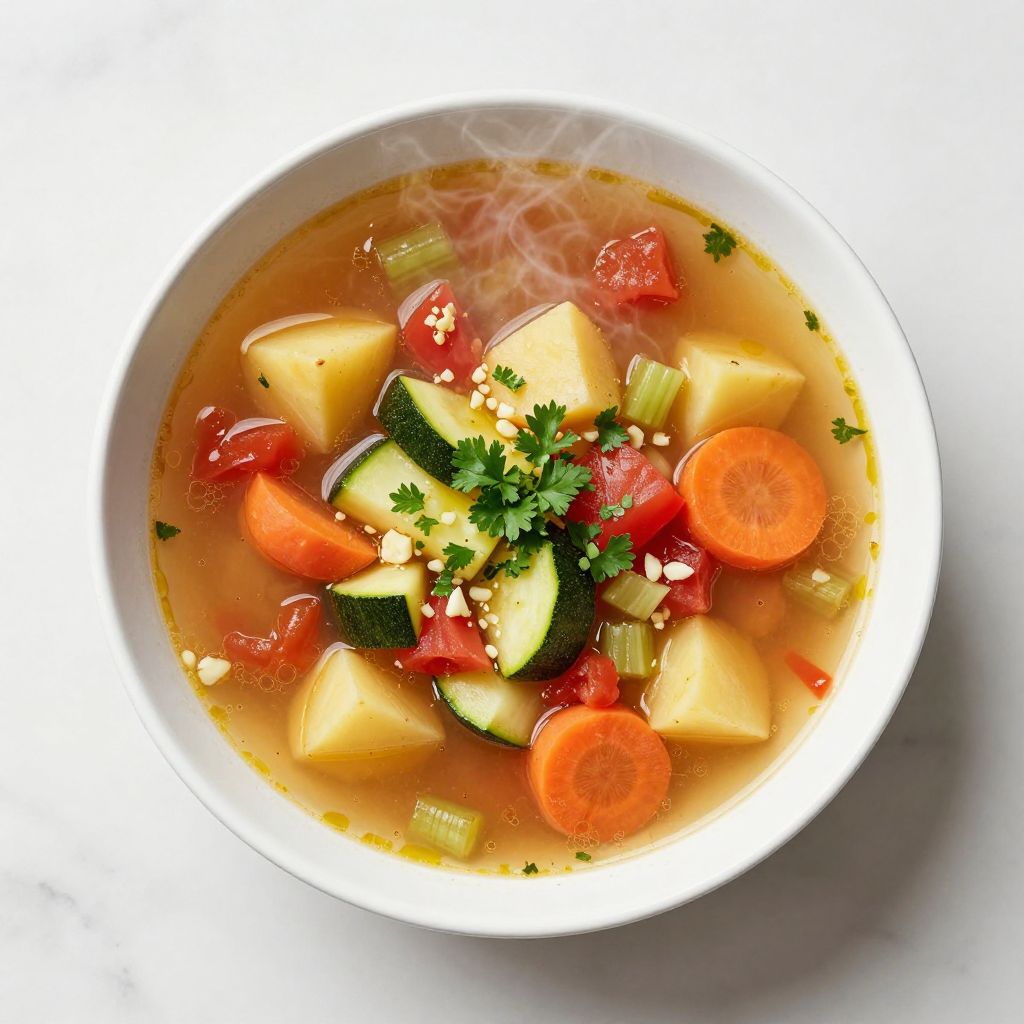
Stone Soup
Ingredients
Equipment
Method
- Place the cleaned stone in the bottom of a large pot (optional) as a nod to the folktale tradition.
- Heat olive oil in the pot over medium heat for about 1 minute until shimmering.
- Add the diced onion and cook for 3–4 minutes, stirring occasionally, until translucent.
- Stir in the minced garlic and cook for 1 minute until fragrant.
- Add the carrots and potatoes, stirring to coat with the onion and garlic mixture.
- Pour in the vegetable broth and diced tomatoes with their juice; bring to a gentle boil.
- Stir in the dried thyme and dried oregano, season with salt and black pepper to taste, then reduce heat to medium-low and simmer for 15 minutes.
- Add the sliced celery and diced zucchini and simmer for an additional 8–10 minutes until all vegetables are tender.
- Remove the stone if used, ladle soup into bowls, and garnish with fresh parsley before serving.
Notes
Frequently Asked Questions
Can I use chicken broth instead of vegetable broth?
Absolutely, and it won’t hurt anything at all. Your soup shifts toward a more savory profile, and the chicken broth adds a slight richness that vegetable broth doesn’t bring.
What if I don’t have fresh vegetables and need to use frozen ones?
Frozen vegetables work beautifully in this soup, though they release more water since freezing breaks down their cell structure. Add them later in cooking or use slightly less broth to compensate.
How long can I make this soup ahead of time?
You can prep all your vegetables the morning of and store them in the refrigerator, then assemble and cook the soup at dinner time. Making the full batch one day and serving it the next works perfectly.
Why is my soup watery instead of having a rich broth?
This usually happens when you skip the initial caramelization of your onions and garlic or when you add too many vegetables relative to broth. Focus on building flavor at the beginning, and remember that a 3-to-1 vegetable-to-broth ratio is about right.
Is there really a stone supposed to go in the soup?
The stone is purely symbolic and traditional to the folktale, not necessary for the actual cooking. If you use one, make sure it’s thoroughly cleaned and use it only for presentation before serving.
Final Thoughts
Stone soup teaches us that cooking doesn’t require fancy equipment or complicated techniques to create something genuinely delicious. What matters most is intention and respect for simple ingredients layered with care.
This recipe is your template, not a set of prison rules, so treat it as a launching point for whatever your kitchen has on hand. Make it once as written, then make it yours by adapting it to the seasons and the vegetables that call to you.
If you enjoyed learning about stone soup, explore more comforting recipes that feed both body and spirit. Check out our sourdough stuffing recipe and cowboy baked beans recipe for more wholesome dishes that bring people to the table.