
The first time I tasted homemade gochujang sauce, I understood why Korean families have kept this condiment on their tables for generations. This gochujang sauce is a perfect balance of heat, sweetness, and umami that transforms everything it touches, from grilled meats to roasted vegetables to simple rice bowls.
Making it at home takes just 10 minutes and costs a fraction of what you’d pay for bottled versions. The magic lies in understanding how a few quality ingredients work together to create something far more complex and delicious than the sum of its parts.
Why You’ll Love This Recipe
This sauce delivers restaurant-quality flavor with minimal effort and pantry staples you likely already own.
- Ready in under 10 minutes with no cooking required
- Naturally gluten-free when using tamari instead of soy sauce
- Works as a marinade, dipping sauce, spread, or condiment
- Stores for weeks in the refrigerator
- Customizable heat level to match your preferences
My Experience Making This Recipe
The first batch I made was almost by accident when I ran out of store-bought gochujang paste and had a tube sitting in my pantry. I whisked it with some honey and garlic, and within minutes had something better than anything I could buy.
My family immediately requested it on everything that week. My kids loved it on grilled chicken, my partner drizzled it over roasted broccoli, and I found myself spooning it straight from the jar at 11 p.m. (no judgment here).
The best part? I’ve made this sauce at least 30 times since that first attempt, and it never disappoints. The flavor deepens slightly when chilled, so make it ahead if you can.
Recipe Overview
- Recipe Name: Gochujang Sauce
- Servings: Makes approximately 1 cup
- Prep Time: 8 minutes
- Cook Time: 0 minutes
- Total Time: 8 minutes
- Course: Condiment, Sauce
- Cuisine: Korean
- Calories per Serving: 45 calories (per 2-tablespoon serving)
Equipment You Will Need
- Small mixing bowl
- Whisk or fork
- Measuring spoons and cups
- Garlic press or mincer
- Spoon for stirring
- Glass jar for storage
Ingredients for Gochujang Sauce
- Gochujang paste: 1/2 cup (Korean red chili paste)
- Honey: 3 tablespoons
- Rice vinegar: 2 tablespoons
- Soy sauce: 1 tablespoon
- Garlic: 2 cloves, minced
- Sesame oil: 1 teaspoon
- Water: 2 to 4 tablespoons (for consistency)
- Sesame seeds: 1/2 teaspoon (optional, for garnish)
Ingredient Notes and Substitutions
- Gochujang paste: This fermented red chili paste is the foundation and brings authentic Korean heat and depth. If unavailable, mix equal parts sriracha and miso paste, though the flavor will be slightly different.
- Honey: It balances the heat and adds natural sweetness that rounds out the sauce. Agave nectar or maple syrup works as a 1:1 substitute with similar results.
- Rice vinegar: It adds bright acidity that cuts through richness and prevents the sauce from tasting one-dimensional. Regular white vinegar is stronger; use half the amount and adjust to taste.
- Soy sauce: It contributes umami and saltiness that enhances all flavors in the sauce. Tamari provides a gluten-free alternative with virtually identical taste.
- Sesame oil: This nutty oil adds warmth and complexity that you cannot replicate. Avoid cooking with it; drizzle it in at the end for best flavor.
- Garlic: Fresh garlic provides sharp, clean notes that brighten the sauce beautifully. Garlic powder works in a pinch (use 1/4 teaspoon), though fresh is vastly superior.
How to Make Gochujang Sauce
Step 1: Gather Your Ingredients
Assemble all your ingredients in one spot before you begin mixing. This prevents you from frantically searching for the sesame oil halfway through.
Step 2: Measure the Gochujang Paste
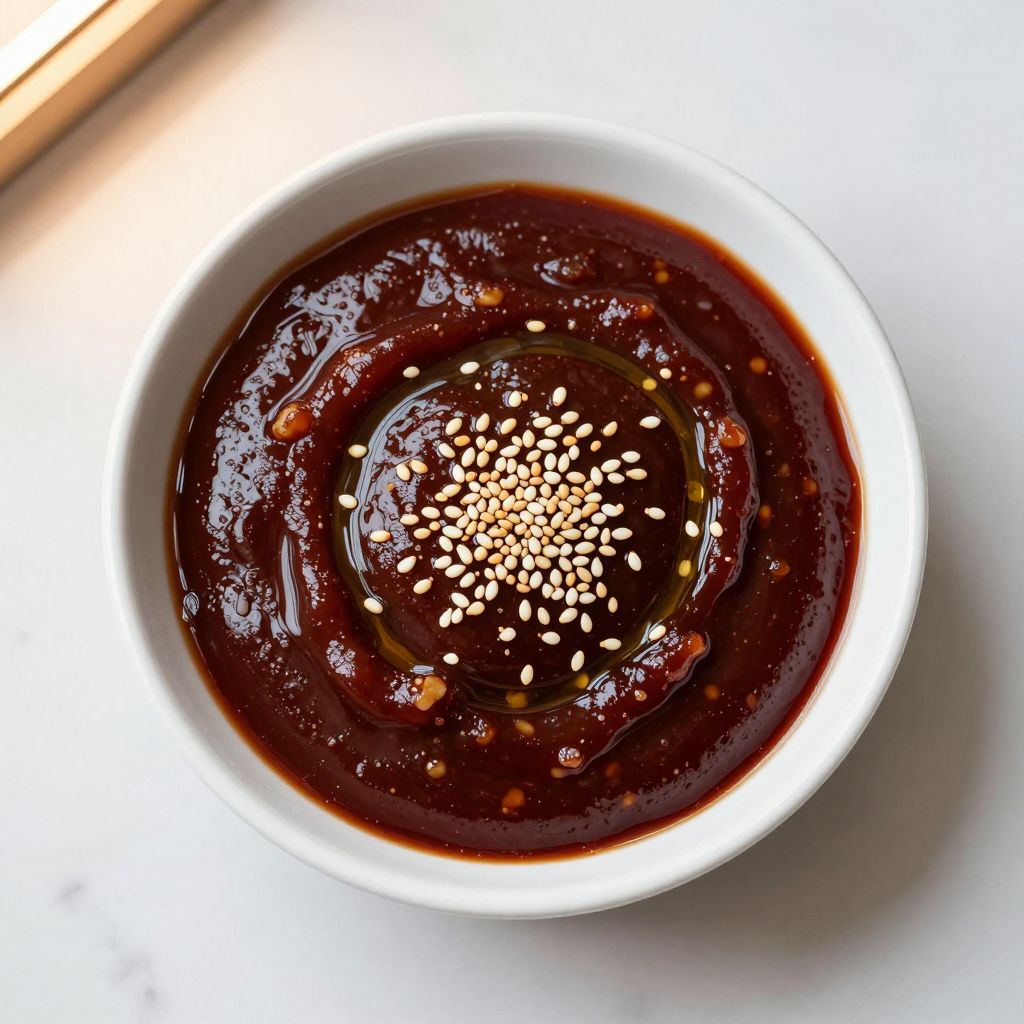
Spoon 1/2 cup of gochujang paste into your mixing bowl. The paste should be thick and burgundy red, with a rich fermented aroma.
Step 3: Add the Honey
Pour 3 tablespoons of honey directly into the bowl with the gochujang. Honey dissolves more easily when it sits on top of the warm paste, so you will need less whisking.
Step 4: Include the Rice Vinegar and Soy Sauce
Add 2 tablespoons of rice vinegar and 1 tablespoon of soy sauce to the bowl. These ingredients work together to create brightness and depth, preventing the sauce from tasting flat.
Step 5: Mince and Add the Garlic
Mince 2 fresh garlic cloves finely and add them to the mixture. Fresh garlic pieces should be small enough to distribute evenly throughout the sauce.
Step 6: Whisk Everything Together
Using a whisk or fork, beat the mixture vigorously for about 2 minutes until the gochujang paste breaks down and all ingredients combine smoothly. The sauce should look relatively uniform, though small paste flecks are normal and desirable.
Step 7: Add the Sesame Oil
Drizzle in 1 teaspoon of sesame oil and whisk to incorporate. Sesame oil burns easily, so always add it last and use it sparingly for the best nutty flavor.
Step 8: Adjust the Consistency
Add water 1 tablespoon at a time until you reach your desired consistency. The sauce should be thick enough to cling to food but thin enough to drizzle or spread without excessive effort.
Step 9: Taste and Adjust
Taste a small spoonful and decide if you need more heat, sweetness, or tanginess. Add extra gochujang for heat, honey for sweetness, or rice vinegar for brightness, adjusting just 1/2 teaspoon at a time.
Pro Tip: Make this sauce one day ahead and refrigerate it overnight so the flavors meld together and become more cohesive and balanced.
Tips for the Best Gochujang Sauce
- Use a good quality gochujang paste from an Asian market rather than a substitute, as the fermentation and complexity cannot be matched by other chili pastes.
- Always add water gradually instead of all at once, preventing you from making the sauce too thin and diluting the flavor.
- Taste frequently while adjusting seasonings, as your palate gets accustomed to heat quickly and you might over-correct.
- Store the finished sauce in a glass jar with a tight-fitting lid to prevent the sesame oil from oxidizing and turning rancid.
- Make a double batch on Sunday and use it throughout the week on proteins, vegetables, and grain bowls for effortless flavor.
- Warm the sauce gently in a small saucepan over low heat if you prefer it warm, stirring constantly to prevent the honey from burning.
Common Mistakes to Avoid
- Adding water too quickly dilutes the sauce and mutes the bold flavors that make this condiment special; add it slowly and taste after each addition.
- Skipping the rice vinegar makes the sauce taste heavy and one-dimensional without the brightness that cuts through richness in dishes.
- Using jarred minced garlic instead of fresh garlic creates a mushy texture and slightly off flavor that does not blend properly with the paste.
- Heating the sesame oil burns it and turns it bitter, destroying the nutty notes that add depth and complexity.
- Making the sauce too thick prevents it from coating foods evenly and makes spreading or drizzling nearly impossible without forcing it.
Serving Suggestions
This sauce works beautifully with grilled proteins, roasted vegetables, and grain bowls, but honestly tastes phenomenal on almost anything savory. Use it as a dipping sauce for spring rolls, a marinade for chicken or beef, or a spread on sandwiches.
- Brush onto grilled chicken, pork, or beef during the last 2 minutes of cooking
- Mix into mayo for an Asian-inspired sandwich spread with serious kick
- Drizzle over roasted broccoli, cauliflower, or Brussels sprouts straight from the oven
- Serve alongside crispy spring rolls, dumplings, or shrimp tempura as a dipping sauce
- Stir into mayo or Greek yogurt for a creamy sauce to top grain bowls with grilled vegetables
Variations to Try
- Spicy Peanut Version: Add 2 tablespoons of peanut butter and 1 tablespoon of lime juice for an Asian-inspired peanut sauce with serious heat and richness.
- Maple Gochujang Sauce: Swap honey for pure maple syrup for a deeper, more complex sweetness that pairs beautifully with grilled pork or roasted squash.
- Creamy Gochujang: Whisk in 3 tablespoons of mayo or sour cream to create a thick, creamy sauce perfect for topping vegetables or serving as a burger condiment.
- Ginger-Forward Version: Add 1 tablespoon of freshly grated ginger for warming spice and a fresh zing that elevates the sauce when served with seafood or light noodle dishes.
- Coconut Milk Gochujang: Thin the sauce with coconut milk instead of water for a creamy, slightly sweet version that works beautifully in noodle dishes and curry bowls.
Dietary Adaptations
- Gluten-Free: Use tamari instead of regular soy sauce, which contains wheat and gluten; the flavor remains virtually identical with no texture changes.
- Dairy-Free: This recipe is naturally dairy-free as written, though any creamy variations should use dairy-free mayo or coconut cream.
- Vegan: Swap honey for agave nectar or maple syrup to make this sauce fully vegan without sacrificing sweetness or balance.
- Low-Carb/Keto: Replace honey with monk fruit sweetener or erythritol, using about half the amount and adjusting to taste for your carb goals.
Storage and Reheating
Refrigerator
Store the finished sauce in an airtight glass jar and refrigerate for up to 3 weeks. The flavors actually improve over the first few days as ingredients meld together.
- Keep the jar away from direct sunlight to prevent the color from fading
- Stir before each use, as sesame oil may separate and float on top
- Ensure the lid is sealed tightly to prevent oxidation and moisture loss
Freezer
This sauce freezes well for up to 3 months in a freezer-safe container or ice cube tray. Frozen portions thaw quickly and taste nearly identical to fresh sauce.
- Freeze in ice cube trays for easy single-serving portions
- Label the container with the date so you remember when it was made
- Thaw overnight in the refrigerator rather than at room temperature
Reheating
Warm the sauce gently over low heat in a small saucepan, stirring constantly to prevent sticking or burning. Never microwave the sauce, as it heats unevenly and can scorch the honey.
- Heat only what you need rather than reheating the entire batch
- Keep the heat on low to protect the delicate sesame oil flavor
- Serve warm or at room temperature depending on your preference
Nutrition Information
| Nutrient | Amount |
|---|---|
| Calories | 45 |
| Total Fat | 1.5g |
| Saturated Fat | 0.2g |
| Carbohydrates | 8g |
| Fiber | 0.5g |
| Sugar | 6g |
| Protein | 1g |
| Sodium | 420mg |
| Cholesterol | 0mg |
Nutritional values are approximate and based on a 2-tablespoon serving size. Actual values vary based on specific brand ingredients and any adjustments made to the recipe.
Frequently Asked Questions
Can I Make This Sauce Without Gochujang Paste?
You can substitute equal parts sriracha and miso paste, though the flavor loses some of the fermented complexity that makes gochujang special. The result tastes good but different, so source gochujang from an Asian market if possible.
How Far in Advance Can I Make This Sauce?
Make this sauce up to 5 days ahead and store it in the refrigerator in an airtight jar. The flavors actually deepen and improve over the first 2 to 3 days.
Is This Sauce Spicy?
Yes, it has moderate heat from the gochujang paste, though the honey and sweetness balance it out nicely. Reduce the gochujang to 1/4 cup if you prefer milder heat, or add extra if you love spicy food.
Can I Use Bottled Minced Garlic Instead of Fresh?
Fresh garlic is far superior and creates a smoother texture when whisked into the sauce. Bottled garlic tends to remain chunky and adds a slightly metallic aftertaste.
What If My Sauce Is Too Thick?
Add water 1 tablespoon at a time and whisk until you reach the desired consistency. You can always add more water, but you cannot remove it, so add gradually.
Does This Sauce Work as a Marinade?
Absolutely, and it works beautifully on grilled meats and vegetables. Use it as a thick coating, marinate for at least 30 minutes, then grill or bake as desired.
Final Thoughts
Making your own gochujang sauce takes less time than waiting for takeout and tastes infinitely better than anything bottled. Once you realize how easy this is, you will never buy pre-made condiments again.
Keep a jar in your refrigerator at all times and use it on everything from eggs at breakfast to leftover chicken at dinner. Your meals deserve this kind of bold, complex flavor, and now you know exactly how to create it at home.
Ready to expand your Korean condiment collection? Try making ssamjang, a textured dipping sauce that pairs beautifully with grilled meats, or explore General Tso sauce for another Asian-inspired condiment that transforms simple ingredients into something extraordinary.
Gochujang Sauce
Ingredients
Equipment
Method
- Gather all ingredients and equipment before starting to ensure a smooth process.
- Spoon 1/2 cup gochujang paste into the mixing bowl.
- Add 3 tablespoons honey to the paste.
- Pour in 2 tablespoons rice vinegar and 1 tablespoon soy sauce.
- Mince 2 cloves of garlic and add to the bowl.
- Whisk the mixture vigorously for about 2 minutes until the sauce is smooth.
- Drizzle in 1 teaspoon sesame oil and whisk to combine.
- Add water 1 tablespoon at a time, whisking after each addition, until the desired consistency is reached.
- Taste the sauce and adjust heat, sweetness, or acidity by adding up to 1/2 teaspoon of gochujang, honey, or rice vinegar as needed.
- Transfer the sauce to a glass storage jar, seal tightly, and refrigerate for at least 30 minutes before serving to allow flavors to meld.