The aroma of sage and prosciutto sizzling in butter hits you before the chicken even touches the pan, and you know you’re about to create something genuinely special. Chicken saltimbocca feels like restaurant-quality cooking, yet it comes together faster than you’d expect on a weeknight.
This Italian classic pairs tender chicken breasts with the salty punch of prosciutto and the earthy brightness of fresh sage, all bound together with a silky white wine sauce. It’s the kind of dish that impresses guests without keeping you in the kitchen for hours.
Why You’ll Love This Recipe
This dish delivers restaurant results in under 30 minutes, making it perfect for busy weeknights or when you want to feel fancy without the stress.
- Quick cooking time with impressive presentation
- Simple ingredient list that creates complex, layered flavors
- Works beautifully for both weeknight dinners and special occasions
- Naturally pairs well with pasta, risotto, or vegetables
- The prosciutto keeps the chicken incredibly moist and tender
My Experience Making This Recipe
I first made saltimbocca during a dinner party when I wanted something elegant but didn’t have time to fuss. The combination of crispy prosciutto, tender chicken, and that silky pan sauce had everyone asking for the recipe before dessert.
What surprised me most was how foolproof it actually is. Even on nights when I’m rushing, the technique works reliably because you’re really just searing properly, then finishing with a quick sauce.
My family now requests this more than any other chicken dish I make. The sage flavor comes through so clearly, especially when you use fresh leaves from the garden.
Recipe Overview
- Recipe Name: Chicken Saltimbocca
- Servings: 4 servings
- Prep Time: 15 minutes
- Cook Time: 12 minutes
- Total Time: 27 minutes
- Course: Main Dish
- Cuisine: Italian
- Calories per Serving: 285
Equipment You Will Need
- Large skillet or sauté pan
- Meat mallet or rolling pin
- Parchment paper or cutting board
- Tongs
- Wooden spoon
- Measuring cups and spoons
- Knife for slicing
Ingredients for Chicken Saltimbocca
- 4 boneless, skinless chicken breasts, about 6 ounces each
- 8 slices prosciutto
- 8 fresh sage leaves
- 2 tablespoons butter
- 2 tablespoons olive oil
- 1/2 cup dry white wine
- 1/2 cup chicken broth
- Salt and black pepper to taste
- 1 tablespoon fresh lemon juice
- Optional: 2 tablespoons capers for serving
Ingredient Notes and Substitutions
- Chicken breasts: Thin cutlets work best because they cook evenly and quickly. If you can’t find pre-pounded cutlets, pound them yourself to about 1/4 inch thickness for even cooking. You can substitute with thin veal cutlets for a more traditional Italian approach, though cooking time remains the same.
- Prosciutto: The saltiness and delicate texture of prosciutto is essential to the dish’s character. If unavailable, thinly sliced good-quality ham works as a substitute, though it will taste less refined and require slightly more seasoning.
- Fresh sage: Sage provides the signature herbal note that defines this dish. Dried sage can substitute in a pinch at half the quantity, but fresh sage delivers the bright flavor this recipe needs.
- White wine: A crisp dry white wine like Pinot Grigio or Vermentino works best for the sauce. You can replace it with chicken broth and a tablespoon of lemon juice if avoiding alcohol, though you’ll lose some acidity and depth.
- Butter and olive oil: The combination creates the right temperature and flavor balance for searing. Using oil alone works, but butter adds richness to the sauce and helps achieve better browning on the prosciutto.
How to Make Chicken Saltimbocca
Step 1: Prepare the Chicken Breasts
Place each chicken breast between two pieces of parchment paper and pound with a meat mallet until it reaches about 1/4 inch thickness. Even thickness ensures all portions cook at the same rate, preventing dry edges while the center remains undercooked.
Step 2: Season the Chicken
Season both sides of each pounded chicken breast lightly with salt and black pepper. Hold back on salt slightly since the prosciutto will add saltiness to the final dish.
Step 3: Layer the Prosciutto and Sage
Lay two slices of prosciutto side by side on top of each chicken breast, overlapping them slightly to cover most of the surface. Place one fresh sage leaf in the center of each breast, pressing it gently to help it stick to the prosciutto.
Step 4: Secure the Toppings
Roll up each chicken breast from one end, tucking in the sides so the prosciutto wraps around and encloses the chicken completely. This sealing prevents the prosciutto from unraveling during cooking and creates a more cohesive package.
Step 5: Heat Your Cooking Fat
Place a large skillet over medium-high heat and add the butter and olive oil together. Wait for the butter to melt completely and the mixture to shimmer, which signals the pan has reached the right temperature for searing.
Step 6: Sear the Saltimbocca
Carefully place the chicken rolls seam-side down into the hot skillet, spacing them so they don’t touch. Let them sear undisturbed for about 4 to 5 minutes until the prosciutto develops a golden, slightly crispy exterior.
Step 7: Cook the Other Side
Flip each piece gently using tongs and cook for another 3 to 4 minutes on the second side until the chicken is cooked through. The internal temperature should reach 165 degrees Fahrenheit when measured with a meat thermometer in the thickest part.
Step 8: Make the Pan Sauce
Remove the chicken to a warm plate, then pour the white wine into the same skillet, scraping up any browned bits stuck to the bottom with a wooden spoon. These browned bits, called fond, carry tremendous flavor and dissolve into the sauce as you stir.
Step 9: Finish the Sauce
Add the chicken broth and lemon juice to the skillet and let it simmer for about 2 minutes until the sauce reduces slightly and thickens just a bit. The sauce should taste balanced between savory, acidic, and rich.
Step 10: Plate and Serve
Return the chicken to the skillet for just 30 seconds to coat with the warm sauce, then plate each piece. Drizzle the pan sauce over the top and sprinkle with capers if desired for extra briny flavor.
Pro Tip: Don’t skip the step of pounding the chicken evenly. Uniform thickness is the difference between perfectly cooked chicken and pieces with dry edges and an undercooked center.
Tips for the Best Chicken Saltimbocca
- Use fresh sage whenever possible. Dried sage tastes dusty and won’t give you the bright herbal notes that make this dish sing.
- Don’t overcrowd the skillet; if your pan is too full, the chicken steams instead of sears, and the prosciutto won’t get crispy.
- Let the chicken develop a proper crust before flipping. Patience for those first 4-5 minutes creates the textural contrast that makes the dish special.
- Keep the wine and broth cold before adding to the hot pan. The temperature drop helps the pan sauce emulsify and become silky.
- Pound the chicken breasts gently and evenly rather than aggressively, which can tear the meat and create thin spots that dry out quickly.
- Roll the chicken tightly so it holds together during cooking and the prosciutto stays in contact with the meat rather than peeling away.
Common Mistakes to Avoid
- Pounding unevenly: This causes some parts to overcook while others remain undercooked. Aim for consistent 1/4 inch thickness across the entire breast.
- Skipping the sear: A proper golden sear on the prosciutto creates texture and flavor that steaming never achieves. Don’t lower the heat or rush this step.
- Using dried sage: While convenient, dried sage tastes nothing like fresh and can overpower the dish with a musty flavor. Fresh sage is essential.
- Overcrowding the pan: Too many pieces at once causes steam buildup, which prevents browning and makes the prosciutto soft rather than crispy.
- Using cheap prosciutto: Thin, quality prosciutto cooks beautifully and adds elegance; thick, low-quality versions become chewy and can overpower the chicken.
Serving Suggestions
Chicken saltimbocca pairs beautifully with simple sides that let the chicken and its sage-prosciutto topping shine as the star.
- Creamy risotto, especially risotto ai funghi or a simple butter and Parmesan version
- Al dente pasta tossed with olive oil, garlic, and fresh parsley
- Roasted asparagus or green beans with lemon and garlic
- A fresh arugula salad dressed with lemon vinaigrette
- Creamy polenta topped with the pan sauce from the chicken
Variations to Try
- Saltimbocca with mozzarella: Add a thin slice of fresh mozzarella under the sage leaf before rolling for extra creaminess and richness.
- Veal version: Substitute thin veal cutlets for a more traditional Italian preparation that cooks in the same time with virtually identical technique.
- Marsala sauce option: Replace the white wine with Marsala wine for a deeper, slightly sweeter sauce that’s equally authentic.
- Sun-dried tomato variation: Spread a thin layer of sun-dried tomato paste on the chicken before adding prosciutto and sage for Mediterranean flair.
- Capers and anchovy: Add a tablespoon of chopped capers and a small anchovy fillet under the sage for more complex, briny flavor.
Dietary Adaptations
- Gluten-free: This recipe is naturally gluten-free as written. Just verify that your chicken broth and wine contain no gluten additives.
- Dairy-free: Substitute the butter with extra virgin olive oil in equal amount, though you’ll lose some richness in both browning and sauce.
- Low-carb or keto: This recipe fits perfectly into low-carb diets as is. Serve with cauliflower rice or zucchini noodles instead of traditional pasta sides.
- Vegetarian adaptation: This isn’t easily vegetarian because prosciutto is central to the dish’s identity, though you could substitute with thinly sliced mushrooms for umami.
Storage and Reheating
Refrigerator
Store leftover chicken saltimbocca in an airtight container for up to three days. Keep the chicken and sauce together to prevent the chicken from drying out.
- Let cool to room temperature before refrigerating
- Store in shallow containers for faster, more even cooling
Freezer
Chicken saltimbocca freezes well for up to two months. Freeze it in a single layer first, then transfer to a freezer bag to save space.
- Lay chicken on a baking sheet and freeze for two hours before bagging
- Label with the date for easy tracking
Reheating
Reheat gently in a skillet over medium heat with a splash of water or broth to restore the sauce consistency. Microwaving works but can toughen the chicken, so avoid it when possible.
- Heat for about 3-4 minutes in a skillet until warmed through
- Add a tablespoon of water per piece to prevent drying
Nutrition Information
| Nutrient | Amount |
|---|---|
| Calories | 285 |
| Total Fat | 14g |
| Saturated Fat | 5g |
| Carbohydrates | 1g |
| Fiber | 0g |
| Sugar | 0g |
| Protein | 38g |
| Sodium | 620mg |
| Cholesterol | 105mg |
Nutritional values are approximate and calculated per serving of four. Actual nutrition may vary based on specific brands and preparation methods used.
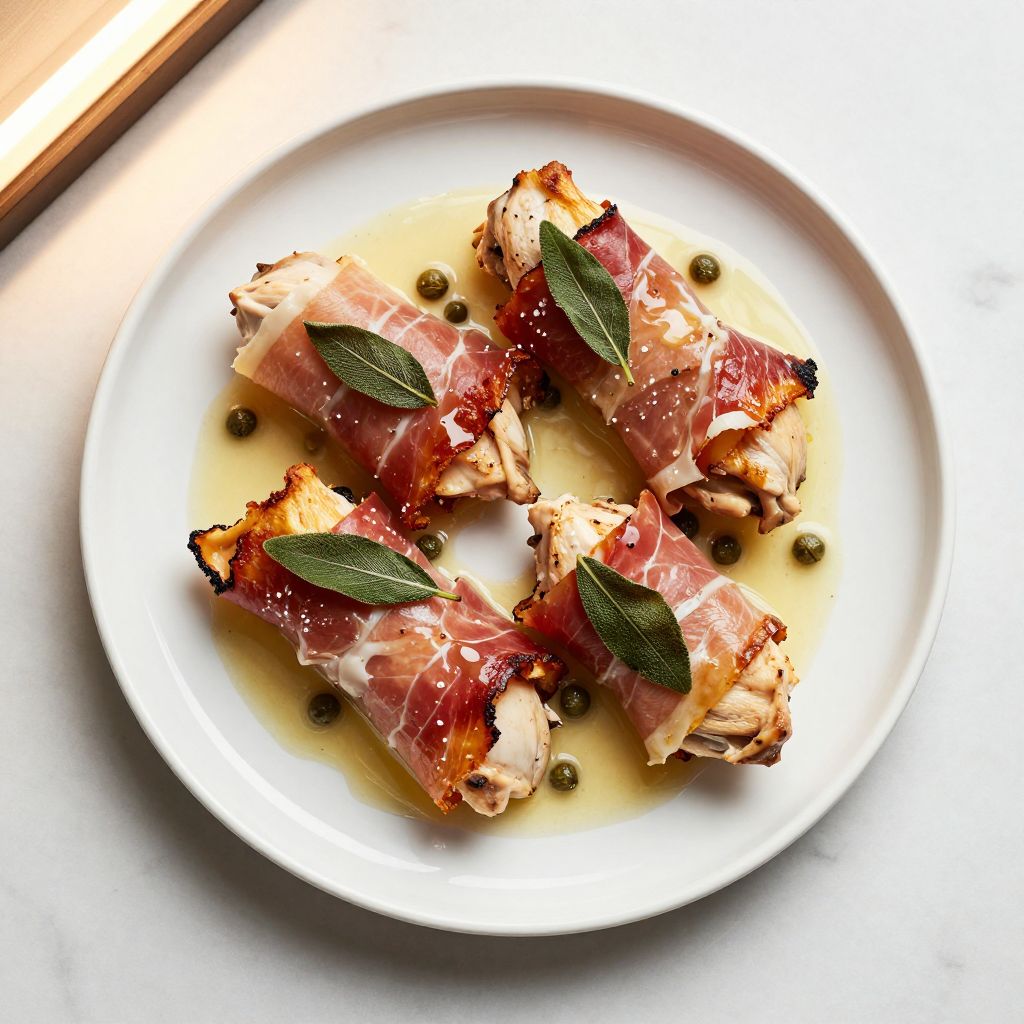
Chicken Saltimbocca
Ingredients
Equipment
Method
- Place each chicken breast between two pieces of parchment paper and pound with a meat mallet until it reaches about 1/4 inch thickness.
- Season both sides of each pounded chicken breast lightly with salt and black pepper, keeping salt minimal since prosciutto adds saltiness.
- Lay two slices of prosciutto side by side on top of each chicken breast, overlapping slightly, then place one fresh sage leaf in the center and press gently.
- Roll up each chicken breast from one end, tucking in the sides so the prosciutto wraps around and encloses the chicken completely.
- Heat a large skillet over medium-high heat and add butter and olive oil; wait until the butter melts and the mixture shimmers.
- Place chicken rolls seam-side down into the hot skillet and sear undisturbed for 4 to 5 minutes until the prosciutto is golden and slightly crispy.
- Using tongs, flip each piece and cook for another 3 to 4 minutes until the internal temperature reaches 165°F.
- Remove the chicken to a warm plate, pour in the white wine, and scrape up any browned bits from the pan with a wooden spoon.
- Add chicken broth and lemon juice to the skillet and simmer for about 2 minutes until the sauce reduces slightly and thickens.
- Return the chicken to the skillet for 30 seconds to coat with sauce, then plate each piece, drizzle with pan sauce, and sprinkle capers if desired.
Notes
Frequently Asked Questions
Can I make this ahead of time?
You can assemble the rolled chicken several hours ahead, cover it with plastic wrap, and refrigerate until cooking time. This actually helps the ingredients meld together slightly before cooking.
What if I don’t have fresh sage?
Fresh sage is really the star here, so it’s worth seeking out at the grocery store. If you must substitute, use half the amount of dried sage, but know the flavor profile will shift noticeably.
Can I pound the chicken the night before?
Yes, you can pound and wrap the chicken a day ahead. Cover it tightly with plastic wrap and refrigerate, then cook directly from the cold pan without thawing.
Why is my chicken tough?
Tough chicken usually means it cooked too long or the pan temperature was too low initially. Sear hot and fast, then finish the cooking gently in the sauce.
Can I use chicken thighs instead of breasts?
Chicken thighs are thicker and more forgiving, but saltimbocca traditionally uses thin, quick-cooking cutlets. Thighs would need pounding to about 1/4 inch and would cook slightly longer, around 6 minutes per side.
Is there a substitute for white wine in the sauce?
You can use chicken broth mixed with a tablespoon of lemon juice or white vinegar, though the acidity and depth will differ slightly. Avoid cooking wine which contains added salt.
Final Thoughts
Chicken saltimbocca proves that you don’t need hours or complicated techniques to create restaurant-quality meals at home. The combination of just a few simple ingredients creates something far greater than the sum of its parts.
Make this recipe soon, and you’ll understand why it’s been a beloved Italian classic for generations. Your family and guests will be equally impressed.
If you enjoyed this recipe, explore more chicken preparations like our chicken cutlet recipe for weeknight dinners or try a chicken thigh marinade recipe for deeper, more forgiving flavors.