
Picture this: a fresh bowl of homemade Basil Pesto, vibrant green and bursting with flavor, ready to elevate your pasta or sandwich. This recipe is special because it’s not just quick to whip up, but it also skips the expensive pine nuts, making it budget-friendly without sacrificing taste.
With its delightful blend of fresh basil, garlic, and cheese, this pesto is a versatile gem in any kitchen. Whether you’re drizzling it over grilled vegetables or tossing it with your favorite pasta, let’s dive into how to create this delicious sauce.
Why You’ll Love This Recipe
This Basil Pesto Recipe Without Pine Nuts is a must-try for several reasons:
- Quick and easy to prepare, perfect for busy weeknights.
- Budget-friendly by omitting pricey pine nuts.
- Versatile and pairs well with many dishes.
- Fresh ingredients create a vibrant flavor.
- Can be stored for later use, making meal prep a breeze.
My Experience Making This Recipe
The first time I made this pesto, my kitchen filled with the irresistible aroma of fresh basil and garlic. I remember tossing it with some warm pasta and feeling like a gourmet chef in my own home.
Each bite was a burst of flavor, and my family couldn’t get enough. It’s a recipe that has quickly become a staple in our household, and I’m excited to share it with you.
Recipe Overview
- Recipe Name: Basil Pesto Recipe Without Pine Nuts
- Servings: 4
- Prep Time: 10 minutes
- Cook Time: 0 minutes
- Total Time: 10 minutes
- Course: Sauce
- Cuisine: Italian
- Calories per Serving: 150
Equipment You Will Need
- Food processor or blender
- Measuring cups and spoons
- Spatula
- Serving bowl
Ingredients for Basil Pesto Recipe Without Pine Nuts
- 2 cups fresh basil leaves, packed
- 2 cloves garlic, peeled
- 1/2 cup grated Parmesan cheese
- 1/2 cup extra virgin olive oil
- 1/4 teaspoon salt
- 1/4 teaspoon black pepper
Ingredient Notes and Substitutions
- Fresh basil: This is the star ingredient, giving the pesto its vibrant flavor. You can substitute with spinach for a milder taste.
- Garlic: Adds a punch of flavor; roasted garlic can be used for a sweeter, less sharp taste.
- Parmesan cheese: Provides a salty, nutty flavor. Nutritional yeast can be a dairy-free alternative.
- Extra virgin olive oil: Enhances the richness of the pesto. Any mild oil can work in a pinch, but the flavor may vary.
- Salt and pepper: These seasonings round out the flavors. Adjust them to your taste preference.
How to Make Basil Pesto Recipe Without Pine Nuts
Step 1: Prepare the Ingredients
Wash the fresh basil leaves thoroughly and pat them dry. Clean basil ensures no grit in your pesto.
Step 2: Combine Basil and Garlic
In your food processor, add the basil leaves and garlic cloves. This allows the flavors to blend right from the start.
Step 3: Add the Cheese
Next, add the grated Parmesan cheese to the food processor. The cheese will contribute to the creamy texture of the pesto.
Step 4: Blend the Ingredients
Pulse the basil, garlic, and cheese until coarsely chopped. This creates a nice base for the pesto.
Step 5: Slowly Add Olive Oil
With the processor running, slowly drizzle in the olive oil. This helps emulsify the ingredients, creating a smooth sauce.
Step 6: Season the Pesto
Add the salt and black pepper to the mixture. These seasonings will enhance the overall flavor profile.
Step 7: Blend Until Smooth
Continue blending until the pesto reaches your desired consistency. A smoother pesto is great for pasta, while a chunkier version can be used as a spread.
Step 8: Taste and Adjust
Finally, taste your pesto and adjust the seasoning if necessary. This step ensures your personal touch shines through.
Pro Tip: For a creamier texture, consider adding a splash of water or more olive oil as needed.
Tips for the Best Basil Pesto
- Use fresh basil for the best flavor; wilted leaves won’t do justice.
- Don’t skip the cheese; it adds essential depth and creaminess.
- Pulse the mixture gradually to control the texture.
- Store any leftover pesto in an airtight container, pressing plastic wrap against the surface to avoid browning.
- Experiment with adding other herbs, like parsley or arugula, for a unique twist.
Common Mistakes to Avoid
- Using stale or dry basil, which can lead to a less vibrant flavor.
- Over-blending, resulting in a paste rather than a pesto with character.
- Not adjusting seasoning; tasting is key to a balanced flavor.
- Skipping the cheese; it is crucial for both flavor and texture.
Serving Suggestions
This pesto pairs beautifully with various dishes, making it a versatile addition to your cooking repertoire.
- Mix it with cooked pasta for a quick meal.
- Spread it on sandwiches or wraps for added flavor.
- Drizzle over grilled vegetables for a fresh side.
- Use as a dip for bread or crackers.
Variations to Try
- Substitute half the basil with spinach for a milder flavor.
- Add walnuts or sunflower seeds for a different nutty profile.
- Incorporate lemon juice for a zesty kick.
- Try different hard cheeses like Pecorino Romano for a sharper taste.
- Use roasted garlic instead of raw for a sweeter, caramelized flavor.
Dietary Adaptations
- Gluten-free: This recipe is naturally gluten-free.
- Dairy-free: Substitute cheese with nutritional yeast for a vegan option.
- Vegan/vegetarian: Use nutritional yeast instead of Parmesan for a vegan take.
- Low-carb/keto: Enjoy as is, or serve with spiralized vegetables.
Storage and Reheating
Refrigerator
Store your pesto in an airtight container in the fridge.
- It will last for up to one week.
Freezer
For longer storage, freeze in ice cube trays.
- This makes it easy to thaw just the right amount.
Reheating
Simply thaw in the fridge overnight or use a microwave at low power.
- Reheat gently to maintain the fresh flavor.
Nutrition Information
| Nutrient | Amount |
|---|---|
| Calories | 150 |
| Total Fat | 15g |
| Saturated Fat | 3g |
| Carbohydrates | 2g |
| Fiber | 1g |
| Sugar | 0g |
| Protein | 3g |
| Sodium | 200mg |
| Cholesterol | 10mg |
This nutritional data is for reference only and may vary based on ingredient brands and measurements.
Frequently Asked Questions
Can I use other nuts instead of pine nuts?
Absolutely! You can substitute with walnuts, sunflower seeds, or even cashews for a unique flavor.
Can I make this pesto ahead of time?
Yes, it keeps well in the fridge for up to a week or can be frozen for several months.
How should I store leftover pesto?
Keep it in an airtight container with plastic wrap pressed against the surface to minimize browning.
Why is my pesto too thick?
If your pesto is thicker than desired, add a little olive oil or water to reach your preferred consistency.
Can I make this recipe without cheese?
You can, but the flavor and texture will change. Try adding nutritional yeast for a cheesy taste without dairy.
Final Thoughts
Making your own basil pesto is a rewarding experience that brings fresh flavors straight to your table. With this recipe, you can enjoy a delicious sauce that’s simple to prepare and perfect for various meals.
So gather your ingredients and give this Basil Pesto Recipe Without Pine Nuts a try. You won’t regret it! And if you’re looking for more pesto ideas, check out my version of pesto without pine nuts or a unique pistachio pesto recipe.
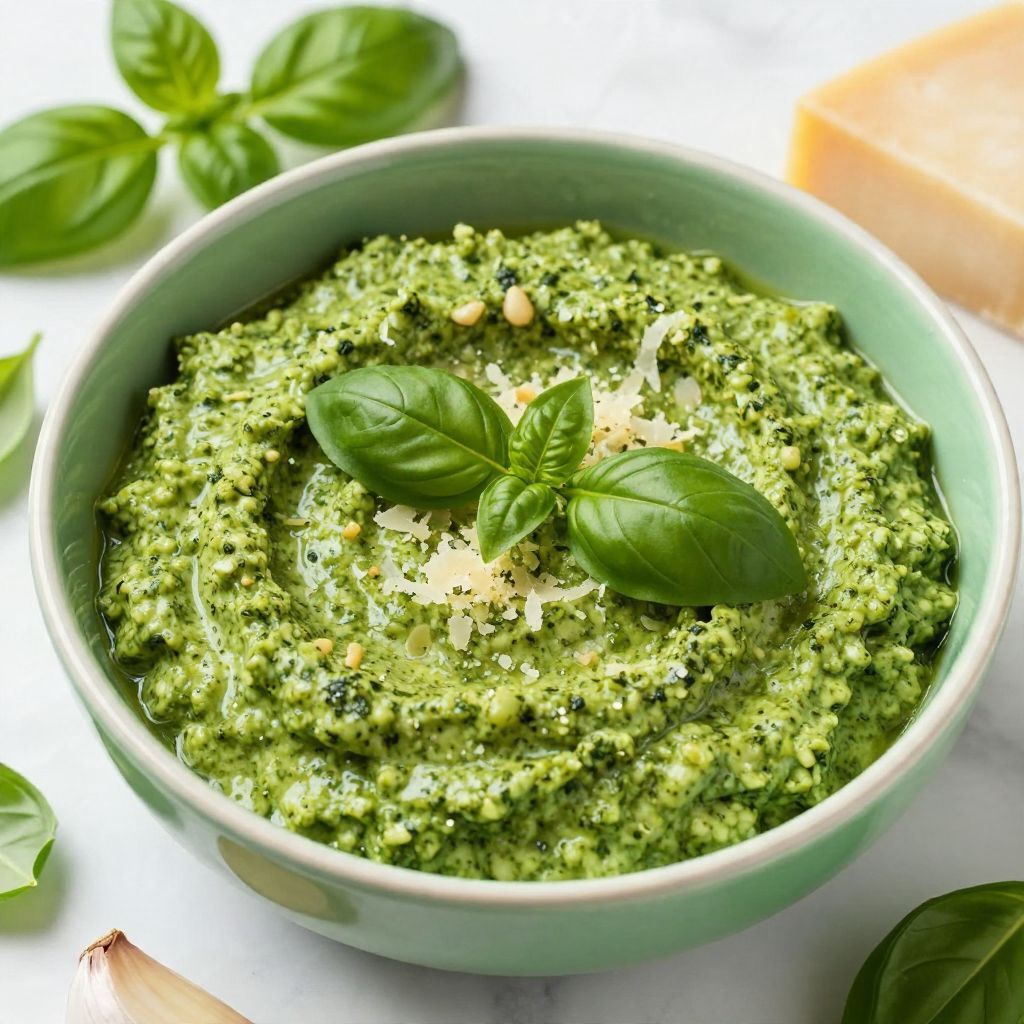
Basil Pesto Recipe Without Pine Nuts
Ingredients
Equipment
Method
- Wash the fresh basil leaves thoroughly and pat them dry.
- In your food processor, add the basil leaves and garlic cloves.
- Add the grated Parmesan cheese to the food processor.
- Pulse the basil, garlic, and cheese until coarsely chopped.
- With the processor running, slowly drizzle in the olive oil.
- Add the salt and black pepper to the mixture.
- Continue blending until the pesto reaches your desired consistency.
- Taste your pesto and adjust the seasoning if necessary.