
There’s something magical about the aroma of fermenting vegetables wafting through your kitchen, isn’t there? This Kimchi Recipe Vegan is not just a staple of Korean cuisine; it’s a flavorful explosion of umami that adds a punch to any dish, whether you’re enjoying it as a side or adding it to your favorite meals.
This recipe is special because it’s packed with vibrant flavors and probiotics, making it a healthy addition to your diet. Plus, it’s versatile, easy to adjust to your taste, and a great way to use up leftover vegetables.
Ready to get started? Let’s dive into the ingredients and the steps!
Why You’ll Love This Recipe
This vegan kimchi is a delightful way to spice up your meals. It brings a unique flavor profile and health benefits.
- Rich and complex flavors that brighten any dish.
- Simple fermentation process that anyone can master.
- Perfectly spicy with a hint of sweetness.
- Great for meal prep and lasts for weeks.
- Customizable to suit your taste preferences.
My Experience Making This Recipe
When I first tried making kimchi at home, I was amazed at how simple it was. The vibrant colors of the vegetables and the scent of the spices filled my kitchen with excitement.
Each batch I create seems to have its own personality, and I love experimenting with different ingredients. Friends and family rave about my homemade kimchi, and I can’t get enough of sharing it.
Recipe Overview
- Recipe Name: Kimchi Recipe Vegan
- Servings: 6
- Prep Time: 30 minutes
- Cook Time: 0 minutes (fermentation time varies)
- Total Time: 30 minutes plus 3-7 days fermenting
- Course: Side Dish
- Cuisine: Korean
- Calories per Serving: 30
Equipment You Will Need
- Large mixing bowl
- Glass jar with a lid (quart size recommended)
- Gloves (optional, but recommended for handling spicy ingredients)
- Knife and cutting board
- Measuring cups and spoons
Ingredients for Kimchi Recipe Vegan
- 1 medium napa cabbage, chopped
- 1/4 cup sea salt
- 4 cups water
- 1 carrot, julienned
- 4 green onions, chopped
- 4 cloves garlic, minced
- 1 tablespoon ginger, grated
- 2-3 tablespoons gochugaru (Korean red pepper flakes, adjust to taste)
- 2 tablespoons soy sauce
- 1 tablespoon maple syrup or sugar
- 1 tablespoon rice vinegar
Ingredient Notes and Substitutions
- Napa cabbage: This is traditional for kimchi, providing a nice crunch. You can substitute with green cabbage if needed.
- Sea salt: It helps in drawing out moisture for fermentation. Table salt can be used, but avoid iodized salt.
- Gochugaru: This gives kimchi its signature heat and flavor. You can use red pepper flakes if you can’t find it.
- Soy sauce: Adds depth to the flavor. Tamari can be used for a gluten-free version.
- Maple syrup: This balances the spice. Brown sugar can be a good alternative.
How to Make Kimchi Recipe Vegan
Step 1: Prepare the Cabbage
Cut the napa cabbage into quarters and then chop it into bite-sized pieces. This makes it easier to pack into your jar and ensures even fermentation.
Step 2: Salt the Cabbage
In a large bowl, dissolve the sea salt in the water and add the chopped cabbage. Let it sit for about 1 to 2 hours, tossing occasionally, to help the cabbage soften and release water.
Step 3: Rinse and Drain
After soaking, rinse the cabbage under cold water to remove excess salt. Drain well to avoid overly salty kimchi.
Step 4: Prepare the Spice Mixture
In a separate bowl, combine the minced garlic, grated ginger, gochugaru, soy sauce, maple syrup, and rice vinegar. This mixture will give your kimchi a robust flavor.
Step 5: Combine Ingredients
Add the rinsed cabbage, julienned carrot, and chopped green onions to the spice mixture. Use your hands (gloves recommended) to mix everything until well coated.
Step 6: Pack the Jar
Transfer the kimchi mixture into a clean glass jar, pressing down firmly to eliminate air pockets. Leave some headspace at the top for fermentation gases.
Step 7: Ferment the Kimchi
Seal the jar loosely to allow gases to escape. Let it sit at room temperature for 3 to 7 days, tasting periodically until it reaches your desired tanginess.
Step 8: Store in the Refrigerator
Once fermented, seal the jar tightly and store it in the refrigerator. This slows down fermentation and enhances the flavors over time.
Pro Tip: Always taste your kimchi as it ferments; this way, you can catch it at your preferred sourness!
Tips for the Best Kimchi Recipe Vegan
- Use fresh ingredients for the best flavor; wilted veggies won’t give the same crunch.
- Adjust the spice level according to your taste; you can always add more gochugaru.
- Ferment in a cool, dark place to avoid over-fermenting.
- Experiment with different vegetables like radishes or cucumbers.
- Don’t skip rinsing the cabbage; it prevents overly salty kimchi.
Common Mistakes to Avoid
- Not salting the cabbage enough: This can lead to mushy kimchi.
- Skipping the fermentation stage: It’s essential for flavor development.
- Using too much water: This can dilute the flavors and lead to a soggy texture.
- Ignoring the headspace in the jar: Too little space can cause overflow during fermentation.
Serving Suggestions
Kimchi is incredibly versatile and can be enjoyed in numerous ways. Here are some ideas to get you started:
- Serve it as a side dish with rice and protein.
- Add it to stir-fries for an extra kick.
- Use it in tacos or wraps for a fusion twist.
- Top your avocado toast with kimchi for a delightful crunch.
- Mix it into soups for added flavor and texture.
Variations to Try
- Add sliced radishes for an extra crunch and peppery flavor.
- Incorporate fruits like pears or apples for a sweet twist.
- Try using different types of chili flakes for varying heat levels.
- Experiment with herbs like cilantro for a fresh note.
- Include fermented fish sauce for a non-vegan version with depth.
Dietary Adaptations
- Gluten-free: Use tamari instead of soy sauce.
- Dairy-free: This recipe is naturally dairy-free.
- Vegan: All ingredients are plant-based.
- Low-carb/keto: Reduce the amount of maple syrup or omit it altogether.
Storage and Reheating
Refrigerator
Kimchi can be stored in the refrigerator for several weeks. Make sure the jar is sealed tightly.
- Store in airtight glass jars.
- Keep it away from strong-smelling foods to avoid flavor transfer.
Freezer
While not ideal for fresh kimchi, you can freeze it for later use. Just know the texture may change.
- Portion it into freezer bags for easy use.
- Label bags with the date for freshness tracking.
Reheating
There’s no need to reheat kimchi; enjoy it cold or at room temperature. It maintains its flavor and crunch better that way.
- Add it directly to hot dishes without cooking it.
- Mix it into rice or noodle bowls just before serving.
Nutrition Information
| Nutrient | Amount |
|---|---|
| Calories | 30 |
| Total Fat | 0g |
| Saturated Fat | 0g |
| Carbohydrates | 7g |
| Fiber | 2g |
| Sugar | 2g |
| Protein | 2g |
| Sodium | 300mg |
| Cholesterol | 0mg |
Nutrition values are approximate and can vary based on specific ingredients used.
Frequently Asked Questions
Can I make kimchi without gochugaru?
Yes, you can use any red pepper flakes, but the flavor will differ from traditional kimchi.
How long does kimchi last?
Homemade kimchi can last in the fridge for several weeks, but its flavor will continue to develop.
Can I make this recipe ahead of time?
Absolutely! Kimchi improves with age, so making it a week in advance can enhance its flavor.
What if my kimchi is too salty?
If it’s too salty, you can mix in some fresh vegetables to balance the flavors.
Can I use other vegetables in kimchi?
Definitely! Feel free to experiment with radishes, cucumbers, or even leafy greens.
Final Thoughts
Making your own kimchi is a rewarding experience that fills your kitchen with delightful aromas. With this simple recipe, you can enjoy the incredible flavors of homemade kimchi anytime.
So, roll up your sleeves and give it a try; you might just find yourself hooked! And if you’re looking for more delicious recipes, check out this Napa Cabbage Recipe or learn how to make Gochujang Sauce.
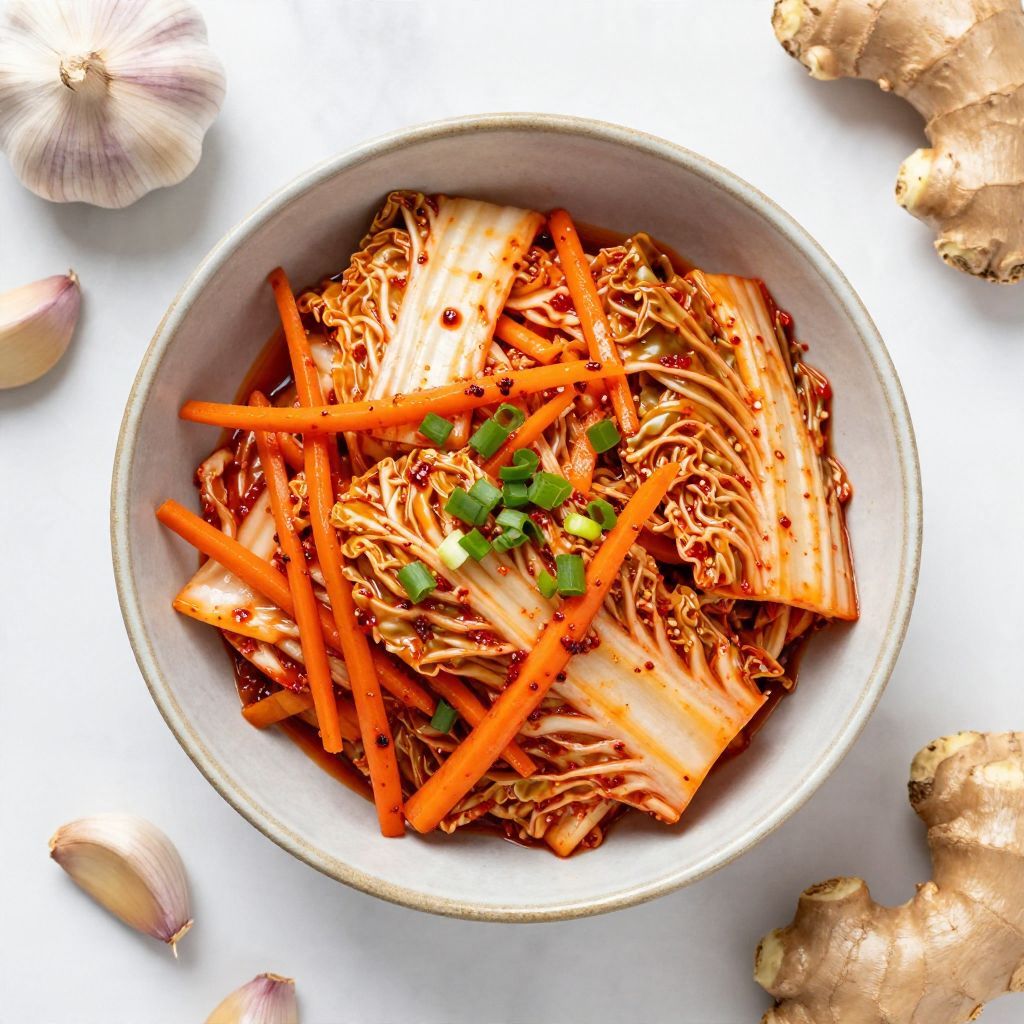
Kimchi Recipe Vegan
Ingredients
Equipment
Method
- Cut the napa cabbage into quarters and then chop it into bite-sized pieces.
- In a large bowl, dissolve the sea salt in the water and add the chopped cabbage. Let it sit for about 1 to 2 hours, tossing occasionally.
- After soaking, rinse the cabbage under cold water to remove excess salt. Drain well.
- In a separate bowl, combine the minced garlic, grated ginger, gochugaru, soy sauce, maple syrup, and rice vinegar.
- Add the rinsed cabbage, julienned carrot, and chopped green onions to the spice mixture. Mix everything well.
- Transfer the kimchi mixture into a clean glass jar, pressing down firmly to eliminate air pockets.
- Seal the jar loosely to allow gases to escape. Let it sit at room temperature for 3 to 7 days.
- Once fermented, seal the jar tightly and store it in the refrigerator.