
The smell of a golden, crispy pizza rustica emerging from the oven is pure magic, especially when you realize it came from your own kitchen. This Italian masterpiece is a savory pie wrapped in buttery pastry that’s loaded with cured meats, cheeses, and eggs, making it a showstopper for brunch, lunch, or a casual dinner.
What makes this recipe special is how it transforms simple ingredients into something that feels fancy but tastes honestly comforting. The combination of crispy pastry, tender filling, and that signature hard-boiled egg slice running through the center creates texture and flavor that single-crust pizzas simply cannot match.
If you’ve never made pizza rustica before, you’re about to discover why this Neapolitan classic has survived centuries. Let’s get you started with everything you need to make this stunning pie from scratch.
Why You’ll Love This Recipe
Pizza rustica is a complete meal in one impressive package, combining pastry, protein, and cheese in perfect harmony. The buttery crust bakes to a golden finish while the filling stays juicy and flavorful, making every slice satisfying.
- Stunning presentation that looks restaurant-quality but comes together at home
- Can be made ahead and reheated, perfect for meal prep or entertaining
- Naturally gluten-free adaptable with the right flour substitution
- Travels well, making it ideal for picnics, potlucks, or packed lunches
- Impressive enough to serve guests yet straightforward enough for weeknight cooking
My Experience Making This Recipe
The first time I made pizza rustica, I was nervous about the pastry, but it came together faster than I expected. The moment I cracked open that hot pie and saw the egg perfectly centered in the filling, I knew this recipe was a keeper.
My family demolished two slices each before asking if I could make it again the following weekend. The combination of salty cured meats and creamy cheese with that buttery crust created genuine excitement at the dinner table, which doesn’t happen with every recipe.
Now I make it regularly, and I’ve learned that the key is not rushing the assembly and using quality ingredients. The filling stays moist, the pastry stays crispy, and somehow it tastes even better the next day when the flavors have melded together.
Recipe Overview
- Recipe Name: Pizza Rustica
- Servings: 8 slices
- Prep Time: 30 minutes
- Cook Time: 45 minutes
- Total Time: 1 hour 15 minutes
- Course: Main Course or Brunch
- Cuisine: Italian
- Calories per Serving: 480
Equipment You Will Need
- 9-inch round cake pan or springform pan
- Medium mixing bowl
- Large mixing bowl
- Measuring cups and spoons
- Sharp knife for slicing
- Rolling pin
- Small pot for boiling eggs
- Baking sheet
- Oven thermometer (optional but helpful)
Ingredients for Pizza Rustica
For the Pastry
- 3 cups all-purpose flour
- 1 teaspoon salt
- 1 cup cold butter, cubed
- 1 egg
- 4 to 6 tablespoons ice water
- 1 tablespoon white vinegar
For the Filling
- 8 ounces whole milk ricotta cheese
- 8 ounces mozzarella cheese, shredded
- 4 ounces Pecorino Romano cheese, grated
- 1/2 pound salami, diced small
- 1/4 pound capicola or ham, diced small
- 1/4 pound mortadella, diced small
- 4 large eggs, hard-boiled and sliced
- Black pepper to taste
- 1 egg yolk mixed with 1 tablespoon water for egg wash
Ingredient Notes and Substitutions
- Ricotta provides the creamy base that keeps the filling from being dry. Substitute with whole milk mascarpone if ricotta is unavailable, though the texture will be slightly richer.
- Pecorino Romano brings salty, sharp flavor that defines pizza rustica. Substitute with Parmigiano-Reggiano if you prefer a milder taste, but increase the amount slightly.
- The combination of three cured meats creates complex flavor and texture. Substitute with any Italian deli meats you enjoy, like spicy soppressata, guanciale, or prosciutto.
- Cold butter in the pastry creates steam pockets that make the crust flaky. Use vegetable shortening or lard as a substitute, though butter delivers superior flavor.
- Hard-boiled eggs add visual appeal and protein. Substitute with cooked sausage crumbles if you prefer, though you’ll lose the signature spiral appearance when sliced.
How to Make Pizza Rustica
Step 1: Make the Pastry Dough
Combine flour and salt in a large bowl, then cut in the cold butter using a pastry cutter or your fingertips until the mixture resembles coarse breadcrumbs. Cold butter creates those flaky layers you’re after, so work quickly to keep it chilled.
In a small bowl, whisk together the egg, vinegar, and 4 tablespoons of ice water. Pour this mixture into the flour and gently mix until the dough just comes together, adding more water only if needed to bring it to a shaggy mass.
Step 2: Chill the Dough
Form the dough into a flat disk, wrap it in plastic wrap, and refrigerate for at least 30 minutes. Chilled dough is easier to roll out and bakes up flakier, so don’t skip this step.
Step 3: Boil the Eggs
Place eggs in a small pot, cover with cold water, bring to a boil, then remove from heat and let sit for 10 minutes. Transfer to an ice bath, then peel and slice them into thin rounds when cool.
Step 4: Prepare the Filling
In a large bowl, combine ricotta, mozzarella, and Pecorino Romano cheese, mixing gently until blended. Add the diced salami, capicola, and mortadella, then season with black pepper and mix until evenly distributed.
Step 5: Roll Out the Pastry
Remove the dough from the refrigerator and divide it into two pieces, one slightly larger than the other. On a lightly floured surface, roll the larger piece into a circle about 12 inches in diameter and 1/8 inch thick.
Transfer this circle to your cake pan, letting the excess hang over the edges. This will become your bottom crust and sides.
Step 6: Layer the Filling and Eggs
Spread half of the meat and cheese mixture over the pastry in an even layer. Arrange the sliced hard-boiled eggs in a single layer on top, creating that signature spiral appearance when the pie is sliced.
Top with the remaining meat and cheese filling, smoothing it gently. The layering ensures every slice gets egg and filling in the right proportions.
Step 7: Assemble the Top Crust
Roll out the second piece of dough to about 10 inches in diameter. Brush the edges of the filling with a light coating of the egg wash, then carefully place the top crust over the filling.
Fold the overhanging bottom crust up and over the top crust, then crimp the edges with a fork to seal. Brush the entire top with egg wash and cut a few small vents to allow steam to escape during baking.
Step 8: Bake the Pizza Rustica
Preheat your oven to 375 degrees Fahrenheit and place the pie on a baking sheet. Bake for 45 to 50 minutes until the pastry is deep golden brown and a knife inserted into the center meets little resistance from the filling.
The baking time depends on your oven, so start checking at 40 minutes if your oven runs hot. The pie should smell rich and meaty when done.
Step 9: Cool Before Slicing
Remove the pie from the oven and let it rest for at least 10 minutes before slicing. This cooling time lets the filling set slightly so slices hold together cleanly without falling apart.
Pro Tip: Make your pastry dough the day before and refrigerate it overnight for maximum flakiness and easier handling on baking day.
Tips for the Best Pizza Rustica
- Keep all ingredients cold while making the pastry, especially the butter and water. Cold ingredients create steam that makes the crust light and flaky rather than dense.
- Don’t overmix the cheese filling, as this can make the texture grainy. Gentle folding and mixing preserves the creamy consistency of the ricotta.
- Dice the cured meats into small, uniform pieces so they distribute evenly throughout the pie. Large chunks create uneven bites and can be difficult to slice.
- Egg wash creates that beautiful golden shine and helps seal the crust edges. Apply it only to the top and edges, not the bottom, so the base stays crispy.
- Let the baked pie cool slightly before unmolding to prevent the pastry from cracking. Five to ten minutes is enough time for the structure to set without the filling getting cold.
- If the edges are browning too fast, tent the top loosely with aluminum foil for the last 15 minutes of baking. Every oven has hot spots, so watch for this and adjust accordingly.
Common Mistakes to Avoid
- Using warm butter in the pastry makes the dough greasy and heavy rather than flaky. The cold butter must stay separate in the flour to create those desirable steam pockets.
- Skipping the egg layer is a missed opportunity for visual drama and extra protein. The sliced eggs are what make pizza rustica unmistakably itself.
- Overfilling the pie causes the filling to spill out during baking and makes slicing messy. Stick to the amount specified and resist the urge to add extra meat and cheese.
- Slicing before the pie cools properly results in a crumbly mess. Give it at least 10 minutes to set so the filling stays in place and slices hold their shape.
- Using low-quality cured meats creates bland filling that tastes one-dimensional. Splurge on Italian imports from a good deli counter, and the difference is immediately obvious.
Serving Suggestions
Pizza rustica is hearty enough to stand alone but pairs beautifully with simple sides that don’t compete for attention. Serve it warm or at room temperature, making it perfect for any meal of the day.
- Arugula salad dressed with lemon juice and olive oil cuts through the richness with peppery freshness
- Roasted vegetables like zucchini, eggplant, or bell peppers add color and lightness to the plate
- Fresh fruit such as grapes, melon, or berries provides a refreshing contrast to the savory pie
- A crisp white wine like Vermentino or Pinot Grigio complements the cured meats and cheeses without overwhelming them
- Simple tomato and basil salad honors the Italian roots while keeping focus on the star of the meal
Variations to Try
- Vegetarian version: Replace all cured meats with roasted vegetables like sun-dried tomatoes, mushrooms, spinach, and olives for a different but equally satisfying filling.
- Seafood twist: Substitute the cured meats with cooked shrimp, smoked salmon, or canned tuna mixed with capers and fresh dill for a lighter, briny flavor profile.
- Spicy kick: Add diced fresh red chili peppers or a teaspoon of red pepper flakes to the filling for heat that builds with each bite.
- Herb-forward version: Mix fresh basil, oregano, and parsley into the cheese mixture to brighten the flavors and add an herbaceous quality.
- Smoked cheese variation: Use smoked mozzarella or smoked Gouda instead of regular mozzarella for a complex, campfire-like depth that elevates the entire pie.
Dietary Adaptations
- Gluten-free: Substitute the all-purpose flour with a one-to-one gluten-free flour blend and proceed as directed, though the crust may be slightly less flaky and more tender.
- Dairy-free: Replace ricotta with tofu crumbled and mixed with nutritional yeast, use dairy-free mozzarella, and omit the Pecorino, though the pie loses some of its signature richness.
- Vegan: Use a plant-based butter substitute in the pastry and replace all cheeses with vegan alternatives, plus use chickpea flour mixed with turmeric for egg wash, creating a completely plant-based version.
- Low-carb or keto: Use almond flour mixed with psyllium husk for the pastry and stick to the meat and cheese filling, reducing total carbs significantly while maintaining most of the flavor and texture.
Storage and Reheating
Refrigerator
Wrap cooled pizza rustica tightly in plastic wrap or transfer it to an airtight container and store it for up to 4 days. The flavors actually improve as the filling melds together overnight.
- Allow the pie to sit at room temperature for 15 minutes before serving for best texture
- Slice cold pie cleanly with a sharp knife and serve cold or reheated
Freezer
Wrap the entire cooled pie in plastic wrap, then aluminum foil, and freeze for up to 3 months. Thaw it overnight in the refrigerator before reheating for best results.
- Alternatively, slice the pie before freezing and wrap individual slices for easy reheating
- Label the package with the date so you remember when it was frozen
Reheating
Reheat the pie at 350 degrees Fahrenheit for 15 to 20 minutes covered with foil to prevent the pastry from over-browning. The filling should be warmed through and the pastry should return to its original crispness.
- For individual slices, reheat in a 350-degree oven for 8 to 10 minutes on a baking sheet
- Avoid the microwave, which makes the pastry soggy and ruins the texture
Nutrition Information
| Nutrient | Amount |
|---|---|
| Calories | 480 |
| Total Fat | 28g |
| Saturated Fat | 14g |
| Carbohydrates | 32g |
| Fiber | 1g |
| Sugar | 1g |
| Protein | 22g |
| Sodium | 890mg |
| Cholesterol | 105mg |
These values are estimates based on standard ingredients and serving sizes. Actual nutrition will vary depending on specific brands and ingredient choices.
Frequently Asked Questions
Can I make the dough ahead of time?
Yes, making the dough the day before actually improves the pastry’s flavor and texture. Store it in the refrigerator wrapped in plastic wrap for up to 48 hours, then proceed with assembly and baking.
What if I can’t find certain cured meats?
Use whatever quality Italian deli meats you can find, substituting spicy salami, prosciutto, or pancetta. The key is using a combination of meats to create depth of flavor rather than relying on one type.
Can I assemble this the night before baking?
Assemble the pie up to 8 hours ahead and refrigerate it covered, then bake as directed without thawing. You may need to add 5 to 10 minutes to the baking time if baking from cold.
Why is my pastry tough instead of flaky?
This usually means the butter wasn’t cold enough or the dough was overworked. Keep everything as cold as possible and mix only until the dough comes together without overmixing.
Can I use a food processor to make the dough?
Yes, a food processor is excellent for cutting cold butter into flour quickly and evenly. Pulse the dry ingredients with cold butter until breadcrumb texture, then add the liquid carefully while pulsing just until combined.
What is the best way to slice pizza rustica?
Use a sharp knife dipped in hot water and wiped clean between cuts for neat slices. A pie server or thin spatula works well for removing slices without them falling apart.
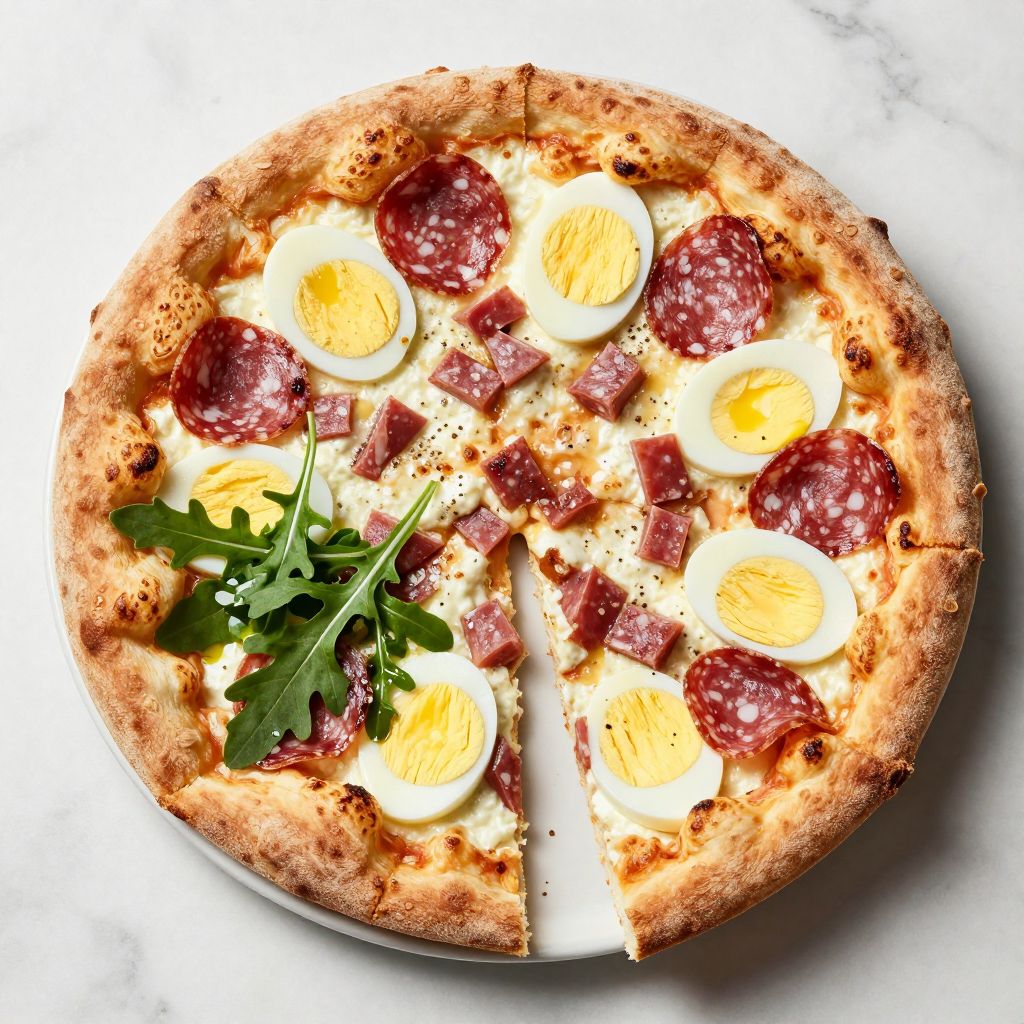
Pizza Rustica
Ingredients
Equipment
Method
- Combine flour and salt in a large bowl, then cut in the cold butter using a pastry cutter or your fingertips until the mixture resembles coarse breadcrumbs.
- In a small bowl, whisk together the egg, vinegar, and 4 tablespoons of ice water. Pour this mixture into the flour and gently mix until the dough just comes together, adding more water only if needed.
- Form the dough into a flat disk, wrap it in plastic wrap, and refrigerate for at least 30 minutes.
- Place eggs in a small pot, cover with cold water, bring to a boil, then remove from heat and let sit for 10 minutes. Transfer to an ice bath, then peel and slice them into thin rounds when cool.
- In a large bowl, combine ricotta, mozzarella, and Pecorino Romano cheese, mixing gently until blended. Add the diced salami, capicola, and mortadella, then season with black pepper and mix until evenly distributed.
- Remove the dough from the refrigerator and divide it into two pieces, one slightly larger than the other. On a lightly floured surface, roll the larger piece into a circle about 12 inches in diameter and 1/8 inch thick.
- Transfer this circle to your cake pan, letting the excess hang over the edges.
- Spread half of the meat and cheese mixture over the pastry in an even layer. Arrange the sliced hard-boiled eggs in a single layer on top. Top with the remaining meat and cheese filling, smoothing it gently.
- Roll out the second piece of dough to about 10 inches in diameter. Brush the edges of the filling with a light coating of the egg wash, then carefully place the top crust over the filling.
- Fold the overhanging bottom crust up and over the top crust, then crimp the edges with a fork to seal. Brush the entire top with egg wash and cut a few small vents to allow steam to escape during baking.
- Preheat your oven to 375 degrees Fahrenheit and place the pie on a baking sheet. Bake for 45 to 50 minutes until the pastry is deep golden brown and a knife inserted into the center meets little resistance from the filling.
- Remove the pie from the oven and let it rest for at least 10 minutes before slicing.
Notes
Final Thoughts
Pizza rustica might sound intimidating, but it’s genuinely one of the most rewarding recipes you can make at home. The combination of crispy pastry, savory filling, and that iconic egg running through the center creates something that tastes both elegant and comforting.
Make this pie once and you’ll understand why it has endured for centuries in Italian kit