
Picture this: a rainy day, the comforting aroma of sizzling pancakes wafting through your kitchen, and the joy of sharing crispy, savory Pajeon with loved ones. This beloved Korean dish is not just a treat for the taste buds; it brings warmth and happiness to any gathering. The beauty of Pajeon lies in its delightful texture and the explosion of flavors from fresh ingredients. It’s the perfect dish for a quick snack or a hearty meal, and it’s incredibly versatile. Let’s dive into the ingredients and steps to make this Korean pancake a star in your kitchen.
Why You’ll Love This Recipe
This recipe is a must-try for anyone who loves comfort food.
- Quick to prepare, perfect for weeknight dinners.
- Uses simple ingredients that pack a flavorful punch.
- Crispy on the outside, soft on the inside.
- Customizable with various fillings and toppings.
- Great for serving a crowd or as a delightful snack.
My Experience Making This Recipe
Every time I whip up a batch of Pajeon, it feels like a warm hug on a chilly day. The sound of the batter hitting the hot skillet is music to my ears, and the bright green scallions popping up in the mix always bring a smile to my face.
When I served it to my family, the crispy edges and savory flavor disappeared in minutes, leaving behind nothing but happy faces and requests for seconds. It truly became a family favorite!
Recipe Overview
- Recipe Name: Pajeon
- Servings: 4
- Prep Time: 10 minutes
- Cook Time: 20 minutes
- Total Time: 30 minutes
- Course: Appetizer/Main
- Cuisine: Korean
- Calories per Serving: 180
Equipment You Will Need
- Mixing bowl
- Whisk or fork
- Non-stick skillet
- Spatula
- Serving plate
Ingredients for Pajeon
- 1 cup all-purpose flour
- 1 cup water
- 1/2 teaspoon salt
- 1 cup scallions, chopped
- 1/2 cup carrots, julienned (optional)
- 1/4 cup cooked shrimp or squid, chopped (optional)
- Vegetable oil for frying
- Dipping sauce: Soy sauce, vinegar, and sesame oil
Ingredient Notes and Substitutions
- All-purpose flour: Provides the pancake’s structure. You can use gluten-free flour for a gluten-free version.
- Water: Creates the batter consistency. Use vegetable or chicken broth for added flavor.
- Salt: Enhances the overall taste. Consider low-sodium soy sauce if concerned about salt intake.
- Scallions: Adds freshness and flavor. Chives or green onions can work as substitutes.
- Carrots and seafood: Optional for added texture and flavor. Feel free to use any vegetables or proteins you prefer.
How to Make Pajeon
Step 1: Prepare the Batter
In a mixing bowl, combine the all-purpose flour, water, and salt. Whisk until smooth to ensure there are no lumps.
Step 2: Add Vegetables and Protein
Fold in the scallions, carrots, and any seafood if using. This adds flavor and texture to your pancake.
Step 3: Heat the Skillet
Preheat your non-stick skillet over medium heat and add a generous amount of vegetable oil. A hot skillet ensures a crispy exterior.
Step 4: Pour the Batter
Pour half the batter into the skillet, spreading it evenly. This helps achieve that signature pancake shape.
Step 5: Cook Until Golden
Cook for about 5 minutes or until the bottom is golden brown. Flip carefully with a spatula to avoid breaking it.
Step 6: Flip and Cook the Other Side
Cook the other side for another 3-4 minutes until it’s crispy. This ensures both sides have that delightful crunch.
Step 7: Repeat
Remove the pancake from the skillet and keep warm. Repeat the process with the remaining batter, adding more oil as needed.
Step 8: Prepare the Dipping Sauce
In a small bowl, mix soy sauce, vinegar, and a dash of sesame oil. This adds a lovely tangy flavor to your Pajeon.
Pro Tip: For an extra crispy texture, let the batter rest for 10 minutes before cooking.
Tips for the Best Pajeon
- Use a heavy skillet for even heat distribution.
- Don’t overcrowd the skillet; cook one pancake at a time for optimal crispiness.
- Adjust the thickness of the batter with water for your desired texture.
- Experiment with different fillings like zucchini or mushrooms for variety.
- Serve immediately for the best taste and texture.
Common Mistakes to Avoid
- Using cold ingredients can lead to a tough pancake. Always use room temperature water.
- Not enough oil can result in sticking. Generously oil the skillet before cooking.
- Flipping too early can make the pancake fall apart. Wait until it’s golden brown.
- Overcrowding the skillet can steam the pancake instead of frying it. Stick to one at a time.
Serving Suggestions
Pajeon is delightful on its own but pairs beautifully with various sides.
- Kimchi for a spicy kick.
- Rice for a heartier meal.
- Fresh vegetables for a crunchy contrast.
- Tea or soju for an authentic Korean experience.
Variations to Try
- Add mushrooms for an earthy flavor that complements the pancake.
- Incorporate zucchini for a refreshing twist and added moisture.
- Try sweet potato for a subtle sweetness and vibrant color.
- Use chopped kimchi for a spicy and tangy version.
Dietary Adaptations
- Gluten-free: Substitute all-purpose flour with a gluten-free blend.
- Dairy-free: This recipe is already dairy-free!
- Vegan: Omit seafood and use vegetable broth instead of water.
- Low-carb/keto: Use almond flour for a low-carb option.
Storage and Reheating
Refrigerator
Store leftover Pajeon in an airtight container in the refrigerator for up to 2 days.
- Refrigerate promptly to maintain freshness.
Freezer
For longer storage, freeze cooked Pajeon in a single layer, then transfer to a freezer bag.
- Freeze for up to one month for best results.
Reheating
Reheat in a skillet over medium heat for a few minutes on each side until warmed through.
- Microwaving is an option, but it may lose crispiness.
Nutrition Information
| Nutrient | Amount |
|---|---|
| Calories | 180 |
| Total Fat | 6g |
| Saturated Fat | 1g |
| Carbohydrates | 25g |
| Fiber | 2g |
| Sugar | 1g |
| Protein | 6g |
| Sodium | 400mg |
| Cholesterol | 20mg |
This information is approximate and can vary based on ingredients and portion sizes.
Frequently Asked Questions
Can I make the batter ahead of time?
Yes, you can prepare the batter and store it in the fridge for up to 24 hours. Just give it a good stir before using.
What can I substitute for seafood?
You can use more vegetables like mushrooms or zucchini for a vegetarian version. Tofu is also a great protein alternative.
How do I store leftover Pajeon?
Store in an airtight container in the refrigerator for up to 2 days. For longer storage, freeze them.
What if my Pajeon is soggy?
Ensure your skillet is hot enough and use enough oil. Cooking at a higher temperature helps create that crispy texture.
Can I make Pajeon with other vegetables?
Absolutely! Feel free to experiment with any vegetables you love, just remember to chop them finely.
Final Thoughts
Making Pajeon is not just about cooking; it is about creating a cozy atmosphere filled with love and laughter. I encourage you to gather your ingredients, invite some friends or family, and enjoy this delicious dish together.
For more delightful recipes, check out my Corn Pone Recipe or try a refreshing Hwachae Recipe. Happy cooking!
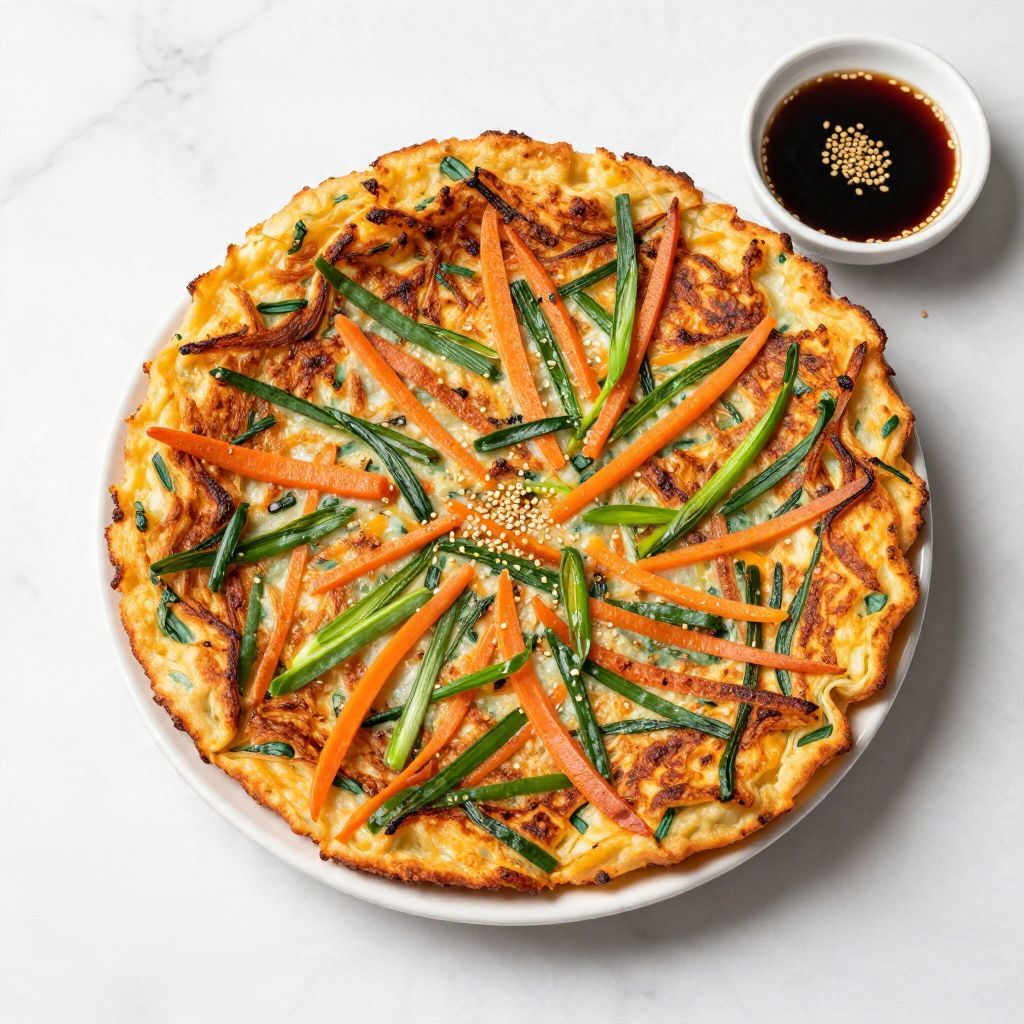
Pajeon
Ingredients
Equipment
Method
- In a mixing bowl, combine the all-purpose flour, water, and salt. Whisk until smooth to ensure there are no lumps.
- Fold in the scallions, carrots, and any seafood if using.
- Preheat your non-stick skillet over medium heat and add a generous amount of vegetable oil.
- Pour half the batter into the skillet, spreading it evenly.
- Cook for about 5 minutes or until the bottom is golden brown. Flip carefully with a spatula.
- Cook the other side for another 3-4 minutes until it's crispy.
- Remove the pancake from the skillet and keep warm. Repeat with the remaining batter, adding more oil as needed.
- In a small bowl, mix soy sauce, vinegar, and a dash of sesame oil for the dipping sauce.