
Picture this: a steaming bowl of perfectly cooked noodles, glistening with a savory sauce and topped with crisp vegetables. This Recipe For Chinese Noodles is not just a meal; it’s a warm hug on a plate. It’s quick enough for weeknight dinners yet impressive enough for guests, making it a versatile staple in my kitchen. The balance of flavors and textures will have your taste buds dancing, and the best part? You can customize it with your favorite ingredients. Let’s gather what you need and dive into the details.
Why You’ll Love This Recipe
This dish is a delightful combination of simplicity and flavor that will leave you craving more.
- Quick and easy to prepare, perfect for busy nights.
- Versatile; you can add your favorite proteins or veggies.
- Rich in flavor with a satisfying texture.
- Great for meal prep and leftovers.
- A crowd-pleaser that brings everyone together.
My Experience Making This Recipe
Every time I whip up this dish, my kitchen fills with the scent of garlic and soy sauce, instantly making me feel at home. The first time I served this to friends, they were surprised at how something so simple could taste so good.
As I watched them enjoy their bowls, I knew this recipe would become a staple in my repertoire. The joy of seeing others savor it is simply unbeatable.
Recipe Overview
- Recipe Name: Chinese Noodles
- Servings: 4
- Prep Time: 15 minutes
- Cook Time: 10 minutes
- Total Time: 25 minutes
- Course: Main Course
- Cuisine: Chinese
- Calories per Serving: 350
Equipment You Will Need
- Large pot for boiling noodles
- Wok or large skillet
- Wooden spoon or spatula
- Measuring cups and spoons
- Colander for draining noodles
Ingredients for Chinese Noodles
- 8 oz Chinese egg noodles or spaghetti
- 2 tbsp vegetable oil
- 3 cloves garlic, minced
- 1 cup bell peppers, sliced
- 1 cup carrots, julienned
- 1 cup broccoli florets
- 3 tbsp soy sauce
- 1 tbsp oyster sauce (optional)
- 1 tsp sesame oil
- Salt and pepper to taste
- Green onions for garnish
Ingredient Notes and Substitutions
- Chinese egg noodles: These provide an authentic texture, but spaghetti can work in a pinch.
- Vegetable oil: This is neutral for frying; olive oil can be a substitute, but it changes the flavor slightly.
- Garlic: Fresh garlic adds depth; garlic powder can be used if in a hurry.
- Bell peppers and carrots: These add color and crunch; feel free to swap with any seasonal veggies.
- Oyster sauce: This gives a rich umami flavor; you can omit it for a vegetarian version.
How to Make Chinese Noodles
Step 1: Boil the Noodles
Bring a large pot of salted water to a boil. This helps season the noodles and prevents them from sticking together.
Step 2: Cook the Noodles
Add the noodles and cook according to package instructions until al dente. Undercooking slightly ensures they hold up during stir-frying.
Step 3: Drain and Rinse
Drain the noodles using a colander and rinse them under cold water. This stops the cooking process and prevents clumping.
Step 4: Heat the Oil
In a wok or large skillet, heat the vegetable oil over medium-high heat. A hot pan ensures a good sear on the vegetables, enhancing flavor.
Step 5: Sauté Garlic
Add the minced garlic to the pan and sauté for about 30 seconds until fragrant. Be careful not to burn it; burnt garlic tastes bitter.
Step 6: Add Vegetables
Add the sliced bell peppers, carrots, and broccoli to the wok. Stir-fry for about 3-4 minutes until the vegetables are tender yet still crisp.
Step 7: Combine Noodles and Sauce
Add the drained noodles to the pan along with the soy sauce, oyster sauce, and sesame oil. Toss everything together until well coated.
Step 8: Season and Serve
Season with salt and pepper to taste, then garnish with chopped green onions. Serve hot and enjoy the burst of flavors!
Pro Tip: For extra flavor, marinate your protein in a little soy sauce and sesame oil before adding it to the stir-fry.
Tips for the Best Chinese Noodles
- Prep all ingredients before you start cooking to make the process smooth.
- Use a high heat to get a nice char on the veggies; this adds depth to the dish.
- Don’t overcrowd the pan; cook in batches if necessary to ensure even cooking.
- Experiment with different sauces for a unique twist; teriyaki or hoisin can work well.
- Adjust the soy sauce amount based on your salt preference.
Common Mistakes to Avoid
- Not salting the water for boiling noodles; this can lead to bland noodles.
- Overcooking the vegetables; they should be crisp-tender for the best texture.
- Using cold noodles without rinsing; they can stick together and become mushy.
- Skipping the oil when frying; this can cause the ingredients to stick and burn.
- Not tasting while cooking; adjusting seasoning during the process is key.
Serving Suggestions
These noodles are delicious on their own but pair beautifully with other dishes. Try serving them alongside:
- Sweet and sour chicken
- General Tso’s tofu
- Egg rolls
- Hot and sour soup
- Steamed dumplings
Variations to Try
- Add shrimp or chicken for extra protein; they cook quickly and absorb flavors well.
- Incorporate different vegetables like snap peas or bok choy for variety.
- Use whole wheat noodles for a healthier option; they offer a nutty flavor.
- Try a spicy version by adding red pepper flakes or sriracha for heat.
- For a creamy twist, mix in a dash of peanut sauce for a different flavor profile.
Dietary Adaptations
- Gluten-free: Substitute with rice noodles or gluten-free pasta.
- Dairy-free: This recipe is naturally dairy-free; just check your sauces.
- Vegan: Keep it plant-based by omitting any animal products.
- Low-carb/keto: Use zucchini noodles or shirataki noodles for a low-carb alternative.
Storage and Reheating
Refrigerator
Store leftovers in an airtight container in the fridge for up to 3 days.
- Let the noodles cool before sealing to prevent moisture buildup.
Freezer
Freezing is possible, but the texture may change slightly when reheated.
- Store in a freezer-safe container for up to 2 months.
Reheating
Reheat in a skillet over medium heat, adding a splash of water or oil to prevent sticking.
- Microwaving is an option but may lead to uneven heating.
Nutrition Information
| Nutrient | Amount |
|---|---|
| Calories | 350 |
| Total Fat | 10g |
| Saturated Fat | 1g |
| Carbohydrates | 55g |
| Fiber | 3g |
| Sugar | 5g |
| Protein | 10g |
| Sodium | 800mg |
| Cholesterol | 0mg |
This information is approximate and can vary based on the specific ingredients used.
Frequently Asked Questions
Can I use different noodles?
Absolutely, any noodle type works, but cooking times may vary, so watch closely.
Can I make this dish ahead of time?
Yes, you can prep everything in advance and stir-fry just before serving.
How do I store leftovers?
Keep them in an airtight container in the fridge for 3 days, or freeze for up to 2 months.
Why are my noodles sticky?
Not rinsing the noodles can cause them to stick together; always rinse after boiling.
Can I add more vegetables?
Definitely! Feel free to include any veggies you have on hand; just adjust cooking times as needed.
Final Thoughts
This Recipe For Chinese Noodles is a delightful way to bring a taste of home to your dinner table. I hope you enjoy making it as much as I do!
If you’re looking for more inspiration, check out my Beef Lo Mein recipe or explore the rich flavors in my Taiwanese Beef Noodle Soup. Happy cooking!
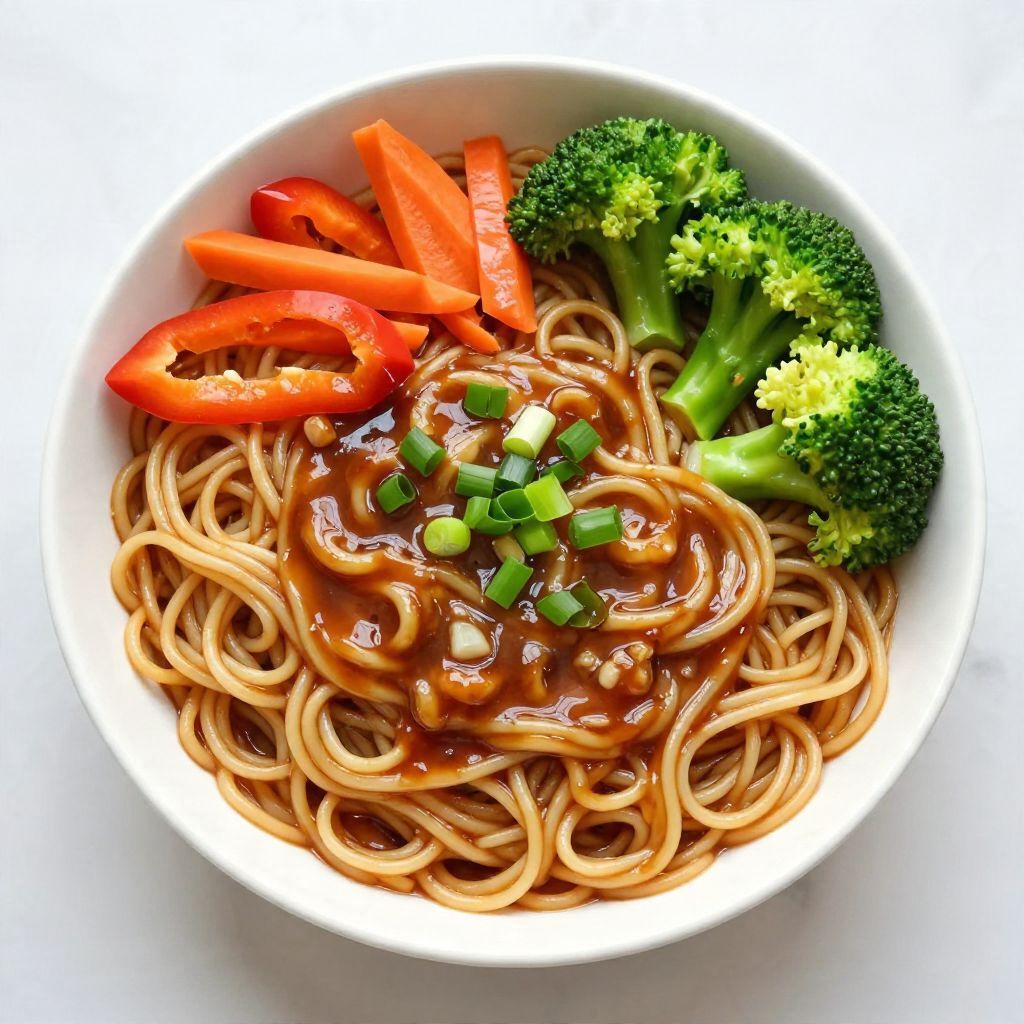
Chinese Noodles
Ingredients
Equipment
Method
- Bring a large pot of salted water to a boil.
- Add the noodles and cook according to package instructions until al dente.
- Drain the noodles using a colander and rinse them under cold water.
- In a wok or large skillet, heat the vegetable oil over medium-high heat.
- Add the minced garlic to the pan and sauté for about 30 seconds until fragrant.
- Add the sliced bell peppers, carrots, and broccoli to the wok. Stir-fry for about 3-4 minutes.
- Add the drained noodles to the pan along with the soy sauce, oyster sauce, and sesame oil.
- Toss everything together until well coated.
- Season with salt and pepper to taste, then garnish with chopped green onions.
- Serve hot.