
The first time you crack open a package of Buldak ramen, the aroma hits you like a spicy punch to the face, and you know you’re about to experience something bold and unforgettable. Buldak ramen, which translates to “fire chicken” in Korean, delivers intense heat paired with umami-rich broth that keeps you coming back for more despite the sweat on your forehead.
This recipe transforms the iconic instant noodles into a restaurant-quality bowl by adding fresh vegetables, protein, and a silky egg that elevates the entire dish. The beauty of Buldak ramen lies in its simplicity: you’re working with a fiery base that needs just a few quality additions to become something truly special. In about 20 minutes, you’ll have a steaming bowl of comfort that satisfies cravings for heat, texture, and genuine flavor.
Why You’ll Love This Recipe
Buldak ramen delivers bold flavor without pretension, making it perfect for weeknight dinners, late-night cravings, or impressing friends who appreciate honest, spicy food.
- Ready in under 20 minutes from start to finish
- Customizable with vegetables, proteins, and toppings you have on hand
- Intense, addictive spice balanced with savory depth
- Surprisingly budget-friendly compared to ordering takeout
- A blank canvas that works with your dietary preferences
My Experience Making This Recipe
I discovered Buldak ramen during a late-night convenience store run in Seoul, and the first bowl completely changed how I thought about instant noodles. The heat was immediate and relentless, but underneath that fire sat a complex broth with roasted chicken and garlic notes that made me understand why this stuff inspires cult devotion. I’ve made it dozens of times since, each version slightly different depending on what I’m craving or what’s in my fridge.
The most satisfying version came when I added a soft-boiled egg, some fresh spinach, and crispy garlic chips to the basic recipe. The egg yolk broke into the broth, creating this luxurious creaminess that mellowed the spice just enough while the spinach added freshness and nutrition. My Korean coworkers laughed at my enthusiasm until they tasted it, and suddenly everyone wanted the recipe.
What strikes me most about making Buldak ramen at home is how personal it becomes. You control the heat level, the texture of the noodles, and which toppings make it feel like your bowl. No two batches are ever identical, and that unpredictability makes it fun rather than routine.
Recipe Overview
- Recipe Name: Buldak Ramen
- Servings: 2
- Prep Time: 5 minutes
- Cook Time: 12 minutes
- Total Time: 17 minutes
- Course: Main Dish
- Cuisine: Korean
- Calories per Serving: 420
Equipment You Will Need
- Large pot for boiling water
- Small mixing bowl for sauce
- Wooden spoon or chopsticks for stirring
- Colander for draining noodles
- Two serving bowls
- Measuring spoons and cups
- Small saucepan for soft-boiling eggs (optional)
Ingredients for Buldak Ramen
- 2 packages Buldak instant ramen noodles (approximately 200 grams)
- 4 cups water
- 2 tablespoons gochujang (Korean red chili paste)
- 1 tablespoon soy sauce
- 1 tablespoon sesame oil
- 2 cloves garlic, minced
- 1 teaspoon sugar
- 1/2 teaspoon salt, or to taste
- 2 eggs (optional, for soft-boiling)
- 1 cup fresh spinach (or other leafy greens)
- 1/2 cup mushrooms, sliced (shiitake or button)
- 2 green onions, chopped
- 1 tablespoon roasted sesame seeds
- 1/4 teaspoon crushed red pepper flakes (optional, for extra heat)
Ingredient Notes and Substitutions
- Buldak Ramen Noodles: These specific noodles contain a fiery spice blend that forms the backbone of the dish. If unavailable, use any instant ramen and add the sauce ingredients listed, though the flavor won’t be quite as authentic.
- Gochujang: This fermented chili paste provides depth and umami beyond simple heat. Sriracha works as a substitute, but you’ll lose the fermented complexity that makes Buldak special.
- Sesame Oil: The nutty aromatics in sesame oil anchor the entire bowl and add richness. Regular vegetable oil lacks this flavor dimension and should be avoided.
- Fresh Spinach: The leafy green adds nutrition, color, and a slight bitterness that balances the heat. Bok choy, kale, or any tender greens work equally well.
- Eggs: A soft-boiled egg creates creaminess when the yolk breaks into the hot broth, mellowing the spice. You can skip this entirely or use a raw egg dropped into the boiling broth for a poached effect.
How to Make Buldak Ramen
Step 1: Prepare Your Soft-Boiled Eggs
Bring a small saucepan of water to a boil, gently place your eggs in the water, and cook for 6 minutes if you like a runny yolk or 7 minutes for a slightly firmer center. The timing matters here because a perfectly soft-boiled egg will have a set white and a jammy yolk that acts like a sauce when it breaks into the hot broth.
While the eggs cook, transfer them to an ice bath after 6 or 7 minutes stops the cooking process and makes them easier to peel later. This step is optional but transforms the final bowl from good to restaurant-quality.
Step 2: Boil Water for the Noodles
Fill a large pot with 4 cups of water and bring it to a rolling boil over high heat. Using plenty of water prevents the noodles from sticking and allows them to cook evenly, which matters for achieving the right texture.
Step 3: Cook the Ramen Noodles
Add both packages of Buldak ramen to the boiling water and stir immediately to separate the noodles. Let them cook for 4 to 5 minutes, stirring occasionally, until they reach your preferred texture.
Most people prefer these noodles with a slight chew rather than completely soft, so aim for the lower end of the cooking time if you want more texture. The noodles will continue absorbing liquid even after you drain them, so slightly undercooking is safer than overcooking.
Step 4: Reserve Noodle Water and Drain
Before draining the noodles, scoop out 1 cup of the starchy cooking water and set it aside in a small bowl. This noodle water will help dilute the sauce to your desired consistency and add body to the broth.
Drain the noodles thoroughly in a colander but don’t rinse them, as the starch helps them hold flavor. Return the empty pot to the stove over medium heat.
Step 5: Create the Sauce Base
In a small mixing bowl, combine 2 tablespoons of gochujang, 1 tablespoon of soy sauce, 1 tablespoon of sesame oil, 2 minced garlic cloves, 1 teaspoon of sugar, and 1/2 teaspoon of salt. Stir until everything blends into a smooth, unified sauce with no lumps of gochujang remaining.
This paste is your flavor foundation, and whisking it smooth prevents chunks from clogging your spoon while eating. The sugar balances the heat and saltiness, while the garlic adds aromatic depth that rounds out the pure spice.
Step 6: Warm the Sauce in the Pot
Add the sauce mixture to the warm pot over medium heat and stir constantly for about 30 seconds, allowing the gochujang to mellow slightly and the aromatics to release. This brief warming step makes the flavors more cohesive and removes any raw paste taste.
Watch for the sauce to become fragrant and slightly darkened at the edges, then proceed to the next step. Don’t let it burn or cook too long, which would make it bitter.
Step 7: Build the Broth
Pour the reserved noodle water into the pot with the sauce, stirring to combine everything into a smooth broth. Taste a spoonful and adjust the heat by adding more gochujang or balance the saltiness with a touch more soy sauce or water.
The broth should coat your spoon slightly but still pour easily. If it seems too thick, add more water in small increments until you reach your preferred consistency.
Step 8: Add Fresh Vegetables
Add the sliced mushrooms and fresh spinach to the broth and let them cook for 2 to 3 minutes until the spinach wilts and the mushrooms soften. These vegetables add nutrition, texture, and freshness that prevents the bowl from tasting one-dimensional.
The mushrooms will absorb some of the broth’s heat and become tender, while the spinach will lose its raw edge and meld with the sauce. Taste the broth again and adjust seasoning if needed.
Step 9: Assemble the Bowls
Divide the cooked noodles between two serving bowls, then ladle the hot broth and vegetables over them. Pour enough broth to partially submerge the noodles but not so much that they float, as you want them to stay coated rather than swimming.
Step 10: Add Toppings and Garnishes
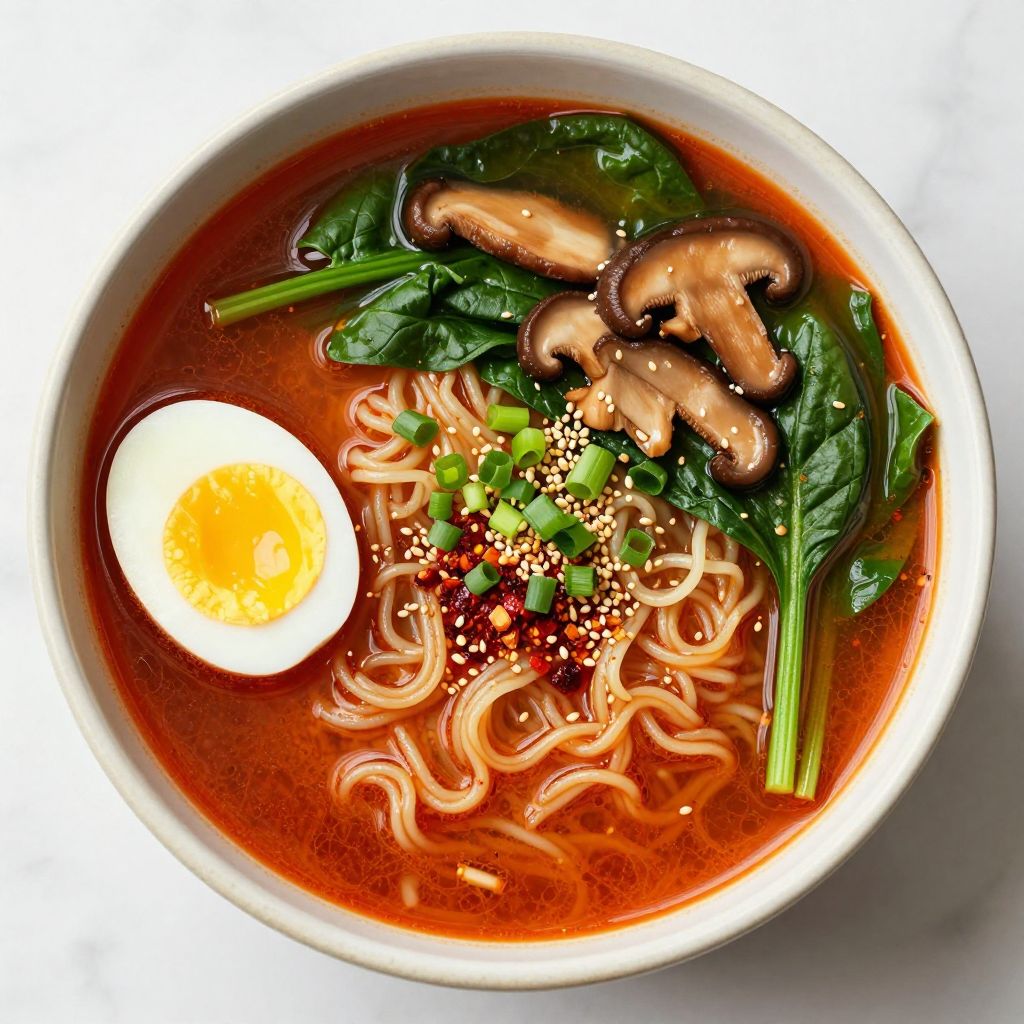
Top each bowl with chopped green onions, roasted sesame seeds, and a soft-boiled egg if you prepared one. If you want extra heat, sprinkle the crushed red pepper flakes over the top and stir to distribute throughout the bowl.
These toppings add color, nutrition, and textural contrast to the soft noodles and hot broth. The green onions add freshness, the sesame seeds add nuttiness, and the egg adds richness that makes the spice more approachable.
Pro Tip: Crack your soft-boiled egg directly into the bowl and stir it thoroughly into the broth before eating, which distributes the creamy yolk throughout and mellows the heat without diluting the flavor.
Tips for the Best Buldak Ramen
- Toast your sesame seeds in a dry pan for 2 minutes before adding them, which intensifies their nutty flavor and makes them more aromatic.
- Don’t skip the ice bath for your eggs if you want that jammy yolk center; it stops the cooking and makes peeling much easier.
- Add a pat of butter or a drizzle of extra sesame oil at the end if the heat becomes overwhelming; fat coats your mouth and provides relief without diluting flavor.
- Cook your noodles to just below your preferred final texture, since they continue softening in the hot broth after assembly.
- Prepare all your toppings before you start boiling water, so you can focus on timing and assembly without rushing.
- If you prefer less heat, reduce the gochujang to 1.5 tablespoons and add 1/2 tablespoon of miso paste instead for umami without pure spice.
Common Mistakes to Avoid
- Overcooking the noodles into mush: This happens when you cook them past 5 minutes, leaving you with soft, unpleasant texture. Aim for 4 to 5 minutes maximum.
- Mixing the sauce with cold water: Adding room-temperature water to the warm broth cools everything down and mutes the flavors. Always use hot water or previously boiled water.
- Skipping the ice bath for eggs: This makes peeling them nearly impossible and creates a chalky gray ring around the yolk that signals overcooking.
- Adding all the heat at once: If you make this spicy for the first time, start with the recipe as written and add extra gochujang gradually rather than doubling it.
- Draining the noodles too early: If you drain them and let them sit before assembling, they’ll clump together and become gummy rather than retaining their shape.
Serving Suggestions
Buldak ramen works perfectly as a standalone dinner, but pairing it with light sides creates a more balanced meal. A simple, cool accompaniment cuts through the heat and makes the eating experience more enjoyable.
- Serve alongside crispy Korean seaweed sheets, which add texture and minerality that grounds the spice.
- Pair with a side of pickled vegetables like kimchi or pickled radish, which add brightness and aid digestion after such a spicy meal.
- Include a cold side dish like cucumber salad dressed with rice vinegar and sesame oil, which cools and refreshes your palate between spoonfuls.
- Offer sliced cheese like mozzarella or a dollop of sour cream on the side for those who find the heat overwhelming.
- Serve with a cold, slightly sweet beverage like iced ginger tea or mango juice rather than plain water, which actually coats your mouth better against capsaicin burn.
Variations to Try
- Creamy Buldak Ramen: Add 1/4 cup of heavy cream or coconut milk to the broth in step 6, which creates a luxurious texture and significantly mellows the heat while adding subtle sweetness.
- Cheese Buldak Ramen: Top the finished bowl with a slice of American cheese or a handful of shredded mozzarella, which melts into the hot broth and adds umami richness alongside the heat.
- Seafood Buldak Ramen: Add frozen shrimp or calamari in step 8 instead of mushrooms, cooking them until opaque, which adds protein and a briny complexity that pairs beautifully with the spice.
- Chicken Buldak Ramen: Cook diced chicken breast or shredded rotisserie chicken in the broth for 3 to 4 minutes, transforming this into a more substantial protein-forward meal.
- Carbonara-Inspired Buldak Ramen: Crack a raw egg into the finished hot bowl and stir vigorously so it coats the noodles and creates a creamy sauce, though skip the egg topping if doing this variation.
Dietary Adaptations
- Gluten-Free: Use gluten-free instant ramen noodles and tamari instead of regular soy sauce, though the texture and flavor of gluten-free noodles won’t match the original exactly.
- Dairy-Free: This recipe is naturally dairy-free unless you add cheese or cream, so simply omit those additions and use only the sesame oil and sauce as written.
- Vegan and Vegetarian: Skip the soft-boiled eggs and make everything else as written, or add extra vegetables like broccoli, bell peppers, or carrots for more substance and nutrition.
- Low-Carb and Keto: Replace the ramen noodles with shirataki noodles or zucchini noodles, though you’ll lose the authentic texture of the original dish and need less cooking time.
Storage and Reheating
Refrigerator
Store leftover Buldak ramen with noodles and broth separated to prevent the noodles from becoming mushy. Keep the broth in an airtight container for up to 3 days.
- Store cooked noodles in a separate container with a light drizzle of sesame oil to prevent sticking
- Keep soft-boiled eggs in their shells in a separate container
- Store fresh toppings like green onions and sesame seeds separately and add fresh just before eating
Freezer
The broth freezes well for up to 2 months, but frozen noodles become mushy when thawed. Freeze the broth alone and cook fresh noodles when you’re ready to eat.
- Freeze the broth in ice cube trays for portion control and easy thawing
- Do not freeze cooked noodles or soft-boiled eggs, as they don’t hold their texture
- Label your broth containers with the date so you use them within 2 months
Reheating
Thaw frozen broth in the refrigerator overnight, then reheat it gently over medium heat without boiling. Cook fresh noodles according to the original instructions and assemble the bowl just before eating for the best texture and flavor.
- Heat the broth until steaming but not at a rolling boil, which prevents the flavors from becoming harsh
- Cook fresh noodles while the broth heats to ensure everything comes together at the right temperature
- Add fresh toppings and a newly soft-boiled egg if desired for the best eating experience
Nutrition Information
| Nutrient | Amount |
|---|---|
| Calories | 420 |
| Total Fat | 16g |
| Saturated Fat | 4g |
| Carbohydrates | — |
Buldak Ramen
Ingredients
Equipment
Method
- Bring a small saucepan of water to a boil, gently place your eggs in the water, and cook for 6 minutes for a runny yolk or 7 minutes for a slightly firmer center. Transfer them to an ice bath immediately after cooking to stop the cooking process and make them easier to peel.
- Fill a large pot with 4 cups of water and bring it to a rolling boil over high heat.
- Add both packages of Buldak ramen to the boiling water and stir immediately to separate the noodles. Let them cook for 4 to 5 minutes, stirring occasionally, until they reach your preferred texture.
- Before draining the noodles, scoop out 1 cup of the starchy cooking water and set it aside in a small bowl. Drain the noodles thoroughly in a colander but don't rinse them. Return the empty pot to the stove over medium heat.
- In a small mixing bowl, combine 2 tablespoons of gochujang, 1 tablespoon of soy sauce, 1 tablespoon of sesame oil, 2 minced garlic cloves, 1 teaspoon of sugar, and 1/2 teaspoon of salt. Stir until everything blends into a smooth, unified sauce with no lumps of gochujang remaining.
- Add the sauce mixture to the warm pot over medium heat and stir constantly for about 30 seconds, allowing the gochujang to mellow slightly and the aromatics to release. Watch for the sauce to become fragrant and slightly darkened at the edges.
- Pour the reserved noodle water into the pot with the sauce, stirring to combine everything into a smooth broth. Taste a spoonful and adjust the heat by adding more gochujang or balance the saltiness with a touch more soy sauce or water.
- Add the sliced mushrooms and fresh spinach to the broth and let them cook for 2 to 3 minutes until the spinach wilts and the mushrooms soften.
- Divide the cooked noodles between two serving bowls, then ladle the hot broth and vegetables over them. Pour enough broth to partially submerge the noodles.
- Top each bowl with chopped green onions, roasted sesame seeds, and a soft-boiled egg if you prepared one. If you want extra heat, sprinkle the crushed red pepper flakes over the top and stir to distribute throughout the bowl.