
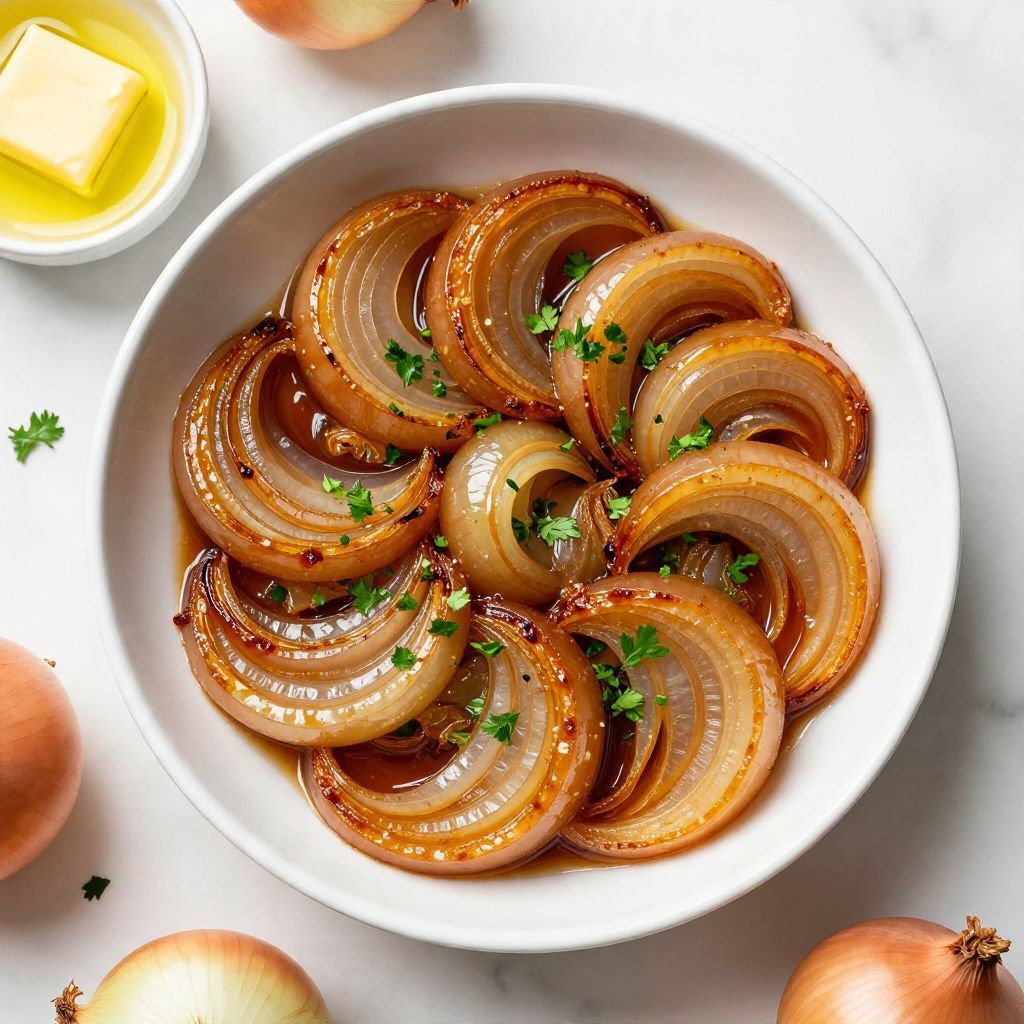
There’s something magical about the sweet aroma of caramelized onions wafting through your kitchen. This simple yet transformative technique elevates any dish, turning even the most basic meals into something special with its deep, rich flavor and melt-in-your-mouth texture.
Whether you’re using them to top a juicy burger, enhance a gourmet pizza, or stir into a comforting soup, caramelized onions are a game changer. Plus, with just a few ingredients and your patience, you can create this delightful addition that’s perfect for any occasion.
Why You’ll Love This Recipe
Caramelized onions are easy to make and add incredible depth to your dishes.
- They are versatile and can be used in many recipes.
- They add a natural sweetness to savory dishes.
- The process transforms onions into a creamy, luscious texture.
- They can be made ahead of time and stored for later use.
My Experience Making This Recipe
Every time I make caramelized onions, I’m reminded of how a few simple ingredients can create something so complex and satisfying. The moment those onions hit the pan, the kitchen fills with a warm, inviting fragrance that makes you want to stay and linger.
Friends and family often rave about how these onions elevate everything from sandwiches to pasta. I love serving them alongside roasted meats, and they always steal the show.
Recipe Overview
- Recipe Name: Caramelized Onions
- Servings: 4
- Prep Time: 10 minutes
- Cook Time: 40 minutes
- Total Time: 50 minutes
- Course: Side Dish
- Cuisine: American
- Calories per Serving: 120
Equipment You Will Need
- Large skillet or frying pan
- Wooden spoon or spatula
- Sharp knife
- Cutting board
- Measuring spoons
Ingredients for Caramelized Onions
- 3 large onions, thinly sliced
- 2 tablespoons butter
- 1 tablespoon olive oil
- 1 teaspoon salt
- 1 teaspoon sugar, optional
Ingredient Notes and Substitutions
- Onions: Yellow onions work best for sweetness; you can use red onions for a sharper flavor.
- Butter: Adds richness; feel free to use all olive oil or even vegan butter for a dairy-free option.
- Olive oil: Enhances flavor and prevents burning; can be substituted with any cooking oil.
- Salt: Balances sweetness; use sea salt or kosher salt for best results.
- Sugar: Optional, but it helps to speed up the caramelization; brown sugar can be used for a richer flavor.
How to Make Caramelized Onions
Step 1: Slice the Onions
Start by peeling and slicing the onions thinly. The thinner they are, the faster they will cook and caramelize.
Step 2: Heat the Pan
Place your skillet over medium heat and add the butter and olive oil. This combination prevents the butter from burning while adding flavor.
Step 3: Add the Onions
Once the butter has melted, add the sliced onions to the skillet. Stir them to coat with the fat, which helps with even cooking.
Step 4: Season with Salt
Sprinkle the salt over the onions. This helps to draw out moisture, which is essential for the caramelization process.
Step 5: Stir Occasionally
Cook the onions, stirring occasionally, for about 40 minutes. Patience is key here; low and slow is how you achieve the best flavor.
Step 6: Add Sugar (Optional)
If you want extra sweetness, sprinkle in the sugar after about 20 minutes. This will enhance the natural sugars already present in the onions.
Step 7: Check for Doneness
After 40 minutes, the onions should be golden brown and soft. If they start to stick, add a splash of water to deglaze the pan.
Step 8: Remove from Heat
Taste and adjust seasoning if needed, then remove the skillet from the heat. Let them cool slightly before serving or storing.
Pro Tip: For deeper flavor, consider adding a splash of balsamic vinegar in the last few minutes of cooking.
Tips for the Best Caramelized Onions
- Use a heavy-bottomed skillet for even heat distribution.
- Keep the heat on medium to low; too high will burn the onions.
- Be patient; caramelization takes time and cannot be rushed.
- Stir occasionally but not constantly to allow some onions to rest and caramelize.
- Experiment with adding herbs like thyme for extra flavor.
Common Mistakes to Avoid
- Cooking on high heat can burn the onions instead of caramelizing them.
- Not using enough fat can lead to sticking and uneven cooking.
- Neglecting to stir can cause some onions to burn while others remain raw.
- Rushing the process will yield less sweet and flavorful results.
Serving Suggestions
Caramelized onions are fantastic in various dishes, enhancing flavors beautifully.
- Top burgers for a gourmet touch.
- Stir into risottos for added creaminess.
- Mix into pasta for a quick yet elegant meal.
- Serve with grilled meats for a savory contrast.
- Spread on bread as a part of a charcuterie board.
Variations to Try
- Try adding garlic for a more pungent flavor.
- Incorporate different herbs, like rosemary or thyme, for a fresh twist.
- Use wine or beer to deglaze the pan for added depth.
- Mix in some cheese, like goat cheese or feta, for a creamy finish.
Dietary Adaptations
- Gluten-Free: Naturally gluten-free as prepared.
- Dairy-Free: Use only olive oil or vegan butter.
- Vegan/Vegetarian: Suitable as is; no meat products involved.
- Low-Carb/Keto: This recipe is low in carbs and fits well into keto diets.
Storage and Reheating
Refrigerator
Store cooled caramelized onions in an airtight container in the fridge.
- They will last for up to one week.
- Ensure they are fully cooled before sealing to prevent moisture buildup.
Freezer
Carmelized onions can be frozen for longer storage.
- Use a freezer-safe container or bag.
- They can be frozen for up to three months.
Reheating
Reheat gently on the stovetop over low heat.
- Add a splash of water or broth to help them heat evenly.
- Microwave is an option, but be cautious to avoid overheating.
Nutrition Information
| Nutrient | Amount |
|---|---|
| Calories | 120 |
| Total Fat | 10g |
| Saturated Fat | 4g |
| Carbohydrates | 9g |
| Fiber | 1g |
| Sugar | 4g |
| Protein | 1g |
| Sodium | 150mg |
| Cholesterol | 15mg |
This nutritional information is an estimate and can vary based on exact ingredients used.
Frequently Asked Questions
Can I make caramelized onions ahead of time?
Yes, they store well in the fridge for about a week or can be frozen for up to three months.
What should I do if my onions are burning?
Lower the heat immediately and add a bit of water or broth to help deglaze the pan.
Can I use different types of onions?
Absolutely! Yellow onions are ideal, but red or sweet onions can also be used for different flavors.
How long do I need to cook them?
Typically, around 40 minutes is perfect for achieving that golden brown color and sweet flavor.
Can I use this recipe for other vegetables?
Yes! This technique works well with shallots, garlic, or even carrots for a sweet twist.
Final Thoughts
Making caramelized onions is a small effort that yields big results in flavor. With their sweet, savory depth, they are sure to become a staple in your kitchen.
Don’t hesitate to experiment with them in your favorite recipes. Once you try this technique, you’ll wonder how you ever lived without these delicious little gems.
If you enjoyed this recipe, check out more delicious options like Tennessee Onions and Onion Jam for more ways to enjoy onions.
Caramelized Onions
Ingredients
Equipment
Method
- Peel and slice the onions thinly.
- Place your skillet over medium heat and add the butter and olive oil.
- Once the butter has melted, add the sliced onions to the skillet.
- Sprinkle the salt over the onions.
- Cook the onions, stirring occasionally, for about 40 minutes.
- If desired, sprinkle in the sugar after about 20 minutes.
- After 40 minutes, the onions should be golden brown and soft.
- Taste and adjust seasoning if needed, then remove the skillet from heat.