
The smell of caramelizing onions fills your kitchen with a sweetness that shouldn’t exist in a savory ingredient, transforming something so humble into something almost decadent. Onion jam is that rare recipe that takes patience as its main ingredient and rewards you with a glossy, complex condiment that makes everything it touches taste better.
This isn’t your typical jam, and it’s not overly complicated either. You simply cook onions low and slow, let their natural sugars concentrate, and end up with a spreadable, tangy-sweet topping that works on charcuterie boards, burgers, cheese platters, and even straight from the spoon when nobody’s looking. The beauty is in its simplicity and versatility.
Why You’ll Love This Recipe
Homemade onion jam tastes infinitely better than store-bought versions and costs a fraction of the price. Once you taste the caramelized depth and bright acidity, you’ll find yourself making batch after batch.
- Requires just five basic ingredients and one pot.
- The low-and-slow method means you can mostly leave it alone while it transforms.
- Works as an appetizer topper, sandwich spread, cheese pairing, or charcuterie board star.
- Stores brilliantly in the fridge for weeks or freezes for months.
- Impresses people far more than it should given how easy it is to make.
My Experience Making This Recipe
The first time I made onion jam, I was skeptical that something so simple could be worthwhile. I threw sliced onions into a pot with butter and watched them slowly turn from crisp white rings into a deep amber puddle of umami.
About forty-five minutes in, the kitchen smelled like a French bistro, and I knew I’d stumbled onto something special. My partner came home, tasted a spoonful on a cracker, and immediately asked if I could make it again the next day.
I’ve since made it for dinner parties, family gatherings, and quiet weeknights when I wanted something that feels fancier than the effort involved. People always ask what it is and how I made it, then look shocked when I explain the five-ingredient simplicity.
Recipe Overview
- Recipe Name: Caramelized Onion Jam
- Servings: Makes about 1 1/2 cups (approximately 12 servings of 2 tablespoons each)
- Prep Time: 15 minutes
- Cook Time: 50 minutes
- Total Time: 65 minutes
- Course: Condiment
- Cuisine: French-inspired
- Calories per Serving: 45 calories per 2-tablespoon serving
Equipment You Will Need
- Large heavy-bottomed pot or Dutch oven (at least 4-quart capacity)
- Sharp chef’s knife for slicing onions
- Cutting board
- Wooden spoon or heat-resistant spatula for stirring
- Measuring spoons and cups
- Airtight glass jars for storage
- Small saucepan (optional, for warming before serving)
Ingredients for Onion Jam
- 3 pounds yellow onions (about 8 to 10 medium onions), peeled and sliced into thin half-moons
- 3 tablespoons unsalted butter
- 2 tablespoons balsamic vinegar
- 1 tablespoon honey or brown sugar
- 1/2 teaspoon fine sea salt
- 1/4 teaspoon black pepper
- 1/4 teaspoon fresh thyme leaves (optional but recommended)
Ingredient Notes and Substitutions
- Yellow onions provide a sweet, mellow flavor when caramelized and are the standard choice. Red onions work too but create a darker color and slightly sharper taste, while Vidalia onions make it sweeter.
- Unsalted butter gives you control over the final salt level and creates the rich base that helps onions caramelize evenly. Olive oil or ghee work but produce a noticeably different flavor profile.
- Balsamic vinegar adds complexity and a subtle sweetness that balances the umami. Red wine vinegar or apple cider vinegar will make it more acidic and less sweet.
- Honey or brown sugar enhances natural sweetness and helps with caramelization. Maple syrup adds a different flavor note and works well for a fall-inspired version.
- Fresh thyme adds herbaceous depth that makes the jam feel more sophisticated. Skip it if you prefer pure caramelized onion flavor, or swap it for fresh rosemary for an earthier taste.
How to Make Onion Jam
Step 1: Prepare Your Onions
Peel your onions and slice them into thin half-moons about 1/4 inch thick. Uniform thickness helps them cook evenly and reach that gorgeous caramelized state at the same pace.
Step 2: Melt the Butter
Place your large heavy-bottomed pot over medium heat and add the butter. Let it melt completely and coat the bottom of the pot, which prevents sticking and helps conduct heat evenly.
Step 3: Add the Onions
Add all your sliced onions to the melted butter and stir well to coat them evenly. The pot will look completely full, but don’t worry; they’ll reduce dramatically as they release their moisture.
Step 4: Reduce Heat and Begin Cooking
Lower the heat to medium-low and cook the onions uncovered, stirring occasionally (every 5 to 8 minutes). This low, slow approach prevents burning and allows the natural sugars to concentrate rather than caramelize too quickly on the outside.
Step 5: Watch for Color Development
After about 20 to 25 minutes, your onions should turn translucent and begin releasing their liquid. After 35 to 40 minutes, they’ll start turning golden brown and the mixture will become noticeably thicker.
Step 6: Add the Vinegar and Sweetener
Once the onions reach a deep golden color (around the 45-minute mark), add your balsamic vinegar, honey or brown sugar, salt, pepper, and thyme if using. Stir well to combine and cook for another 3 to 5 minutes.
The vinegar adds brightness that cuts through the richness, while the sweetener enhances the caramelization and balances the acidity. This combination creates that complex, almost sophisticated flavor that makes people wonder what’s in it.
Step 7: Achieve the Right Consistency
Continue cooking until the mixture reaches a spreadable jam-like consistency where most of the liquid has evaporated and you can run a spoon through it and it leaves a trail. This should take 50 to 55 minutes total from when you started cooking.
Step 8: Cool and Transfer
Remove the pot from heat and let the jam cool to room temperature before transferring it to clean glass jars. The jam will thicken slightly more as it cools, so don’t worry if it looks a bit loose while still warm.
Pro Tip: Use a heavy-bottomed pot and keep the heat at medium-low for the entire process; rushing with higher heat causes the bottoms to burn while the tops remain undercooked.
Tips for the Best Onion Jam
- Don’t skip the low heat. This is genuinely the secret. High heat caramelizes the outside too fast and burns the bottom before the insides cook through properly.
- Stir every 5 to 8 minutes to ensure even cooking and prevent sticking on the bottom. You’re not making a roux, so casual stirring is fine; you don’t need constant attention.
- Use a really sharp knife to slice your onions uniformly so they cook at the same rate. Thick pieces will still be slightly crunchy while thin ones turn to mush otherwise.
- Taste and adjust seasonings after adding the vinegar and sweetener. Some people prefer it tangier with extra vinegar, while others want it sweeter with more honey.
- Make a double batch and freeze half. You’ll thank yourself when you need a fancy condiment in five minutes instead of an hour.
- Let it cool completely before jarring it to prevent condensation that can promote mold growth during storage.
Common Mistakes to Avoid
- Cooking at too high heat burns the bottom before onions finish caramelizing, creating a bitter flavor that ruins the whole batch. Resist the temptation to speed things up.
- Not stirring frequently enough leads to uneven cooking and dark, burnt spots that taste acrid. Those occasional stirs really do matter.
- Skipping the vinegar makes it cloying and one-dimensional. The acidity is what makes it taste interesting rather than just sweet.
- Adding the sweetener too early can cause caramelization to happen unevenly and too quickly. Wait until the onions are already golden before adding honey or sugar.
- Transferring to jars while still hot creates condensation that drips down into the jam and can promote mold. Patience during cooling saves your batch.
Serving Suggestions
Onion jam shines on charcuterie boards alongside aged cheeses and cured meats, but it’s equally at home on a simple burger or slathered on grilled bread. Think of it as a condiment that upgrades everything from appetizers to sandwiches.
- Spread on toasted baguette slices with cream cheese and fresh herbs as an easy appetizer.
- Top burgers or grilled chicken sandwiches for depth and slight sweetness.
- Pair with sharp cheddar, gouda, or blue cheese on a charcuterie board.
- Dollop onto roasted meats like pork tenderloin or duck breast right before serving.
- Swirl into plain Greek yogurt or sour cream as a vegetable dip.
Variations to Try
- Red Onion Jam: Use red onions instead of yellow for a deeper purple color and slightly more peppery flavor. The cooking time stays the same, and the result looks striking on a board.
- Caramelized Onion and Fig Jam: Add 1/4 cup chopped dried figs in the last 10 minutes of cooking for a more dessert-like jam that pairs beautifully with cheese. This works especially well in fall menus.
- Onion Jam with Garlic and Thyme: Add 6 to 8 minced garlic cloves when you add the vinegar, and use fresh rosemary or thyme throughout. This creates a more savory, herbaceous version perfect for meat platters.
- Spiced Onion Jam: Stir in 1/4 teaspoon smoked paprika, a pinch of cayenne, and 1/4 teaspoon cumin for warmth and a smoky note. This version pairs unexpectedly well with pork and game.
- Shallot and Onion Jam: Replace half the onions with thinly sliced shallots for a more refined, slightly sharper flavor. Shallots cook faster, so watch the timing carefully.
Dietary Adaptations
- Gluten-free: This recipe is naturally gluten-free as written; no modifications needed.
- Dairy-free: Replace butter with olive oil or ghee, which both work beautifully and create a slightly different but equally delicious result.
- Vegan: Use olive oil instead of butter and replace honey with maple syrup or agave nectar for a fully plant-based version with no loss of flavor.
- Low-carb or Keto: Onions are higher in natural sugars, so this isn’t ideal for strict keto, but moderate portions work in flexible low-carb approaches. The trade-off is you’re eating natural sugars from slow-cooked onions rather than processed carbs.
Storage and Reheating
Refrigerator
Store onion jam in airtight glass jars in the refrigerator where it keeps for 3 to 4 weeks. The cool temperature slows any fermentation or mold growth, and the glass doesn’t absorb odors like plastic can.
- Always use a clean spoon when removing jam so bacteria don’t contaminate the batch.
- If any mold appears on the surface, discard the entire jar since mold spores spread through soft foods.
Freezer
Onion jam freezes beautifully for up to 3 months in airtight containers or freezer bags. Portion it into ice cube trays first so you can thaw just what you need without defrosting the whole batch.
- Frozen jam thaws quickly at room temperature or in the microwave on low power.
- The texture stays spreadable after thawing with no grainy or separated consistency.
Reheating
Onion jam is excellent served at room temperature straight from the jar, but you can gently warm it in a small saucepan over low heat if you prefer it warm. Warm jam spreads more easily and tastes slightly richer.
- Stir occasionally while warming to distribute heat evenly.
- Don’t microwave it directly in the jar if the jar is glass, as it can heat unevenly.
Nutrition Information
| Nutrient | Amount |
|---|---|
| Calories | 45 |
| Total Fat | 2.5g |
| Saturated Fat | 1.5g |
| Carbohydrates | 5g |
| Fiber | 0.5g |
| Sugar | 3g |
| Protein | 0.5g |
| Sodium | 95mg |
| Cholesterol | 6mg |
These values are based on the full recipe divided into 12 servings of 2 tablespoons each and calculated using USDA ingredient databases. Individual nutritional needs vary, so use this as a general guide rather than medical nutrition advice.
Frequently Asked Questions
Can I speed up the cooking process?
You can increase heat slightly to medium, but you risk burning the bottom while undercooking the centers. The low-and-slow method gives you that glossy, deep caramel color without acrid burnt notes, so patience genuinely produces better results.
How do I know when it’s done cooking?
The jam is finished when it reaches a spreadable consistency where a spoon dragged through it leaves a trail that doesn’t immediately fill back in. Most batches take 50 to 55 minutes total, but timing varies based on onion water content and pot size.
Can I make this in a slow cooker?
Yes, cook on low for 8 to 10 hours, stirring occasionally. Add the vinegar and sweetener in the final 30 minutes so they don’t cook off entirely, and cook uncovered so moisture can evaporate.
What if my jam is too thin when cooled?
You can recook it over medium-low heat, stirring frequently, until it reaches the right consistency. Alternatively, stir in a tablespoon of tomato paste or reduce the liquid content in your next batch.
Can I use sweet onions like Vidalias for a sweeter jam?
Absolutely, and you might want to reduce the honey or sugar slightly since sweet onions already contain more natural sugars. Taste as you go and adjust to your preference.
Does this recipe work with white or red onions?
White onions work but produce a sharper, less sweet result, while red onions create a beautiful purple-brown jam with slightly peppery notes. Yellow onions remain the best choice for balanced sweet-savory flavor.
Final Thoughts
Onion jam proves that the best recipes don’t need a long ingredient list or complicated techniques to deliver impressive results. You’re essentially cooking onions down to their essence and making them taste better than they have any right to taste.
Make your first batch this week and taste what all the fuss is about. Once you experience how this humble condiment transforms a simple cheese plate or burger into something memorable, you’ll understand why people keep asking for the recipe.
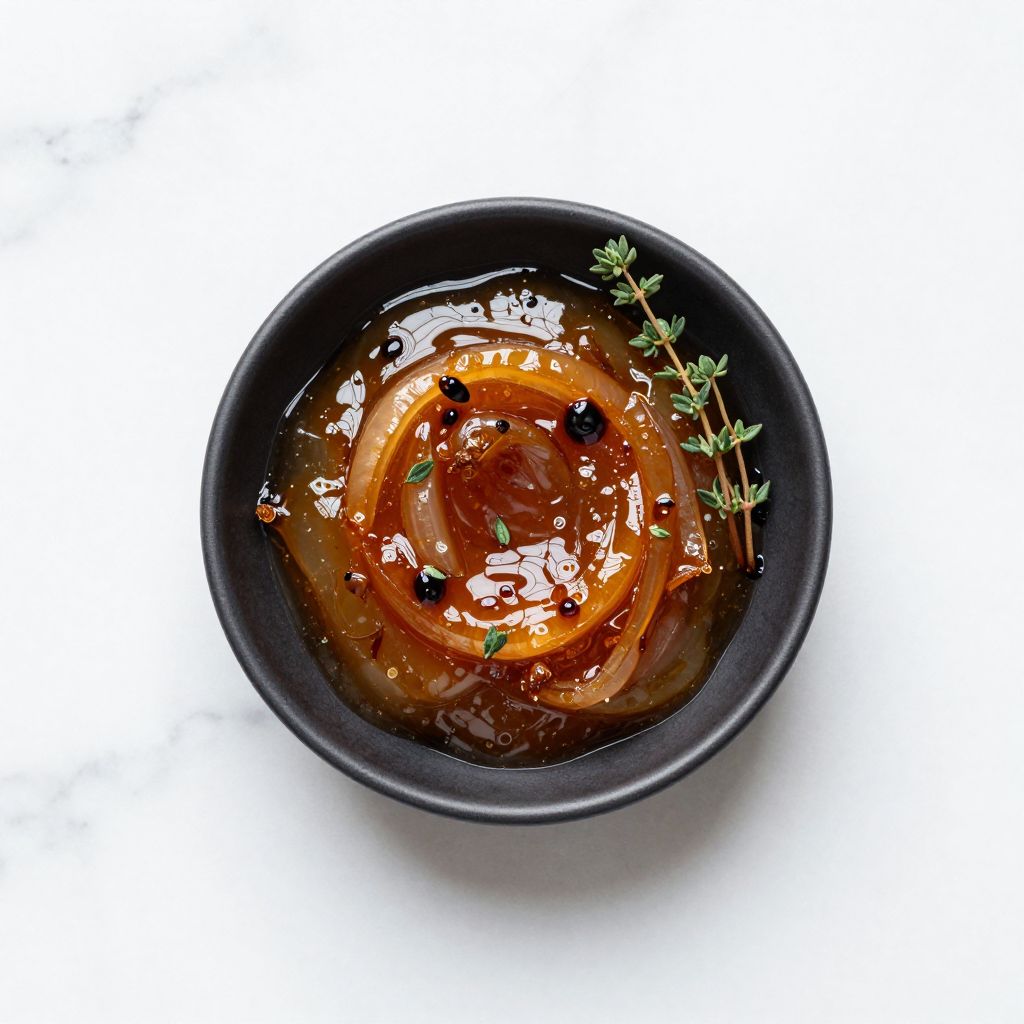
Caramelized Onion Jam
Ingredients
Equipment
Method
- Peel your onions and slice them into thin half-moons about 1/4 inch thick for uniform cooking.
- Place your large heavy-bottomed pot over medium heat and add the butter. Let it melt completely and coat the bottom of the pot.
- Add all your sliced onions to the melted butter and stir well to coat them evenly.
- Lower the heat to medium-low and cook the onions uncovered, stirring occasionally every 5 to 8 minutes for 45 minutes until they turn deep golden brown.
- Once the onions reach a deep golden color (around the 45-minute mark), add your balsamic vinegar, honey or brown sugar, salt, pepper, and thyme if using. Stir well to combine.
- Continue cooking for another 3 to 5 minutes until the mixture reaches a spreadable jam-like consistency where most of the liquid has evaporated and you can run a spoon through it and it leaves a trail.
- Remove the pot from heat and let the jam cool to room temperature before transferring it to clean glass jars.