
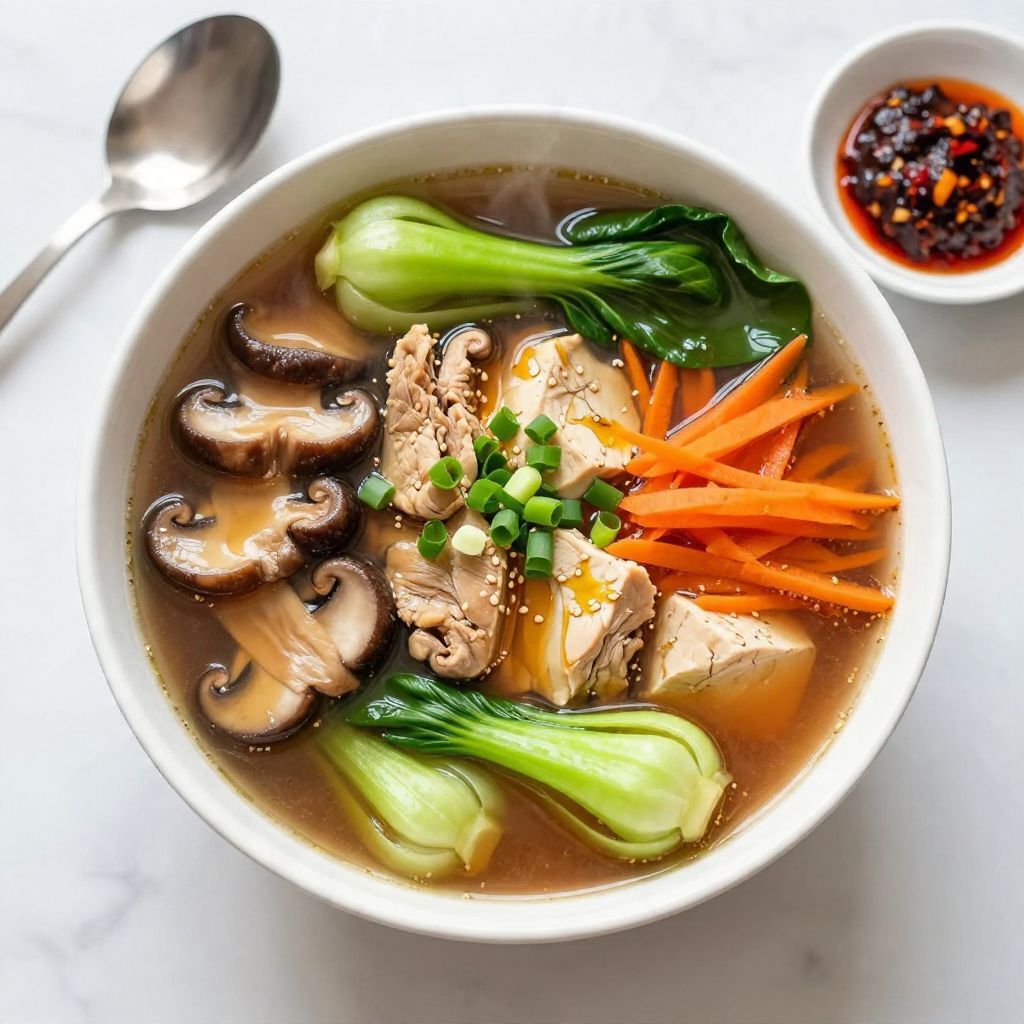
As the aroma of simmering broth fills the kitchen, you can almost hear the comforting whispers of countless family dinners. This Asian Soup recipe is a delightful blend of flavors and textures, offering a warm hug in a bowl that you can enjoy any time of the year. It’s quick to prepare and can easily be customized to suit your tastes, making it a versatile staple for busy weeknights or cozy weekends.
Why You’ll Love This Recipe
This soup is a delightful fusion of taste and simplicity.
- Rich, savory broth that warms the soul.
- Quick to make, perfect for a weeknight meal.
- Versatile ingredients that can be swapped based on what you have.
- Healthy and packed with veggies and protein.
My Experience Making This Recipe
Making this soup has become a cherished ritual for me. The first time I prepared it, I was amazed by how just a few simple ingredients could create such depth of flavor.
Each time I serve it, I’m met with smiles and satisfied slurps, which is the ultimate compliment in my kitchen. It’s the kind of recipe that brings everyone together, filling the air with warmth and laughter.
Recipe Overview
- Recipe Name: Asian Soup
- Servings: 4
- Prep Time: 15 minutes
- Cook Time: 30 minutes
- Total Time: 45 minutes
- Course: Soup
- Cuisine: Asian
- Calories per Serving: 250
Equipment You Will Need
- Large pot
- Wooden spoon
- Measuring cups and spoons
- Knife and cutting board
- Serving bowls
Ingredients for Asian Soup
- 4 cups chicken or vegetable broth
- 1 cup sliced mushrooms
- 1 cup chopped bok choy
- 1 cup shredded carrots
- 1 cup cooked protein (chicken, tofu, or shrimp)
- 2 tablespoons soy sauce
- 1 tablespoon sesame oil
- 1 teaspoon grated ginger
- 2 cloves garlic, minced
- 2 green onions, chopped
- 1 teaspoon chili paste (optional, for heat)
Ingredient Notes and Substitutions
- Chicken or vegetable broth: This forms the soup base, adding flavor. Use homemade for the best taste or low-sodium for a healthier option.
- Mushrooms: They add umami richness. Swap with any favorite mushroom variety or omit for a lighter taste.
- Bok choy: Provides crunch and nutrition. Substitute with spinach or kale if bok choy isn’t available.
- Cooked protein: Adds heartiness. Any leftover protein works, or choose to skip for a vegetarian version.
How to Make Asian Soup
Step 1: Heat the Broth
Start by pouring the chicken or vegetable broth into a large pot over medium heat. Heating the broth first ensures a quicker cooking time for the other ingredients.
Step 2: Add Aromatics
Once the broth is warm, stir in the minced garlic and grated ginger. This step is crucial as it releases their flavors into the soup.
Step 3: Incorporate Vegetables
Add the sliced mushrooms, chopped bok choy, and shredded carrots to the pot. These veggies not only add nutrition but also create a lovely texture contrast.
Step 4: Stir in Soy Sauce and Sesame Oil
Pour in the soy sauce and sesame oil, stirring well to combine. This gives the soup a rich, savory flavor that’s hard to resist.
Step 5: Add Cooked Protein
Mix in your choice of cooked protein, whether it’s chicken, tofu, or shrimp. This makes the soup more filling and satisfying.
Step 6: Bring to a Simmer
Increase the heat slightly and bring the soup to a gentle simmer. This allows all the flavors to meld beautifully.
Step 7: Adjust Seasoning
Taste the soup and adjust with more soy sauce or chili paste if desired. It’s all about finding that perfect balance of flavors that you love.
Step 8: Serve and Garnish
Once everything is heated through, ladle the soup into bowls and top with chopped green onions. This final touch adds freshness and a pop of color.
Pro Tip: For an even deeper flavor, let the soup simmer longer, up to an hour, before serving.
Tips for the Best Asian Soup
- Use fresh ingredients for the best flavor and crunch.
- Experiment with different proteins to keep it exciting.
- Add a squeeze of lime just before serving for brightness.
- Serve with rice or noodles for a heartier meal.
- Make it ahead of time and let the flavors develop overnight.
Common Mistakes to Avoid
- Not simmering long enough, which can lead to bland flavors.
- Overcooking vegetables, making them mushy and unappealing.
- Using too much broth, resulting in a diluted taste.
- Skipping the aromatics, which are essential for depth of flavor.
Serving Suggestions
This soup is a delightful standalone dish, but pairing it can elevate your meal.
- Serve with steamed rice or noodles for a filling option.
- Pair with spring rolls for a complete Asian-inspired feast.
- Offer a side of dumplings to enhance the experience.
- A crisp salad can provide a refreshing contrast.
Variations to Try
- Add coconut milk for a creamy, Thai-inspired version.
- Incorporate different vegetables like bell peppers or snow peas for variety.
- Use miso paste instead of soy sauce for a unique flavor twist.
- Try adding some noodles for a heartier soup.
Dietary Adaptations
- Gluten-free: Use tamari instead of soy sauce.
- Dairy-free: This recipe is naturally dairy-free.
- Vegan/Vegetarian: Substitute meat with tofu and use vegetable broth.
- Low-carb/Keto: Skip the noodles and add more protein and veggies.
Storage and Reheating
Refrigerator
Store leftover soup in an airtight container in the fridge for up to three days.
- Ensure it has cooled completely before sealing.
- Label with the date for easy tracking.
Freezer
This soup can be frozen for up to three months.
- Use freezer-safe containers to prevent freezer burn.
- Leave some space in the container for expansion during freezing.
Reheating
Reheat on the stove over medium heat until warmed through.
- Add a splash of broth or water if it’s too thick.
- Stir occasionally to prevent sticking.
Nutrition Information
| Nutrient | Amount |
|---|---|
| Calories | 250 |
| Total Fat | 8g |
| Saturated Fat | 1g |
| Carbohydrates | 30g |
| Fiber | 4g |
| Sugar | 5g |
| Protein | 15g |
| Sodium | 800mg |
| Cholesterol | 50mg |
This information is an estimate and can vary based on specific ingredients used.
Frequently Asked Questions
Can I make this soup ahead of time?
Yes, this soup can be made in advance and stored in the fridge. The flavors will develop even more overnight.
What can I substitute for bok choy?
You can use spinach or kale as a substitute. Both will provide similar nutrition and flavor.
How do I store leftover soup?
Store in an airtight container in the fridge for up to three days. You can also freeze it for up to three months.
Can I use uncooked noodles in the soup?
Yes, you can add uncooked noodles directly to the soup, but ensure they are cooked through before serving. Adjust the broth accordingly for the noodles to cook properly.
What’s the best way to reheat the soup?
Reheat on medium heat on the stove, stirring occasionally. Add a little broth or water if it becomes too thick.
Final Thoughts
This Asian Soup has a way of warming both the body and soul, making it a perfect dish for any occasion. I encourage you to give it a try and adapt it to your own tastes.
Feel free to explore more comforting recipes, such as Taiwanese Beef Noodle Soup or Bun Bo Hue, and enjoy the delightful world of home cooking.