
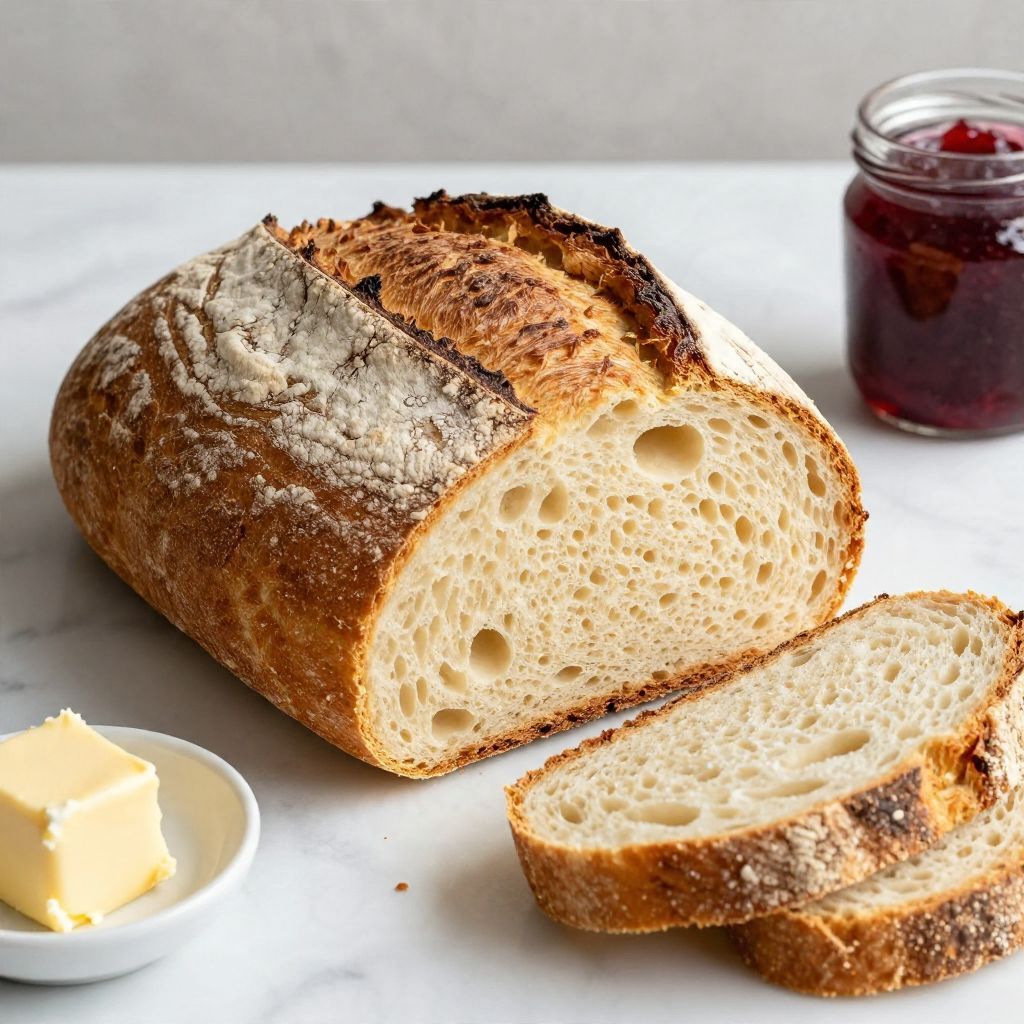
Imagine walking into your kitchen and being greeted by the warm, yeasty aroma of freshly baked bread. The simple act of making Flour Bread can transform your home into a cozy haven, and trust me, there’s nothing quite like slicing into a warm loaf. This recipe is cherished for its ease and versatility, allowing you to create a crusty exterior and a soft interior with minimal effort. Whether you’re a seasoned baker or a novice, this bread will elevate your meals and make your kitchen feel like a bakery. Let’s get into the ingredients and the steps to make this delightful bread.
Why You’ll Love This Recipe
This recipe is a favorite for several reasons.
- Simple ingredients you probably already have.
- Perfect for sandwiches or toast.
- Can be customized with herbs or spices.
- Great for beginners and experienced bakers alike.
- Freezes well for later enjoyment.
My Experience Making This Recipe
Every time I make this bread, it takes me back to my childhood, where the smell of baking bread filled our home. The first time I pulled a loaf out of the oven, I could hardly believe I had made something so delicious.
My family devoured it in no time, slathering it with butter and homemade jam. Each slice brought back fond memories, making this recipe feel like a warm hug from the past.
Recipe Overview
- Recipe Name: Flour Bread
- Servings: 12
- Prep Time: 20 minutes
- Cook Time: 30 minutes
- Total Time: 50 minutes
- Course: Bread
- Cuisine: Various
- Calories per Serving: 150
Equipment You Will Need
- Mixing bowl
- Measuring cups and spoons
- Whisk or fork
- Loaf pan
- Oven
- Cooling rack
Ingredients for Flour Bread
- 3 cups all-purpose flour
- 1 tablespoon sugar
- 1 teaspoon salt
- 1 packet (2 1/4 teaspoons) active dry yeast
- 1 cup warm water (110°F)
- 2 tablespoons olive oil
Ingredient Notes and Substitutions
- All-purpose flour: This gives the bread its structure. You can substitute with bread flour for a chewier texture.
- Sugar: It helps activate the yeast. Honey or maple syrup can be used as natural alternatives.
- Salt: Adds flavor and controls yeast activity. Sea salt can be used instead of table salt.
- Active dry yeast: This is crucial for rising. Instant yeast can be used without proofing.
- Warm water: Activates the yeast effectively. If you prefer, use milk for a richer flavor.
- Olive oil: Adds moisture and flavor. You can use any neutral oil if desired.
How to Make Flour Bread
Step 1: Activate the Yeast
In a small bowl, combine warm water, sugar, and yeast. Let it sit for about 5-10 minutes until it becomes frothy, indicating that the yeast is alive.
Step 2: Mix Dry Ingredients
In a large mixing bowl, whisk together the flour and salt. This ensures even distribution of the salt, which is crucial for flavor.
Step 3: Combine Wet and Dry Ingredients
Add the frothy yeast mixture and olive oil to the dry ingredients. Use a fork or wooden spoon to mix until a dough starts to form.
Step 4: Knead the Dough
Transfer the dough onto a floured surface and knead for about 5-7 minutes until it’s smooth and elastic. This develops the gluten, giving the bread its structure.
Step 5: First Rise
Place the kneaded dough in a greased bowl, cover it with a damp cloth, and let it rise in a warm place for about 1 hour or until it doubles in size. This fermentation is key for flavor and texture.
Step 6: Shape the Dough
Punch down the risen dough to remove excess air, then shape it into a loaf. Place it into a greased loaf pan, ensuring it’s snug but not overly tight.
Step 7: Second Rise
Cover the loaf again and let it rise for another 30 minutes. This step allows the dough to expand further, creating a light texture.
Step 8: Bake the Bread
Preheat your oven to 375°F (190°C). Bake the bread for 25-30 minutes until golden brown and sounds hollow when tapped. This ensures the crust is perfectly crispy.
Pro Tip: For an extra crispy crust, place a pan of water in the oven while baking.
Tips for the Best Flour Bread
- Use a thermometer to check the water temperature for the yeast activation.
- Let the dough rise in a warm, draft-free area for best results.
- Knead until the dough is smooth to ensure proper gluten development.
- Experiment with herbs or spices for unique flavor profiles.
- Brush the top with butter after baking for a delicious finish.
Common Mistakes to Avoid
- Skipping the yeast activation step can lead to flat bread.
- Not kneading enough will result in dense bread.
- Using cold water will not activate the yeast properly.
- Overproofing the dough can cause it to collapse.
Serving Suggestions
Freshly baked bread is delightful on its own, but pairing it enhances the experience.
- Spread with butter or a flavored compound butter.
- Serve with soups or stews for a hearty meal.
- Make sandwiches with your favorite fillings.
- Toast and top with avocado or eggs for breakfast.
Variations to Try
- Add herbs like rosemary or thyme for a savory twist.
- Incorporate cheese for a cheesy bread version.
- Use whole wheat flour for a healthier loaf.
- Mix in seeds or nuts for added texture and flavor.
Dietary Adaptations
- Gluten-free: Substitute with a gluten-free flour blend but adjust the liquid accordingly.
- Dairy-free: This recipe is naturally dairy-free, so no changes are needed.
- Vegan: Use plant-based oil and leave out any dairy products.
- Low-carb/Keto: Use almond flour or coconut flour instead of all-purpose flour.
Storage and Reheating
Refrigerator
Store in an airtight container for up to a week.
- Slice before storing for easy access.
- Wrap in plastic wrap to maintain moisture.
Freezer
Freeze for up to 3 months for best quality.
- Wrap tightly in foil or plastic wrap.
- Slice before freezing for convenience.
Reheating
Reheat in the oven to restore freshness.
- Wrap in foil to prevent over-browning.
- Warm at 350°F (175°C) for about 10 minutes.
Nutrition Information
| Nutrient | Amount |
|---|---|
| Calories | 150 |
| Total Fat | 2g |
| Saturated Fat | 0g |
| Carbohydrates | 30g |
| Fiber | 1g |
| Sugar | 1g |
| Protein | 4g |
| Sodium | 200mg |
| Cholesterol | 0mg |
This information is based on standard ingredient measurements and can vary based on specific brands used.
Frequently Asked Questions
Can I use whole wheat flour instead of all-purpose flour?
Yes, but you may need to adjust the liquid since whole wheat flour absorbs more moisture.
How can I make this bread ahead of time?
You can prepare the dough, let it rise, and then refrigerate it overnight before baking.
What if my dough doesn’t rise?
This could indicate the yeast was expired or the water was too hot or cold. Always check the temperature of your water.
Can I add seeds or nuts to the dough?
Absolutely! Just fold them into the dough during the kneading stage for added flavor and texture.
How do I know when the bread is done baking?
The bread should be golden brown and sound hollow when tapped on the bottom. A thermometer should read around 190°F (88°C).
Final Thoughts
Making your own bread can be incredibly satisfying and rewarding. I encourage you to try this Flour Bread Recipe and savor each slice.
Do not hesitate to explore more delicious recipes, like almond flour bread or einkorn bread, to expand your baking repertoire.