
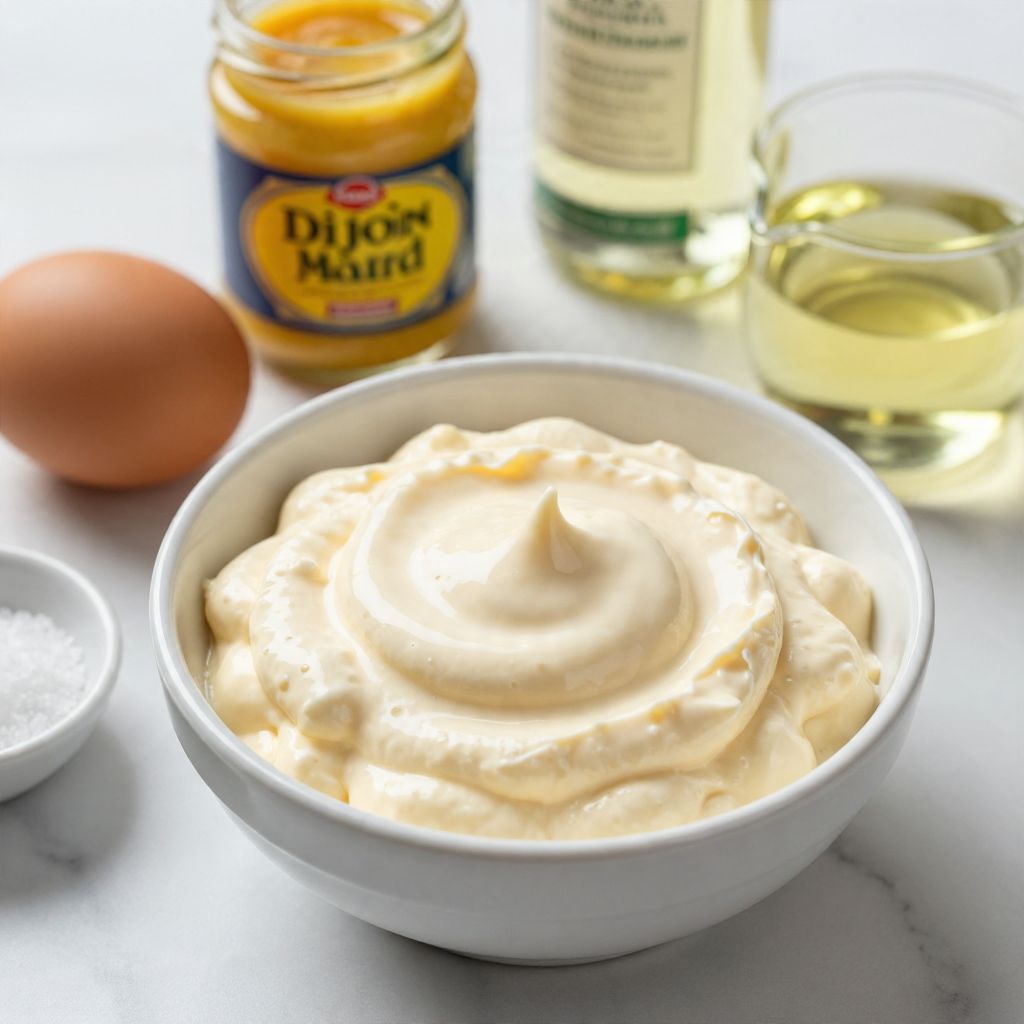
There’s nothing quite like the creamy texture and rich flavor of homemade mayonnaise. This Easy Mayonnaise Recipe is a lifesaver, perfect for sandwiches, salads, or dips, and it takes just minutes to whip up!
With just a few simple ingredients, you can create a condiment that outshines store-bought varieties in flavor and freshness. Plus, it’s customizable, allowing you to experiment with flavors like garlic or herbs, making it a versatile staple in your kitchen.
Why You’ll Love This Recipe
This mayonnaise recipe is a breeze to make and delivers fantastic results.
- Quick to prepare with minimal ingredients.
- Customizable flavors to suit your taste.
- Perfectly creamy texture that elevates any dish.
- Healthier option without preservatives.
My Experience Making This Recipe
The first time I made this mayonnaise, I was surprised by how simple it was. The moment I tasted it, I knew I’d never go back to store-bought again.
Each batch has become a family favorite, and experimenting with different flavors has turned into a fun kitchen adventure. It’s like a little culinary magic right in your kitchen!
Recipe Overview
- Recipe Name: Easy Mayonnaise
- Servings: 1 cup
- Prep Time: 5 minutes
- Cook Time: 0 minutes
- Total Time: 5 minutes
- Course: Condiment
- Cuisine: American
- Calories per Serving: 94
Equipment You Will Need
- Blender or food processor
- Measuring cups
- Measuring spoons
- Spatula
- Container for storage
Ingredients for Easy Mayonnaise
- 1 large egg at room temperature
- 1 tablespoon Dijon mustard for flavor
- 1 tablespoon white wine vinegar for acidity
- 1 cup neutral oil like vegetable or canola
- Salt to taste
Ingredient Notes and Substitutions
- Egg: Used for emulsifying the mayonnaise. You can substitute with pasteurized egg if concerned about raw eggs.
- Dijon mustard: Adds depth of flavor. Yellow mustard can be a substitute, but the taste will differ.
- White wine vinegar: Provides tanginess. Apple cider vinegar works as a good alternative.
- Neutral oil: Essential for the creamy texture. Olive oil can be used but will impart a stronger flavor.
How to Make Easy Mayonnaise
Step 1: Gather Your Ingredients
Start by measuring out all your ingredients. Having everything ready makes the process smoother and quicker.
Step 2: Add Ingredients to Blender
Place the egg, Dijon mustard, white wine vinegar, and a pinch of salt into your blender or food processor. This base will create the creamy emulsion essential for mayonnaise.
Step 3: Blend the Base
Blend the mixture on medium speed for about 5 seconds until well combined. This step ensures that the egg and mustard are fully incorporated.
Step 4: Add Oil Slowly
With the blender running, slowly drizzle in the oil. Adding it gradually helps to emulsify the mixture, creating that luscious, creamy texture.
Step 5: Watch for Thickness
Continue blending until the mayonnaise thickens, which should take about 30 seconds. The emulsion is successful when it holds its shape and has a pale color.
Step 6: Taste and Adjust
Stop the blender and taste your mayonnaise. Adjust the seasoning by adding more salt or vinegar if needed. This is where you can personalize the flavor.
Step 7: Store the Mayonnaise
Transfer the mayonnaise to a clean container. Make sure to store it airtight to maintain freshness.
Step 8: Chill Before Serving
Refrigerate for at least 30 minutes before using. Chilling allows the flavors to meld beautifully.
Pro Tip: Make sure all your ingredients are at room temperature for the best emulsion!
Tips for the Best Easy Mayonnaise
- Use fresh eggs for the best flavor and texture.
- Experiment with different vinegars for unique flavors.
- Blend on high speed for a fluffier mayonnaise.
- Keep the oil at room temperature to help emulsification.
- Use a clean container to prevent spoilage and contamination.
Common Mistakes to Avoid
- Adding oil too quickly can lead to a broken emulsion. Slow and steady wins the race here.
- Using cold ingredients can prevent emulsification. Room temperature is key.
- Not blending long enough can leave you with a runny texture. Patience is crucial.
- Skipping the taste test can result in bland mayonnaise. Adjusting seasoning makes all the difference.
Serving Suggestions
This mayonnaise is incredibly versatile and can be paired with many dishes.
- Spread on sandwiches or wraps for extra flavor.
- Use as a dip for vegetables or chips.
- Mix into potato salad for creaminess.
- Top off burgers for a gourmet touch.
Variations to Try
- Add minced garlic for a delicious garlic mayonnaise.
- Incorporate fresh herbs like basil or dill for a herbed mayonnaise.
- Sweeten with a bit of honey for a honey mustard version.
- Mix in sriracha or hot sauce for a spicy kick.
Dietary Adaptations
- Gluten-free: Naturally gluten-free without any modifications.
- Dairy-free: This recipe is dairy-free as written.
- Vegan: Replace the egg with aquafaba for a vegan version.
- Low-carb/Keto: Low in carbs, suitable for keto diets.
Storage and Reheating
Refrigerator
Store homemade mayonnaise in an airtight container in the fridge.
- It stays fresh for about 1 week.
Freezer
Freezing mayonnaise is not recommended as it can change texture.
- Instead, make smaller batches to avoid waste.
Reheating
There is no need to reheat mayonnaise. Use it cold or at room temperature for best results.
Nutrition Information
| Nutrient | Amount |
|---|---|
| Calories | 94 |
| Total Fat | 10g |
| Saturated Fat | 1g |
| Carbohydrates | 0g |
| Fiber | 0g |
| Sugar | 0g |
| Protein | 1g |
| Sodium | 40mg |
| Cholesterol | 37mg |
This nutritional information is an estimate and can vary based on ingredients used.
Frequently Asked Questions
Can I use a hand whisk instead of a blender?
Yes, but whisking by hand requires more effort and time to emulsify.
How long can I store homemade mayonnaise?
It lasts about one week in the refrigerator, so make sure to use it quickly.
What if my mayonnaise is too thin?
Try adding a bit more oil slowly while blending to thicken it up.
Can I make mayo without eggs?
Yes, you can use aquafaba, the liquid from canned chickpeas, as an egg substitute.
Is it safe to eat raw egg mayonnaise?
Using fresh, high-quality eggs minimizes risk, but pasteurized eggs are a safer option.
Final Thoughts
Making your own mayonnaise is simple and rewarding, offering a taste that store-bought just can’t match. Once you try this recipe, you might find yourself making it all the time!
Explore more delicious recipes like garlic mayo or a tasty mayo chicken that will surely impress!