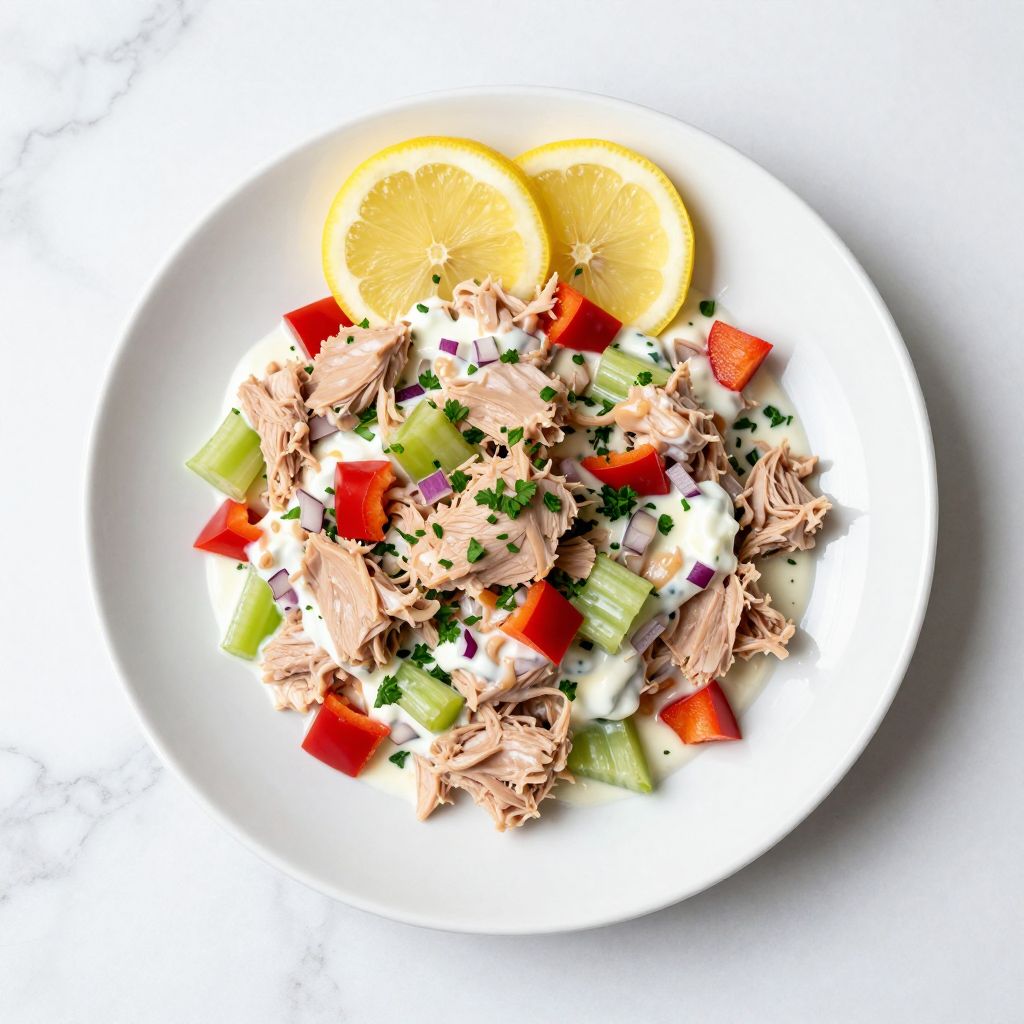
There’s something deeply satisfying about opening a can of tuna and transforming it into something that tastes far better than the sum of its parts. Healthy tuna salad sits at that perfect intersection of convenience and nutrition, ready in minutes but packed with protein, omega-3 fatty acids, and vibrant flavors that make you feel genuinely nourished rather than like you’re eating a diet food.
This version strips away the mayo-heavy versions you might remember and replaces them with a lighter, brighter approach that doesn’t sacrifice creaminess or taste. You get a salad that works for quick lunches, meal prep containers, and even impressive enough to serve at gatherings without anyone suspecting how little effort went into it.
Why You’ll Love This Recipe
This recipe delivers on speed, nutrition, and flavor without asking you to sacrifice taste for health.
- Ready in under 10 minutes with zero cooking involved
- High in protein and omega-3s, keeping you satisfied for hours
- Naturally versatile, adapting to whatever vegetables and mix-ins you have on hand
- Costs just a few dollars to make a batch that feeds multiple people
- Works for meal prep, quick lunches, or a light dinner option
My Experience Making This Recipe
I started making this version after getting tired of the heavy, mayo-laden tuna salads at delis and restaurants. The first time I combined Greek yogurt with a touch of mayo, fresh lemon juice, and crunchy celery, something clicked into place in my kitchen.
What surprised me most was how people reacted when I told them it was mostly Greek yogurt, not mayo. They genuinely couldn’t tell the difference, but they felt better eating it, and that matters just as much as the actual flavor.
Now I make a batch nearly every Sunday, using it throughout the week on salad greens, whole grain bread, or straight from the bowl as a protein-packed snack. My partner actually requests it, which speaks volumes about how far this recipe has come from my early “eating healthy” experiments.
Recipe Overview
- Recipe Name: Healthy Tuna Salad
- Servings: 4 servings
- Prep Time: 10 minutes
- Cook Time: 0 minutes
- Total Time: 10 minutes
- Course: Lunch, Light Dinner, Appetizer
- Cuisine: American
- Calories per Serving: 185 calories
Equipment You Will Need
- Medium mixing bowl
- Can opener
- Wooden spoon or rubber spatula
- Cutting board
- Sharp knife
- Measuring spoons
- Measuring cups
Ingredients for Healthy Tuna Salad
- 2 cans (5 ounces each) albacore tuna in water, drained well
- 1/2 cup non-fat plain Greek yogurt
- 2 tablespoons mayonnaise
- 2 tablespoons fresh lemon juice
- 1/2 cup celery, finely diced
- 1/4 cup red bell pepper, finely diced
- 2 tablespoons red onion, finely minced
- 1/4 cup fresh parsley, chopped
- 1 teaspoon Dijon mustard
- Salt and black pepper to taste
Ingredient Notes and Substitutions
- Albacore tuna in water: Provides lean protein without excess oil or mercury concerns. Swap chunk light tuna for a milder, slightly less flaky texture, though it works fine.
- Greek yogurt: Replaces most mayo while adding creaminess and protein. Use regular plain yogurt if needed, though it will be thinner and slightly tangier.
- Mayonnaise: Adds a small amount of richness and emulsifies the dressing. Use avocado oil mayo or omit entirely for a lighter version, though creaminess decreases slightly.
- Lemon juice: Brightens flavors and prevents the salad from tasting flat. Fresh lime juice works as a tasty alternative with a citrus twist.
- Celery: Provides crunch and a fresh, slightly peppery note. Substitute with diced cucumber for a lighter crunch or skip it entirely for a smoother texture.
- Red bell pepper: Adds sweetness and color while contributing vitamin C. Green bell pepper works too, with a slightly more herbaceous note.
How to Make Healthy Tuna Salad
Step 1: Drain the Tuna Thoroughly
Open both cans of tuna and pour the contents into a fine-mesh strainer set over a bowl or sink. Press the tuna gently with a clean kitchen towel or the back of a spoon to remove excess water and oil, which prevents the salad from becoming watery or overly rich.
Step 2: Combine the Creamy Base
In a medium mixing bowl, add the Greek yogurt, mayonnaise, and Dijon mustard. Stir them together until smooth and well blended, creating a creamy base that will coat all the other ingredients evenly.
Step 3: Add the Lemon Juice
Pour the fresh lemon juice into the creamy base and stir well, mixing it thoroughly throughout. Lemon juice not only adds brightness and flavor but also helps prevent oxidation and keeps your salad fresh longer in the refrigerator.
Step 4: Fold in the Drained Tuna
Add the drained tuna to the bowl and gently fold it in with a rubber spatula, breaking it into bite-sized pieces as you go. Avoid overmixing, which can turn the tuna into a paste instead of maintaining its flaky texture.
Step 5: Add the Celery
Stir in the finely diced celery, distributing it evenly throughout the mixture. Celery adds crunch that contrasts beautifully with the creamy base and keeps every spoonful interesting.
Step 6: Incorporate the Red Bell Pepper
Add the diced red bell pepper and fold it in gently until well distributed. Bell pepper contributes sweetness and color while adding nutritional value without any additional calories from fat.
Step 7: Add Aromatics and Fresh Herbs
Mix in the minced red onion and chopped fresh parsley, stirring until they’re spread throughout the salad. These ingredients bring a fresh, aromatic quality that elevates the entire dish from simple to sophisticated.
Step 8: Season to Taste
Taste the salad and add salt and black pepper according to your preference, keeping in mind that flavors develop and deepen as the salad sits. Start with a light hand since you can always add more, but you can’t remove it once it’s mixed in.
Pro Tip: Make this salad up to 4 hours ahead and let it chill in the refrigerator, which allows the flavors to meld beautifully and makes the celery even crunchier.
Tips for the Best Healthy Tuna Salad
- Drain your tuna aggressively by pressing it firmly in a strainer and even squeezing it gently in a clean kitchen towel. Extra liquid dilutes the flavors and makes the salad watery no matter how good your other ingredients are.
- Use high-quality Greek yogurt without added sweeteners or stabilizers, which can affect the flavor and texture. Check the ingredient list and stick to plain versions for the cleanest taste.
- Dice all your vegetables finely and uniformly so they distribute evenly and don’t create any unpleasant texture surprises. Uneven pieces mean some bites have too much crunch while others have none.
- Taste as you go and adjust the lemon juice and mustard before adding salt, which can mask subtle flavors. These two ingredients brighten the whole salad and make it taste fresher without adding calories.
- Chill the finished salad for at least 30 minutes before serving if you have the time, which helps flavors develop and makes eating it more enjoyable. A cold salad also stays fresh longer once you serve it.
- Consider making a double batch on Sunday for meal prep, which gives you convenient protein throughout the week. It stays fresh for up to 4 days when stored properly in airtight containers.
Common Mistakes to Avoid
- Not draining the tuna well enough: Excess liquid ruins the texture and dilutes all your carefully balanced flavors, leaving you with a mushy, bland mixture that tastes like water.
- Using too much mayo: Even though mayo tastes delicious, going overboard makes the salad heavy and masks the fresh taste of the tuna and vegetables underneath.
- Chopping vegetables too coarsely: Large chunks of celery or onion create an inconsistent texture and make the salad harder to eat on bread or crackers.
- Mixing too aggressively: Overmixing breaks down the tuna into small flakes instead of nice chunks, creating a pasty texture that’s unpleasant to eat and looks less appetizing.
- Skipping the fresh parsley: This herb brings a fresh note that makes the entire salad taste brighter and more intentional, not just like “canned tuna with mayo.”
Serving Suggestions
This salad adapts beautifully to however you want to enjoy it, whether you’re keeping it light or making it a more substantial meal. Serve it cold straight from the refrigerator for maximum crunch and refresh.
- Piled high on mixed greens with cherry tomatoes and cucumber slices for a complete salad
- Spread on whole grain bread or a toasted baguette for a satisfying sandwich
- Served on crispy romaine lettuce leaves as a fun, low-carb finger food option
- Alongside hard boiled eggs, cheese, and olives for a protein-packed charcuterie-style spread
- Stuffed into halved avocados for a creamy, nutritious lunch that feels indulgent
Variations to Try
- Mediterranean Style: Add diced cucumber, kalamata olives, and crumbled feta cheese, then swap the parsley for fresh dill and finish with a squeeze of lemon. This version tastes brighter and more herbaceous, perfect for warm weather eating.
- Spicy Version: Mix in a pinch of cayenne pepper, some diced jalapeno, and a drizzle of hot sauce to the creamy base. The heat complements the mild tuna and makes the salad feel more dynamic and exciting.
- Curry-Inspired: Add a teaspoon of curry powder, a small dice of mango or pineapple, and some shredded carrots to the mix. This transforms the familiar flavors into something tropical and unexpected that tastes completely different.
- Asian-Fusion: Replace the lemon juice with rice vinegar, add some sesame oil, diced water chestnuts, and fresh ginger, then top with crispy wontons. This version offers crunch, aromatic spice, and an entirely new flavor profile.
- Herb-Forward: Double the parsley and add fresh tarragon, chives, and dill for an herbaceous version that tastes like spring. Fresh herbs shine when they’re the star, creating an elegant salad that impresses without much effort.
Dietary Adaptations
- Gluten-Free: This recipe is naturally gluten-free as written, but verify that your mayo and any crackers or bread you serve it with are certified gluten-free to avoid cross-contamination.
- Dairy-Free: Replace Greek yogurt with a plant-based yogurt or use an extra tablespoon of mayo instead, though you’ll lose some of the protein benefit and gain more fat.
- Vegan: Swap canned tuna with mashed chickpeas or crumbled tofu, use vegan mayo made with aquafaba, and replace Greek yogurt with cashew cream for a completely plant-based version.
- Low-Carb and Keto: This recipe is already low in carbs, containing under 5 grams per serving when served on greens rather than bread or crackers.
Storage and Reheating
Refrigerator
Store your healthy tuna salad in an airtight container on the coldest shelf of your refrigerator, where it stays fresh for up to 4 days. The salad actually tastes better after sitting for a few hours as flavors meld together.
- Keep it in a glass container with a tight-fitting lid to maintain freshness
- Store any crunchy additions like crackers separately if you’re planning to eat it over several days
- Give it a quick stir before serving if liquid has accumulated at the bottom
Freezer
Freezing tuna salad is not recommended because the vegetables soften and the texture becomes mushy when thawed. Make fresh batches instead, which only takes 10 minutes and tastes infinitely better.
- The mayo-based dressing doesn’t freeze well and separates upon thawing
- Vegetables like celery and bell pepper lose their pleasant crunch
Reheating
This is a cold salad that never requires reheating, so simply scoop it out of the container and serve it cold. If you’ve stored it for several days, give it a gentle stir and add a splash of lemon juice to refresh the flavors.
- Serve straight from the refrigerator for the best texture and temperature
- Add fresh herbs or a squeeze of lemon just before serving to brighten flavors
Nutrition Information
| Nutrient | Amount |
|---|---|
| Calories | 185 |
| Total Fat | 8g |
| Saturated Fat | 1.5g |
| Carbohydrates | 4g |
| Fiber | 1g |
| Sugar | 1g |
| Protein | 28g |
| Sodium | 520mg |
| Cholesterol | 42mg |
These values are approximations based on standard USDA data for the ingredients listed and assume 4 servings. Individual values may vary slightly based on specific brands and exact measurements used in preparation.
Frequently Asked Questions
Can I use canned tuna in oil instead of water?
You can, but drain it extremely well and consider reducing the mayonnaise slightly since the oil adds richness. Tuna packed in water gives you better control over the fat content and a cleaner tuna flavor.
How far ahead can I make this salad?
Make it up to 4 hours before eating for the best flavor development and crunch. Beyond 4 hours, the celery softens and the flavors begin to flatten, though it’s still perfectly safe and tasty for up to 4 days.
Can I make this without Greek yogurt?
Yes, simply use all mayonnaise in place of the Greek yogurt, though you’ll double the calories and fat content per serving. If you want to keep it light, use regular plain yogurt instead, which is thinner but still adds creaminess.
What can I use if I don’t have fresh parsley?
Fresh dill, cilantro, or chives all work beautifully and bring different flavor profiles to the salad. Dried parsley works in a pinch at about one-third the amount, though fresh herbs are always superior.
Is this salad good for meal prep?
Absolutely, it’s one of the best meal prep dishes because it stays fresh for 4 days and tastes better the next day after flavors meld. Pack it in individual containers on Sunday and you have convenient lunches ready to grab all week.
Can I add other vegetables to this recipe?
Completely, that’s the beauty of this recipe: add diced cucumber, shredded carrots, corn, sun-dried tomatoes, or anything else you enjoy. Just keep the total vegetable amount around 1.5 cups so the dressing coats everything evenly.
Final Thoughts
This healthy tuna salad proves that eating nutritiously doesn’t mean sacrificing flavor or convenience. Once you make it a few times, you’ll find yourself preparing it instinctively on busy weeks, knowing you’ve got a protein-packed meal ready whenever hunger strikes.
Don’t be afraid to experiment with different vegetables, herbs, and additions until you find your own version that makes you genuinely excited to eat it. The best recipe is the one you’ll actually make, so adjust boldly and enjoy every single bite.
Healthy Tuna Salad
Ingredients
Equipment
Method
- Open both cans of tuna and pour the contents into a fine-mesh strainer set over a bowl or sink. Press the tuna gently with a clean kitchen towel or the back of a spoon to remove excess water and oil, which prevents the salad from becoming watery or overly rich.
- In a medium mixing bowl, add the Greek yogurt, mayonnaise, and Dijon mustard. Stir them together until smooth and well blended, creating a creamy base that will coat all the other ingredients evenly.
- Pour the fresh lemon juice into the creamy base and stir well, mixing it thoroughly throughout. Lemon juice not only adds brightness and flavor but also helps prevent oxidation and keeps your salad fresh longer in the refrigerator.
- Add the drained tuna to the bowl and gently fold it in with a rubber spatula, breaking it into bite-sized pieces as you go. Avoid overmixing, which can turn the tuna into a paste instead of maintaining its flaky texture.
- Stir in the finely diced celery, distributing it evenly throughout the mixture. Celery adds crunch that contrasts beautifully with the creamy base and keeps every spoonful interesting.
- Add the diced red bell pepper and fold it in gently until well distributed. Bell pepper contributes sweetness and color while adding nutritional value without any additional calories from fat.
- Mix in the minced red onion and chopped fresh parsley, stirring until they're spread throughout the salad. These ingredients bring a fresh, aromatic quality that elevates the entire dish from simple to sophisticated.
- Taste the salad and add salt and black pepper according to your preference, keeping in mind that flavors develop and deepen as the salad sits. Start with a light hand since you can always add more, but you can't remove it once it's mixed in.
- For best results, chill the finished salad for at least 30 minutes before serving to allow flavors to meld and make eating it more enjoyable. Serve cold and enjoy on greens, bread, or straight from the bowl.