
There’s something primal about searing a thick T-bone steak in a screaming hot cast iron pan, watching the crust form in real time, and that unmistakable aroma that fills your kitchen and tells you something special is happening.
A T-bone steak is a showstopper cut that sits at the intersection of two premium muscles: the strip on one side of the bone and the tenderloin on the other. This recipe delivers restaurant-quality results at home with minimal fuss, relying on high heat, proper seasoning, and a patient hand to let the meat do the talking.
What makes this recipe special is how it respects the steak itself: no overcomplicated sauces, no mystery ingredients, just the fundamentals executed well. You’ll end up with a beautiful crust, juicy interior, and the confidence to cook a premium cut without breaking the bank or your sanity.
Why You’ll Love This Recipe
This approach transforms a simple steak into something you’d proudly serve at a dinner party, restaurant-quality results without the restaurant price tag.
- Restaurant-quality crust and doneness achieved in your own kitchen
- Minimal prep and ingredients, maximum flavor and impact
- Works equally well for weeknight indulgence or special occasions
- The reverse-sear method ensures a perfectly cooked interior every single time
- Feeds two people generously or one very happy steak lover
My Experience Making This Recipe
The first time I nailed this steak, I was honestly shocked at how simple it was. I’d been intimidating myself for years, thinking I needed special equipment or some secret technique, when really the magic came down to temperature control and patience.
Watching the Maillard reaction happen in real time, that gorgeous brown crust forming under high heat, made me understand why chefs obsess over this stuff. The butter-basted finish filled the kitchen with this incredible savory aroma that had my partner hovering in the kitchen asking when dinner would be ready.
The payoff was absolutely worth it: a steak with a shattering crust outside and a rosy, tender center that needed nothing but flaky salt and maybe a knob of herb butter. After that first success, I’ve made variations for everything from casual dates to birthday celebrations, and it never disappoints.
Recipe Overview
- Recipe Name: T-Bone Steak with Herb Butter
- Servings: 2
- Prep Time: 10 minutes
- Cook Time: 20 minutes
- Total Time: 30 minutes
- Course: Main Course
- Cuisine: American Steakhouse
- Calories per Serving: 680
Equipment You Will Need
- Cast iron skillet or heavy-bottomed stainless steel pan (12-inch preferred)
- Meat thermometer (instant-read)
- Paper towels
- Tongs (never a fork for turning)
- Small mixing bowl for herb butter
- Oven preheated to 400 degrees Fahrenheit
Ingredients for T-Bone Steak Recipe
- T-bone steak (1.5 inches thick, 2 to 2.5 pounds)
- Kosher salt (1.5 teaspoons)
- Black pepper (0.5 teaspoon, freshly ground)
- Neutral oil (2 tablespoons, avocado or vegetable)
- Unsalted butter (4 tablespoons)
- Fresh garlic cloves (3, smashed)
- Fresh thyme (3 sprigs)
- Fresh rosemary (2 sprigs)
Ingredient Notes and Substitutions
- T-bone steak: This cut includes both the New York strip and filet mignon separated by bone, offering two different textures in one steak. If unavailable, a porterhouse works identically; look for a butcher-cut steak rather than vacuum-sealed for better surface moisture control.
- Kosher salt: Kosher salt crystals dissolve more slowly than table salt, allowing you to season and taste before cooking. Sea salt works in a pinch, but avoid table salt which will over-salt your steak quickly due to its density.
- Neutral oil: You need a high smoke point oil so it doesn’t burn at the intense heat required for searing. Olive oil will smoke and taste burnt, but ghee or refined coconut oil are solid alternatives.
- Unsalted butter: Using unsalted butter gives you control over the final salt level and prevents the butter from over-browning too quickly. Clarified butter or ghee won’t brown as visibly but will still add incredible flavor.
- Fresh herbs: Fresh thyme and rosemary infuse the butter with earthy notes that amplify the steak’s savory character. Dried herbs can work but use half the amount since they’re more concentrated.
How to Make T-Bone Steak Recipe
Step 1: Remove the Steak from Refrigeration
Pull your T-bone steak from the refrigerator and let it sit on the counter for 30 to 40 minutes before cooking. Bringing the meat to room temperature ensures it cooks evenly from edge to center rather than having a cold core by the time the outside develops a crust.
Step 2: Preheat Your Oven and Cast Iron
Set your oven to 400 degrees Fahrenheit and place your cast iron skillet inside for at least 10 minutes. A preheated pan transfers heat efficiently to the steak, which is essential for that restaurant-quality sear you’re after.
Step 3: Dry the Steak Thoroughly
Pat the steak completely dry with paper towels, paying special attention to the bone and crevices. Moisture is the enemy of a good crust because water will create steam and prevent browning; a dry surface allows the Maillard reaction to happen unobstructed.
Step 4: Season Generously with Salt and Pepper
Season both sides of the steak with kosher salt and freshly ground black pepper about 5 minutes before searing. This short window allows the salt to dissolve slightly and penetrate the meat without drawing out excess moisture.
Step 5: Add Oil to the Hot Pan and Sear
Carefully remove the skillet from the oven and place it on the stovetop over high heat (use an oven mitt). Add your neutral oil and let it shimmer for about 30 seconds, then gently lay the steak away from you to avoid splashing.
Let the steak sear undisturbed for 3 to 4 minutes on the first side without moving it around. Resisting the urge to touch it allows a golden crust to form through the Maillard reaction, which creates incredible flavor and texture.
Step 6: Flip the Steak and Sear the Second Side
Using tongs, flip the steak and sear the second side for another 3 to 4 minutes. The bone side might cook slightly faster than the flat side, so keep an eye on it and rotate slightly if needed for even browning.
Step 7: Transfer to the Oven and Cook to Temperature
Once both sides are deeply browned, transfer the entire skillet to the oven to finish cooking. Insert your meat thermometer into the thickest part of the strip side (away from the bone) and cook until it reaches 120 to 125 degrees for medium-rare.
This oven finish cooks the steak gently and evenly from all sides without overdeveloping the crust, which is the magic of the reverse-sear method. Cooking time typically ranges from 5 to 10 minutes depending on your steak’s thickness and starting temperature.
Step 8: Add Butter and Herbs for the Final Baste
Remove the skillet from the oven and add butter, smashed garlic, thyme, and rosemary directly to the hot pan. Tip the skillet toward you and continuously spoon the foaming, herb-infused butter over the steak for about 2 minutes.
This basting step deposits incredible savory, garlicky, herbal flavor directly into the meat and creates an aromatic finish that signals to everyone in your home that dinner is nearly ready. The butter browns slightly, adding nutty depth without burning the delicate herbs.
Step 9: Rest and Finish with Salt
Transfer the steak to a cutting board and let it rest for 8 to 10 minutes before serving. Resting allows the juices to redistribute throughout the muscle fibers, so when you slice or cut, the juices stay inside the steak rather than running onto the plate.
Finish with a pinch of flaky sea salt just before serving for brightness and textural contrast against the rich, savory meat.
Pro Tip: The meat thermometer is your best friend; removing the steak at 120 to 125 degrees ensures it will carry over to a perfect 130 to 135 degrees (medium-rare) after resting, avoiding the dry, gray disappointment of overcooking.
Tips for the Best T-Bone Steak Recipe
- Buy from a butcher whenever possible and ask for a steak that’s at least 1.5 inches thick, preferably cut to order. Thicker steaks are more forgiving and develop better crust-to-interior ratios than thin supermarket cuts.
- Use a meat thermometer obsessively, not just to check doneness but to learn how the steak feels at different temperatures. This builds your intuition for future steaks and removes guesswork from the equation.
- Don’t skip the resting period; it feels counterintuitive to wait when the steak is done, but those 8 to 10 minutes transform a good steak into a juicy one. The carryover cooking during rest will bring your 120-degree pull to a perfect 130 to 135 degrees.
- Keep your cast iron skillet seasoned and preheated; the thermal mass of cast iron is unmatched for delivering consistent, restaurant-quality sears. A thin, stuck-on layer of oil in the pan actually improves your sear compared to a squeaky-clean surface.
- Don’t be shy with the butter basting; this is where umami and herb flavor happen. The steak can handle an aggressive butter baste because the high heat creates emulsification that coats the meat evenly.
Common Mistakes to Avoid
- Cooking from cold: A steak straight from the fridge will have a cold core by the time the outside is brown, resulting in uneven doneness. Always bring your steak to room temperature before cooking; 30 to 40 minutes makes an enormous difference.
- Moving the steak too much: Flipping every minute or pushing the meat around prevents crust formation and wastes the energy needed for browning. Trust the process and let each side sear undisturbed for 3 to 4 minutes per side.
- Overcooking past medium-rare: Steaks this premium deserve to showcase their tender texture and beefy flavor, which gets muted and tough at higher doneness levels. Pull at 120 to 125 degrees and let carryover do its job.
- Skipping the rest: Cutting into the steak immediately releases all the flavorful juices onto the cutting board instead of into your mouth. Eight to ten minutes might feel long, but your bite will thank you.
- Using a wet pan or wet steak: Moisture creates steam and prevents browning, so dry everything thoroughly before the pan comes into contact with heat. This one mistake tanks more home steaks than any other factor.
Serving Suggestions
A T-bone steak is the star of the plate, so sidekicks should complement rather than compete. Think rich, earthy, or bright vegetables and simple starches that won’t fight the meat.
- Creamed spinach or sauteed garlic spinach provides earthiness and richness that bridges to the steak beautifully
- Roasted potatoes tossed in rosemary and butter echo the herb butter from the steak preparation
- A crisp arugula salad with lemon vinaigrette offers brightness and cuts through the steak’s richness
- Grilled asparagus with flaky salt and lemon zest gives you a vegetable side that feels intentional, not obligatory
- A baked potato topped with aged cheddar, sour cream, and chives is the classic steakhouse pairing for good reason
Variations to Try
- Blue Cheese Butter Steak: Mix crumbled blue cheese, softened butter, and a dash of Worcestershire sauce, then top the rested steak with a dollop instead of herb butter. This variation delivers savory, tangy intensity that absolutely transforms the richness of the beef.
- Garlic and Black Pepper Crust Steak: Skip the herb butter and instead create a paste of smashed garlic, cracked black pepper, and oil to coat the steak before searing. This approach amplifies the pepper flavor and creates an extra-crispy, almost charred exterior.
- Coffee-Rubbed T-Bone: Toast 1 tablespoon of espresso powder with your salt and pepper before seasoning, then cook using the same method. The coffee deepens the savory notes and adds a subtle bittersweet undertone that complements beef beautifully.
- Soy-Glazed Finish: During the last 30 seconds of butter basting, whisk in 1 tablespoon of soy sauce and a teaspoon of honey for an umami-rich glaze. This fusion variation creates sweet-salty notes that feel restaurant-special without requiring new techniques.
- Compound Butter Medallions: Make herb butter ahead of time, roll it in plastic wrap to freeze, then slice into medallions and top the steak as it rests. This looks more refined than spooning butter and melts slowly into the warm meat.
Dietary Adaptations
- Gluten-Free: This recipe is naturally gluten-free as written; just verify your butter and oil are certified gluten-free if that matters for your kitchen. There’s no trade-off here, just verify labels and cook normally.
- Dairy-Free: Skip the butter basting or substitute with olive oil infused with garlic and herbs, finishing the steak with that instead. The steak loses some richness and savory depth, but still tastes excellent and delivers great crust and doneness.
- Low-Carb or Keto: A T-bone steak is your dream protein since it’s zero-carb and packed with fat and protein; just skip starchy sides and go with roasted vegetables or creamed greens. This adaptation requires zero sacrifice since the steak itself fits perfectly within carb limits.
- Vegan or Vegetarian: This recipe doesn’t translate to a plant-based version; try thick-cut portobello mushrooms or cauliflower steaks seared using the same technique instead. You’ll lose the umami-rich beef flavor, but the technique creates a beautiful crust on plant proteins.
Storage and Reheating
Refrigerator
Store leftover steak in an airtight container on the bottom shelf for up to 4 days. The steak will dry out slightly after the first day, so slice it thin and use it in salads, sandwiches, or grain bowls rather than eating it plain.
- Keep the herb butter separate if possible, or wrap the steak in a damp paper towel before sealing to minimize moisture loss
Freezer
Wrap the steak tightly in plastic wrap, then place it in a freezer bag and label with the date. Frozen steak stays safe for up to 3 months but tastes best within 6 to 8 weeks.
- Thaw in the refrigerator overnight before reheating; thawing at room temperature can compromise food safety
Reheating
The best reheating method is low and slow in a 275-degree oven with a little butter, covered loosely with foil for about 5 to 8 minutes until warmed through. Alternatively, slice thinly and sear quickly in a hot skillet for 30 to 45 seconds per side, which gives you a crust while keeping the inside warm.
- Never microwave a premium steak; the uneven heat dries it out and ruins the texture
- A quick sear in a hot pan works beautifully if you’re slicing thin for salads or sandwiches
Nutrition Information
| Nutrient | Amount |
|---|---|
| Calories | 680 |
| Total Fat | 52g |
| Saturated Fat | 22g |
| Carbohydrates | 0g |
| Fiber | 0g |
| Sugar | 0g |
| Protein | 72g |
| Sodium | 540mg |
| Cholesterol | 188mg |
These values are estimates based on a 2-pound T-bone steak divided into two servings with herb butter included. Individual steaks will vary slightly based on cut, marbling, and exact butter used during cooking.
Frequently Asked Questions
Can I cook a T-bone steak on the grill instead of in a cast iron pan?
Yes, absolutely. Heat your grill to high heat, sear the steak for 3 to 4 minutes per side, then finish in a 400-degree oven or move to the cooler side of the grill with a tent of foil. The technique remains identical; only the heat source changes.
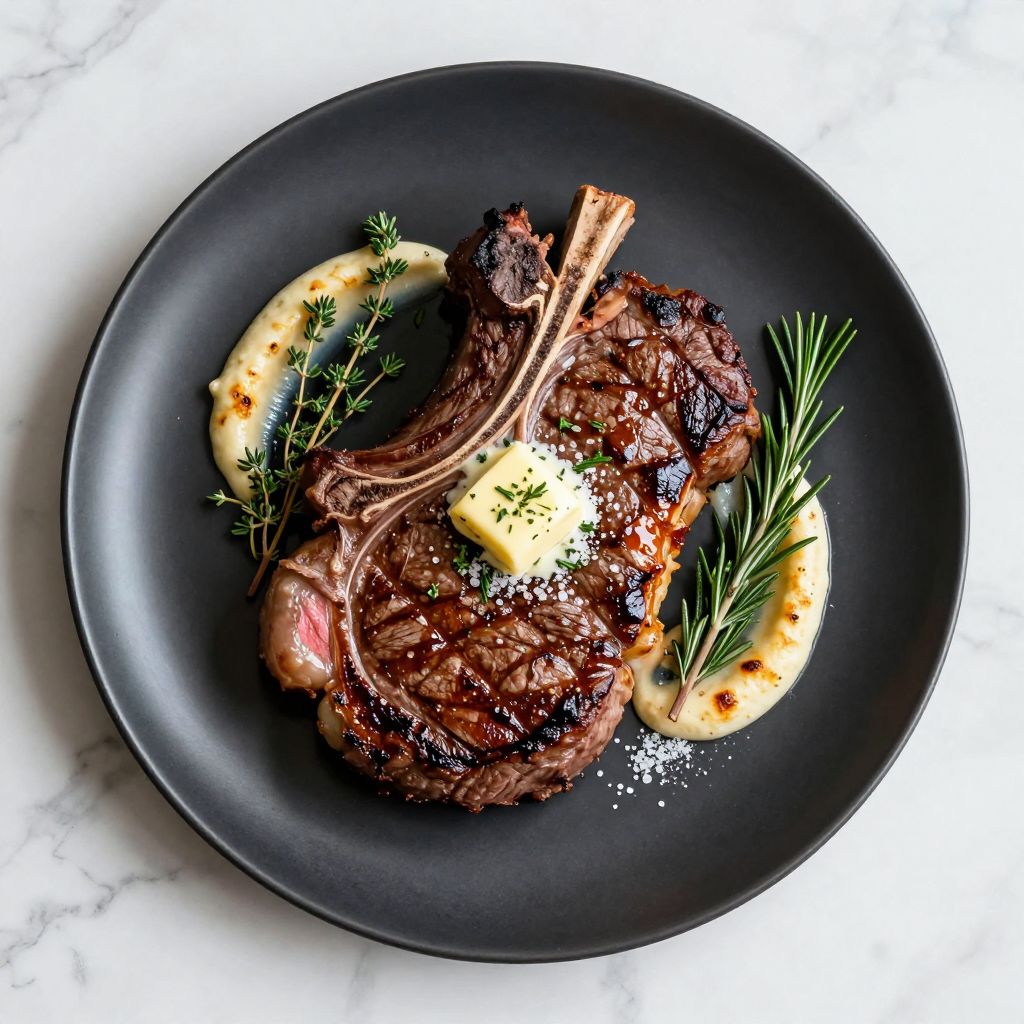
T-Bone Steak with Herb Butter
Ingredients
Equipment
Method
- Pull your T-bone steak from the refrigerator and let it sit on the counter for 30 to 40 minutes before cooking to bring to room temperature.
- Set your oven to 400 degrees Fahrenheit and place your cast iron skillet inside for at least 10 minutes to preheat.
- Pat the steak completely dry with paper towels, paying special attention to the bone and crevices.
- Season both sides of the steak with kosher salt and freshly ground black pepper about 5 minutes before searing.
- Carefully remove the skillet from the oven and place it on the stovetop over high heat. Add your neutral oil and let it shimmer for about 30 seconds, then gently lay the steak in the pan.
- Let the steak sear undisturbed for 3 to 4 minutes on the first side without moving it.
- Using tongs, flip the steak and sear the second side for another 3 to 4 minutes.
- Transfer the entire skillet to the oven. Insert your meat thermometer into the thickest part of the strip side and cook until it reaches 120 to 125 degrees Fahrenheit for medium-rare, about 5 to 10 minutes.
- Remove the skillet from the oven and add butter, smashed garlic, thyme, and rosemary directly to the hot pan. Tip the skillet toward you and continuously spoon the foaming, herb-infused butter over the steak for about 2 minutes.
- Transfer the steak to a cutting board and let it rest for 8 to 10 minutes before serving. Finish with a pinch of flaky sea salt just before serving.