
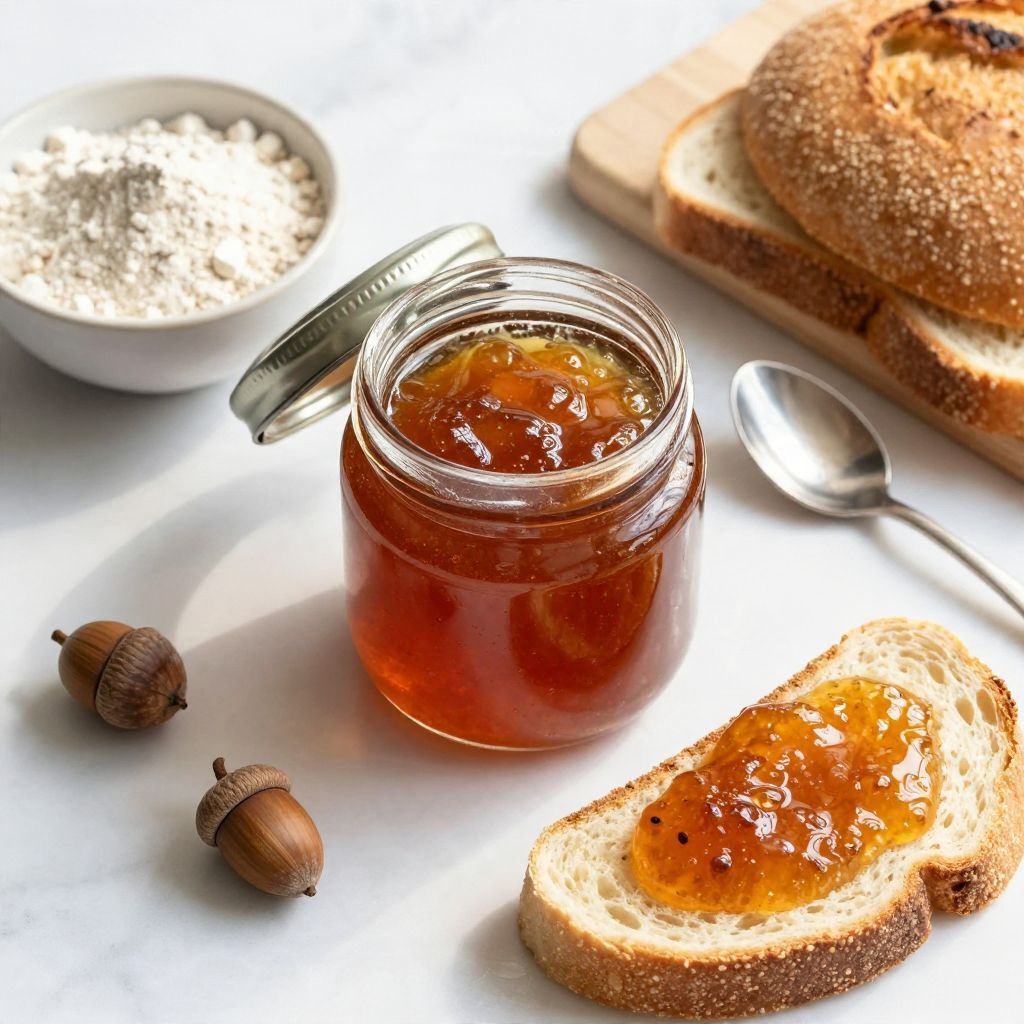
Picture this: a warm, golden jar of homemade Acorn Jelly glistening in the sunlight, ready to spread over a slice of fresh bread. This recipe brings a delightful touch of nostalgia, showcasing the unique flavor of acorns that many overlook. With a subtly sweet and nutty taste, acorn jelly is not just a tasty treat; it’s a versatile addition to your pantry. Whether you serve it with cheese, as a glaze, or simply on toast, it’s sure to impress anyone lucky enough to try it. Let’s gather our ingredients and get started!
Why You’ll Love This Recipe
This Acorn Jelly recipe is a fun way to use acorns, turning foraged finds into something delicious.
- Unique flavor profile that stands out.
- Simple ingredients and straightforward steps.
- Great for gifting or adding to your breakfast routine.
- Perfect way to connect with nature through cooking.
My Experience Making This Recipe
When I first tried making Acorn Jelly, I was surprised by how straightforward it was. The aroma of simmering acorns filled my kitchen, making the whole process feel magical.
Friends who tasted the jelly were amazed; they had never thought of using acorns this way. Watching their expressions as they spread the jelly on toast was priceless.
Recipe Overview
- Recipe Name: Acorn Jelly
- Servings: 4-6
- Prep Time: 30 minutes
- Cook Time: 1 hour
- Total Time: 1 hour 30 minutes
- Course: Condiment
- Cuisine: American
- Calories per Serving: 50
Equipment You Will Need
- Large pot
- Sieve or cheesecloth
- Measuring cups and spoons
- Canning jars and lids
- Wooden spoon
Ingredients for Acorn Jelly
- 2 cups of acorn flour (from shelled acorns)
- 2 cups of water
- 1 cup of sugar
- 1 tablespoon of lemon juice
- 1 packet of pectin
Ingredient Notes and Substitutions
- Acorn flour: This is the base for your jelly and gives it that unique flavor. If unavailable, use another nut flour.
- Sugar: Regular granulated sugar works best for sweetness. You can substitute with honey, but it may alter the taste.
- Lemon juice: This adds acidity and helps with preservation. Apple cider vinegar can be a good alternative.
How to Make Acorn Jelly
Step 1: Prepare the Acorns
Start by gathering acorns, ensuring they are ripe and clean. Remove any shells and rinse the acorns to eliminate dirt.
Step 2: Make Acorn Flour
Once the acorns are clean, grind them into a fine flour using a food processor. This will be the foundation of your jelly.
Step 3: Soak the Acorn Flour
Mix the acorn flour with water in a large pot. Allow it to soak for at least 8 hours or overnight to remove bitterness.
Step 4: Strain the Mixture
After soaking, strain the mixture through a sieve or cheesecloth. This separates the liquid from the flour, giving you the acorn-infused water.
Step 5: Cook the Jelly Base
Pour the acorn-infused water back into the pot. Add the sugar, lemon juice, and pectin, stirring well.
Step 6: Boil the Mixture
Bring the mixture to a boil over medium-high heat. Keep stirring to prevent sticking, as this will help the sugar dissolve properly.
Step 7: Test for Consistency
After about 10 minutes of boiling, do a plate test to check the jelly’s consistency. If it holds its shape, it’s ready for canning!
Step 8: Jar the Jelly
Carefully pour the jelly into sterilized canning jars, leaving about half an inch of space at the top. Seal the jars and let them cool completely.
Pro Tip: Make sure to strain the acorn mixture well to avoid a gritty texture in your jelly.
Tips for the Best Acorn Jelly
- Use fresh acorns for the best flavor and texture.
- Be patient during soaking to ensure the bitterness is fully removed.
- Experiment with adding spices like cinnamon or vanilla for a unique twist.
- Check the pectin package instructions for precise ratios according to your taste.
- Ensure your jars are properly sterilized to prolong shelf life.
Common Mistakes to Avoid
- Not soaking the acorns long enough can lead to a bitter taste.
- Skipping the straining step results in a gritty jelly.
- Using too little pectin may leave you with a runny consistency.
- Not sterilizing jars properly can cause spoilage.
Serving Suggestions
This Acorn Jelly is not just for toast, but pairs beautifully with cheese platters or as a glaze for meats. Here are some serving ideas:
- Spread on crackers with cream cheese.
- Drizzle over roasted chicken for added flavor.
- Serve alongside charcuterie for a delightful contrast.
- Use as a filling for pastries or tarts.
Variations to Try
- Add a hint of spicy jalapeño for a kick.
- Mix in herbs like rosemary for a savory version.
- Use honey instead of sugar for a more natural sweetener.
- Infuse with citrus zest for a refreshing twist.
Dietary Adaptations
- Gluten-free: This recipe is naturally gluten-free, as it uses acorns.
- Dairy-free: All ingredients are dairy-free, making it suitable for lactose intolerant individuals.
- Vegan: Use plant-based sweeteners to keep it vegan-friendly.
- Low-carb/keto: Reduce sugar content or replace with a low-carb sweetener.
Storage and Reheating
Refrigerator
Store opened jars in the refrigerator for up to 3 weeks.
- Ensure the lid is tightly sealed.
- Label the jar with the date for freshness.
Freezer
For longer storage, freeze jelly for up to a year.
- Use freezer-safe containers to prevent freezer burn.
- Leave space at the top of jars for expansion.
Reheating
To reheat, simply warm on the stove or microwave until spreadable.
- Stir gently to maintain a smooth consistency.
- Do not overheat, as it can alter the texture.
Nutrition Information
| Nutrient | Amount |
|---|---|
| Calories | 50 |
| Total Fat | 0g |
| Saturated Fat | 0g |
| Carbohydrates | 13g |
| Fiber | 1g |
| Sugar | 12g |
| Protein | 0g |
| Sodium | 1mg |
| Cholesterol | 0mg |
This nutrition information is an estimate and may vary based on the specific ingredients used.
Frequently Asked Questions
Can I use other types of nuts instead of acorns?
Absolutely! You can experiment with nut flours like hazelnut or almond, but the flavor will differ.
Can I make this jelly ahead of time?
Yes, you can prepare this jelly weeks in advance and store it in the refrigerator or freezer.
How do I know if my jelly set properly?
Jelly should hold its shape when spooned out. A plate test helps check the consistency during cooking.
What if my jelly is too runny?
If the jelly does not set, you can reheat it and add more pectin per package instructions.
How should I store my acorn jelly?
Keep it sealed in sterilized jars in the refrigerator for short-term storage or freeze for long-term use.
Final Thoughts
Making Acorn Jelly is a delightful way to celebrate the beauty of nature and the art of home cooking. I encourage you to try this recipe; the flavor will surprise you and your guests.
For more delicious recipes, check out my Muscle Milk Recipe and Muscadine Jelly Recipe. Enjoy your culinary adventures!
Acorn Jelly
Ingredients
Equipment
Method
- Gather ripe and clean acorns, remove shells, and rinse to eliminate dirt.
- Grind the acorns into a fine flour using a food processor.
- Mix acorn flour with water in a large pot and allow it to soak for at least 8 hours.
- Strain the mixture through a sieve or cheesecloth to separate the liquid from the flour.
- Pour the acorn-infused water back into the pot, add sugar, lemon juice, and pectin, and stir.
- Bring the mixture to a boil over medium-high heat, stirring to prevent sticking.
- After about 10 minutes of boiling, perform a plate test to check for consistency.
- Carefully pour the jelly into sterilized canning jars, leaving space at the top, and seal.