
There’s something magical about the smell of freshly baked bread wafting through your home, especially when it’s a warm loaf of Sourdough Spelt Bread. This recipe is not just a bread; it’s a cozy experience that combines the nutty flavor of spelt with the delightful tang of sourdough. With a chewy crust and a soft interior, this bread is not only wholesome but also versatile enough for sandwiches, toast, or just slathered with butter. Let’s gather our ingredients and get started!
Why You’ll Love This Recipe
This recipe is a joy for both novice and experienced bakers. It offers a unique blend of flavors and health benefits.
- Rich, nutty flavor from spelt flour.
- Easy to follow with minimal ingredients.
- Great for sandwiches or as a side to soups.
- Perfect for beginners wanting to try sourdough.
- Utilizes natural fermentation for better digestion.
My Experience Making This Recipe
The first time I made this bread, my kitchen felt like a warm hug. The dough came together beautifully, and the fermentation process had my house smelling incredible.
Watching the dough rise and then transform in the oven was a highlight of my baking adventures. The moment I sliced into the bread and spread some butter on it was pure bliss.
Recipe Overview
- Recipe Name: Sourdough Spelt Bread
- Servings: 12 slices
- Prep Time: 30 minutes
- Cook Time: 40 minutes
- Total Time: 12 hours (includes rising time)
- Course: Bread
- Cuisine: Artisan
- Calories per Serving: 120
Equipment You Will Need
- Mixing bowl
- Wooden spoon or dough scraper
- Kitchen scale (for accuracy)
- Proofing basket or bowl
- Baking stone or baking sheet
- Sharp knife or lame for scoring
- Kitchen towel or plastic wrap
Ingredients for Sourdough Spelt Bread
- 500g spelt flour
- 350g water, at room temperature
- 100g active sourdough starter
- 10g salt
Ingredient Notes and Substitutions
- Spelt Flour: Provides a unique nutty flavor and is easier to digest. You can substitute with whole wheat flour, but the texture will differ.
- Water: Hydration is crucial for the dough’s consistency. If using filtered or bottled water, the temperature should be around room temperature.
- Sourdough Starter: This is the heart of your bread. If you don’t have one, you can create a simple starter or use store-bought.
- Salt: Enhances flavor and strengthens the dough. Avoid using table salt; sea salt is preferable.
How to Make Sourdough Spelt Bread
Step 1: Mix the Dough
In a large mixing bowl, combine the spelt flour and water. Stir with a wooden spoon until no dry flour remains.
Step 2: Add the Starter
Incorporate the sourdough starter into the dough. This adds the essential natural yeast needed for fermentation.
Step 3: Add the Salt
Sprinkle the salt over the dough and mix thoroughly. This step is important as salt strengthens the gluten structure.
Step 4: Bulk Fermentation
Cover the bowl with a kitchen towel and let it rest at room temperature for 6-8 hours. This allows the dough to rise and develop flavor.
Step 5: Shape the Dough
After bulk fermentation, gently turn the dough out onto a floured surface. Shape it into a round loaf by tucking the edges into the center.
Step 6: Second Rise
Place the shaped dough into a proofing basket, seam side up. Cover and let it rise for another 1-2 hours until puffy.
Step 7: Preheat the Oven
About 30 minutes before baking, preheat your oven to 450°F (230°C). This ensures a hot environment for a great crust.
Step 8: Bake the Bread
Carefully transfer the dough onto the baking stone or sheet. Score the top with a sharp knife to allow for expansion and bake for 30-40 minutes.
Pro Tip: For a crusty loaf, add steam to your oven by placing a pan of hot water at the bottom during baking.
Tips for the Best Sourdough Spelt Bread
- Make sure your sourdough starter is active and bubbly for the best rise.
- Keep the dough covered during the rising process to prevent it from drying out.
- Consider using a baking stone for even heat distribution.
- Let the bread cool completely before slicing for better texture.
- Experiment with adding seeds or nuts for extra flavor and nutrition.
Common Mistakes to Avoid
- Using an inactive starter can lead to a dense loaf.
- Not letting the dough rise long enough results in poor flavor development.
- Overworking the dough can toughen the bread.
- Skipping the scoring step can cause the bread to crack unpredictably.
Serving Suggestions
This bread is perfect for any meal and pairs wonderfully with various toppings. Here are some ideas:
- Avocado and poached egg for a hearty breakfast.
- Classic peanut butter and jelly for a nostalgic lunch.
- Soup or salad for a wholesome dinner.
- Bruschetta with tomatoes and basil for an appetizer.
Variations to Try
- Add seeds like sunflower or flax for texture and nutrition.
- Incorporate herbs such as rosemary or thyme for added flavor.
- Try using whole wheat flour for a different taste and texture.
- Mix in nuts like walnuts for a delightful crunch.
Dietary Adaptations
- Gluten-free: Substitute with a gluten-free flour blend, but results may vary.
- Dairy-free: This recipe is naturally dairy-free.
- Vegan: No animal products are used, making it suitable for vegans.
- Low-carb/Keto: Spelt is not low-carb, so consider alternatives like almond flour.
Storage and Reheating
Refrigerator
Store bread in a paper bag in the fridge for up to a week to maintain freshness.
- Wrap in a kitchen towel to prevent moisture loss.
- Slice as needed for easy access.
Freezer
For longer storage, freeze the bread wrapped tightly in plastic wrap.
- Slice before freezing for convenience.
- Use within three months for best quality.
Reheating
To enjoy your bread warm, reheat by wrapping it in foil and placing it in a 350°F (175°C) oven for about 10 minutes.
- Alternatively, slice and toast for a quick option.
- A microwave can be used, but it may result in a softer crust.
Nutrition Information
| Nutrient | Amount |
|---|---|
| Calories | 120 |
| Total Fat | 0.5g |
| Saturated Fat | 0g |
| Carbohydrates | 25g |
| Fiber | 4g |
| Sugar | 0g |
| Protein | 5g |
| Sodium | 200mg |
| Cholesterol | 0mg |
This information is approximate and may vary based on specific ingredients used.
Frequently Asked Questions
Can I use all-purpose flour instead of spelt flour?
Yes, but the flavor and texture will be different, less nutty and more neutral.
How long can I store the bread?
It can last up to a week in the refrigerator or up to three months in the freezer.
Can I make this bread ahead of time?
Absolutely! You can prepare the dough and refrigerate it overnight before shaping.
Why is my bread dense?
This may happen if your sourdough starter was not active enough or if the dough did not rise adequately.
Can I add other ingredients to the dough?
Yes! Feel free to include seeds, nuts, or herbs to customize your bread.
Final Thoughts
Baking your own bread is not just about the final product; it’s about the experience, the aromas, and the joy it brings. I encourage you to try this Sourdough Spelt Bread recipe and enjoy the process.
For more delicious bread recipes, check out my Einkorn Sourdough Bread Recipe and try a Same Day Sourdough Bread Recipe for quick baking solutions.
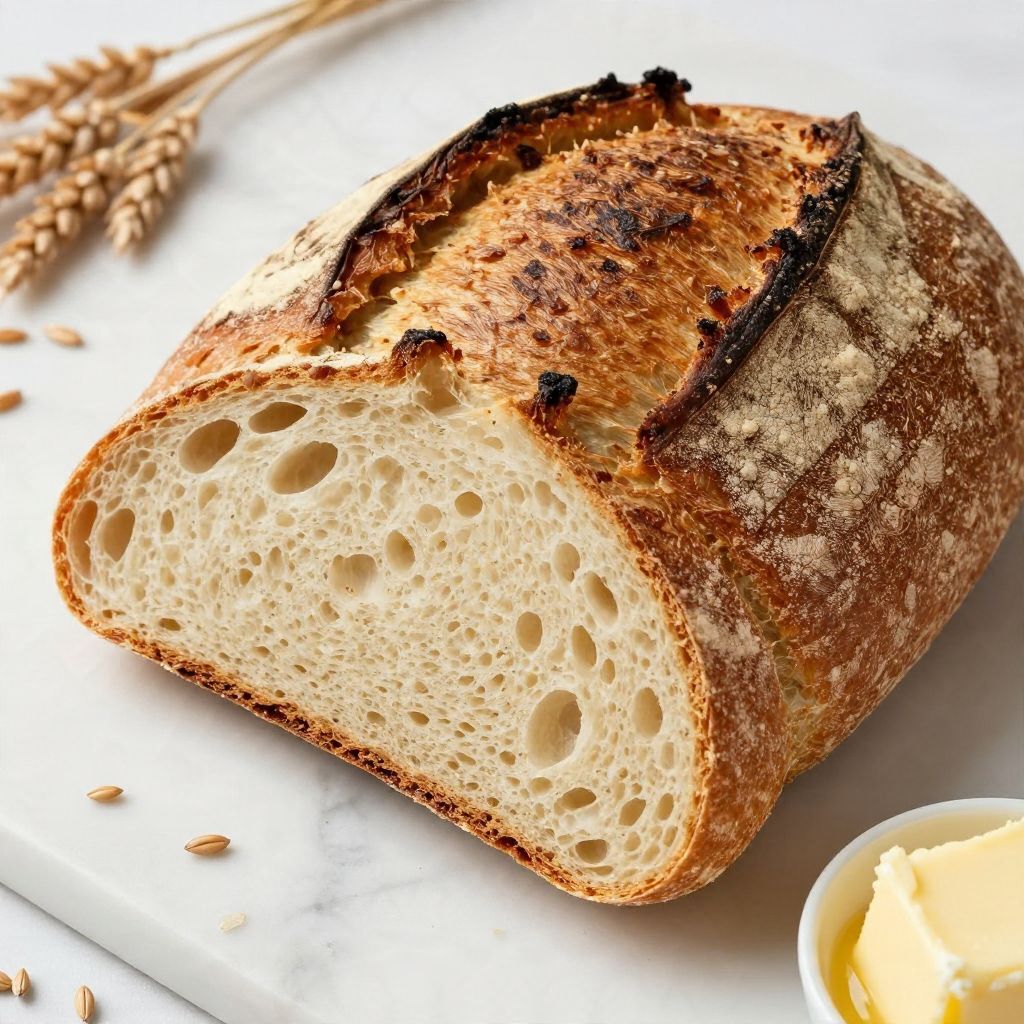
Sourdough Spelt Bread
Ingredients
Equipment
Method
- In a large mixing bowl, combine the spelt flour and water. Stir with a wooden spoon until no dry flour remains.
- Incorporate the sourdough starter into the dough.
- Sprinkle the salt over the dough and mix thoroughly.
- Cover the bowl with a kitchen towel and let it rest at room temperature for 6-8 hours.
- After bulk fermentation, gently turn the dough out onto a floured surface. Shape it into a round loaf.
- Place the shaped dough into a proofing basket, seam side up. Cover and let it rise for another 1-2 hours.
- About 30 minutes before baking, preheat your oven to 450°F (230°C).
- Carefully transfer the dough onto the baking stone or sheet. Score the top with a sharp knife and bake for 30-40 minutes.