
The sizzle of beef hitting a screaming hot wok, the fragrant cloud of garlic and ginger rising through your kitchen, the satisfying tangle of glossy noodles wrapped around your chopsticks. This is the beef lo mein recipe that will make you question why you ever bothered with takeout.
Restaurant style lo mein at home sounds intimidating, but I promise you it is absolutely achievable on a regular Tuesday night. The secret lies in a few simple techniques and one very hot pan.
What makes this version special? Tender strips of marinated beef, perfectly chewy noodles, and a sauce that hits every note: savory, slightly sweet, with just enough depth to keep you coming back for another bite. Plus, it comes together in about 30 minutes from start to finish.
Why You Will Love This Recipe
This beef lo mein delivers that authentic takeout flavor without the mystery ingredients or soggy delivery noodles. It is the kind of recipe that makes you feel like a kitchen rock star.
- Ready in 30 minutes, making it perfect for busy weeknights
- Completely customizable with whatever vegetables you have on hand
- The sauce is perfectly balanced between sweet, salty, and savory
- Leftovers taste incredible the next day (if they last that long)
- Costs a fraction of restaurant prices with double the flavor
My Experience Making This Recipe
I have made this beef lo mein more times than I can count, and it never disappoints. The first time I nailed it, my partner actually accused me of secretly ordering delivery.
The aroma that fills the kitchen while cooking is absolutely intoxicating. Garlic, ginger, and sesame oil create this warm, inviting scent that makes everyone wander into the kitchen asking when dinner will be ready.
Every time I serve this to guests, plates come back empty and people ask for the recipe. That is the highest compliment any home cook can receive.
Recipe Overview
- Recipe Name: Beef Lo Mein
- Servings: 4
- Prep Time: 15 minutes
- Cook Time: 15 minutes
- Total Time: 30 minutes
- Course: Main Dish
- Cuisine: Chinese American
- Calories per Serving: 485
Equipment You Will Need
- Large wok or 12 inch skillet
- Large pot for boiling noodles
- Sharp knife and cutting board
- Small mixing bowl for sauce
- Tongs or chopsticks for tossing
- Colander for draining noodles
Ingredients for Beef Lo Mein
For the Beef
- Flank steak, 1 pound, sliced thin against the grain
- Soy sauce, 1 tablespoon
- Cornstarch, 1 teaspoon
- Sesame oil, 1 teaspoon
For the Noodles and Vegetables
- Lo mein noodles, 8 ounces (fresh or dried)
- Vegetable oil, 3 tablespoons, divided
- Garlic, 4 cloves, minced
- Fresh ginger, 1 tablespoon, minced
- Cabbage, 2 cups, shredded
- Carrots, 1 cup, julienned
- Green onions, 4 stalks, cut into 2 inch pieces
- Bean sprouts, 1 cup (optional)
For the Sauce
- Soy sauce, 3 tablespoons
- Oyster sauce, 2 tablespoons
- Sesame oil, 1 tablespoon
- Brown sugar, 1 tablespoon
- Rice vinegar, 1 teaspoon
- White pepper, 1/4 teaspoon
Ingredient Notes and Substitutions
- Flank steak offers the ideal balance of flavor and tenderness when sliced thin. Sirloin or skirt steak work as alternatives with similar results.
- Lo mein noodles have a chewy texture that holds sauce beautifully. Substitute with fresh spaghetti or linguine if Asian noodles are unavailable.
- Oyster sauce provides that signature savory depth to the dish. Hoisin sauce mixed with a splash of soy sauce creates a decent vegetarian substitute.
- Fresh ginger adds brightness that dried simply cannot match. Use 1/2 teaspoon ground ginger in a pinch, but fresh is strongly preferred.
- Rice vinegar adds subtle acidity to balance the rich sauce. Apple cider vinegar works as a one to one replacement.
How to Make Beef Lo Mein
Step 1: Marinate the Beef
Slice the flank steak into thin strips against the grain, about 1/4 inch thick. Toss with soy sauce, cornstarch, and sesame oil in a bowl, then let it sit while you prep everything else.
Cutting against the grain shortens the muscle fibers, which guarantees tender bites instead of chewy ones. The cornstarch creates a silky coating that helps the beef sear beautifully.
Step 2: Prepare the Sauce
Whisk together soy sauce, oyster sauce, sesame oil, brown sugar, rice vinegar, and white pepper in a small bowl. Set this aside within arm’s reach of your stove.
Having your sauce ready before you start cooking is non negotiable. Once the wok gets going, things move fast and you will not have time to measure ingredients.
Step 3: Cook the Noodles
Bring a large pot of water to a rolling boil and cook the noodles according to package directions, usually 3 to 4 minutes for fresh or 6 to 8 minutes for dried. Drain and rinse briefly with cold water to stop the cooking.
Slightly undercooking the noodles prevents them from turning mushy when tossed in the hot wok later. Toss with a drizzle of oil to prevent sticking.
Step 4: Sear the Beef
Heat your wok over the highest heat possible until it just starts to smoke, then add 1 tablespoon of vegetable oil. Add the beef in a single layer and let it sear undisturbed for 60 seconds before stirring.
Resist the urge to move the beef around constantly. That initial sear creates flavorful browning that takes the dish from good to incredible. Remove the beef and set aside once cooked through.
Step 5: Cook the Aromatics
Add another tablespoon of oil to the wok. Drop in the garlic and ginger, stirring constantly for about 30 seconds until incredibly fragrant.
The aromatics should sizzle immediately upon contact. If they do not, your wok is not hot enough, and you risk the garlic turning bitter instead of golden.
Step 6: Stir Fry the Vegetables
Add the carrots first since they take longest, cooking for 2 minutes. Follow with the cabbage and cook another 2 minutes until slightly wilted but still crisp.
Keep everything moving in the wok to ensure even cooking. The vegetables should retain some crunch because they will continue cooking once everything comes together.
Step 7: Combine Everything
Return the beef to the wok along with the cooked noodles. Pour the sauce over everything and toss vigorously with tongs for 1 to 2 minutes until the noodles are evenly coated and heated through.
Add the green onions and bean sprouts during the last 30 seconds. These delicate ingredients need minimal heat to preserve their fresh crunch and color.
Step 8: Final Adjustments and Serve
Taste the lo mein and adjust seasoning if needed. A splash more soy sauce for salt, a pinch of sugar for balance, or extra white pepper for subtle heat.
Transfer immediately to plates and serve while piping hot. Lo mein waits for no one, and those noodles taste best straight from the wok.
Pro Tip: The single most important factor for restaurant quality lo mein is wok hei, that smoky char you get from an extremely hot pan. Get your wok screaming hot before adding anything, and cook in batches if needed to avoid overcrowding.
Tips for the Best Beef Lo Mein
- Slice beef when it is partially frozen for cleaner, thinner cuts that cook quickly and evenly.
- Have all ingredients prepped and within reach before heating your wok. Stir frying moves fast.
- Do not overcrowd the wok or the temperature drops and your ingredients will steam instead of sear.
- Use the highest heat your stove can produce. Wok cooking relies on intense, concentrated heat.
- Toss the noodles with oil immediately after draining to prevent a sticky, clumpy mess.
- Let the sauce reduce slightly in the wok so it coats the noodles rather than pooling at the bottom.
Common Mistakes to Avoid
- Overcooking the noodles results in a mushy, sad texture that cannot be rescued.
- Using a cold or medium hot pan means your beef steams instead of sears, losing flavor and texture.
- Adding too many vegetables at once drops the wok temperature and creates soggy results.
- Skipping the beef marinade leaves you with bland, tough meat that cannot carry the dish.
- Measuring ingredients while cooking leads to burnt garlic and uneven results since timing is everything.
Serving Suggestions
Beef lo mein works wonderfully as a complete meal on its own, but pairing it with complementary dishes creates a memorable spread. Here are some ideas to round out your table.
- Hot and sour soup or egg drop soup as a light starter
- Steamed pork dumplings or crispy potstickers on the side
- Quick cucumber salad with rice vinegar and sesame seeds
- Crispy spring rolls for textural contrast
- Steamed bok choy with garlic for extra vegetables
Variations to Try
- Chicken lo mein: Substitute boneless thighs for a slightly richer, more forgiving protein that stays juicy.
- Shrimp lo mein: Use large shrimp and cook just 2 minutes until pink for a lighter seafood version.
- Spicy Szechuan style: Add 1 tablespoon of chili crisp and a pinch of Szechuan peppercorns for numbing heat.
- Extra vegetable version: Double the vegetables and reduce beef by half for a more produce forward meal.
- Mushroom lovers: Add sliced shiitake and cremini mushrooms for earthy depth and meaty texture.
Dietary Adaptations
- Gluten free: Use tamari instead of soy sauce and rice noodles instead of wheat lo mein noodles with minimal taste difference.
- Dairy free: This recipe is naturally dairy free as written.
- Vegetarian or vegan: Replace beef with extra firm tofu and use mushroom sauce instead of oyster sauce for similar depth.
- Low carb or keto: Substitute shirataki noodles or spiralized zucchini for the lo mein noodles, though the texture will differ.
Storage and Reheating
Refrigerator
Store leftover beef lo mein in an airtight container in the refrigerator for up to 4 days.
- Let cool completely before refrigerating to prevent condensation
- The noodles may stick together slightly but will separate when reheated
Freezer
Freezing is possible but not recommended since the noodle texture suffers noticeably.
- If freezing, store in airtight containers for up to 2 months
- Thaw overnight in the refrigerator before reheating
Reheating
A hot skillet or wok produces the best reheated results by far.
- Add a splash of water or soy sauce to loosen the noodles
- Stir fry over high heat for 3 to 4 minutes until heated through
- Microwave works in a pinch: cover and heat in 1 minute intervals, stirring between
Nutrition Information
| Nutrient | Amount |
|---|---|
| Calories | 485 |
| Total Fat | 18g |
| Saturated Fat | 4g |
| Carbohydrates | 48g |
| Fiber | 3g |
| Sugar | 8g |
| Protein | 32g |
| Sodium | 1180mg |
| Cholesterol | 68mg |
Nutritional values are estimates based on standard ingredients and may vary based on specific brands and modifications.
Frequently Asked Questions
Can I use a different cut of beef for lo mein?
Sirloin, skirt steak, or even ribeye all work well as long as you slice them thin against the grain. The key is thin slices that cook quickly over high heat.
Can I make beef lo mein ahead of time?
You can prep all ingredients in advance and store them separately in the refrigerator for up to 24 hours. Cook the dish fresh when ready to serve for best results.
How do I prevent my noodles from sticking together?
Toss the drained noodles with a tablespoon of sesame or vegetable oil immediately after rinsing. This creates a light coating that keeps strands separate.
Why is my lo mein watery instead of saucy?
Excess moisture usually comes from overcrowded pans or vegetables releasing water. Cook in smaller batches and let the sauce reduce for 30 seconds before serving.
What type of noodles work best if I cannot find lo mein noodles?
Fresh spaghetti or linguine from the refrigerated section makes the closest substitute. Dried Italian pasta works too, though the texture will be slightly different.
Final Thoughts
This beef lo mein recipe has earned a permanent spot in my weeknight rotation, and I suspect it will find a home in yours too. Once you experience how quickly it comes together and how much better it tastes than delivery, there is really no going back.
Give this recipe a try and watch your family fight over the last tangle of noodles. That is the kind of problem I love having in my kitchen.
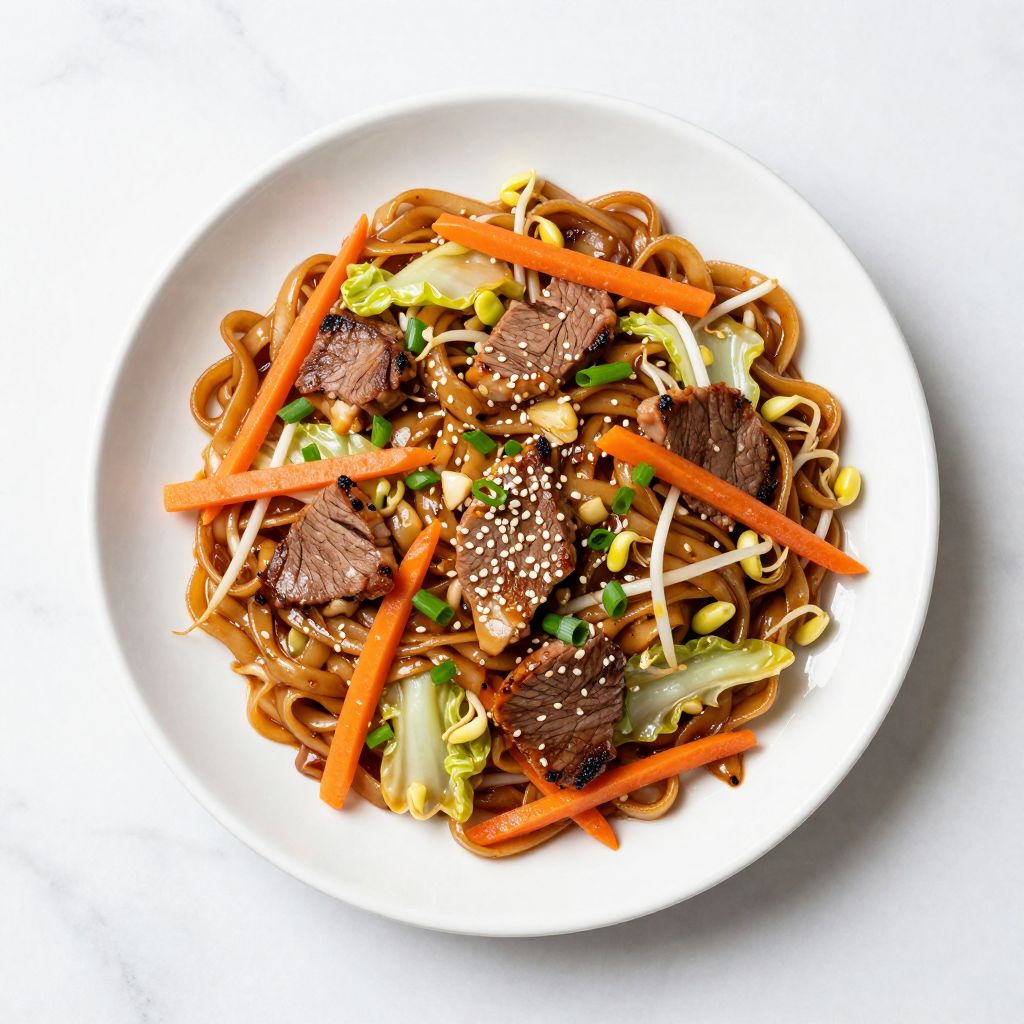
Beef Lo Mein
Ingredients
Equipment
Method
- Slice the flank steak into thin strips against the grain, about 1/4 inch thick. Toss with 1 tablespoon soy sauce, cornstarch, and 1 teaspoon sesame oil in a bowl, then let it sit while you prep everything else.
- Whisk together 3 tablespoons soy sauce, oyster sauce, 1 tablespoon sesame oil, brown sugar, rice vinegar, and white pepper in a small bowl. Set aside within arm's reach of your stove.
- Bring a large pot of water to a rolling boil and cook the noodles according to package directions, usually 3 to 4 minutes for fresh or 6 to 8 minutes for dried. Drain and rinse briefly with cold water to stop the cooking. Toss with a drizzle of oil to prevent sticking.
- Heat your wok over the highest heat possible until it just starts to smoke, then add 1 tablespoon of vegetable oil. Add the beef in a single layer and let it sear undisturbed for 60 seconds before stirring. Cook until done, then remove and set aside.
- Add another tablespoon of oil to the wok. Drop in the garlic and ginger, stirring constantly for about 30 seconds until incredibly fragrant.
- Add the carrots first and cook for 2 minutes. Follow with the cabbage and cook another 2 minutes until slightly wilted but still crisp.
- Return the beef to the wok along with the cooked noodles. Pour the sauce over everything and toss vigorously with tongs for 1 to 2 minutes until the noodles are evenly coated and heated through.
- Add the green onions and bean sprouts during the last 30 seconds. Toss to combine.
- Taste and adjust seasoning if needed. Transfer immediately to plates and serve while piping hot.