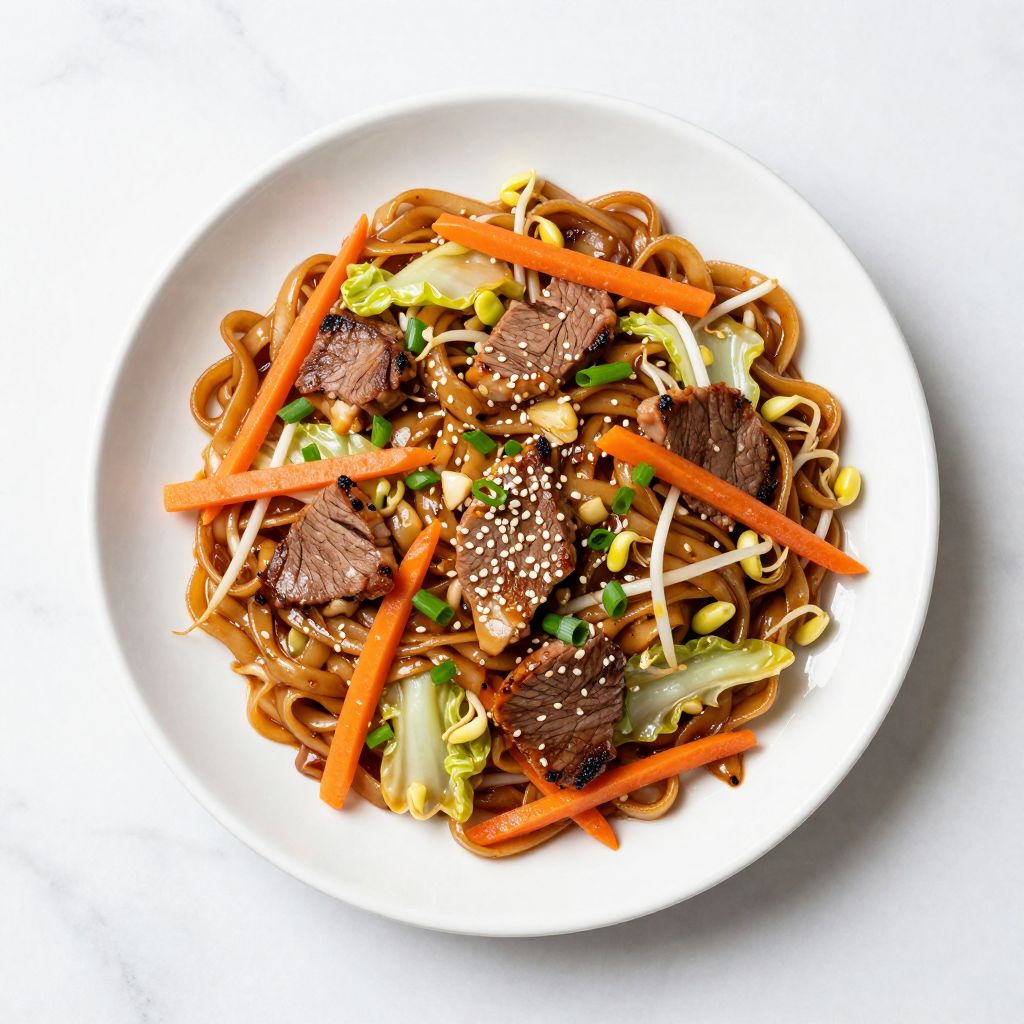
Ingredients
Equipment
Method
- Slice the flank steak into thin strips against the grain, about 1/4 inch thick. Toss with 1 tablespoon soy sauce, cornstarch, and 1 teaspoon sesame oil in a bowl, then let it sit while you prep everything else.
- Whisk together 3 tablespoons soy sauce, oyster sauce, 1 tablespoon sesame oil, brown sugar, rice vinegar, and white pepper in a small bowl. Set aside within arm's reach of your stove.
- Bring a large pot of water to a rolling boil and cook the noodles according to package directions, usually 3 to 4 minutes for fresh or 6 to 8 minutes for dried. Drain and rinse briefly with cold water to stop the cooking. Toss with a drizzle of oil to prevent sticking.
- Heat your wok over the highest heat possible until it just starts to smoke, then add 1 tablespoon of vegetable oil. Add the beef in a single layer and let it sear undisturbed for 60 seconds before stirring. Cook until done, then remove and set aside.
- Add another tablespoon of oil to the wok. Drop in the garlic and ginger, stirring constantly for about 30 seconds until incredibly fragrant.
- Add the carrots first and cook for 2 minutes. Follow with the cabbage and cook another 2 minutes until slightly wilted but still crisp.
- Return the beef to the wok along with the cooked noodles. Pour the sauce over everything and toss vigorously with tongs for 1 to 2 minutes until the noodles are evenly coated and heated through.
- Add the green onions and bean sprouts during the last 30 seconds. Toss to combine.
- Taste and adjust seasoning if needed. Transfer immediately to plates and serve while piping hot.
Notes
The single most important factor for restaurant quality lo mein is wok hei, that smoky char you get from an extremely hot pan. Get your wok screaming hot before adding anything, and cook in batches if needed to avoid overcrowding. Slice beef when it is partially frozen for cleaner, thinner cuts. Store leftovers in an airtight container in the refrigerator for up to 4 days.