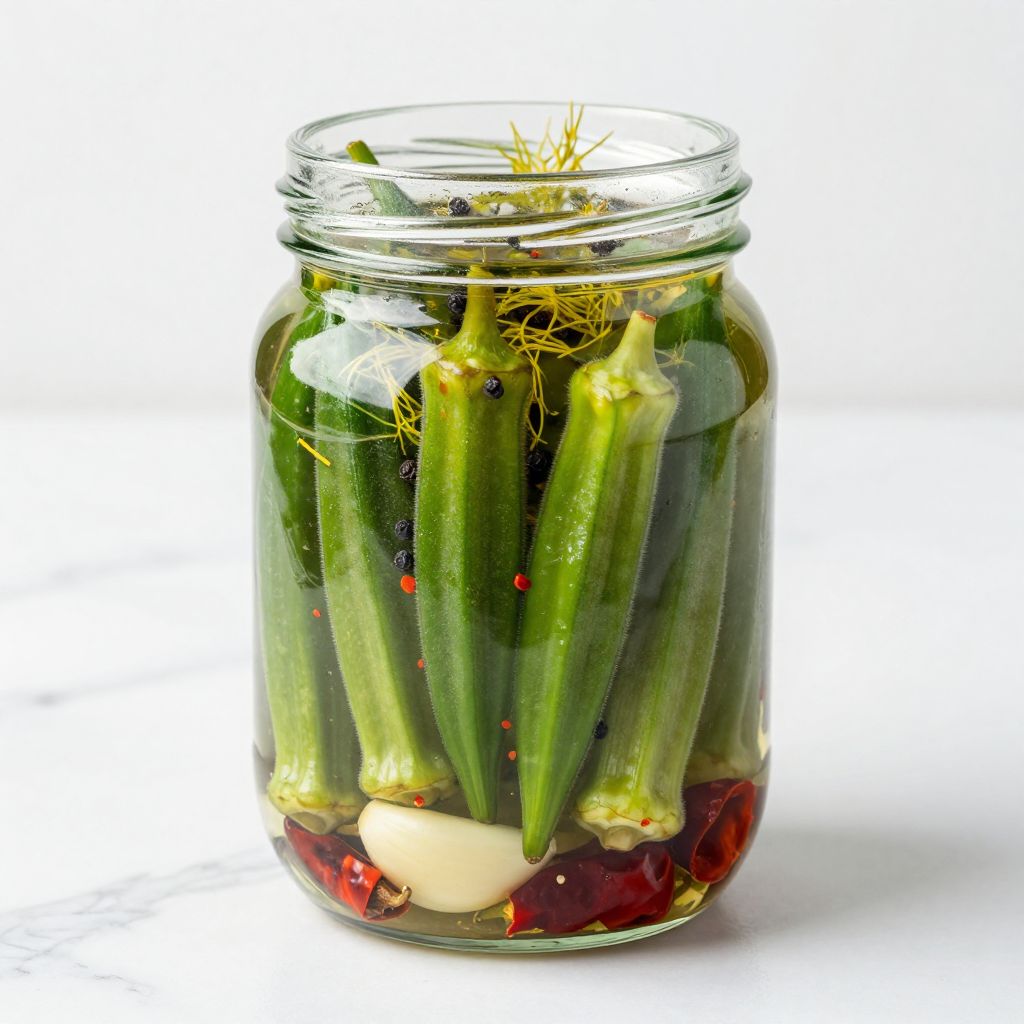
Pickled okra transforms this humble Southern vegetable into a tangy, crunchy snack that belongs in every well-stocked pantry. Whether you grow okra in your garden or grab it fresh from the farmers market, this recipe delivers that perfect balance of vinegar bite and warm spice.
Once you taste homemade pickled okra, the store-bought jars will never satisfy you again. Let me walk you through every step to create crisp, flavorful pickled okra that will have everyone asking for your secret.
Why You’ll Love This Recipe
This pickled okra recipe hits all the right notes for both canning beginners and seasoned preservers. The process is straightforward, and the results are absolutely worth the effort.
- Ready to eat in just 2 weeks with flavors that improve over time
- Uses simple pantry staples you probably already have
- Produces a satisfying crunch that puts soggy okra to shame
- Makes an impressive homemade gift during the holiday season
- Perfect for Bloody Marys, charcuterie boards, or straight from the jar snacking
My Experience Making This Recipe
I remember my first batch of pickled okra turning out disappointingly soft, and I almost gave up on the whole endeavor. After some trial and error, I discovered that keeping the okra cold and working quickly made all the difference in achieving that satisfying snap.
Now I make at least a dozen jars every summer when okra is at its peak. The smell of hot brine mixed with dill and garlic filling my kitchen has become one of my favorite seasonal rituals.
Friends and family have started requesting jars months in advance. There is something deeply satisfying about cracking open a jar in January and tasting summer preserved at its finest.
Recipe Overview
- Recipe Name: Homemade Pickled Okra
- Servings: 4 pint jars
- Prep Time: 30 minutes
- Cook Time: 15 minutes
- Total Time: 45 minutes plus 2 weeks curing
- Course: Condiment, Appetizer
- Cuisine: Southern American
- Calories per Serving: 15 calories per 3 pods
Equipment You Will Need
- 4 pint sized canning jars with lids and bands
- Large stockpot or water bath canner
- Jar lifter
- Wide mouth canning funnel
- Medium saucepan for brine
- Clean kitchen towels
- Lid wand or magnetic lid lifter
- Cutting board and sharp knife
- Ladle
Ingredients for Pickled Okra
For the Okra
- 2 pounds fresh okra, small to medium pods about 3 to 4 inches long
- 4 cloves garlic, peeled
- 4 fresh dill heads or 4 teaspoons dill seeds
- 1 teaspoon black peppercorns, divided among jars
- 1 teaspoon red pepper flakes, divided among jars
- 4 small dried red chiles, optional for extra heat
For the Brine
- 3 cups white distilled vinegar, 5 percent acidity
- 3 cups water
- 3 tablespoons pickling salt or kosher salt
- 1 tablespoon granulated sugar
Ingredient Notes and Substitutions
- Fresh okra: Small, firm pods produce the crunchiest results. Avoid okra longer than 4 inches as larger pods tend to be tough and fibrous.
- Pickling salt: This dissolves clearly without additives that cloud your brine. Kosher salt works fine, but avoid table salt which contains anti caking agents.
- White vinegar: Provides a clean, sharp acidity that lets the okra flavor shine. Apple cider vinegar adds a mellower taste if you prefer something less sharp.
- Fresh dill: Delivers that classic pickle flavor we all crave. Dried dill seed substitutes well at 1 teaspoon per jar if fresh dill is unavailable.
- Garlic: Adds depth and savory notes to the brine. Use 2 cloves per jar for milder flavor or up to 3 for garlic lovers.
- Red pepper flakes: Brings gentle heat that builds over time. Omit entirely for mild pickles or double for a spicier kick.
How to Make Pickled Okra
Step 1: Prepare Your Canning Equipment
Fill your large stockpot or water bath canner with water and bring it to a simmer. Wash your jars, lids, and bands in hot soapy water, then keep the jars warm in the simmering water until ready to fill.
Keeping jars hot prevents thermal shock when you add the boiling brine. This step also ensures everything stays sanitary throughout the process.
Step 2: Wash and Trim the Okra
Rinse the okra pods under cold running water and gently scrub away any dirt or fuzz. Trim the stem ends, but leave the caps intact so the brine stays outside the pods.
Cutting into the okra pod itself releases that notorious slime we want to avoid. A small trim of just the very tip of the stem keeps everything neat and crisp.
Step 3: Prepare the Brine
Combine the vinegar, water, pickling salt, and sugar in your medium saucepan. Bring the mixture to a rolling boil over high heat, stirring until the salt and sugar fully dissolve.
The proper ratio of vinegar to water ensures safe acidity for shelf stable canning. Never reduce the vinegar amount, though you can safely increase it if you prefer more tang.
Step 4: Pack the Jars with Aromatics
Remove the warm jars from the water bath using your jar lifter. Place 1 garlic clove, 1 dill head, a pinch of peppercorns, and red pepper flakes into each jar.
Add a dried chile to any jars you want extra spicy. These aromatics infuse the brine and create layers of flavor over the curing time.
Step 5: Pack the Okra Tightly
Stand the okra pods upright in each jar, alternating stem end up and stem end down to fit as many as possible. Pack them snugly but avoid crushing the pods.
Tight packing prevents the okra from floating and ensures every pod stays submerged in brine. Leave about half an inch of headspace at the top of each jar.
Step 6: Add the Hot Brine
Ladle the boiling brine into each packed jar, covering the okra completely. Use a chopstick or bubble remover to release any trapped air pockets along the sides.
Maintain that half inch headspace after adding brine. Wipe the jar rims with a clean, damp cloth to remove any residue that could prevent proper sealing.
Step 7: Seal and Process the Jars
Center a lid on each jar and screw on the band until fingertip tight. Lower the jars into the boiling water bath, ensuring at least 1 inch of water covers the tops.
Process pint jars for 10 minutes, starting your timer once the water returns to a full boil. This processing time ensures safe preservation for shelf storage.
Step 8: Cool and Check the Seals
Carefully remove the jars using your jar lifter and place them on a towel lined surface. Allow them to cool undisturbed for 12 to 24 hours.
You should hear that satisfying pop as each lid seals. Press the center of each cooled lid to confirm it does not flex up and down.
Step 9: Cure and Store
Label your sealed jars with the date and store them in a cool, dark place. Wait at least 2 weeks before opening to allow flavors to develop fully.
Patience is difficult here, but the flavor difference between fresh jars and cured jars is remarkable. The pickles reach peak flavor around 4 to 6 weeks.
Pro Tip: Refrigerate your okra for at least 2 hours before packing into jars. Cold okra stays firmer during the hot brine pour and produces the crunchiest final pickle.
Tips for the Best Pickled Okra
- Select okra pods that feel firm and snap cleanly when bent. Soft or bendy pods indicate age and will turn mushy when pickled.
- Work in small batches to keep the brine at a rolling boil when filling jars. Brine that cools too much can affect both safety and crunch.
- Add a grape leaf, oak leaf, or a pinch of calcium chloride to each jar for extra crispness. These contain natural tannins that help maintain texture.
- Process at the correct time for your altitude. Add 5 minutes of processing time for every 1,000 feet above sea level.
- Store sealed jars away from direct sunlight. Light can degrade quality and cause color changes over time.
- Refrigerate any jars that fail to seal and use those within 3 weeks. They taste just as good but lack the shelf stability of properly sealed jars.
Common Mistakes to Avoid
- Using overripe okra: Large, tough pods produce chewy, unpleasant pickles no matter how perfectly you prepare them.
- Cutting into the pod: Trimming too much of the stem exposes the interior and releases slime into your brine.
- Skipping the water bath: Simply pouring hot brine into jars does not create a safe, shelf stable product. Process every jar properly.
- Opening jars too soon: Tasting before 2 weeks of curing results in sharp, undeveloped flavors. The wait is worth it.
- Using reactive equipment: Aluminum pots can react with vinegar and create off flavors. Stick to stainless steel or enamel coated cookware.
Serving Suggestions
Pickled okra shines in so many contexts beyond simple snacking. Pull out a jar whenever you need something tangy and crunchy to round out a meal.
- Use as the perfect garnish for a Bloody Mary or dirty martini
- Add to a charcuterie or relish board alongside cheeses and cured meats
- Chop and toss into potato salad or egg salad for a tangy crunch
- Serve alongside fried chicken, barbecue, or other rich Southern dishes
- Enjoy straight from the jar as a low calorie, flavorful snack
Variations to Try
- Cajun spiced: Add a teaspoon of Cajun seasoning and extra cayenne to each jar for a Louisiana inspired version.
- Bread and butter style: Increase sugar to 1 cup and add mustard seeds and turmeric for a sweeter, tangier pickle.
- Garlic dill: Triple the garlic and add extra dill for a pickle that garlic lovers will devour.
- Mediterranean twist: Replace dill with oregano and add a strip of lemon zest to each jar for a bright, herbaceous flavor.
- Extra hot: Add 2 to 3 habanero slices per jar for pickles that bring serious heat.
Dietary Adaptations
- Gluten free: This recipe is naturally gluten free as written. Just verify your vinegar brand does not contain gluten based additives.
- Dairy free: Completely dairy free with no modifications needed.
- Vegan and vegetarian: Fully plant based and suitable for vegan and vegetarian diets.
- Low carb and keto: With minimal sugar and very few carbs per serving, pickled okra makes an excellent keto friendly snack.
Storage and Reheating
Refrigerator
Once opened, store your pickled okra in the refrigerator with the brine covering the pods.
- Opened jars keep for 2 to 3 months refrigerated
- Always use clean utensils to remove okra and prevent contamination
- Keep the okra submerged in brine for best texture
Freezer
Freezing is not recommended for pickled okra as it destroys the crisp texture that makes this recipe special.
- Frozen and thawed pickles become soft and mushy
- The brine may expand and crack glass jars
- Make smaller batches if you cannot use a full jar in time
Reheating
Pickled okra is meant to be served cold or at room temperature and does not require reheating.
- Remove from refrigerator 10 minutes before serving for best flavor
- Heat destroys the crunch, so avoid warming these pickles
- Serve chilled for cocktail garnishes
Nutrition Information
| Nutrient | Amount |
|---|---|
| Calories | 15 |
| Total Fat | 0g |
| Saturated Fat | 0g |
| Carbohydrates | 3g |
| Fiber | 1g |
| Sugar | 1g |
| Protein | 1g |
| Sodium | 280mg |
| Cholesterol | 0mg |
Nutritional values are estimates based on a serving of 3 okra pods. Actual values may vary based on specific ingredients and pod sizes used.
Frequently Asked Questions
Can I make pickled okra without a water bath canner?
For long term shelf storage, water bath processing is necessary for food safety. You can make refrigerator pickles without canning, but they must stay refrigerated and be consumed within 3 to 4 weeks.
Why did my pickled okra turn out soft and mushy?
Soft pickles usually result from using overripe okra or letting the brine cool before pouring. Always select small, firm pods and keep your brine at a rolling boil throughout the jarring process.
How long do sealed jars of pickled okra last?
Properly sealed and processed jars last 12 to 18 months stored in a cool, dark place. Quality is best within the first year, after which texture and flavor may decline.
Can I reuse the leftover brine for another batch?
Reusing brine is not recommended for canning as the acidity level decreases after processing. You can use leftover brine for quick refrigerator pickles or as a tangy addition to salad dressings.
What if some of my jars did not seal properly?
Jars that fail to seal within 24 hours should be refrigerated immediately and used within 3 weeks. You can also reprocess within 24 hours with a new lid, though this may affect texture.
Final Thoughts
Making your own pickled okra connects you to a proud Southern tradition of preserving the summer harvest. The process becomes easier with each batch, and before long you will develop your own signature flavor combinations.
Grab some fresh okra while it is in season and give this recipe a try. Your future self, surrounded by jars of homemade pickled okra in the middle of winter, will thank you for the effort.
Homemade Pickled Okra
Ingredients
Equipment
Method
- Fill your large stockpot or water bath canner with water and bring it to a simmer. Wash your jars, lids, and bands in hot soapy water, then keep the jars warm in the simmering water until ready to fill.
- Rinse the okra pods under cold running water and gently scrub away any dirt or fuzz. Trim the stem ends, but leave the caps intact so the brine stays outside the pods.
- Combine the vinegar, water, pickling salt, and sugar in your medium saucepan. Bring the mixture to a rolling boil over high heat, stirring until the salt and sugar fully dissolve.
- Remove the warm jars from the water bath using your jar lifter. Place 1 garlic clove, 1 dill head, a pinch of peppercorns, and red pepper flakes into each jar. Add a dried chile to any jars you want extra spicy.
- Stand the okra pods upright in each jar, alternating stem end up and stem end down to fit as many as possible. Pack them snugly but avoid crushing the pods. Leave about half an inch of headspace at the top of each jar.
- Ladle the boiling brine into each packed jar, covering the okra completely. Use a chopstick or bubble remover to release any trapped air pockets along the sides. Maintain half inch headspace after adding brine.
- Wipe the jar rims with a clean, damp cloth to remove any residue. Center a lid on each jar and screw on the band until fingertip tight.
- Lower the jars into the boiling water bath, ensuring at least 1 inch of water covers the tops. Process pint jars for 10 minutes, starting your timer once the water returns to a full boil.
- Carefully remove the jars using your jar lifter and place them on a towel lined surface. Allow them to cool undisturbed for 12 to 24 hours. Press the center of each cooled lid to confirm it does not flex up and down.
- Label your sealed jars with the date and store them in a cool, dark place. Wait at least 2 weeks before opening to allow flavors to develop fully.