
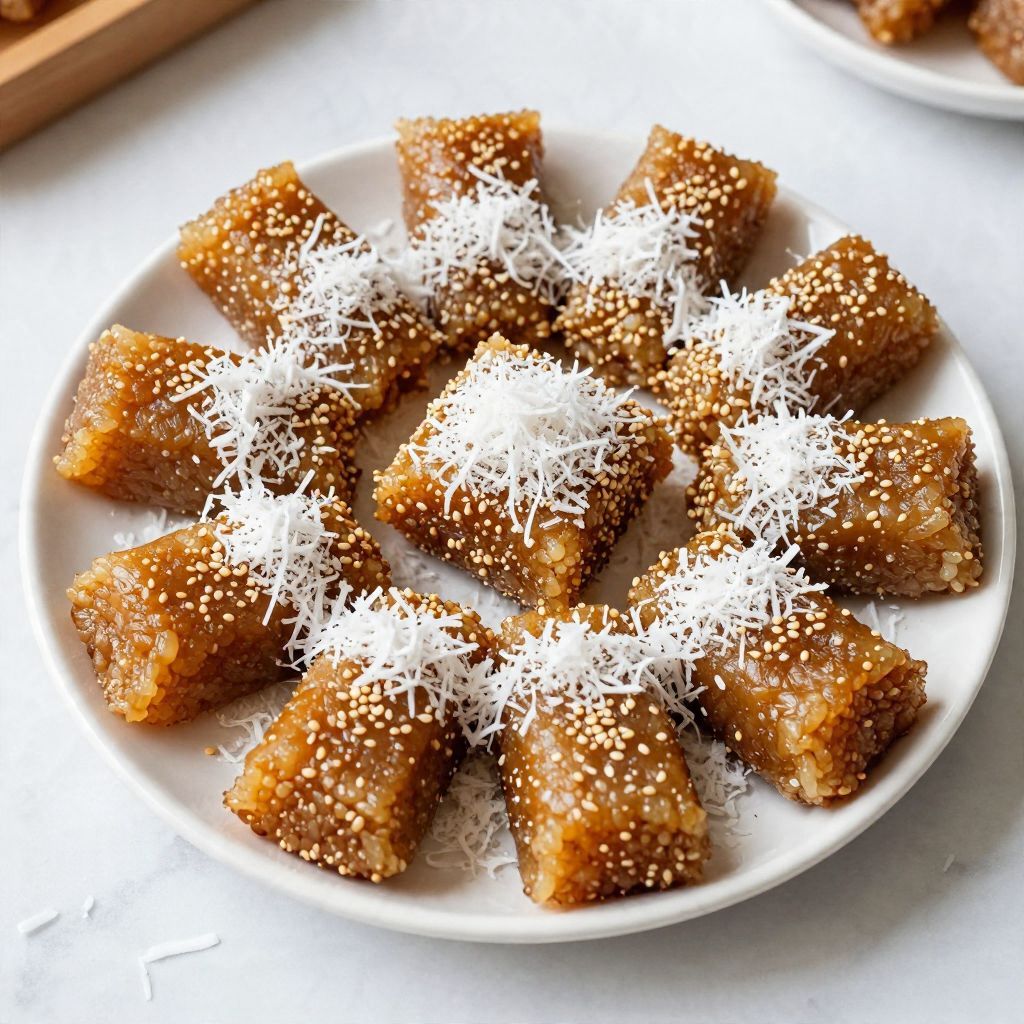
Picture this: a warm, chewy rice cake, coated in sweet coconut and a sprinkle of sesame seeds. That’s the delightful experience of making Palitaw, a beloved Filipino treat that is perfect for snacking or dessert. This recipe stands out not only for its unique texture but also for its simplicity, making it an easy way to impress your friends and family. Plus, it’s gluten-free and takes less than an hour to prepare, so let’s dive in!
Why You’ll Love This Recipe
This recipe is a must-try for anyone who enjoys sweet snacks.
- Quick to prepare, taking only about 30 minutes.
- Chewy texture with a sweet, toasted coconut topping.
- Gluten-free and made with simple ingredients.
- Perfect for sharing at gatherings or enjoying solo.
- Customizable with different toppings or fillings.
My Experience Making This Recipe
When I first tried making Palitaw, I was surprised by how simple it was. The process filled my kitchen with a delightful aroma as the rice cakes cooked, instantly transporting me back to my childhood.
The first bite was pure bliss—soft, chewy, and the sweetness of the coconut was just right. It disappeared quickly, proving that these little cakes are a hit no matter the occasion.
Recipe Overview
- Recipe Name: Palitaw
- Servings: 10 pieces
- Prep Time: 10 minutes
- Cook Time: 20 minutes
- Total Time: 30 minutes
- Course: Snack/Dessert
- Cuisine: Filipino
- Calories per Serving: 120
Equipment You Will Need
- Large mixing bowl
- Pot for boiling water
- Slotted spoon
- Plate or tray for cooling
- Grater or food processor for coconut
Ingredients for Palitaw
- 2 cups sweet rice flour
- 1 cup water
- 1 cup grated fresh coconut
- 1/2 cup sugar
- 1/4 cup toasted sesame seeds
- Pinch of salt
Ingredient Notes and Substitutions
- Sweet rice flour: This gives Palitaw its characteristic chewy texture. You can substitute with regular rice flour, but the texture will differ.
- Grated fresh coconut: Fresh coconut adds richness. Dried coconut can be used but won’t provide the same moisture.
- Sugar: For sweetness, but feel free to use coconut sugar for a more caramel-like flavor.
- Toasted sesame seeds: These add a nutty crunch. You can replace them with chopped peanuts or omit them entirely if desired.
How to Make Palitaw
Step 1: Prepare the Dough
In a large mixing bowl, combine the sweet rice flour and salt. Gradually add water until a smooth dough forms; it should be pliable but not sticky.
Step 2: Shape the Cakes
Take small portions of the dough and roll them into balls about the size of a golf ball. Flatten each ball slightly to form a thick disc.
Step 3: Boil Water
Fill a large pot with water and bring it to a gentle boil. This step is crucial, as the boiling water will cook the rice cakes evenly.
Step 4: Cook the Cakes
Carefully drop the discs into the boiling water. Once they float to the surface, let them cook for an additional 2-3 minutes.
Step 5: Remove and Cool
Using a slotted spoon, remove the cooked cakes and place them on a plate or tray to cool slightly. This allows them to firm up a bit before adding toppings.
Step 6: Prepare Toppings
While the cakes cool, mix the grated coconut and sugar in a bowl. This mixture will be the sweet coating that makes Palitaw irresistible.
Step 7: Coat the Cakes
While still warm, coat each cake in the coconut-sugar mixture, pressing gently to adhere. Feel free to sprinkle some toasted sesame seeds on top for added flavor.
Step 8: Serve and Enjoy
Arrange the coated cakes on a serving plate. Enjoy them warm or at room temperature, savoring the delightful flavors!
Pro Tip: Make sure to use fresh coconut for the best flavor and texture in your Palitaw.
Tips for the Best Palitaw
- Don’t overwork the dough; just mix until combined for a tender texture.
- Adjust the sweetness by varying the sugar to your taste preference.
- Serve warm for the best texture; they can become firmer as they cool.
- Experiment with different toppings like grated cheese or chocolate for a twist.
- Ensure the water is boiling gently to properly cook the cakes without breaking them.
Common Mistakes to Avoid
- Using regular flour instead of sweet rice flour will result in a different texture.
- Overcooking the cakes can make them tough instead of chewy.
- Not properly cooling the cakes before coating can lead to the toppings sliding off.
- Adding too much water to the dough can make it sticky and hard to shape.
Serving Suggestions
Serve Palitaw as a standalone snack or with a hot cup of coffee or tea. Here are some delicious pairings:
- Fresh fruits like mango or banana.
- Coconut milk for drizzling.
- Ice-cold drinks for a refreshing contrast.
- Other Filipino snacks like puto or bibingka.
Variations to Try
- Add a splash of pandan extract to the dough for a fragrant twist.
- Incorporate mashed sweet potato into the dough for a unique flavor.
- Top with a drizzle of chocolate sauce for a dessert-like treat.
- Use different nuts as toppings, like crushed almonds or walnuts.
Dietary Adaptations
- Gluten-free: This recipe is naturally gluten-free due to the use of sweet rice flour.
- Dairy-free: The ingredients are dairy-free, making it suitable for lactose-intolerant individuals.
- Vegan: No animal products are used, so it’s perfect for vegans.
- Low-carb/keto: This recipe is not suitable for keto; consider alternatives like almond flour for a low-carb version.
Storage and Reheating
Refrigerator
Store leftover Palitaw in an airtight container in the refrigerator for up to three days.
- Place parchment paper between layers to prevent sticking.
Freezer
For longer storage, freeze the cakes in a single layer before transferring them to a freezer-safe container.
- Thaw overnight in the fridge before serving.
Reheating
Reheat in the microwave for a few seconds or steam them briefly to restore their chewy texture.
- Avoid overcooking to maintain the right consistency.
Nutrition Information
| Nutrient | Amount |
|---|---|
| Calories | 120 |
| Total Fat | 5g |
| Saturated Fat | 4g |
| Carbohydrates | 16g |
| Fiber | 1g |
| Sugar | 5g |
| Protein | 2g |
| Sodium | 10mg |
| Cholesterol | 0mg |
Nutrition values are approximate and can vary based on ingredients used.
Frequently Asked Questions
Can I use regular rice flour instead of sweet rice flour?
You can, but the texture will be different; sweet rice flour gives Palitaw its chewy quality.
How can I make these a day ahead?
Prepare the cakes and store them in the refrigerator, then coat them just before serving for the best texture.
How do I store leftovers?
Keep leftovers in an airtight container in the refrigerator for up to three days.
Why did my cakes break while cooking?
This could be due to overcooking; ensure the water is gently boiling to prevent them from falling apart.
Can I add fillings to the cakes?
Yes, you can fill them with sweetened mung beans or cheese before shaping them for a delicious twist.
Final Thoughts
Making Palitaw is a delightful way to connect with Filipino culture and treat yourself to a delicious snack. I encourage you to try this recipe and share it with your family and friends; they will surely appreciate the effort.
Explore more delightful recipes like Pani Popo or try your hand at Sago for a delicious treat!
Palitaw
Ingredients
Equipment
Method
- In a large mixing bowl, combine the sweet rice flour and salt.
- Gradually add water until a smooth dough forms; it should be pliable but not sticky.
- Take small portions of the dough and roll them into balls about the size of a golf ball.
- Flatten each ball slightly to form a thick disc.
- Fill a large pot with water and bring it to a gentle boil.
- Carefully drop the discs into the boiling water. Once they float to the surface, let them cook for an additional 2-3 minutes.
- Using a slotted spoon, remove the cooked cakes and place them on a plate or tray to cool slightly.
- While the cakes cool, mix the grated coconut and sugar in a bowl.
- While still warm, coat each cake in the coconut-sugar mixture, pressing gently to adhere.
- Sprinkle some toasted sesame seeds on top if desired.
- Arrange the coated cakes on a serving plate and enjoy them warm or at room temperature.