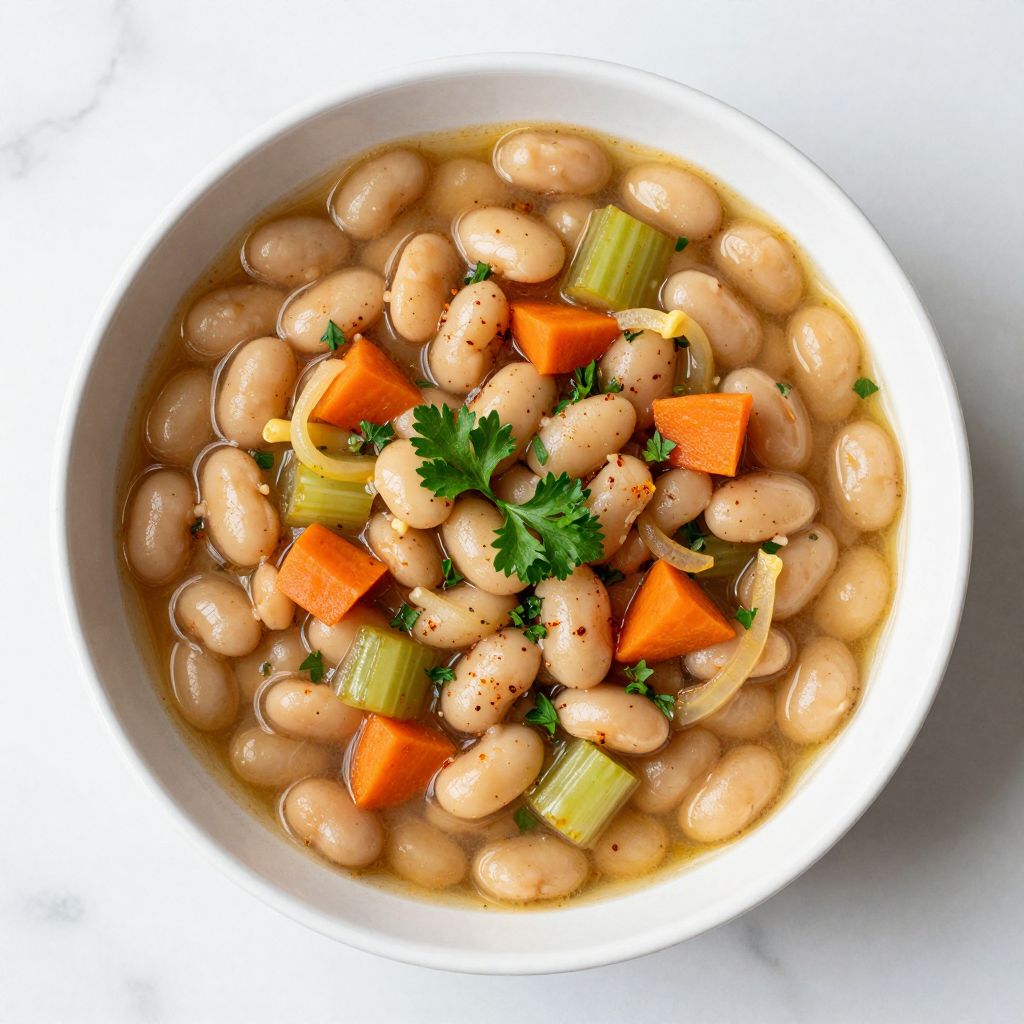
Great northern beans recipe transforms simple pantry staples into a comforting, protein-packed meal that works for weeknight dinners or meal prep. These creamy white beans simmer with aromatic vegetables and herbs to create a dish that’s both satisfying and incredibly versatile.
If you’ve been looking for an affordable, nutritious recipe that doesn’t sacrifice flavor, this is it. This recipe delivers tender beans in a savory broth that gets better with time.
Why You’ll Love This Recipe
This great northern beans recipe offers incredible value and nutrition without requiring hours in the kitchen. The hands-off cooking method lets you multitask while the beans work their magic.
- Budget-friendly ingredients that cost just a few dollars per batch
- Packed with fiber and plant-based protein to keep you full for hours
- Flexible enough to serve as a main dish or hearty side
- Freezes beautifully for quick future meals
- Requires minimal active cooking time
My Experience Making This Recipe
I first made this recipe on a cold Sunday afternoon when I needed something warm and filling without much effort. The smell of garlic and thyme filling my kitchen convinced me I was onto something special.
My family devoured the entire pot within two days, even my kids who usually turn their noses up at beans. The creamy texture surprised everyone, and the savory broth begged to be soaked up with crusty bread.
I’ve made this recipe at least a dozen times since then, tweaking the seasonings and trying different add-ins. Each batch reminds me why simple, honest cooking often beats complicated recipes.
Recipe Overview
- Recipe Name: Great Northern Beans
- Servings: 6
- Prep Time: 15 minutes (plus 8 hours soaking)
- Cook Time: 90 minutes
- Total Time: 1 hour 45 minutes (plus soaking)
- Course: Main or Side Dish
- Cuisine: American
- Calories per Serving: 245
Equipment You Will Need
- Large heavy-bottomed pot or Dutch oven
- Wooden spoon for stirring
- Chef’s knife and cutting board
- Measuring cups and spoons
- Fine-mesh strainer or colander
- Large bowl for soaking beans
Ingredients for Great Northern Beans Recipe
- 1 pound dried great northern beans, rinsed and picked over
- 6 cups vegetable or chicken broth
- 2 tablespoons olive oil
- 1 large yellow onion, diced
- 3 medium carrots, peeled and diced
- 3 celery stalks, diced
- 4 garlic cloves, minced
- 2 bay leaves
- 1 teaspoon dried thyme
- 1 teaspoon smoked paprika
- 1 teaspoon salt, plus more to taste
- 1/2 teaspoon black pepper
- 2 tablespoons fresh parsley, chopped
Ingredient Notes and Substitutions
- Great northern beans: These mild, creamy beans hold their shape well during cooking. You can substitute navy beans or cannellini beans for similar results.
- Vegetable or chicken broth: Broth adds depth and savory flavor to the cooking liquid. Water works in a pinch, but add an extra teaspoon of salt and consider a splash of soy sauce for umami.
- Olive oil: This fat helps sauté the vegetables and adds richness. Substitute with butter or any neutral cooking oil you prefer.
- Smoked paprika: This spice provides a subtle smoky depth without adding heat. Regular paprika works fine, or try a pinch of cumin for a different flavor profile.
- Fresh parsley: The fresh herb brightens the finished dish. Substitute with fresh cilantro, or use 1 teaspoon dried parsley if that’s what you have.
How to Make Great Northern Beans Recipe
Step 1: Soak the Beans Overnight
Place the rinsed great northern beans in a large bowl and cover with at least 3 inches of cold water. Let them soak at room temperature for 8 hours or overnight.
Soaking softens the beans and reduces cooking time significantly while also making them easier to digest. If you forget to soak overnight, use the quick-soak method by boiling beans for 2 minutes, then letting them sit covered for 1 hour.
Step 2: Prepare the Aromatics
Drain and rinse the soaked beans thoroughly. Dice your onion, carrots, and celery into roughly equal-sized pieces, about 1/4 inch each.
Uniform sizing helps everything cook evenly and creates a pleasant texture throughout the dish. Mincing the garlic finely releases more flavor than chopping it coarsely.
Step 3: Sauté the Vegetables
Heat the olive oil in your Dutch oven over medium heat. Add the onion, carrots, and celery, cooking for 6 to 8 minutes until the vegetables soften and the onion becomes translucent.
This step builds a flavorful base by caramelizing the natural sugars in the vegetables. Stirring occasionally prevents sticking without interfering with the browning process.
Step 4: Add Garlic and Spices
Stir in the minced garlic, thyme, and smoked paprika. Cook for 1 minute, stirring constantly, until the garlic becomes fragrant.
Garlic burns quickly, so this short cooking time releases its flavor without creating bitterness. The spices bloom in the hot oil, intensifying their aromatic compounds.
Step 5: Add Beans and Liquid
Add the drained beans, broth, bay leaves, salt, and pepper to the pot. Stir everything together and bring to a boil over high heat.
Starting with a boil helps the beans cook more evenly before you reduce the heat. Make sure the liquid covers the beans by at least 1 inch, adding more broth or water if needed.
Step 6: Simmer Until Tender
Once boiling, reduce the heat to low and maintain a gentle simmer. Cover the pot partially, leaving a small gap for steam to escape, and cook for 75 to 90 minutes.
Check the beans after 75 minutes by tasting a few from different areas of the pot. They should be creamy inside without any chalky texture, and the skins should be tender but intact.
Step 7: Adjust Seasoning and Consistency
Remove the bay leaves and taste the broth. Add more salt and pepper as needed, keeping in mind that the flavors will concentrate slightly as the dish sits.
If the beans seem too soupy, simmer uncovered for 10 more minutes to reduce the liquid. If they’re too thick, stir in additional broth or water until you reach your preferred consistency.
Step 8: Finish and Serve
Remove the pot from heat and stir in the fresh parsley. Let the beans rest for 5 minutes before serving.
This resting period allows the flavors to meld and the beans to absorb a bit more liquid for optimal creaminess. The parsley adds a fresh, bright note that balances the rich, savory flavors.
Pro Tip: Never add acidic ingredients like tomatoes or vinegar until the final 15 minutes of cooking. Acid prevents beans from softening properly, so save those additions for the end to keep your beans creamy and tender.
Tips for the Best Great Northern Beans Recipe
- Pick through the dried beans before soaking to remove any small stones or debris that sometimes sneak into packages. One hard pebble can ruin a tooth and your dinner.
- Resist the urge to add salt at the beginning of cooking if you want the absolute creamiest texture. Adding it halfway through or at the end produces slightly more tender beans.
- Keep the simmer gentle, not aggressive. Vigorous boiling breaks down the bean skins and creates a mushy, unappealing texture instead of perfectly intact creamy beans.
- Taste beans from different parts of the pot to check doneness. The ones on the bottom often cook faster than those on top.
- For richer flavor, replace 1 cup of broth with white wine added in step 5. The acidity complements the creamy beans beautifully once they’re already tender.
- Make a double batch since the effort is nearly identical. These beans freeze perfectly and make weeknight dinners effortless when you have a stash ready.
Common Mistakes to Avoid
- Skipping the soaking step results in unevenly cooked beans with tough skins and a longer cooking time. The overnight soak is worth the planning.
- Cooking beans at a rolling boil instead of a gentle simmer causes the skins to burst and creates a starchy, broken-down mess. Low and slow wins this race.
- Using old beans that have been sitting in your pantry for years leads to beans that never fully soften no matter how long you cook them. Buy fresh dried beans when possible.
- Adding acidic ingredients too early prevents the beans from becoming tender. Save tomatoes, lemon juice, and vinegar for the last 15 minutes.
- Not tasting and adjusting the seasoning at the end leaves you with a bland pot of beans. The broth should be flavorful enough to enjoy on its own.
Serving Suggestions
These great northern beans shine as a main dish with crusty bread or as a hearty side alongside roasted meats. The versatility makes them perfect for any meal.
- Serve over fluffy white rice or quinoa for a complete protein-packed vegetarian meal
- Pair with cornbread and a simple green salad for classic comfort food
- Ladle over baked sweet potatoes and top with shredded cheese and sour cream
- Serve alongside roasted chicken, pork chops, or grilled sausages
- Top with a fried egg and hot sauce for a satisfying breakfast bowl
Variations to Try
- Italian-style: Add diced tomatoes, Italian seasoning, and fresh basil in the last 15 minutes for a Tuscan-inspired version. The tomatoes add bright acidity that cuts through the richness.
- Smoky bacon: Cook 4 strips of diced bacon before the vegetables and use the rendered fat instead of olive oil. The smoky, salty pork flavors permeate every bite.
- Spicy Southwest: Add cumin, chili powder, diced jalapeños, and finish with fresh cilantro and lime juice. This version pairs perfectly with cornbread and avocado.
- Herbed lemon: Stir in fresh rosemary during cooking and finish with lemon zest and juice. The bright citrus transforms the beans into something elegant enough for company.
- Garlicky greens: Stir in 4 cups of chopped kale or spinach during the last 10 minutes. The greens wilt into the broth and add color, nutrition, and subtle bitterness.
Dietary Adaptations
- Gluten-free: This recipe is naturally gluten-free as long as you check that your broth doesn’t contain any hidden gluten. Most pure broths are safe, but always verify the label.
- Dairy-free: The recipe contains no dairy products, making it suitable for dairy-free diets without any modifications needed.
- Vegan: Use vegetable broth instead of chicken broth to keep the recipe completely plant-based. The flavor remains rich and satisfying without any animal products.
- Low-carb/Keto: Beans are high in carbohydrates and not suitable for keto diets. Try substituting with cauliflower florets for a similar texture, though the flavor profile will differ significantly.
Storage and Reheating
Refrigerator
Store cooled beans in an airtight container in the refrigerator for up to 5 days. The flavors actually deepen and improve after a day or two in the fridge.
- Let the beans cool to room temperature before refrigerating to prevent condensation
- Store the beans in their cooking liquid to maintain moisture and flavor
- The beans will thicken as they chill, so add a splash of broth when reheating
Freezer
Freeze beans in portion-sized containers for up to 3 months. Freezing in individual servings makes it easy to defrost exactly what you need.
- Leave 1 inch of headspace in containers to allow for expansion during freezing
- Label containers with the date and contents for easy identification
- Thaw overnight in the refrigerator for best texture
Reheating
Reheat beans gently on the stovetop over medium-low heat, stirring occasionally. Microwave reheating works too, but stovetop gives better control over consistency.
- Add a splash of broth or water to restore the original consistency
- Heat until warmed through, about 5 to 7 minutes on the stovetop
- Microwave in 1-minute intervals, stirring between each, until hot
Nutrition Information
| Nutrient | Amount |
|---|---|
| Calories | 245 |
| Total Fat | 5g |
| Saturated Fat | 1g |
| Carbohydrates | 38g |
| Fiber | 11g |
| Sugar | 3g |
| Protein | 14g |
| Sodium | 680mg |
| Cholesterol | 0mg |
Nutritional values are approximate and will vary based on specific ingredients and portion sizes used. These calculations assume vegetable broth and standard measurements.
Frequently Asked Questions
Can I use canned great northern beans instead of dried?
Yes, but reduce the cooking time significantly since canned beans are already fully cooked. Add them in step 6 and simmer for just 15 to 20 minutes to let them absorb the flavors without turning mushy.
Can I make this recipe in a slow cooker?
Absolutely, and it’s actually quite convenient for hands-off cooking. Sauté the vegetables first, then transfer everything to your slow cooker and cook on low for 6 to 8 hours or high for 3 to 4 hours.
Why are my beans still hard after cooking for the recommended time?
Old beans lose moisture over time and may never fully soften no matter how long you cook them. Try buying beans from stores with high turnover, and check the packaging date if available.
Do I need to rinse the beans after soaking?
Yes, always drain and rinse soaked beans before cooking. The soaking water contains compounds that can cause digestive discomfort, and fresh liquid produces a cleaner-tasting final dish.
Can I cook the beans without soaking them first?
You can, but the cooking time will increase to 2.5 to 3 hours, and the beans may cook less evenly. The quick-soak method is a good compromise if you forgot to soak overnight.
How do I know when the beans are perfectly done?
Taste several beans from different parts of the pot. They should be creamy all the way through without any chalky or grainy center, and the skins should be tender but not falling apart.
Final Thoughts
This great northern beans recipe proves that simple ingredients can create something truly satisfying when treated with care. The creamy texture and savory broth make this dish a reliable favorite that you’ll return to again and again.
Give this recipe a try and discover how effortless and delicious home-cooked beans can be. Your kitchen will smell amazing, your wallet will thank you, and you’ll have a versatile dish that works for any occasion.
Great Northern Beans
Ingredients
Equipment
Method
- Place the rinsed great northern beans in a large bowl and cover with at least 3 inches of cold water. Let them soak at room temperature for 8 hours or overnight. If you forget to soak overnight, use the quick-soak method by boiling beans for 2 minutes, then letting them sit covered for 1 hour.
- Drain and rinse the soaked beans thoroughly. Dice your onion, carrots, and celery into roughly equal-sized pieces, about 1/4 inch each. Mince the garlic finely.
- Heat the olive oil in your Dutch oven over medium heat. Add the onion, carrots, and celery, cooking for 6 to 8 minutes until the vegetables soften and the onion becomes translucent. Stir occasionally to prevent sticking.
- Stir in the minced garlic, thyme, and smoked paprika. Cook for 1 minute, stirring constantly, until the garlic becomes fragrant.
- Add the drained beans, broth, bay leaves, salt, and pepper to the pot. Stir everything together and bring to a boil over high heat. Make sure the liquid covers the beans by at least 1 inch, adding more broth or water if needed.
- Once boiling, reduce the heat to low and maintain a gentle simmer. Cover the pot partially, leaving a small gap for steam to escape, and cook for 75 to 90 minutes. Check the beans after 75 minutes by tasting a few from different areas of the pot. They should be creamy inside without any chalky texture, and the skins should be tender but intact.
- Remove the bay leaves and taste the broth. Add more salt and pepper as needed. If the beans seem too soupy, simmer uncovered for 10 more minutes to reduce the liquid. If they're too thick, stir in additional broth or water until you reach your preferred consistency.
- Remove the pot from heat and stir in the fresh parsley. Let the beans rest for 5 minutes before serving.