
There’s something undeniably comforting about a warm bowl of Thai Red Curry Sauce, especially when the aroma fills your kitchen and makes your stomach grumble with anticipation. This recipe is a gem because it brings together bold flavors and creamy textures, making it a versatile sauce that can elevate any dish, from a simple stir-fry to a luxurious curry.
Why You’ll Love This Recipe
This sauce is a must-try for anyone who loves vibrant flavors in their cooking.
- Quick to prepare, so it’s perfect for busy weeknights.
- Versatile enough to pair with meats, seafood, or veggies.
- Rich and creamy texture that coats ingredients beautifully.
- Authentic Thai flavors that transport you to street food stalls.
- Can be easily adjusted to fit your spice preference.
My Experience Making This Recipe
Making this sauce was a delightful experience, with the ingredients coming together in a symphony of color and aroma. As I simmered the sauce, the rich coconut milk mingled with the spices, creating a warm hug in a bowl.
When I served it over jasmine rice, my family couldn’t get enough. It was a delightful reminder of our last trip to Thailand, and I knew I had to share this recipe with all of you!
Recipe Overview
- Recipe Name: Thai Red Curry Sauce
- Servings: 4
- Prep Time: 10 minutes
- Cook Time: 15 minutes
- Total Time: 25 minutes
- Course: Sauce
- Cuisine: Thai
- Calories per Serving: 150
Equipment You Will Need
- Medium saucepan
- Wooden spoon or spatula
- Measuring cups and spoons
- Knife and cutting board
Ingredients for Thai Red Curry Sauce
- 1 tablespoon vegetable oil
- 1 onion, finely chopped
- 2 cloves garlic, minced
- 1 tablespoon ginger, minced
- 2 tablespoons red curry paste
- 1 can (13.5 oz) coconut milk
- 1 tablespoon soy sauce
- 1 tablespoon brown sugar
- 1 tablespoon lime juice
- Fresh basil leaves for garnish (optional)
Ingredient Notes and Substitutions
- Vegetable oil: Used for sautéing; can substitute with coconut oil for extra flavor.
- Onion: Provides sweetness; yellow or red onions work well as substitutes.
- Red curry paste: This is where the flavor comes from; green curry paste can be used for a different taste.
- Coconut milk: Adds creaminess; light coconut milk is a lower-calorie option.
- Brown sugar: Balances the flavors; honey or maple syrup can be a natural alternative.
How to Make Thai Red Curry Sauce
Step 1: Sauté the Aromatics
Heat the vegetable oil in a medium saucepan over medium heat. This step builds the flavor base for the sauce.
Step 2: Add Onions and Garlic
Add the chopped onion and sauté until translucent, about 5 minutes. The onions should soften and become fragrant.
Step 3: Incorporate Ginger
Stir in the minced garlic and ginger, cooking for another minute. This adds a lovely depth of flavor to the sauce.
Step 4: Mix in the Red Curry Paste
Add the red curry paste and stir well to combine. This step is crucial as it infuses the oil with those vibrant flavors.
Step 5: Pour in the Coconut Milk
Slowly add the coconut milk, stirring to combine. This creates a creamy base that will mellow the spice.
Step 6: Season the Sauce
Mix in the soy sauce and brown sugar. This balances the heat from the curry paste with a touch of sweetness.
Step 7: Simmer the Sauce
Bring the mixture to a gentle simmer and cook for about 10 minutes. Allowing it to simmer thickens the sauce and deepens the flavors.
Step 8: Finish with Lime Juice
Remove the sauce from heat and stir in the lime juice. This brightens up the sauce, enhancing all the other flavors.
Pro Tip: Adjust the amount of red curry paste based on your spice tolerance, starting with less if you’re unsure.
Tips for the Best Thai Red Curry Sauce
- Cook the aromatics well to develop maximum flavor.
- Use full-fat coconut milk for a richer sauce.
- Let the sauce sit for a few minutes after cooking to allow the flavors to meld.
- Garnish with fresh basil or cilantro for a burst of freshness.
- Serve with a side of jasmine rice to soak up all that delicious sauce.
Common Mistakes to Avoid
- Not sautéing the aromatics long enough can lead to a bland sauce.
- Using low-quality curry paste might result in a lackluster flavor.
- Skipping the lime juice means missing out on that essential acidity.
- Not allowing the sauce to simmer long enough can lead to a watery texture.
Serving Suggestions
This Thai Red Curry Sauce pairs beautifully with a variety of dishes. It can be served over rice, noodles, or even as a dipping sauce.
- Pair it with grilled chicken or shrimp for a protein boost.
- Serve alongside steamed vegetables for a healthy option.
- Use it as a base for a hearty vegetable curry.
- Enjoy with rice noodles for a tasty stir-fry.
Variations to Try
- Add vegetables like bell peppers or zucchini for extra nutrition and color.
- Incorporate proteins like tofu or chicken for a more filling meal.
- Try different curry pastes for unique flavor profiles.
- Mix in some peanut butter for a creamy twist.
Dietary Adaptations
- Gluten-free: Use tamari in place of soy sauce.
- Dairy-free: This recipe is naturally dairy-free due to coconut milk.
- Vegan/Vegetarian: Use vegetable broth instead of chicken broth for added depth.
- Low-carb/Keto: Skip the sugar or use a keto-friendly sweetener.
Storage and Reheating
Refrigerator
Store any leftover sauce in an airtight container in the fridge for up to a week.
- Cool the sauce completely before sealing.
- Label the container with the date for reference.
Freezer
This sauce freezes well for up to three months.
- Portion it into freezer-safe bags or containers.
- Leave some space in the container for expansion.
Reheating
Reheat the sauce gently on the stove over low heat.
- Add a splash of water if the sauce is too thick.
- Stir frequently to prevent sticking.
Nutrition Information
| Nutrient | Amount |
|---|---|
| Calories | 150 |
| Total Fat | 12g |
| Saturated Fat | 10g |
| Carbohydrates | 10g |
| Fiber | 1g |
| Sugar | 4g |
| Protein | 2g |
| Sodium | 200mg |
| Cholesterol | 0mg |
This nutritional information is an estimate and can vary based on specific ingredients used.
Frequently Asked Questions
Can I substitute the red curry paste?
Yes, you can use green curry paste for a different flavor profile, but the spice level may vary.
Can I make this sauce ahead of time?
Absolutely! This sauce keeps well in the refrigerator or freezer, making it perfect for meal prep.
How can I adjust the spice level?
Start with less curry paste and gradually add more to reach your desired heat level.
Why is my sauce too thin?
If your sauce is too thin, allow it to simmer longer to thicken up or add a cornstarch slurry.
What can I serve with this sauce?
This sauce pairs well with rice, noodles, or as a dipping sauce for spring rolls.
Final Thoughts
This Thai Red Curry Sauce has the power to transform a simple meal into something extraordinary. With its bold flavors and creamy texture, it’s sure to become a staple in your kitchen.
So, gather your ingredients and give this recipe a try—you won’t regret it! For more delicious ideas, check out my Shrimp Curry Recipe and Thai Cucumber Salad Recipe.
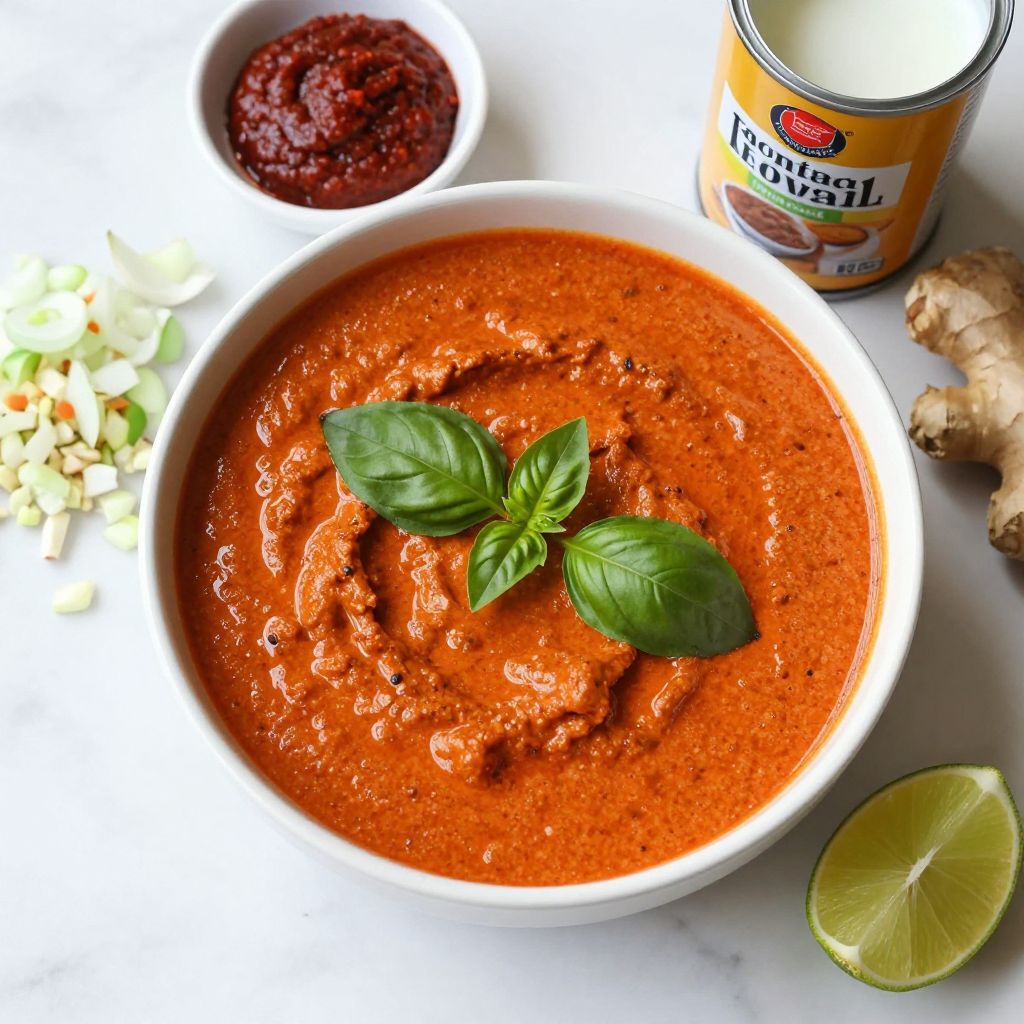
Thai Red Curry Sauce
Ingredients
Equipment
Method
- Heat the vegetable oil in a medium saucepan over medium heat.
- Add the chopped onion and sauté until translucent, about 5 minutes.
- Stir in the minced garlic and ginger, cooking for another minute.
- Add the red curry paste and stir well to combine.
- Slowly add the coconut milk, stirring to combine.
- Mix in the soy sauce and brown sugar.
- Bring the mixture to a gentle simmer and cook for about 10 minutes.
- Remove the sauce from heat and stir in the lime juice.