
Picture this: a cozy evening at home, the savory aroma of tender pork sizzling in the air, and a warm bowl of rice waiting to soak it all in. That’s what you get with a Pork Rice Bowl—a simple yet satisfying dish that brings comfort and flavor to your table. This recipe is special because it’s versatile, allowing you to customize it with your favorite toppings and sauces. Plus, it can be whipped up in no time, making it perfect for busy weeknights or a relaxed Sunday dinner. Let’s get into the delicious details!
Why You’ll Love This Recipe
This recipe is a game changer for your dinner routine.
- Quick and easy to make, perfect for weeknight meals.
- Deliciously tender pork paired with fluffy rice.
- Customizable with your favorite toppings and sauces.
- Great for meal prepping and leftovers.
- A delightful balance of flavors and textures in every bite.
My Experience Making This Recipe
When I first made this Pork Rice Bowl, I was pleasantly surprised by how quickly it came together. The tender pork caramelized beautifully, creating a mouthwatering flavor that paired perfectly with the rice.
Everyone at the table was raving about it, and I loved how each person could personalize their bowl with different toppings. It has become a regular in our dinner rotation, and I can’t wait for you to try it!
Recipe Overview
- Recipe Name: Pork Rice Bowl
- Servings: 4
- Prep Time: 15 minutes
- Cook Time: 20 minutes
- Total Time: 35 minutes
- Course: Main Course
- Cuisine: Asian
- Calories per Serving: 450
Equipment You Will Need
- Large skillet or wok
- Rice cooker or pot
- Cutting board
- Sharp knife
- Measuring cups and spoons
- Serving bowls
Ingredients for Pork Rice Bowl
- 1 lb pork shoulder, thinly sliced
- 2 cups cooked rice (white or brown)
- 2 tablespoons soy sauce
- 1 tablespoon sesame oil
- 1 tablespoon vegetable oil
- 2 cloves garlic, minced
- 1 teaspoon ginger, grated
- 1 cup mixed vegetables (carrots, bell peppers, broccoli)
- 2 green onions, sliced
- Sesame seeds, for garnish
Ingredient Notes and Substitutions
- Pork shoulder: This cut is tender and flavorful. You can substitute it with pork loin for a leaner option.
- Rice: Use any type of rice you prefer for your bowl. Quinoa or cauliflower rice can be great low-carb alternatives.
- Soy sauce: It adds umami flavor. Tamari works well for a gluten-free option.
- Mixed vegetables: Fresh or frozen work fine. Feel free to use your favorite veggies for variety.
How to Make Pork Rice Bowl
Step 1: Prepare the Rice
Start by cooking your rice according to package instructions. Fluffy rice is the perfect base for soaking up all the delicious flavors.
Step 2: Slice the Pork
Thinly slice the pork shoulder against the grain. This helps keep the meat tender and makes it easier to cook quickly.
Step 3: Heat the Skillet
In a large skillet, heat the vegetable oil over medium-high heat. This ensures a nice sear on the pork, enhancing its flavor.
Step 4: Sauté the Garlic and Ginger
Add the minced garlic and grated ginger to the skillet. Sauté for about 30 seconds until fragrant, but be careful not to burn them!
Step 5: Cook the Pork
Add the sliced pork to the skillet. Cook for about 5-7 minutes, stirring occasionally, until browned and cooked through.
Step 6: Add Soy Sauce and Sesame Oil
Pour in the soy sauce and sesame oil, stirring to coat the pork evenly. This adds depth of flavor and a lovely sheen to the meat.
Step 7: Incorporate the Vegetables
Add the mixed vegetables to the skillet. Cook for an additional 3-5 minutes until the veggies are tender but still crisp.
Step 8: Assemble the Bowls
In serving bowls, layer the cooked rice and top it with the pork and vegetable mixture. Garnish with sliced green onions and sesame seeds for a pop of color and flavor.
Pro Tip: For extra depth, marinate the pork in soy sauce, garlic, and ginger for 30 minutes before cooking.
Tips for the Best Pork Rice Bowl
- Use a hot skillet to get a nice sear on the pork for better flavor.
- Don’t overcrowd the skillet; cook in batches if necessary to maintain heat.
- Feel free to get creative with toppings like avocado or a fried egg.
- Adjust the soy sauce to your taste; add more for a saltier kick.
- Experiment with different vegetables based on what’s in season.
Common Mistakes to Avoid
- Not slicing the pork thinly enough can lead to tough bites. Thin slices cook more evenly.
- Overcooking the vegetables can make them mushy. Aim for a tender-crisp texture.
- Skipping the marinating step can miss out on added flavor. A little marinating goes a long way.
- Using the wrong type of rice may affect the dish’s overall texture. Stick to what you enjoy best.
Serving Suggestions
This bowl is filling on its own, but you can elevate the experience with a few sides.
- Serve with a fresh cucumber salad for crunch.
- A light miso soup pairs beautifully with this dish.
- Edamame sprinkled with sea salt makes a great appetizer.
- Include pickled vegetables for a tangy contrast.
Variations to Try
- Use beef or chicken instead of pork for a different protein option.
- Add a spicy sauce for a kick, like Sriracha or chili paste.
- Top with kimchi for a tangy, fermented addition.
- Incorporate pineapple chunks for a sweet and savory twist.
Dietary Adaptations
- Gluten-free: Use tamari instead of soy sauce.
- Dairy-free: This recipe is naturally dairy-free.
- Vegan/Vegetarian: Substitute pork with tofu or tempeh.
- Low-carb/Keto: Switch rice for cauliflower rice or zucchini noodles.
Storage and Reheating
Refrigerator
Store leftovers in an airtight container in the refrigerator.
- They will keep for up to 3 days.
- Reheat gently in the microwave or on the stovetop.
Freezer
The pork mixture can be frozen for longer storage.
- Use freezer-safe containers, and it will last up to 2 months.
- Thaw overnight in the refrigerator before reheating.
Reheating
Reheat on the stovetop for best texture.
- Add a splash of water or broth to avoid drying out.
- Heat until warmed through and serve fresh.
Nutrition Information
| Nutrient | Amount |
|---|---|
| Calories | 450 |
| Total Fat | 20g |
| Saturated Fat | 5g |
| Carbohydrates | 48g |
| Fiber | 3g |
| Sugar | 2g |
| Protein | 25g |
| Sodium | 800mg |
| Cholesterol | 70mg |
This information is for informational purposes and can vary based on specific ingredients.
Frequently Asked Questions
Can I use other types of meat?
Absolutely! Chicken or beef can easily replace pork in this recipe.
Can I make this ahead of time?
Yes, you can prepare the pork and veggies in advance and store them separately until you’re ready to serve.
How should I store leftovers?
Store leftovers in an airtight container in the refrigerator for up to 3 days.
Why is my pork tough?
Slicing against the grain is key for tenderness; if you slice with the grain, it can turn out chewy.
What can I add for extra flavor?
Consider adding chili paste or a drizzle of teriyaki sauce for a flavor boost.
Final Thoughts
This Pork Rice Bowl brings warmth and comfort to any meal. I hope you enjoy making it as much as I do!
For more delicious recipes, check out Pork and Beans Recipe or explore Pork Cutlets Recipe for more inspiration.
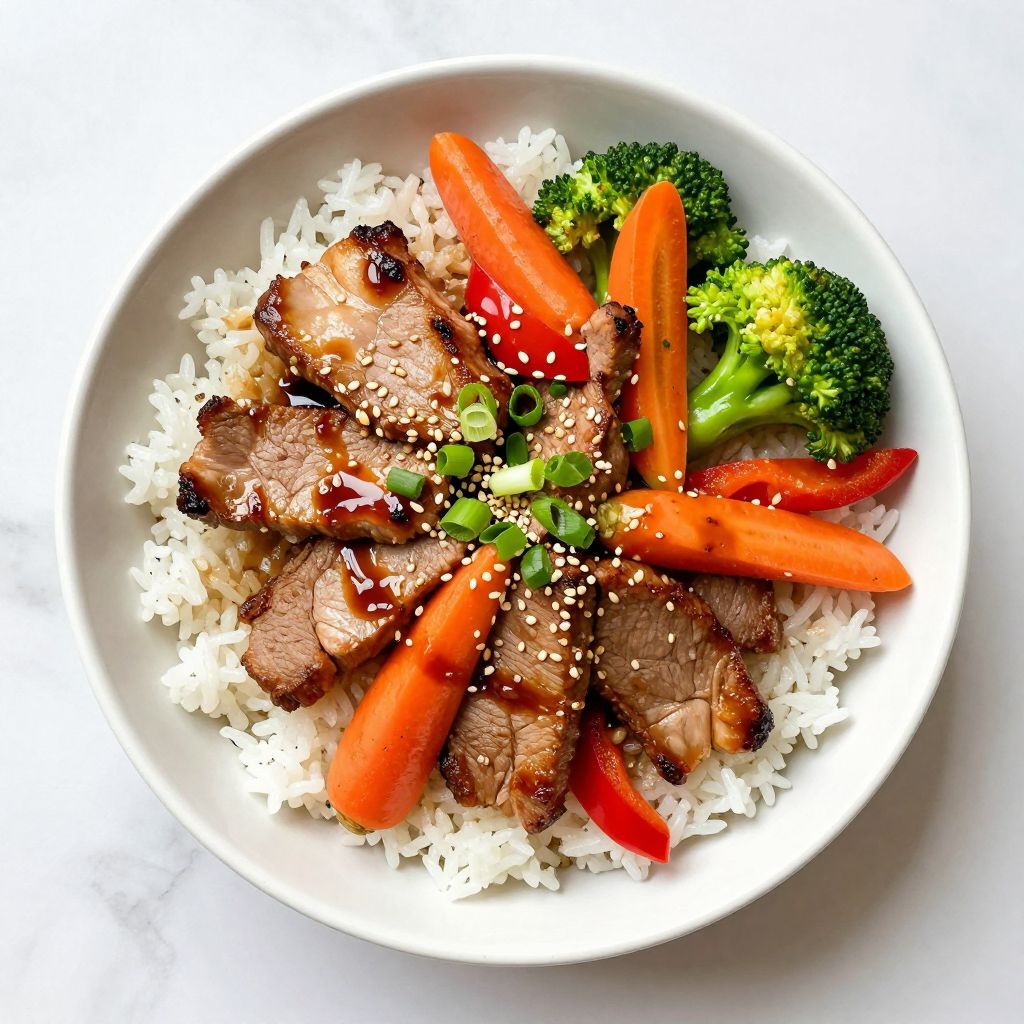
Pork Rice Bowl
Ingredients
Equipment
Method
- Cook rice according to package instructions.
- Thinly slice the pork shoulder against the grain.
- In a large skillet, heat the vegetable oil over medium-high heat.
- Add minced garlic and grated ginger to the skillet, sauté for about 30 seconds.
- Add the sliced pork to the skillet, cook for about 5-7 minutes until browned and cooked through.
- Pour in soy sauce and sesame oil, stir to coat the pork evenly.
- Add mixed vegetables to the skillet, cook for an additional 3-5 minutes until tender.
- Layer the cooked rice in serving bowls and top with the pork and vegetable mixture.
- Garnish with sliced green onions and sesame seeds.