
Picture this: a warm, fluffy slice of a Spanish omelette, dripping with rich flavors and memories from sun-soaked afternoons in Spain. This dish, known as a tortilla española, is not just a meal; it’s a celebration of simple ingredients coming together to create something truly special. With its crispy exterior and tender center, this Spanish omelette is both satisfying and versatile, perfect for breakfast, lunch, or dinner. Ready to whip up this classic dish? Let’s dive into the details!
Why You’ll Love This Recipe
This Spanish omelette is a favorite for many reasons.
- It’s incredibly easy to make with just a few ingredients.
- The flavor combination of potatoes and eggs is comforting and delicious.
- Perfect for meal prep or a quick weeknight dinner.
- It can be served hot or cold, making it perfect for any occasion.
- Great for impressing guests with minimal effort!
My Experience Making This Recipe
When I first attempted a Spanish omelette, I was nervous about getting the texture just right. The sizzle of the potatoes in the pan and the aroma that filled my kitchen brought back memories of my travels in Spain.
As I sliced into the golden tortilla, I felt a rush of joy when I saw the soft, creamy interior. My family devoured it within minutes, asking for seconds and reminiscing about our favorite tapas bars.
Recipe Overview
- Recipe Name: Spanish Omelette
- Servings: 4
- Prep Time: 10 minutes
- Cook Time: 30 minutes
- Total Time: 40 minutes
- Course: Breakfast / Brunch
- Cuisine: Spanish
- Calories per Serving: 250
Equipment You Will Need
- Large non-stick skillet
- Mixing bowl
- Spatula
- Knife
- Cutting board
Ingredients for Spanish Omelette
- 4 large eggs
- 2 large potatoes, peeled and thinly sliced
- 1 small onion, finely chopped (optional)
- Salt, to taste
- Pepper, to taste
- Olive oil, for frying
Ingredient Notes and Substitutions
- Potatoes: They provide the base for the dish and give it that classic texture. You can substitute with sweet potatoes for a twist.
- Onion: Adds sweetness and depth of flavor. Omit it if you prefer a simpler taste.
- Eggs: Essential for binding everything together. Egg substitutes like flaxseed can work, but the texture will differ.
- Olive oil: Necessary for frying and flavor. Avocado oil can be used as a neutral substitute.
How to Make Spanish Omelette
Step 1: Prepare the Potatoes
Peel and thinly slice the potatoes. Thin slices cook evenly and create that tender texture we love.
Step 2: Cook the Potatoes
Heat a generous amount of olive oil in a non-stick skillet over medium heat. This will help crisp the potatoes without burning them.
Step 3: Add the Onion
If using, add the chopped onion to the skillet with the potatoes. This will soften and sweeten, enhancing the overall flavor.
Step 4: Season the Mixture
Sprinkle salt and pepper over the potatoes and onion. Seasoning early allows the flavors to develop as they cook.
Step 5: Cook Until Tender
Fry the potatoes and onion for about 15-20 minutes, stirring occasionally until they are tender. This step is crucial for achieving that soft, melt-in-your-mouth texture.
Step 6: Whisk the Eggs
In a mixing bowl, whisk the eggs until fully combined. This adds air and lightness to your omelette.
Step 7: Combine Ingredients
Once the potatoes are cooked, drain them from the oil and let them cool slightly. Then, gently fold them into the whisked eggs.
Step 8: Cook the Omelette
Return the mixture to the skillet, spreading it evenly. Cook on low heat for about 5-7 minutes until the bottom is set and the top is slightly runny.
Pro Tip: To flip the omelette, use a large plate: gently slide it onto the plate, then invert it back into the skillet to cook the other side.
Tips for the Best Spanish Omelette
- Use a non-stick skillet for easy flipping and cleanup.
- Let the potatoes cool slightly before adding them to the eggs for a fluffier texture.
- Do not rush the cooking process; low heat helps develop flavors.
- Try adding herbs like parsley or chives for extra flavor.
- Serve with a side of crusty bread for a complete meal.
Common Mistakes to Avoid
- Using thick potato slices can lead to uneven cooking. Thin slices ensure they cook through properly.
- Not enough oil can cause the omelette to stick. Use enough oil to coat the pan.
- Flipping too soon can result in a messy omelette. Wait until the bottom is fully set.
- Cooking on high heat can burn the bottom while leaving the top uncooked. Always go low and slow.
Serving Suggestions
This Spanish omelette is perfect on its own, but it pairs beautifully with other dishes.
- Serve with a fresh green salad for a light lunch.
- Pair with crusty bread for a hearty breakfast.
- Top with a dollop of aioli for a flavorful kick.
- Enjoy with a glass of chilled white wine for a tapas-style dinner.
Variations to Try
- Add bell peppers for sweetness and color.
- Incorporate spinach or kale for a pop of green and added nutrients.
- Mix in cheese for extra creaminess and flavor.
- Try adding chorizo for a smoky, meaty twist.
Dietary Adaptations
- Gluten-free: This recipe is naturally gluten-free, so no changes are needed.
- Dairy-free: Omit cheese or use a dairy-free alternative.
- Vegan/Vegetarian: Replace eggs with a chickpea flour mixture, though the texture will differ.
- Low-carb/Keto: Use fewer potatoes or substitute with zucchini slices.
Storage and Reheating
Refrigerator
Store leftovers in an airtight container in the fridge for up to 3 days.
- Let it cool before storing to prevent condensation.
Freezer
This omelette can be frozen for up to a month.
- Wrap it tightly in plastic wrap and then foil to prevent freezer burn.
Reheating
Reheat slices in a skillet over low heat until warmed through.
- Alternatively, use the microwave for quick reheating but be cautious of overcooking.
Nutrition Information
| Nutrient | Amount |
|---|---|
| Calories | 250 |
| Total Fat | 18g |
| Saturated Fat | 4g |
| Carbohydrates | 20g |
| Fiber | 2g |
| Sugar | 1g |
| Protein | 8g |
| Sodium | 300mg |
| Cholesterol | 200mg |
This nutrition information is approximate and may vary based on specific ingredients used.
Frequently Asked Questions
Can I make this omelette ahead of time?
Yes, you can prepare it in advance and simply reheat before serving.
What can I use instead of potatoes?
You can use zucchini or cauliflower for a low-carb option.
How do I store leftovers?
Store them in an airtight container in the refrigerator for up to three days.
Why is my omelette sticking to the pan?
This could be due to not using enough oil or using a pan that is not non-stick.
Can I add other vegetables to the omelette?
Absolutely! Bell peppers, spinach, or mushrooms are great additions.
Final Thoughts
This Spanish omelette is a delightful dish that brings warmth and comfort to any meal. Its simplicity and flavor will surely make it a staple in your kitchen.
I encourage you to try making it yourself and perhaps even add your twist. For more delicious recipes, check out good substitute ideas and don’t miss my creamy coconut shrimp recipe.
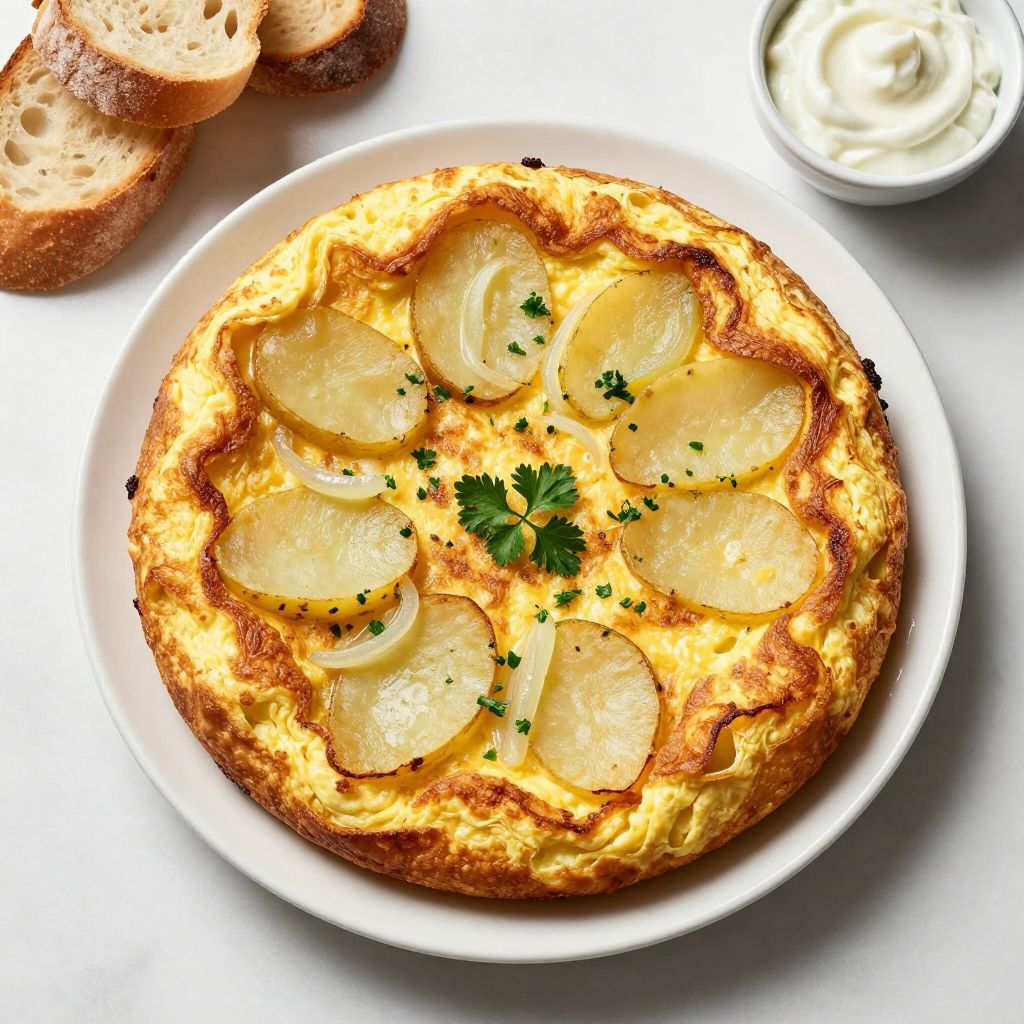
Spanish Omelette
Ingredients
Equipment
Method
- Peel and thinly slice the potatoes.
- Heat a generous amount of olive oil in a non-stick skillet over medium heat.
- If using, add the chopped onion to the skillet with the potatoes.
- Sprinkle salt and pepper over the potatoes and onion.
- Fry the potatoes and onion for about 15-20 minutes, stirring occasionally until they are tender.
- In a mixing bowl, whisk the eggs until fully combined.
- Once the potatoes are cooked, drain them from the oil and let them cool slightly.
- Gently fold the cooked potatoes into the whisked eggs.
- Return the mixture to the skillet, spreading it evenly.
- Cook on low heat for about 5-7 minutes until the bottom is set and the top is slightly runny.
- To flip the omelette, slide it onto a large plate, then invert it back into the skillet to cook the other side.