
As the aroma of freshly baked bread wafts through the air, there’s something undeniably comforting about making your own Fougasse. This French flatbread is not only a visual delight with its rustic appearance but also a flavor-packed treat that’s versatile enough for any occasion. Its crispy crust and soft, chewy interior make it perfect for dipping or enjoying alongside your favorite meal, and the best part? It’s surprisingly simple to whip up at home.
Why You’ll Love This Recipe
This Fougasse recipe stands out for so many reasons.
- It’s easy to prepare with minimal ingredients.
- Perfect for sharing at gatherings or as a dinner side.
- Customizable with your favorite herbs and toppings.
- Gives your kitchen that delightful bakery smell.
- Ideal for beginners and experienced bakers alike.
My Experience Making This Recipe
Every time I make Fougasse, it feels like I’m transported to a quaint French bakery. The kneading of the dough is therapeutic, and the anticipation builds as it rises, filling the kitchen with warmth.
When I finally pull it from the oven, the golden crust crackles slightly, and the aroma makes it hard to resist. Friends and family have always raved about it, and it never lasts long on the table!
Recipe Overview
- Recipe Name: Fougasse
- Servings: 8
- Prep Time: 15 minutes
- Cook Time: 25 minutes
- Total Time: 40 minutes
- Course: Bread
- Cuisine: French
- Calories per Serving: 180
Equipment You Will Need
- Large mixing bowl
- Wooden spoon or spatula
- Floured surface for kneading
- Baking sheet
- Parchment paper
- Sharp knife or dough cutter
Ingredients for Fougasse
- 3 ½ cups all-purpose flour
- 2 teaspoons salt
- 1 teaspoon sugar
- 1 packet (2 ¼ teaspoons) instant yeast
- 1 ¼ cups warm water (about 110°F)
- 2 tablespoons olive oil
- Optional: herbs like rosemary or thyme
Ingredient Notes and Substitutions
- All-purpose flour: This gives a nice texture; whole wheat can add more flavor.
- Salt: Essential for flavor; sea salt works well.
- Instant yeast: This allows for quicker rising; active dry yeast can be used, just activate it first.
- Olive oil: Adds richness; can substitute with melted butter.
How to Make Fougasse
Step 1: Mix the Dry Ingredients
In a large mixing bowl, combine the flour, salt, sugar, and yeast. Mixing these first ensures even distribution of flavors and helps the yeast activate better.
Step 2: Add Water and Olive Oil
Pour in the warm water and olive oil into the dry ingredients. Stir until a rough dough begins to form; this helps to hydrate the flour evenly.
Step 3: Knead the Dough
Transfer the dough to a floured surface and knead for about 8-10 minutes. Kneading develops gluten, which gives the bread its chewy texture.
Step 4: First Rise
Place the dough in a greased bowl, cover it with a damp cloth, and let it rise in a warm place for about 1 hour. This allows the dough to double in size, making it light and airy.
Step 5: Shape the Fougasse
Once risen, punch the dough down and transfer it back to the floured surface. Divide it in half and shape each piece into a flat oval or rectangle, about 1-inch thick.
Step 6: Create the Signature Cuts
Using a sharp knife, make cuts in the dough to create a leaf or branch design. This gives the Fougasse its characteristic look and allows steam to escape during baking.
Step 7: Second Rise
Place the shaped dough onto a parchment-lined baking sheet and cover again with a cloth. Let it rise for another 30 minutes to get that perfect fluffiness.
Step 8: Bake the Fougasse
Preheat your oven to 425°F (220°C) and bake for 20-25 minutes until golden brown. Baking at a high temperature creates a crispy crust, while the inside remains soft.
Pro Tip: For extra flavor, brush the top with olive oil and sprinkle with sea salt before baking.
Tips for the Best Fougasse
- Use warm water, not hot; too hot can kill the yeast.
- Don’t rush the rising times; patience leads to better texture.
- Experiment with toppings like olives or cheese for added flavor.
- Ensure your oven is fully preheated for an even bake.
- Store any leftovers in a paper bag to keep the crust crispy.
Common Mistakes to Avoid
- Using cold water; it can prevent the yeast from activating properly.
- Not kneading enough; it can lead to a dense loaf.
- Skipping the second rise; this can result in a flat bread.
- Overbaking; watch closely for a perfect golden color.
Serving Suggestions
Pair your Fougasse with a variety of dips or a hearty soup.
- Olive tapenade
- Herbed olive oil for dipping
- Tomato soup
- Cheese platters
- Antipasto dishes
Variations to Try
- Herb-infused: Add chopped fresh herbs to the dough for extra flavor.
- Cheese-stuffed: Incorporate cheese into the dough before shaping.
- Sweet fougasse: Mix in dried fruits and a touch of sugar for a dessert version.
- Spiced: Experiment with spices like garlic powder or paprika for a kick.
Dietary Adaptations
- Gluten-free: Substitute with a gluten-free flour blend.
- Dairy-free: This recipe is already dairy-free.
- Vegan: Use vegetable oil instead of olive oil if desired.
- Low-carb/Keto: Use almond flour instead of all-purpose flour.
Storage and Reheating
Refrigerator
Store in an airtight container for up to 3 days.
- Wrap in aluminum foil for best results.
- Reheat in the oven to restore crispiness.
Freezer
Freeze well for up to 3 months.
- Wrap tightly in plastic wrap and aluminum foil.
- Thaw at room temperature before reheating.
Reheating
Reheat in a preheated oven at 350°F for about 10 minutes.
- This helps bring back the original texture.
- Microwaving is not recommended as it can make it soggy.
Nutrition Information
| Nutrient | Amount |
|---|---|
| Calories | 180 |
| Total Fat | 3g |
| Saturated Fat | 0.5g |
| Carbohydrates | 34g |
| Fiber | 1g |
| Sugar | 1g |
| Protein | 6g |
| Sodium | 300mg |
| Cholesterol | 0mg |
Note: Nutritional values may vary based on specific ingredients and portion sizes.
Frequently Asked Questions
Can I use all-purpose flour instead of bread flour?
Yes, all-purpose flour works perfectly fine for this recipe and yields great results.
Can I make this dough ahead of time?
Absolutely! Prepare the dough and refrigerate it for up to 24 hours before shaping.
How do I know if my dough has risen enough?
The dough should double in size and feel airy when poked with a finger.
What if my Fougasse is too dense?
A dense texture usually means the dough was not kneaded enough or was overworked.
Can I add toppings to my Fougasse?
Yes! Feel free to sprinkle toppings like cheese, olives, or herbs before baking.
Final Thoughts
Making Fougasse is a wonderful way to bring a taste of France to your home. With its irresistible flavor and texture, it’s sure to become a favorite in your kitchen.
So gather your ingredients and give this delightful recipe a try. And while you’re at it, consider exploring more bread recipes like the King Arthur Pizza Dough Recipe or a delicious Lavash Bread Recipe. Happy baking!
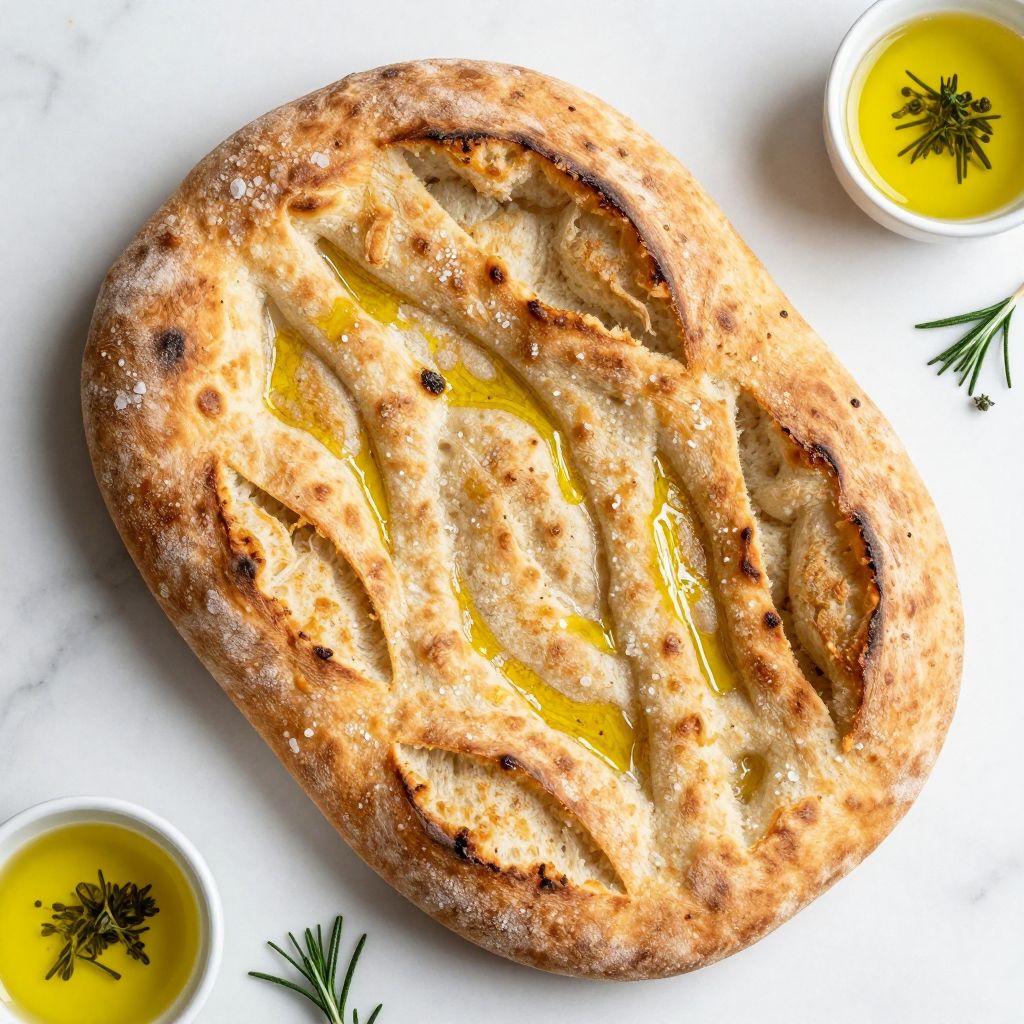
Fougasse
Ingredients
Equipment
Method
- In a large mixing bowl, combine the flour, salt, sugar, and yeast.
- Pour in the warm water and olive oil into the dry ingredients and stir until a rough dough begins to form.
- Transfer the dough to a floured surface and knead for about 8-10 minutes.
- Place the dough in a greased bowl, cover with a damp cloth, and let it rise in a warm place for about 1 hour.
- Once risen, punch the dough down and transfer it back to the floured surface. Divide it in half and shape each piece into a flat oval or rectangle, about 1-inch thick.
- Using a sharp knife, make cuts in the dough to create a leaf or branch design.
- Place the shaped dough onto a parchment-lined baking sheet and cover again with a cloth. Let it rise for another 30 minutes.
- Preheat your oven to 425°F (220°C) and bake for 20-25 minutes until golden brown.