
Imagine the comforting aroma of spices wafting through your kitchen, instantly making you feel at home. The Puliyogare recipe is a delightful South Indian rice dish that is not only packed with flavor but also incredibly easy to prepare, making it perfect for busy weeknights or a quick lunchbox meal.
Why You’ll Love This Recipe
This dish is a fantastic blend of tangy and spicy flavors that will excite your taste buds.
- Quick and easy to prepare.
- Perfect for meal prep and lunchboxes.
- Versatile; can be served with various sides.
- Healthy and satisfying with wholesome ingredients.
My Experience Making This Recipe
When I first made Puliyogare, I was amazed by how a few simple ingredients could transform into something so delicious. The tangy tamarind and fragrant spices created a beautiful symphony of flavors that left my family asking for seconds.
As the rice cooked and absorbed the spices, the kitchen filled with an irresistible aroma that made everyone curious about what was cooking. Every bite of this dish felt like a warm hug, and it quickly became a family favorite.
Recipe Overview
- Recipe Name: Puliyogare
- Servings: 4
- Prep Time: 15 minutes
- Cook Time: 20 minutes
- Total Time: 35 minutes
- Course: Main Course
- Cuisine: South Indian
- Calories per Serving: 320
Equipment You Will Need
- Large pot for cooking rice
- Pan for tempering spices
- Measuring cups and spoons
- Wooden spoon for stirring
- Serving bowl
Ingredients for Puliyogare
- 2 cups of cooked rice
- 2 tablespoons of tamarind pulp
- 1 tablespoon of oil
- 1 teaspoon of mustard seeds
- 1 teaspoon of urad dal
- 1 teaspoon of chana dal
- 2-3 dried red chilies, broken
- 2 tablespoons of puliyogare powder
- Salt to taste
- Fresh coriander leaves for garnish
Ingredient Notes and Substitutions
- Tamarind pulp: Adds a tangy flavor. You can use lemon juice as a substitute for a different tang.
- Puliyogare powder: A special spice blend. If unavailable, you can mix equal parts of chili powder and coriander powder.
- Mustard seeds: Provide a nutty flavor. You can replace them with cumin seeds for a milder taste.
How to Make Puliyogare
Step 1: Prepare the Rice
Start by cooking the rice until it is fluffy and fully cooked. Fluffy rice is essential as it helps absorb the flavors without becoming mushy.
Step 2: Make the Tamarind Mixture
In a bowl, mix the tamarind pulp with a little water to dissolve it. This mixture is the base that adds the signature tanginess to the dish.
Step 3: Heat the Oil
In a pan, heat the oil over medium heat. Ensuring the oil is hot allows the spices to bloom and release their flavors.
Step 4: Temper the Spices
Add mustard seeds, urad dal, chana dal, and dried red chilies to the hot oil. Fry them until the mustard seeds start to pop and the dals turn golden.
Step 5: Add the Tamarind Mixture
Pour the tamarind mixture into the pan. Bring it to a gentle simmer to allow the flavors to meld together.
Step 6: Incorporate Puliyogare Powder
Add the puliyogare powder to the simmering sauce and mix well. This will create a thick, flavorful paste to coat the rice.
Step 7: Combine with Rice
Gently fold the cooked rice into the tamarind mixture until evenly coated. Be careful not to break the rice grains while mixing.
Step 8: Garnish and Serve
Transfer the puliyogare to a serving bowl and garnish with fresh coriander leaves. This adds a pop of color and freshness to the dish.
Pro Tip: Always use freshly cooked rice for the best texture and flavor absorption.
Tips for the Best Puliyogare
- Use good quality tamarind pulp for authentic taste.
- Adjust spice levels to suit your preference by modifying the number of dried red chilies.
- For added crunch, consider adding peanuts during the tempering step.
- Let the puliyogare sit for a bit after mixing for the flavors to enhance.
- Pair with yogurt or raita for a cooling contrast.
Common Mistakes to Avoid
- Not cooking the rice properly can lead to a mushy texture.
- Using stale tamarind can make the dish taste off.
- Overcooking the spices can lead to bitterness.
- Skipping the tempering step can result in dull flavors.
Serving Suggestions
Puliyogare is a delightful dish that pairs wonderfully with a variety of sides.
- Serve with coconut chutney for a refreshing contrast.
- Pair with crispy papad for added texture.
- Enjoy with a side of vegetable sambar.
- Accompany with yogurt for a cooling element.
Variations to Try
- Add sautéed vegetables for a nutritious boost.
- Incorporate boiled eggs for added protein.
- Use quinoa instead of rice for a healthier option.
- Experiment with different nuts like cashews for added flavor.
Dietary Adaptations
- Gluten-free: This recipe is naturally gluten-free.
- Dairy-free: Use coconut yogurt instead of regular yogurt for serving.
- Vegan: The recipe is vegan, perfect for plant-based diets.
- Low-carb/Keto: Substitute rice with cauliflower rice for a low-carb version.
Storage and Reheating
Refrigerator
Store any leftovers in an airtight container in the refrigerator.
- Keep for up to 3-4 days.
Freezer
For longer storage, freeze the puliyogare in a freezer-safe container.
- Use within 1-2 months for the best quality.
Reheating
Reheat in the microwave or on the stovetop until heated through.
- Add a splash of water if it seems dry while reheating.
Nutrition Information
| Nutrient | Amount |
|---|---|
| Calories | 320 |
| Total Fat | 12g |
| Saturated Fat | 2g |
| Carbohydrates | 45g |
| Fiber | 5g |
| Sugar | 1g |
| Protein | 8g |
| Sodium | 300mg |
| Cholesterol | 0mg |
This nutritional information is an estimate and can vary based on specific ingredients used.
Frequently Asked Questions
Can I make Puliyogare ahead of time?
Yes, it can be made ahead and stored in the fridge for up to four days.
What can I substitute for puliyogare powder?
You can mix chili powder and coriander powder for a similar flavor if you cannot find puliyogare powder.
How do I fix a dry puliyogare?
Add a little water or oil when reheating to restore moisture.
Can I add protein to this dish?
Absolutely! Boiled eggs or cooked chicken can be great additions.
Is this recipe spicy?
The spice level can be adjusted based on the number of chilies used, so feel free to tone it down!
Final Thoughts
Making Puliyogare is a delightful experience that fills your kitchen with warmth and enticing aromas. I encourage you to give this dish a try; it might just become your new go-to recipe.
For more delicious recipes, check out my Handvo Recipe or explore the Puliyogare Recipe for more culinary adventures.
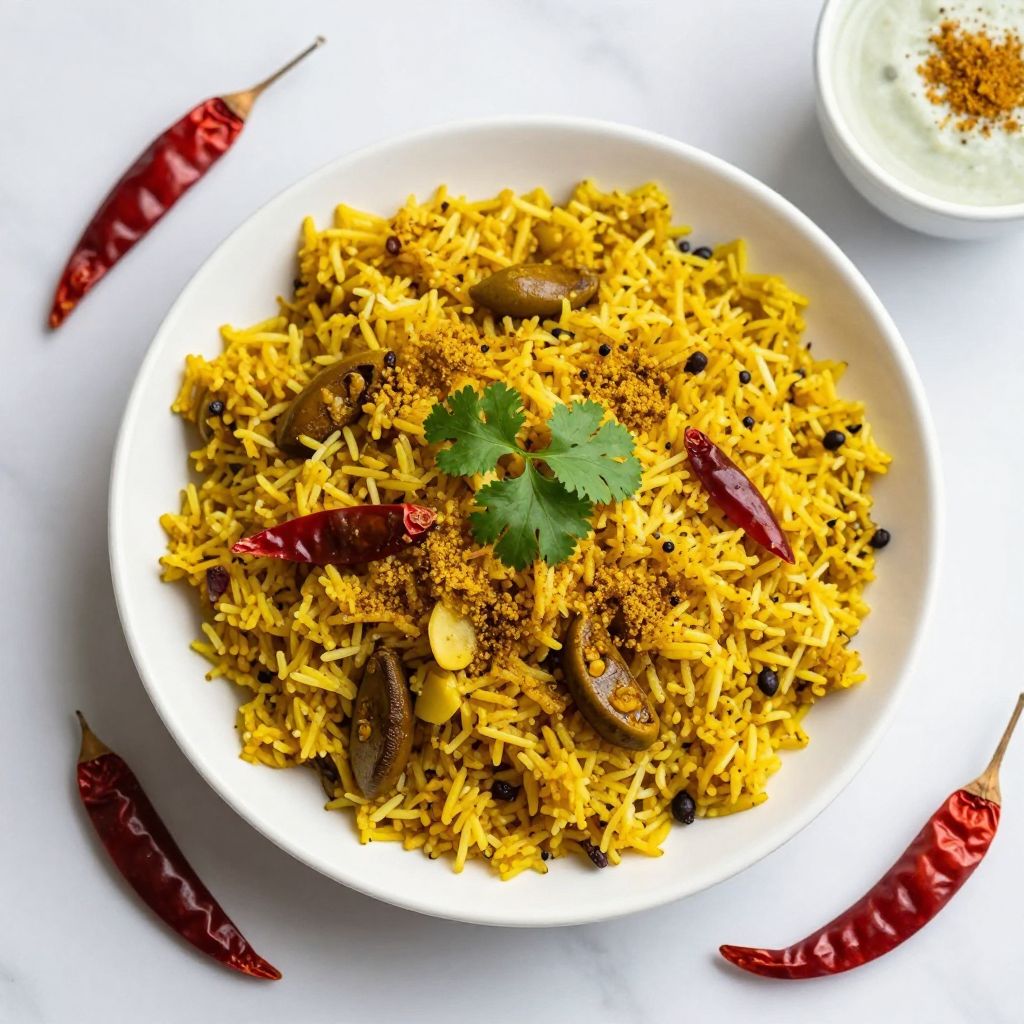
Puliyogare
Ingredients
Equipment
Method
- Start by cooking the rice until it is fluffy and fully cooked.
- In a bowl, mix the tamarind pulp with a little water to dissolve it.
- In a pan, heat the oil over medium heat.
- Add mustard seeds, urad dal, chana dal, and dried red chilies to the hot oil and fry until mustard seeds pop and dals turn golden.
- Pour the tamarind mixture into the pan and bring to a gentle simmer.
- Add the puliyogare powder to the simmering sauce and mix well.
- Gently fold the cooked rice into the tamarind mixture until evenly coated.
- Transfer the puliyogare to a serving bowl and garnish with fresh coriander leaves.