
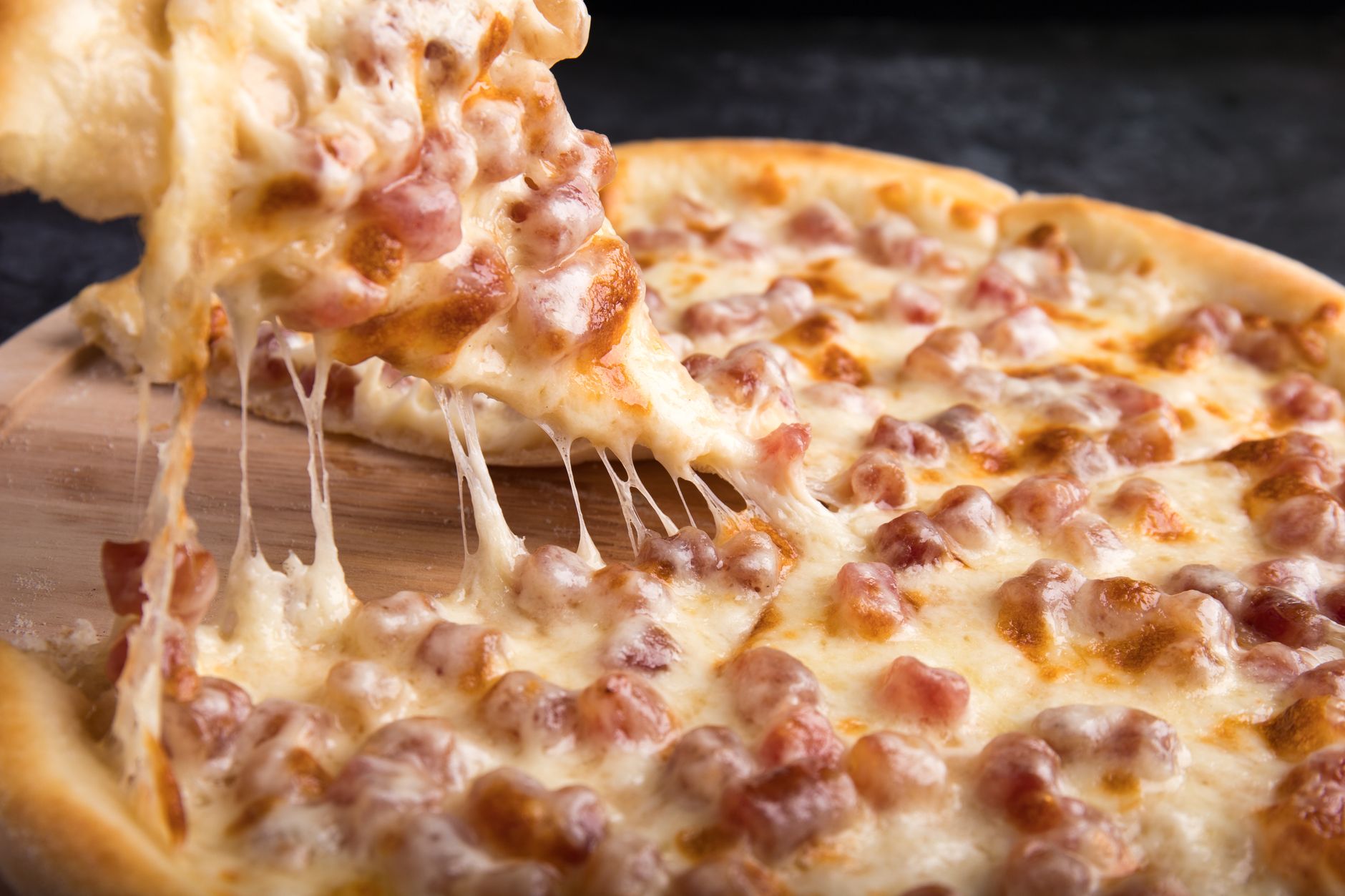
Cheese pizza is a beloved comfort food, enjoyed by many around the world. Whether it’s part of a casual gathering or a quick weeknight dinner, it holds a special place in the hearts (and stomachs) of pizza lovers. One of the questions that often arises is, “How many calories are in one slice of cheese pizza?”
This article will explore the calorie content of cheese pizza, variations in preparation, factors affecting calorie counts, and healthier options you can consider. Understanding this delicious dish’s nutritional aspects will help you make informed decisions about your pizza indulgence.
How Many Calories in One Slice of Cheese Pizza?
On average, one slice of cheese pizza—about 1/8 of a standard 14-inch pizza—contains approximately 285 to 300 calories. However, this can vary significantly based on crust type, cheese quantity, and any additional toppings.
Calorie counts can differ based on regional variations and preparation methods. A thin crust pizza generally has fewer calories compared to a thick or stuffed crust. Moreover, the portion size can affect calorie intake, so knowing the serving size is crucial when calculating your meal.
Understanding Cheese Pizza Ingredients
To delve deeper into the calorie content of cheese pizza, it’s essential to understand its main ingredients:
- Dough: The base of any pizza, made from flour, water, yeast, and sometimes oil. The type of crust—thin, regular, or deep dish—significantly impacts calorie counts.
- Tomato Sauce: Often a simple mixture of tomatoes, garlic, and herbs, this component typically adds few calories per slice.
- Cheese: Mozzarella cheese is the most common for cheese pizza. The quantity and type of cheese can significantly increase calorie totals.
Caloric Breakdown of Common Ingredients
Here’s a breakdown of the average calories contributed by each main ingredient per slice of cheese pizza:
| Ingredient | Calories per Slice |
|---|---|
| Dough (thin crust) | 100-150 |
| Tomato Sauce | 20-30 |
| Mozzarella Cheese (1 oz) | 70-100 |
| Total Calories | 190-280 |
This table demonstrates how dough and cheese significantly impact the overall calorie content. Adjustments in these ingredients can allow for lower-calorie options.
Factors Affecting Calorie Count in Cheese Pizza
Several factors can affect the calorie count in cheese pizza, including:
- Crust Type: As mentioned, the type of crust can vary. Thin crusts are generally lower in calories, while thicker or stuffed crusts increase calorie totals due to more dough.
- Cheese Type: While mozzarella is traditional, variations like cheddar, provolone, or gourmet cheeses can alter calorie totals.
- Toppings: Adding vegetables, meats, or additional cheese can increase the calorie count significantly. It’s essential to consider each topping’s contribution, especially high-calorie options.
- Serving Size: Not all pizza slice sizes are created equal. A large slice from a 16-inch pizza contains more calories compared to a smaller slice from a 12-inch pizza.
Healthier Alternatives to Consider
For those looking to enjoy cheese pizza while managing calorie intake, here are some healthier alternatives:
- Thin Crust Pizza: Opt for a thin crust instead of traditional or deep-dish crust to reduce calorie intake.
- Reduced-Fat Cheese: Choose reduced-fat mozzarella to cut down on calories while still enjoying that cheesy goodness.
- Whole Wheat Crust: A whole wheat crust can offer more fiber and nutrients compared to regular white flour dough.
- Load Up on Veggies: Consider topping your pizza with more vegetables instead of additional cheese or meats. This can enhance flavor and nutrition without adding too many calories.
Caloric Comparison: Regular vs. Gourmet Cheese Pizza
While traditional cheese pizza serves as a comfort food staple, gourmet cheese pizzas have emerged as popular alternatives. Here, we compare basic and gourmet pizzas to see how calorie counts differ.
A basic cheese pizza typically contains around 285-300 calories per slice as discussed earlier. In contrast, gourmet versions featuring specialty cheeses, like brie, or ingredients such as pesto can easily raise the count to 400 calories or more per slice.
Thus, while indulging in gourmet options is delightful, it’s wise to remain mindful of portion sizes and total calorie intake.
How to Calculate Your Pizza Calorie Intake
Accurately calculating your pizza calorie intake involves several steps:
- Determine the size of the pizza and how it’s divided. For instance, if a 14-inch pizza is cut into 8 slices, each slice is approximately 1/8 of the total.
- Identify the ingredients you plan to use. Consider the type of crust, cheese, and any toppings.
- Use nutrition databases or food labels to find the calorie content of each ingredient per serving.
- Sum the calorie contents of the identified ingredients for one slice and multiply by the number of slices consumed to find your total intake.
This method allows for a tailored approach based on the specific ingredients of your cheese pizza.
Tips for Ordering Pizza
When ordering pizza from a restaurant, making mindful choices can help keep your calorie consumption within reason:
- Choose Size Wisely: Opt for a smaller size to prevent overeating.
- Request Less Cheese: Don’t hesitate to ask for less cheese if you want to reduce calories.
- Monitor Toppings: Consider your toppings carefully—lighter options like vegetables can be healthier than heavy meats.
- Share: Sharing a pizza can help in controlling portion size while still enjoying the experience.
Storing Leftover Cheese Pizza
Proper storage of leftover cheese pizza can extend its life and ensure it remains safe to eat:
- Cool the pizza: Allow leftovers to cool to room temperature before packing.
- Wrap: Place slices in an airtight container or wrap them tightly in aluminum foil or plastic wrap.
- Refrigerate: Store in the refrigerator for up to 3-4 days.
- Freeze for longer storage: If you wish to keep them longer, wrap each slice in plastic wrap, then in aluminum foil, and freeze for up to 2 months.
Reheat leftover pizza in an oven or on a skillet for the best texture and flavor retention.
Reheating Leftover Cheese Pizza
There are various methods to reheat leftover cheese pizza, each with its pros and cons:
- Oven: Preheat your oven to 375°F (190°C). Place pizza on a baking sheet and heat for about 10 minutes.
- Skillet: Heat a non-stick skillet over medium heat. Place pizza in the skillet, cover with a lid, and heat for 3-5 minutes until heated through and the crust is crispy.
- Microwave (not ideal): Use a microwave-safe plate. Heat for 30 seconds to one minute. This method may result in a soggy crust.
Conclusion
Understanding the calorie content of cheese pizza helps you enjoy this popular dish mindfully. Whether choosing to indulge in a slice or make healthier choices, being informed allows for better dietary decisions. Remember to consider ingredient type, portion sizes, and toppings for the most accurate assessment of your meal’s calorie content.
For those interested in trying homemade versions, you can explore the King Arthur Pizza Dough Recipe or experiment with alternatives like Chicken Bacon Ranch Pizza. Enjoy your pizza adventure!