
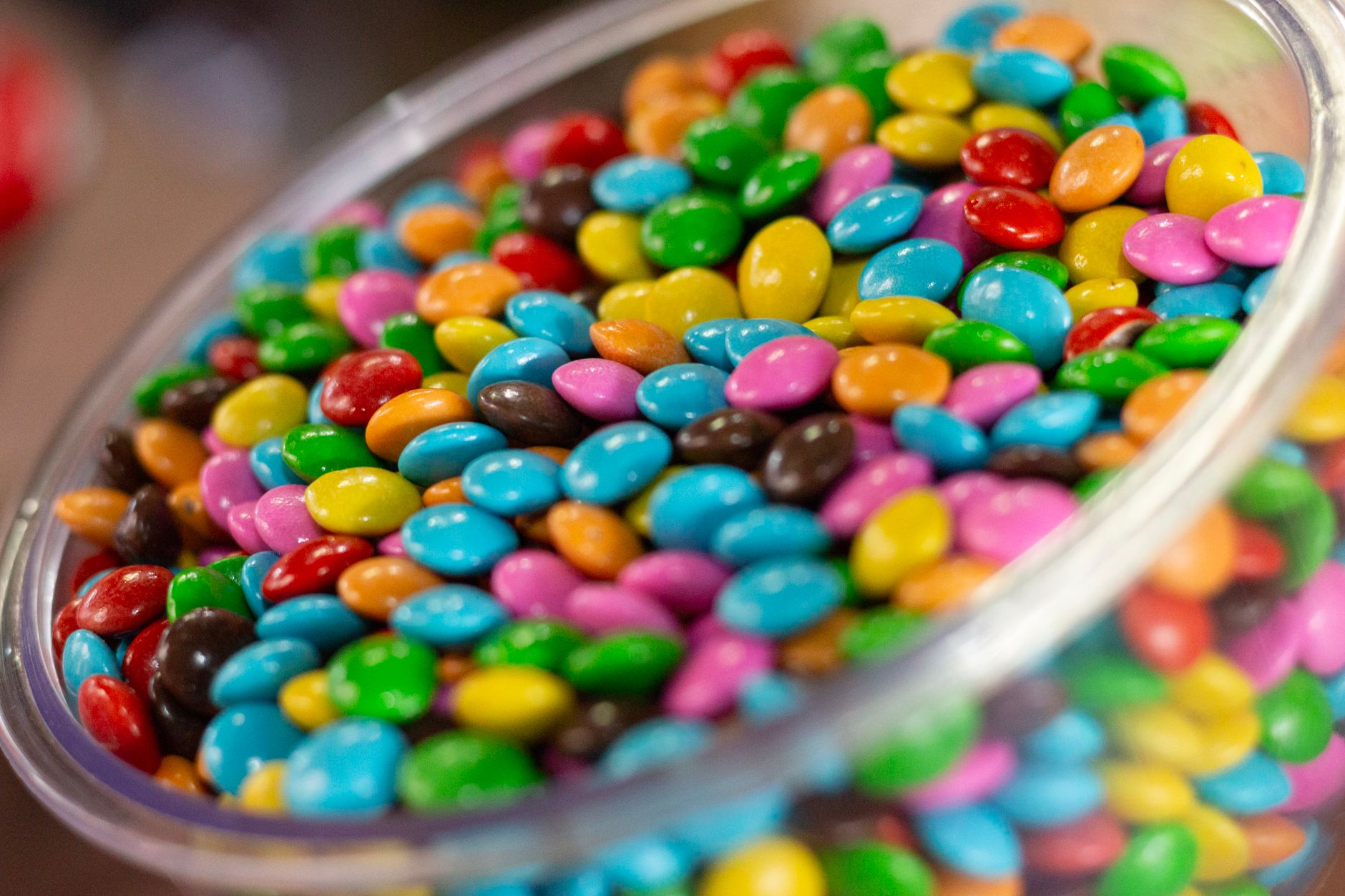
M&Ms are a beloved candy, known for their colorful shells and delightful chocolate centers. However, if you’re curious about their ingredients, specifically whether they contain gelatin, this article will provide all the details you need. Understanding food ingredients helps people make informed choices based on dietary preferences or restrictions.
This guide covers whether M&Ms contain gelatin, what ingredients are used, the flavors available, and practical kitchen uses for this iconic candy.
Do M&Ms Have Gelatin?
No, M&Ms do not contain gelatin. The candy is primarily made of sugar, chocolate, and various flavoring components that do not include animal-derived gelatin. This makes them suitable for vegetarians; however, vegans should check specific varieties, as some may include ingredients like milk.
Understanding M&M Ingredients
To appreciate M&Ms fully, it’s essential to know their ingredient breakdown. The major components of standard M&Ms include:
- Sugar
- Cocoa butter
- Chocolate
- Skim milk
- Lactose
- Coloring agents
- Confectioner’s glaze
- Vegetable oil (in some varieties)
- Artificial flavors
Popular Varieties of M&Ms
M&Ms come in several varieties, each with unique flavors and textures. Here are some of the most popular types available:
- Milk Chocolate M&Ms
- Peanut M&Ms
- Almond M&Ms
- Crispy M&Ms
- Dark Chocolate M&Ms
- Peanut Butter M&Ms
- Caramel M&Ms
Each variety has a slightly different ingredient list, particularly concerning the chocolate and filling, but the core component, the candy shell, remains similar across all types.
Flavor and Texture Profile
M&Ms have a distinct flavor profile depending on the variety. The classic Milk Chocolate M&Ms are sweet, creamy, and have a smooth texture due to the milk chocolate. The Peanut M&Ms provide a delightful crunch from the roasted peanut center, while the Peanut Butter M&Ms have a rich, nutty flavor and a creamier texture as they are filled with peanut butter instead of a nut.
The coloring agents, usually derived from natural or artificial sources, provide the iconic bright colors, adding a fun visual aspect to the candy without altering the primary flavor significantly.
Practical Uses for M&Ms in the Kitchen
M&Ms are not only enjoyable as a snack but also have various culinary uses. Here are some practical applications:
Baking
M&Ms can be used as a colorful addition to various baked goods. Here’s how they can enhance your baking:
- Cookies: Incorporate M&Ms into chocolate chip or oatmeal cookies for a vibrant twist. They add sweetness and a chewy texture.
- Cakes: Add M&Ms to cake batters or sprinkle them on top as a decoration before baking. They add a pop of color and sweetness that kids especially love.
- Muffins: Use M&Ms in muffin recipes for breakfast treats. They can act as an alternative to chocolate chips.
Snacking and Trail Mix
Mix M&Ms with nuts, dried fruits, or popcorn to create a customized snack mix. This combination offers a balance of sweet and savory flavors, making it great for party snacks or on-the-go fuel.
Dessert Toppings
M&Ms make excellent toppings for various desserts. Here are a few ideas:
- Ice Cream: Top your ice cream sundaes with M&Ms for added crunch and color.
- Cakes and Cupcakes: Decorate cakes and cupcakes with M&Ms for a festive look.
- Parfaits: Layer M&Ms in yogurt parfaits for added texture and sweetness.
Choosing M&Ms for Special Diets
If you’re following a specific dietary plan, you might wonder about M&Ms’ suitability. Here’s a breakdown based on dietary preferences:
Vegetarian and Vegan Considerations
As mentioned, traditional M&Ms are vegetarian-friendly since they do not contain gelatin. However, vegetarians should be mindful of types that may include dairy, making them unsuitable for vegans. Always check the labels for ingredients such as milk chocolate and lactose if you are avoiding animal products.
Gluten-Free Options
M&Ms are generally gluten-free, making them suitable for those with gluten sensitivities. However, cross-contamination might occur in factories that process gluten-containing products, so it’s wise to verify packaging or consult allergen warnings.
Allergies and Sensitivities
Some variants of M&Ms, such as Peanut M&Ms, contain allergens. Always read the packaging carefully to assess ingredients and potential cross-contamination. If you have nut allergies, it’s crucial to stay clear of these options.
Storing M&Ms
To maintain their quality, proper storage of M&Ms is essential. Here are some tips:
- Room Temperature: Store M&Ms in a cool, dry place away from sunlight and heat sources. A pantry or cupboard works well.
- Airtight Container: If you open a bag of M&Ms, consider transferring them to an airtight container to prevent them from getting stale.
- Refrigeration: While not necessary, you can refrigerate M&Ms if you prefer a cooler candy. Just be mindful that condensation may affect their texture.
Common Mistakes When Working with M&Ms
When incorporating M&Ms into recipes or using them in creations, a few pitfalls can occur. Here are some mistakes to avoid:
- Overheating: Be cautious when incorporating M&Ms into warm baked goods, as excessive heat can cause the colors to bleed. Add them towards the end of baking or after the dish has cooled.
- Using the Wrong Type: Ensure you’re using the right flavor of M&M for your dish, as some flavors may not pair well with certain baked goods.
- Ignoring Allergens: Always check for allergens and sensitive ingredients when baking or preparing recipes that include M&Ms.
Making M&M Recipes at Home
If you want to experiment with M&Ms in your kitchen, here’s a straightforward recipe for M&M cookies that will delight friends and family:
Ingredients:
- 1 cup unsalted butter, softened
- 3/4 cup brown sugar
- 3/4 cup granulated sugar
- 1 teaspoon vanilla extract
- 2 large eggs
- 2 1/4 cups all-purpose flour
- 1 teaspoon baking soda
- 1/2 teaspoon salt
- 1 cup M&Ms (plus extra for topping)
Equipment Needed:
- Mixing bowl
- Electric mixer or whisk
- Baking sheet
- Parchment paper
- spatula
Instructions:
- Preheat your oven to 350°F (175°C).
- In a mixing bowl, cream together the softened butter, brown sugar, and granulated sugar using an electric mixer or whisk until light and fluffy.
- Add the vanilla extract and eggs, mixing well until combined.
- In a separate bowl, whisk together the flour, baking soda, and salt.
- Gradually add the dry ingredients to the wet mixture, mixing until just combined. Be careful not to overmix.
- Fold in the M&Ms gently.
- Drop tablespoonfuls of dough onto a baking sheet lined with parchment paper. Press a few extra M&Ms on top for decoration.
- Bake in the preheated oven for about 10-12 minutes or until the edges are lightly golden. The centers may appear soft; they will set as they cool.
- Remove from the oven and let cool on the baking sheet for a few minutes before transferring to a wire rack to cool completely.
Conclusion
M&Ms are a delicious and versatile candy that can enhance many recipes and snacks. Understanding their ingredients, uses, and dietary considerations allows you to enjoy them while accommodating specific preferences. Now that you know M&Ms do not contain gelatin, you can safely incorporate them into your culinary creations.
Explore related recipes, cooking tips, or food guides such as a chia pudding recipe using coconut milk or learn what molasses is made from to expand your culinary knowledge.