
Have you ever found yourself flipping through a cookbook, searching for a recipe that hits the spot? A Standardized Recipe Definition is your answer to creating consistent, delicious meals every time. This concept simplifies the cooking process, ensuring that your results are reliable and replicable, no matter who is in the kitchen. With clear measurements and precise instructions, this method helps you master flavors and textures. Ready to dive into the world of standardized recipes? Let’s get started!
Why You’ll Love This Recipe
Standardized recipes are invaluable for any home cook looking to elevate their culinary game. They offer precision and clarity, making cooking enjoyable and stress-free.
- Consistent results every time you cook.
- Easy to follow, even for beginners.
- Perfect for meal prep and planning.
- Helps in managing portion sizes efficiently.
- Ideal for scaling recipes up or down.
My Experience Making This Recipe
When I first began using standardized recipes, I was amazed at how much they transformed my cooking. No more guessing games; I could finally recreate my favorite dishes just as I remembered them.
Each time I followed a standardized recipe, the flavors and textures were spot on. My family began to notice, and soon, requests for repeat meals became a regular occurrence!
Recipe Overview
- Recipe Name: Standardized Recipe Definition
- Servings: Varies
- Prep Time: 10 minutes
- Cook Time: N/A
- Total Time: 10 minutes
- Course: Various
- Cuisine: Various
- Calories per Serving: Varies
Equipment You Will Need
- Measuring cups and spoons
- Mixing bowls
- Cutting board
- Sharp knife
- Cooking utensils (spatula, whisk, etc.)
Ingredients for Standardized Recipe Definition
- Clear instructions – To guide the cooking process.
- Accurate measurements – For consistency in taste and texture.
- Ingredient list – Easily identifiable items needed for the recipe.
- Serving sizes – To help with portion control.
- Cooking methods – Detailed techniques to achieve the best results.
Ingredient Notes and Substitutions
- Clear instructions: These are crucial for clarity. Substitute with visual aids or videos if necessary.
- Accurate measurements: Ensure precision. You can use a kitchen scale for more accuracy if needed.
- Ingredient list: This serves as your shopping guide. For variations, consider local or seasonal alternatives.
- Serving sizes: Important for meal planning. Adjust portions based on your family’s needs.
- Cooking methods: They dictate texture. Substitute methods based on available equipment.
How to Make Standardized Recipe Definition
Step 1: Gather Your Ingredients
Start by collecting all necessary ingredients. Having everything in one place makes the cooking process smoother.
Step 2: Prepare Your Equipment
Ensure all tools are clean and ready to use. A clutter-free kitchen helps maintain focus.
Step 3: Read Through the Recipe
Familiarize yourself with the instructions. Understanding each step prevents mistakes during cooking.
Step 4: Measure Ingredients
Use measuring cups and spoons for accuracy. This step is key to achieving consistent results.
Step 5: Follow Cooking Techniques
Adhere to the specified methods like sautéing or baking. Proper techniques enhance flavors and textures.
Step 6: Adjust Portions if Necessary
If you need more or less, adjust the measurements accordingly. This flexibility is one of the strengths of standardized recipes.
Step 7: Document Any Changes
Note any substitutions or adjustments you made. This helps in future attempts and improves your recipe collection.
Step 8: Enjoy Your Meal!
Finally, savor your dish and share it with loved ones. Cooking is about enjoyment and creating memories.
Pro Tip: Always taste your dish as you go to ensure balanced flavors and make adjustments if needed.
Tips for the Best Standardized Recipe Definition
- Keep your workspace organized to minimize distractions.
- Invest in quality measuring tools for accuracy.
- Read the entire recipe before starting to avoid surprises.
- Take notes on what worked well for future reference.
- Don’t rush the process; enjoy each step.
Common Mistakes to Avoid
- Skipping ingredient measurements can lead to inconsistent results.
- Not reading the recipe beforehand can cause confusion during cooking.
- Ignoring cooking times might affect the texture and flavor.
- Using stale ingredients can ruin the dish’s quality.
- Failing to taste as you cook can result in bland flavors.
Serving Suggestions
Pair your meal with a refreshing salad or a side of roasted vegetables. Here are some great ideas:
- Fresh green salad with vinaigrette.
- Crispy garlic bread.
- Sauteed seasonal vegetables.
- Steamed rice or quinoa.
- Your favorite dipping sauce.
Variations to Try
- Experiment with different herbs and spices for unique flavors.
- Try using alternative cooking methods like grilling instead of baking.
- Incorporate seasonal ingredients for freshness.
- Adjust serving sizes for larger gatherings or meal prep.
- Switch up the cuisine style to explore new tastes.
Dietary Adaptations
- Gluten-free: Substitute flour with a gluten-free blend.
- Dairy-free: Use plant-based alternatives like almond milk or coconut yogurt.
- Vegan/vegetarian: Replace animal products with plant-based options.
- Low-carb/keto: Swap high-carb ingredients for low-carb veggies.
Storage and Reheating
Refrigerator
Store any leftovers in an airtight container. This keeps your dish fresh for up to three days.
- Let the dish cool before refrigerating.
- Label containers with the date for easy tracking.
Freezer
For longer storage, freeze portions in airtight containers. This helps preserve flavor and texture.
- Use freezer-safe containers to prevent freezer burn.
- Thaw in the fridge overnight for best results.
Reheating
Reheat in the microwave or on the stovetop. Ensure even heating to maintain quality.
- Add a splash of water or broth to keep it moist.
- Stir occasionally for even heat distribution.
Nutrition Information
| Nutrient | Amount |
|---|---|
| Calories | Varies |
| Total Fat | Varies |
| Saturated Fat | Varies |
| Carbohydrates | Varies |
| Fiber | Varies |
| Sugar | Varies |
| Protein | Varies |
| Sodium | Varies |
| Cholesterol | Varies |
This information may vary based on specific ingredients and serving sizes.
Frequently Asked Questions
Can I substitute ingredients in a standardized recipe?
Yes, feel free to swap ingredients while keeping proportions in mind for balanced flavors.
How can I make a standardized recipe ahead of time?
Prepare the ingredients and measurements in advance for quick assembly later.
What is the best way to store leftovers?
Store leftovers in airtight containers to keep them fresh for a few days.
What if my dish didn’t turn out as expected?
Review your measurements and cooking times to understand where it may have gone wrong.
Can I scale the recipe for larger gatherings?
Absolutely! Just multiply the ingredient amounts while keeping the same ratios.
Final Thoughts
Embracing the Standardized Recipe Definition can transform your cooking into a joyful experience. By following clear instructions and precise measurements, you’ll gain confidence in the kitchen.
So gather your ingredients, prepare your equipment, and let the culinary adventure begin. Happy cooking!
For more cooking tips, check out these articles on substituting rosemary and storing cooked chicken.
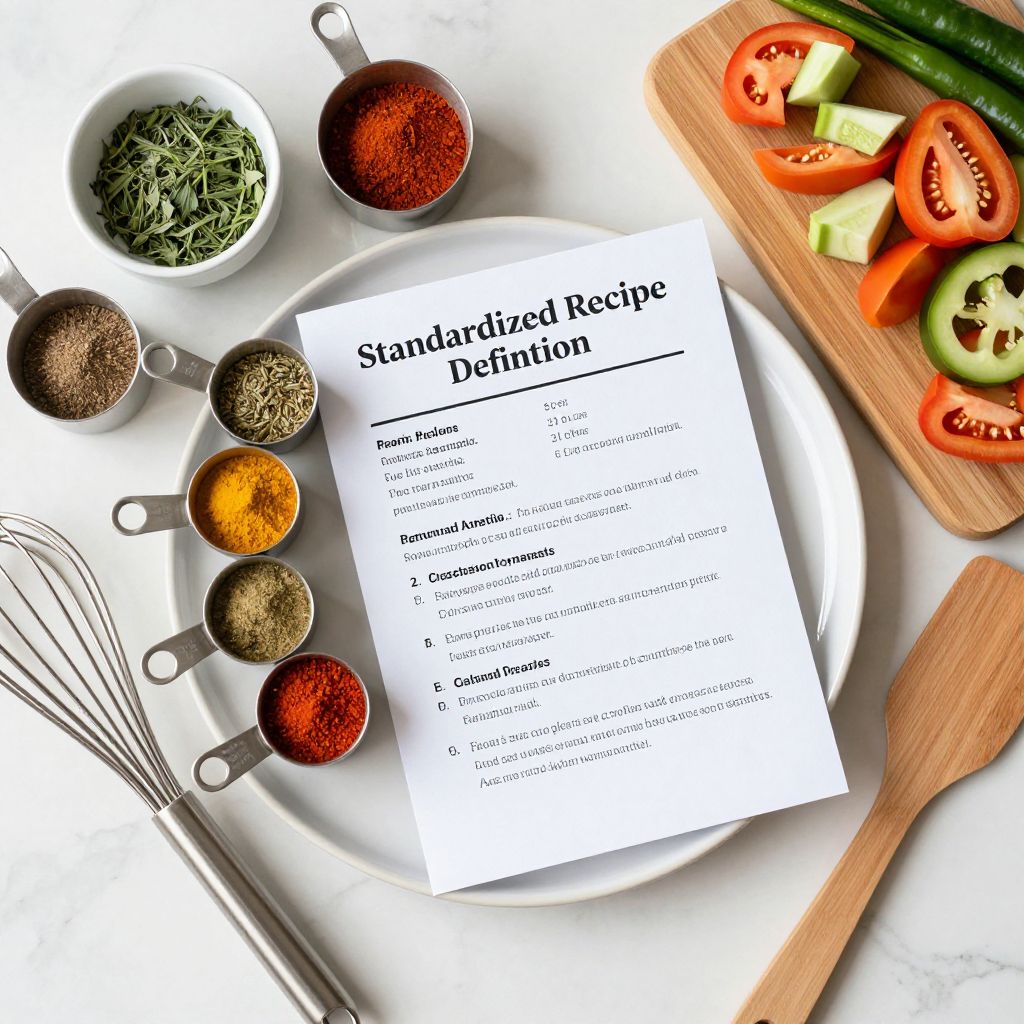
Standardized Recipe Definition
Ingredients
Equipment
Method
- Gather all necessary ingredients.
- Prepare your equipment and ensure all tools are clean and ready to use.
- Read through the recipe to familiarize yourself with the instructions.
- Measure ingredients accurately using measuring cups and spoons.
- Follow the specified cooking techniques.
- Adjust portions if necessary for your needs.
- Document any changes made for future reference.
- Enjoy your meal!