
There’s nothing quite like the tangy aroma of a simmering pot of Filipino Sinigang wafting through the house. This dish is a warm hug in a bowl, combining tender meat and vibrant vegetables in a sour broth that dances on your taste buds. Sinigang is not just a meal; it’s a comforting tradition that brings families together around the table. With its delightful balance of savory, sour, and slightly spicy flavors, this recipe is a must-try for anyone looking to explore Filipino cuisine. Let’s gather our ingredients and get cooking!
Why You’ll Love This Recipe
This Sinigang recipe is a favorite for many reasons.
- It’s packed with nutrients from fresh vegetables.
- The sour broth is incredibly refreshing.
- It’s versatile; you can use different meats or even make it vegetarian.
- Perfect for any occasion, from casual dinners to special gatherings.
- It’s easy to make and will impress your family and friends.
My Experience Making This Recipe
Every time I make Sinigang, the tangy smell transports me back to my childhood, where my mom would simmer a pot on rainy days. The first taste always brings a wave of nostalgia, reminding me of family gatherings filled with laughter and love.
When I served this to my friends, they couldn’t get enough of the unique flavor. It’s always a joy to share a piece of my heritage through food.
Recipe Overview
- Recipe Name: Filipino Sinigang
- Servings: 4-6
- Prep Time: 15 minutes
- Cook Time: 1 hour
- Total Time: 1 hour 15 minutes
- Course: Soup
- Cuisine: Filipino
- Calories per Serving: 280
Equipment You Will Need
- Large pot
- Cutting board
- Knife
- Ladle
- Measuring cups and spoons
Ingredients for Filipino Sinigang
- 1 pound pork (shoulder or belly, cut into cubes)
- 8 cups water
- 1 medium onion (quartered)
- 2 medium tomatoes (quartered)
- 1 radish (sliced, optional)
- 1 cup eggplant (sliced)
- 1 cup long green beans
- 2 cups water spinach (kangkong) or spinach
- 1/4 cup fish sauce (patis)
- 1 packet Sinigang mix or 1/2 cup fresh tamarind juice
- 2-3 green chili peppers (optional)
- Salt and pepper to taste
Ingredient Notes and Substitutions
- Pork: Used for its rich flavor and tenderness; chicken can be a lighter substitute.
- Tamarind: The key souring agent; can use lemon juice in a pinch for a different flavor.
- Vegetables: Any mix of your favorites works; zucchini or bok choy can be great additions.
- Fish Sauce: Adds depth; soy sauce can be used for a vegetarian version.
How to Make Filipino Sinigang
Step 1: Prepare the Ingredients
Start by cutting the pork into cubes and washing the vegetables. Having everything prepped saves time and ensures even cooking.
Step 2: Boil the Pork
In a large pot, combine the water and pork. Bring it to a boil over high heat to extract flavor and tenderize the meat.
Step 3: Add Onions and Tomatoes
Once boiling, add the quartered onion and tomatoes. This creates a fragrant base that enhances the broth’s flavor.
Step 4: Simmer the Broth
Reduce the heat to low and let it simmer for about 40 minutes. This slow cooking allows the flavors to meld beautifully.
Step 5: Incorporate the Radish and Eggplant
Add the sliced radish and eggplant to the pot. These vegetables add texture and absorb the tasty broth.
Step 6: Add Green Beans
After 10 minutes, toss in the long green beans. They cook quickly and should remain crisp yet tender.
Step 7: Season with Fish Sauce
Stir in the fish sauce and tamarind mix or juice. Adjusting the sourness is key for a perfect balance of flavors.
Step 8: Final Touches
Lastly, add the water spinach and green chili peppers, if using. Cook for an additional 5 minutes until the greens are wilted.
Pro Tip: Always taste the broth before serving; you can adjust the seasoning for your perfect sourness.
Tips for the Best Filipino Sinigang
- Use fresh vegetables for the best flavor and texture.
- Let the soup sit for a few minutes off heat to allow the flavors to deepen.
- Feel free to experiment with different meats or even seafood.
- Serve with a side of steamed rice to balance the tanginess.
- Try adding a bit of chili paste for extra heat if you like spice.
Common Mistakes to Avoid
- Skipping the cooking time; rushing can lead to tough meat.
- Not adjusting the sourness; taste as you go to find your ideal balance.
- Overcooking the vegetables; they should be tender but still vibrant.
- Using stale ingredients; fresh is always best for flavor.
Serving Suggestions
This dish pairs beautifully with steamed rice, which soaks up the delicious broth.
- Serve with a side of fried fish.
- A fresh green salad complements the flavors nicely.
- Try it with a spicy dipping sauce for an extra kick.
- Pair with a cold beverage to refresh your palate.
Variations to Try
- Use beef instead of pork for a heartier version.
- Try shrimp or fish for a lighter, seafood-focused dish.
- Add coconut milk for a creamy twist.
- Make it vegetarian by using tofu and a variety of vegetables.
Dietary Adaptations
- Gluten-Free: This recipe is naturally gluten-free; just ensure your fish sauce is also gluten-free.
- Dairy-Free: Sinigang is dairy-free, making it suitable for lactose-intolerant individuals.
- Vegetarian: Replace meat with tofu and vegetable broth for a delicious vegetarian option.
- Low-Carb/Keto: Skip the rice and focus on the meat and vegetables for a low-carb meal.
Storage and Reheating
Refrigerator
Store leftover Sinigang in an airtight container in the fridge for up to 3 days.
- Let it cool completely before sealing.
- Reheat gently on the stove to avoid overcooking the vegetables.
Freezer
For longer storage, freeze portions in airtight containers for up to 3 months.
- Leave some space in the container for expansion.
- Thaw overnight in the fridge before reheating.
Reheating
Reheat on low heat on the stove and stir occasionally to ensure even warming.
- Adding a splash of water can help revive the broth.
Nutrition Information
| Nutrient | Amount |
|---|---|
| Calories | 280 |
| Total Fat | 15g |
| Saturated Fat | 5g |
| Carbohydrates | 12g |
| Fiber | 3g |
| Sugar | 2g |
| Protein | 24g |
| Sodium | 800mg |
| Cholesterol | 70mg |
This nutritional information is approximate and can vary based on specific ingredients used.
Frequently Asked Questions
Can I use chicken instead of pork?
Yes, chicken works well, but adjust the cooking time as it cooks faster than pork.
Can I make this ahead of time?
Absolutely! Sinigang tastes even better the next day as the flavors meld.
How do I store leftovers?
Store in an airtight container in the fridge for up to three days or freeze for up to three months.
Why is my broth not sour enough?
Try adding more tamarind or fish sauce to enhance the sourness to your liking.
Can I add more vegetables?
Definitely! Feel free to add any veggies you like; just adjust cooking times accordingly.
Final Thoughts
Making a delicious pot of Filipino Sinigang is truly a rewarding experience. I hope you enjoy every spoonful and find your own little moment of nostalgia with this dish.
If you’re interested in exploring more delicious recipes, check out my Siomai recipe or try making Igado. Happy cooking!
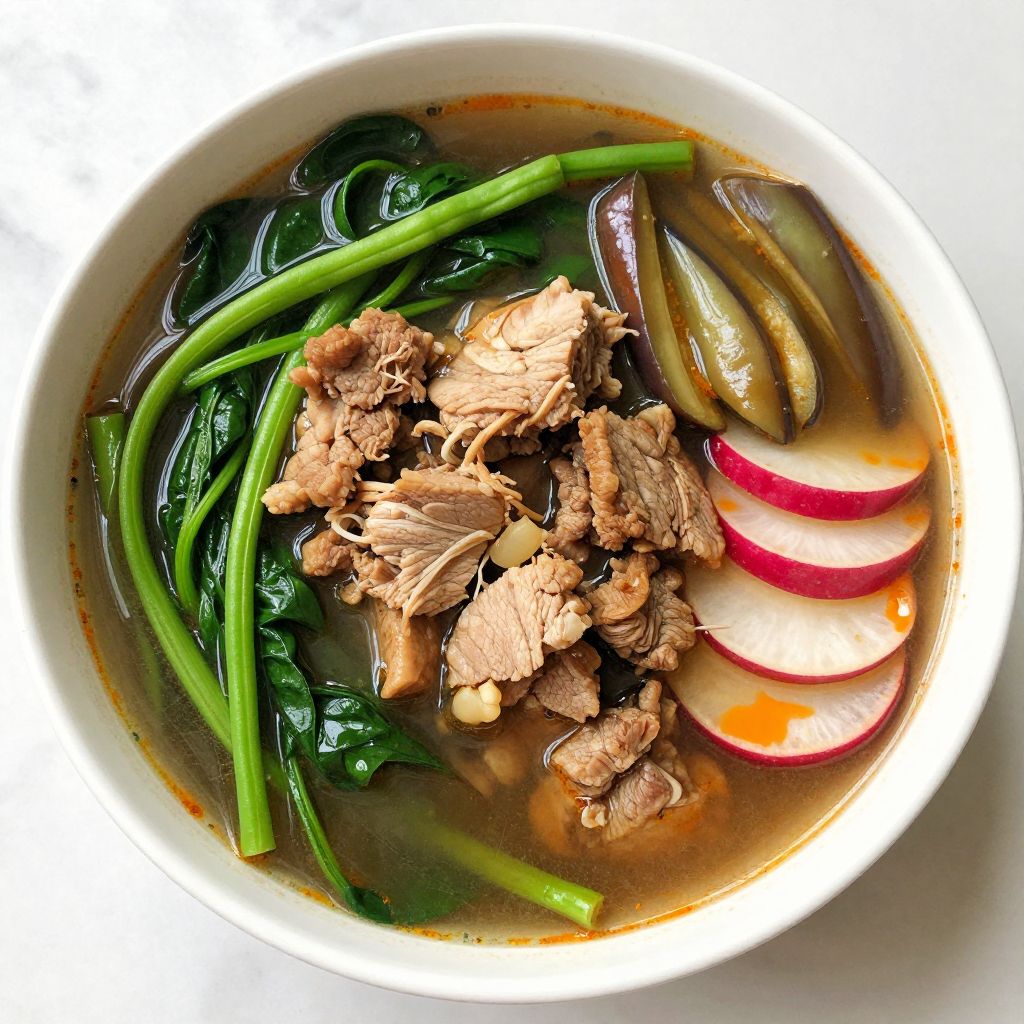
Filipino Sinigang
Ingredients
Equipment
Method
- Start by cutting the pork into cubes and washing the vegetables.
- In a large pot, combine the water and pork. Bring it to a boil over high heat to extract flavor and tenderize the meat.
- Once boiling, add the quartered onion and tomatoes.
- Reduce the heat to low and let it simmer for about 40 minutes.
- Add the sliced radish and eggplant to the pot.
- After 10 minutes, toss in the long green beans.
- Stir in the fish sauce and tamarind mix or juice.
- Lastly, add the water spinach and green chili peppers, if using. Cook for an additional 5 minutes until the greens are wilted.