
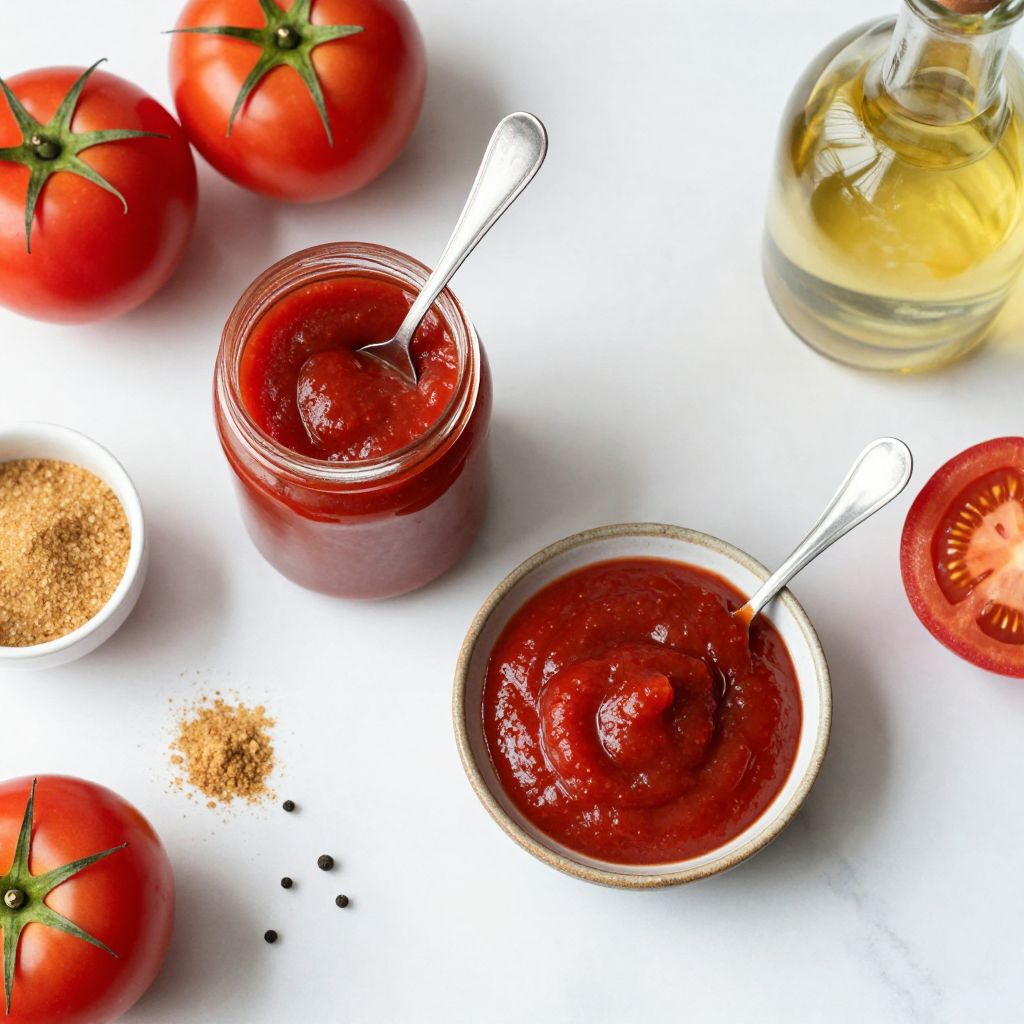
There’s something incredibly satisfying about making your own Homemade Ketchup—the vibrant red, the sweet tang, and that unmistakable freshness. This recipe stands out because it uses simple ingredients to create a flavor that far surpasses anything from a bottle, making it a fun project for both kids and adults. You’ll love how versatile it is, perfect for fries, burgers, or even as a secret ingredient in sauces. Now, let’s get into the ingredients and steps to whip up your very own batch.
Why You’ll Love This Recipe
This homemade version is a true delight for your taste buds.
- Fresh and vibrant flavor that bottled versions can’t match.
- Simple ingredients you likely have on hand.
- Customizable sweetness and spice levels to suit your taste.
- Perfect for family meals or as a gourmet gift.
My Experience Making This Recipe
The first time I made this ketchup, my kitchen smelled like a mini tomato factory. As the tomatoes cooked down, the sweet and tangy aroma filled the air, making my mouth water.
When I finally tasted it, I was blown away by how much richer it was than store-bought. My family couldn’t believe it was homemade, and they quickly devoured it with everything!
Recipe Overview
- Recipe Name: Homemade Ketchup
- Servings: 2 cups
- Prep Time: 15 minutes
- Cook Time: 30 minutes
- Total Time: 45 minutes
- Course: Condiment
- Cuisine: American
- Calories per Serving: 25
Equipment You Will Need
- Medium-sized saucepan
- Measuring cups and spoons
- Blender or immersion blender
- Glass jar or bottle for storage
Ingredients for Homemade Ketchup
- 2 cups of crushed tomatoes (canned or fresh)
- 1/4 cup of apple cider vinegar
- 1/4 cup of brown sugar
- 1 teaspoon of salt
- 1/2 teaspoon of onion powder
- 1/2 teaspoon of garlic powder
- 1/4 teaspoon of ground cinnamon
- 1/4 teaspoon of allspice
Ingredient Notes and Substitutions
- Crushed tomatoes: They provide a rich base. You can substitute with tomato puree if needed.
- Apple cider vinegar: This adds a tangy flavor. White vinegar works as an alternative.
- Brown sugar: It balances acidity. Use honey or maple syrup for a different sweetness.
- Spices: They give depth to the flavor. Feel free to adjust based on your preferences or omit if desired.
How to Make Homemade Ketchup
Step 1: Prepare the Ingredients
Gather all your ingredients and measure them out. This ensures you have everything ready to go, making the cooking process smoother.
Step 2: Combine Tomatoes and Vinegar
In a medium saucepan, add the crushed tomatoes and apple cider vinegar. This forms the base of your ketchup, bringing acidity and freshness.
Step 3: Add Sugar and Spices
Stir in the brown sugar, salt, onion powder, garlic powder, cinnamon, and allspice. These ingredients create the classic ketchup flavor that everyone loves.
Step 4: Cook the Mixture
Bring the mixture to a gentle simmer over medium heat, stirring occasionally. Cooking helps meld the flavors together and thickens the ketchup.
Step 5: Simmer and Stir
Let it simmer for about 30 minutes. Stir occasionally to prevent it from sticking and burning on the bottom.
Step 6: Blend the Ketchup
After simmering, use a blender or immersion blender to puree the ketchup until smooth. This step ensures a creamy texture, just like store-bought varieties.
Step 7: Taste and Adjust
Give your ketchup a taste and adjust sweetness or seasoning as needed. You might want it a little sweeter or tangier, depending on your preference.
Step 8: Cool and Store
Let the ketchup cool before transferring to a glass jar or bottle. This homemade version will keep in the fridge for up to three weeks, if it lasts that long!
Pro Tip: Adjust the spices to create your signature flavor; don’t be afraid to experiment!
Tips for the Best Homemade Ketchup
- Use ripe tomatoes for the best flavor, especially if using fresh.
- Don’t skip the simmering time, as it concentrates the flavors.
- Store in a glass container to prevent any off-flavors from plastics.
- Double the recipe and freeze some for later use.
- Try adding a splash of hot sauce for a spicy twist!
Common Mistakes to Avoid
- Not simmering long enough will leave the ketchup watery. Take your time to thicken it properly.
- Using too much vinegar can overpower the flavor. Start with less and adjust as needed.
- Skipping the blending step results in a chunky ketchup. Smooth is the goal!
- Not tasting before storing can lead to unexpected flavors. Always adjust before it’s too late.
Serving Suggestions
This ketchup is perfect for a range of dishes, elevating your meals in delightful ways.
- Classic fries and burgers
- As a dip for onion rings or veggie sticks
- In homemade barbecue sauces
- On grilled cheese sandwiches
Variations to Try
- Add smoked paprika for a smoky flavor that enhances grilled meats.
- Incorporate chipotle peppers for a spicy kick.
- Mix in some fresh herbs like basil or oregano for an Italian twist.
- Try using different sweeteners like agave for a unique taste.
Dietary Adaptations
- Gluten-free: This recipe is naturally gluten-free.
- Dairy-free: It contains no dairy, making it suitable for all diets.
- Vegan/Vegetarian: Completely plant-based, ideal for any lifestyle.
- Low-carb/Keto: Use less sugar or a keto-friendly sweetener to lower carbs.
Storage and Reheating
Refrigerator
Store your homemade ketchup in the fridge for freshness.
- Use an airtight container for best preservation.
- Consume within three weeks for optimal flavor.
Freezer
You can freeze ketchup for longer storage.
- Pour it into ice cube trays for easy portioning.
- Transfer to a freezer-safe container once frozen.
Reheating
Thaw frozen ketchup in the fridge overnight before use.
- Warm gently on the stove if you prefer it heated.
Nutrition Information
| Nutrient | Amount |
|---|---|
| Calories | 25 |
| Total Fat | 0g |
| Saturated Fat | 0g |
| Carbohydrates | 6g |
| Fiber | 0g |
| Sugar | 5g |
| Protein | 0g |
| Sodium | 100mg |
| Cholesterol | 0mg |
This nutritional information is approximate and can vary based on specific ingredients used.
Frequently Asked Questions
Can I use fresh tomatoes instead of canned?
Yes, fresh tomatoes work beautifully; just make sure they are ripe for the best flavor.
Can I make this ketchup ahead of time?
Absolutely! It stores well in the fridge for up to three weeks.
How should I store leftover ketchup?
Keep it in an airtight container in the refrigerator for maximum freshness.
Why is my ketchup too runny?
It may need more simmering to thicken properly; give it some extra time on the stove.
Can I add spices or herbs to customize the flavor?
Of course! Feel free to experiment with your favorite spices for a unique twist.
Final Thoughts
Making your own Homemade Ketchup is a rewarding experience that brings a burst of flavor to your meals. Once you try it, you might find it hard to go back to store-bought.
So grab those tomatoes and get cooking; your taste buds will thank you! If you’re interested in more delicious recipes, check out how to freeze cooked chicken or try making tomato juice next.
Homemade Ketchup
Ingredients
Equipment
Method
- Gather all your ingredients and measure them out.
- In a medium saucepan, add the crushed tomatoes and apple cider vinegar.
- Stir in the brown sugar, salt, onion powder, garlic powder, cinnamon, and allspice.
- Bring the mixture to a gentle simmer over medium heat, stirring occasionally.
- Let it simmer for about 30 minutes, stirring occasionally.
- After simmering, use a blender or immersion blender to puree the ketchup until smooth.
- Taste your ketchup and adjust sweetness or seasoning as needed.
- Let the ketchup cool before transferring to a glass jar or bottle.