
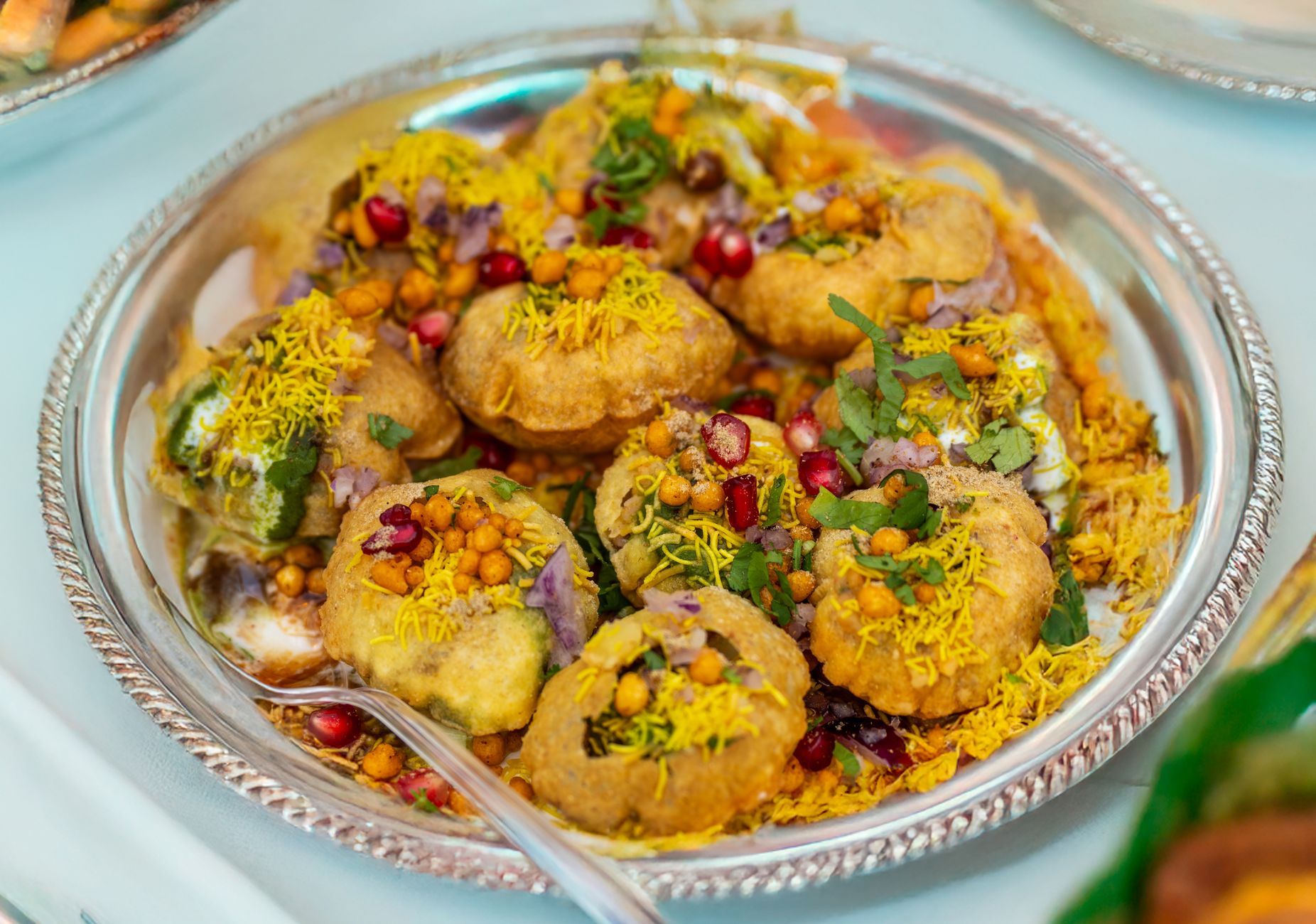
Chaat is a vibrant and flavorful Indian street food that combines a variety of textures and tastes. It typically involves a medley of ingredients such as crispy fried dough, boiled potatoes, yogurt, chutneys, and spices. Not only is it a delicious snack, but it also showcases the art of balancing sweet, spicy, and tangy flavors.
Each region in India has its own twist on chaat, making it a versatile dish that can cater to various palates. Whether you’re looking for a quick bite or an elaborate starter for your dinner party, chaat is sure to impress with its colorful presentation and complex flavors.
What Is Chaat?
Chaat is a popular Indian snack made by mixing various ingredients to create a flavorful dish. It often includes crispy elements, legumes, vegetables, and a mix of sauces and seasonings. Street vendors in India commonly serve chaat, where customers enjoy the fresh and energetic atmosphere that comes with it.
History and Origins of Chaat
The origins of chaat can be traced back to ancient India, specifically in the northern regions where it was a staple snack. The term “chaat” itself comes from the Hindi word “chaatna,” which means “to lick,” referring to the irresistible nature of the flavors that leave one wanting more. Over time, this dish has diversified and adapted to include local ingredients and regional flavors, evolving into many varieties.
Key Ingredients in Chaat
The unique appeal of chaat lies in its blend of ingredients, which can vary widely based on regional preferences and available resources. Below are some of the fundamental components found in various chaat recipes:
- Base components: Fried dough wafers (papdi), puffed rice, or crispy sev (thin noodle-like snacks).
- Vegetables: Diced potatoes, chickpeas, onions, tomatoes, and sometimes fruits like apples or pomegranate seeds.
- Dairy: Yogurt (curd) or paneer to add creaminess.
- Sauces and chutneys: Tamarind chutney, mint chutney, and yogurt-based sauces to provide tang and sweetness.
- Seasoning: Chaat masala (a unique spice blend), salt, and chili powder for flavor enhancement.
Popular Types of Chaat
Chaat indeed comes in countless variations across India, with each type having its own unique taste and style. Here are some of the most popular types:
Pani Puri
Pani puri, also known as golgappa, consists of hollow crispy puris filled with spicy tamarind water, potato, and chickpeas. Each bite provides a delightful burst of flavors, making it a favorite among street food lovers.
Bhel Puri
Bhel puri is a tangy snack made with puffed rice, vegetables, and the signature tamarind and mint chutneys. It is often garnished with sev for added crunch and is a popular dish along the beaches of Mumbai.
Samosa Chaat
Samosa chaat combines the beloved potato-stuffed samosas with a hearty layer of yogurt, chutneys, and spices, creating a comforting dish that is rich in texture and taste. It’s a filling snack that is great for gatherings.
Dahi Puri
Dahi puri is similar to pani puri, but instead of infused water, it uses yogurt as the filling. The addition of tamarind chutney, spices, and sometimes boiled potatoes provides a rich creamy experience.
Tikki Chaat
Tikki chaat features fried potato patties topped with yogurt, chutney, and onions. The combination of crispy texture and the creamy, tangy toppings is irresistible, making it a popular snack option.
How to Make Chaat at Home
Making chaat at home is a delightful experience. Below, find a basic recipe for one of the most popular types, Bhel Puri, along with guidance on how to customize it to suit your taste.
Yield and Timing
- Serving Size: Approximately 4 servings
- Preparation Time: 15 minutes
- Assembly Time: 5 minutes
- Total Time: 20 minutes
Ingredients
- 4 cups puffed rice
- 1 cup chopped vegetables (onions, tomatoes, and coriander leaves)
- 1 cup boiled potatoes, diced
- 1/2 cup tamarind chutney
- 1/2 cup mint chutney
- 1 teaspoon chaat masala
- Salt to taste
- 1/2 cup sev (optional, for garnish)
Essential Equipment
- Large mixing bowl
- Serving platter or individual bowls
- Measuring cups and spoons
Step-by-Step Method
- In a large mixing bowl, combine the puffed rice, diced vegetables, and boiled potatoes.
- Add the tamarind chutney and mint chutney, mixing well to coat all ingredients.
- Sprinkle chaat masala and salt over the mixture, adjusting to your taste.
- Carefully mix until all ingredients are well incorporated.
- Serve immediately in individual bowls or on a platter, topped with sev for added crunch.
Practical Tips for Making Chaat
When preparing chaat, keeping a few tips in mind can elevate the dish significantly:
- Serve immediately after mixing to maintain crunchiness. If prepared in advance, store components separately and assemble just before serving.
- For a healthier version, you can replace sev with crushed roasted nuts or seeds for added texture without the added calories.
- Experiment with different vegetables based on seasonal ingredients available to you.
Common Mistakes to Avoid
- Using stale puffed rice can lead to a soggy chaat. Ensure the puffed rice is fresh for optimal crispiness.
- Over-saucing the ingredients can make the dish too wet. It is essential to adjust the sauces to achieve a balance of flavors.
Storage and Make-Ahead Guidance
Chaat is best enjoyed fresh; however, if you plan ahead, here are some tips:
- Store individual components separately. Puffed rice, chutneys, and vegetables can be prepped a few hours in advance.
- Keep ingredients in airtight containers in the refrigerator to maintain freshness.
Chaat Variations and Substitutions
Versatility is one of the hallmarks of chaat; consider these variations to customize your dish:
- Gluten-Free Option: Use gluten-free crispy snacks or exclude crushed fried dough altogether.
- Vegan Version: Substitute yogurt with dairy-free yogurt alternatives and avoid any animal by-products.
- Spice Levels: Adjust the amount of green chilies or chili powder according to your heat preference.
Cultural Significance of Chaat
Beyond its delicious taste, chaat has cultural significance in Indian society, often found at festivals, celebrations, and communal gatherings. Its affordability and accessibility make it a beloved snack among various social classes.
Where to Find Chaat
If you’re not ready to make your own, many Indian restaurants and street food vendors serve an array of chaat dishes. Most metropolitan areas with Indian communities will offer vendors specializing in this cuisine. Make sure to check out local food festivals or markets for authentic experiences.
Conclusion
Chaat is more than just a snack; it is an experience that encapsulates the rich and diverse culinary culture of India. With its array of flavors and textures, it invites you to explore your creativity in the kitchen. Start with the basic bhel puri recipe and adjust it to your liking, embracing the vibrant spirit of this delightful street food.
For more recipes, explore our Bhel Puri recipe or try our Samosa Chaat recipe for your next culinary adventure!