Ingredients
Equipment
Method
- Grab a small mixing bowl and arrange all your ingredients nearby so you can work quickly and efficiently.
- Spoon 3 tablespoons of gochugaru into your bowl as the flavor foundation of your ssamjang.
- Add 2 tablespoons of doenjang directly to the gochugaru, pressing it gently against the bowl with your spoon to begin breaking it apart.
- Pour in 1 tablespoon of soy sauce, which adds saltiness and additional umami depth to your paste.
- Drizzle in 1 tablespoon of toasted sesame oil, which brings a rich, nutty aroma and flavor.
- Fold in your 3 minced garlic cloves using gentle stirring motions to distribute them evenly throughout the paste.
- Stir in 1/2 teaspoon of rice vinegar and 1/2 teaspoon of sugar, which brighten the overall flavor and prevent the sauce from tasting one-dimensional.
- Add 1 tablespoon of water at a time while stirring, tasting after each addition until you reach your preferred consistency.
- Take a small spoon and taste your ssamjang, noting whether it needs more salt, more heat, or more savory depth. The final product should taste spicy, savory, garlicky, and slightly sweet with a nutty sesame finish.
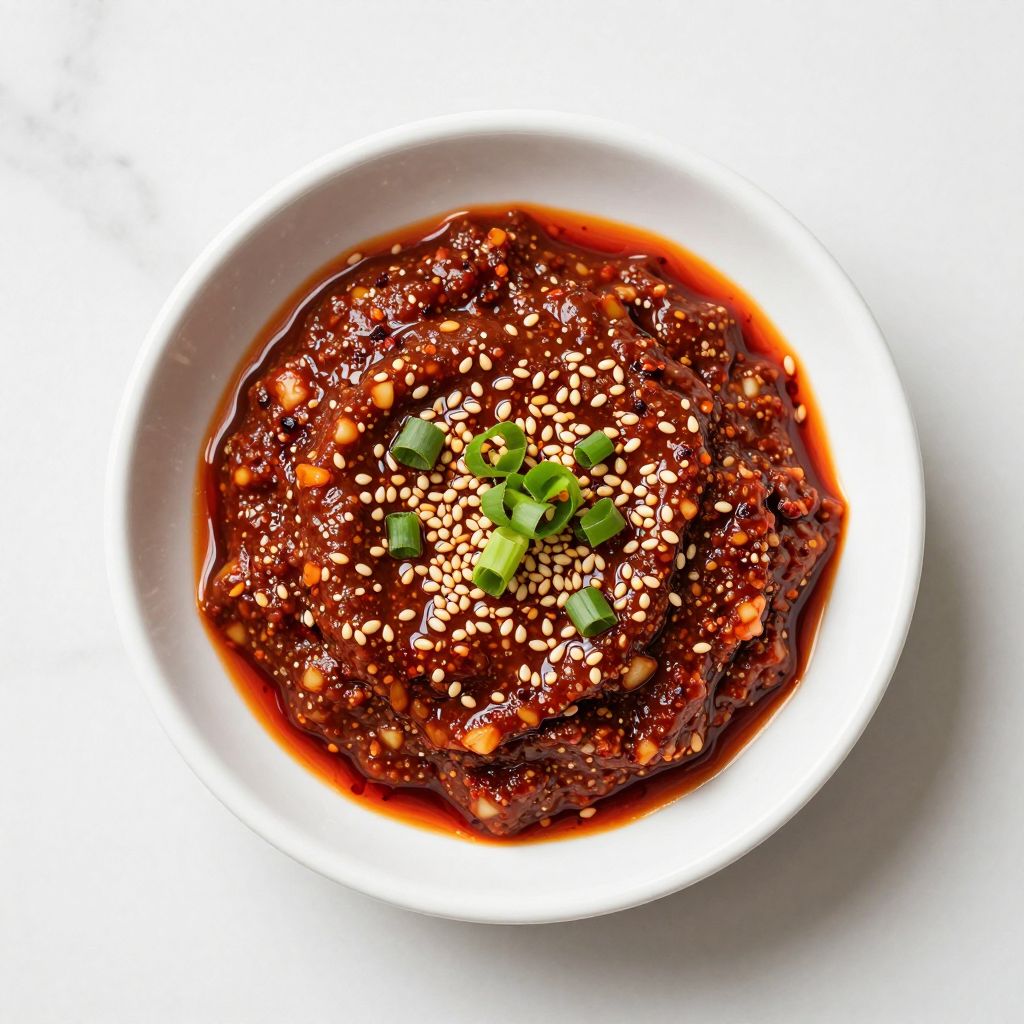
- Spoon your finished ssamjang into a clean airtight jar for storage in the refrigerator, where it keeps beautifully for three to four weeks. If you want to garnish it, sprinkle a light pinch of toasted sesame seeds on top right before serving.
- Let your finished ssamjang sit at room temperature for 15 minutes before serving so the flavors meld together and the heat softens slightly, creating a more rounded taste experience.
Notes
Ssamjang is best served as a condiment with grilled proteins like beef bulgogi, pork belly, or chicken, alongside lettuce wraps and fresh vegetables. Store in an airtight jar in the refrigerator for up to 3-4 weeks. Use a clean spoon when scooping to prevent contamination. If the paste thickens during storage, stir in a few drops of sesame oil or water to restore consistency.