Ingredients
Equipment
Method
- Cut the pork shoulder into 1.5-inch cubes, keeping the pieces relatively uniform so they cook at the same rate. Pat them dry with paper towels to help them brown better when you fry them later.
- In a large bowl, combine the lime juice, orange juice, minced garlic, whole scotch bonnets, thyme, salt, and black pepper. Stir everything together so the salt dissolves and the flavors begin to blend.
- Add the cubed pork to the marinade and stir until every piece is submerged in the liquid. Cover the bowl with plastic wrap and refrigerate for 4 to 8 hours, stirring once or twice if you remember.
- Remove the pork from the marinade about 30 minutes before you plan to cook it, allowing it to reach closer to room temperature for more even browning. Reserve 1 cup of the marinade liquid to use in the sauce later.
- Pat the pork pieces dry with fresh paper towels, leaving bits of garlic and herbs clinging to them but removing excess liquid so they will brown instead of steam.
- Pour 1/4 cup of vegetable oil into a large heavy-bottomed skillet over medium-high heat. Wait until wisps of smoke just begin to appear from the oil (around 350 to 375 degrees F).
- Working in batches to avoid crowding the pan, place the dried pork pieces in the hot oil and let each side cook for 3 to 4 minutes until golden brown and crispy on that surface, then turn to brown the next side.
- While the pork finishes cooking, heat 3 tablespoons of oil in a small saucepan over medium heat. Add the minced garlic and cook for about 1 minute until fragrant, then add the diced scotch bonnet and diced onions.
- Stir and cook for 3 to 4 minutes until the onions soften and release their sweetness.
- Pour the reserved 1 cup of marinade liquid into the saucepan with the aromatics, stirring to deglaze any browned bits clinging to the bottom. Add the tomato paste, lime juice, orange juice, salt, and black pepper, stirring well to combine.
- Simmer for 5 to 7 minutes until the sauce thickens slightly and the flavors meld together.
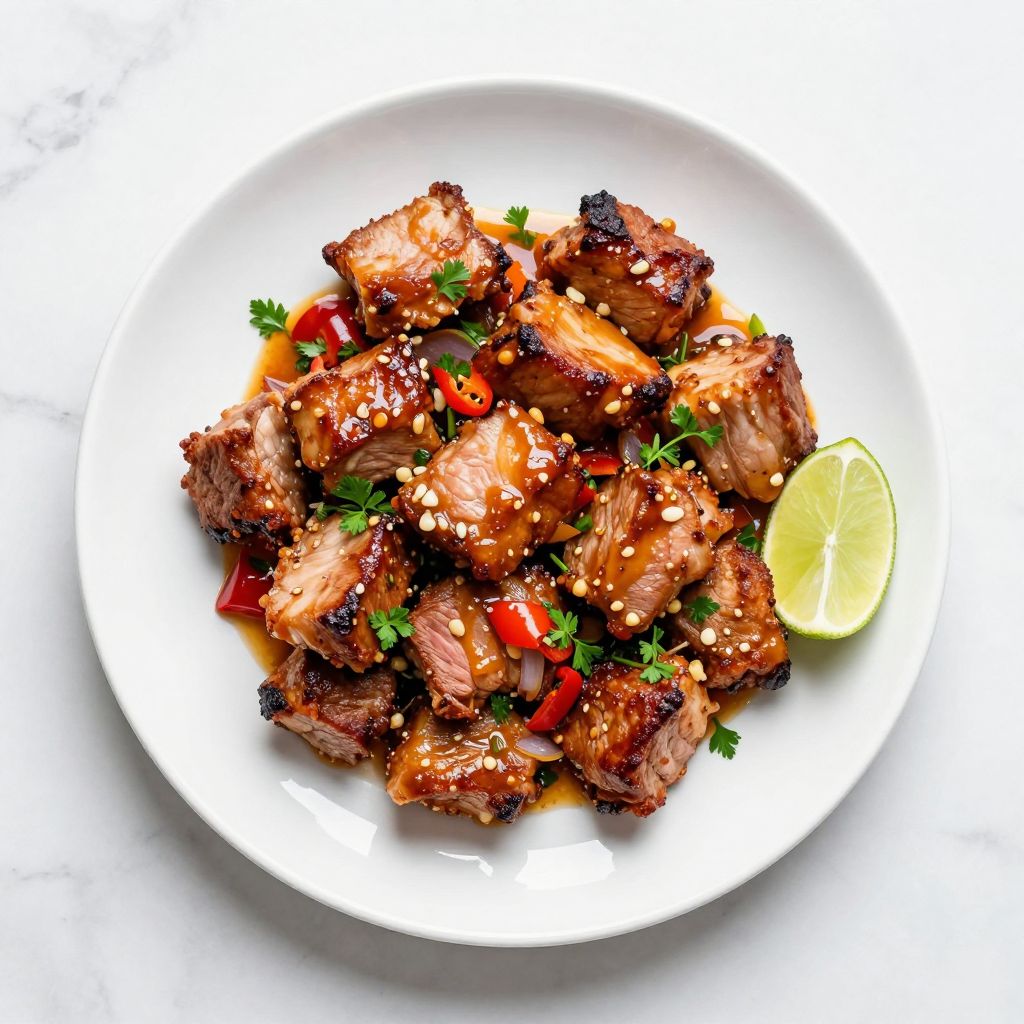
- Transfer the seared pork pieces to a serving platter and pour the hot sauce over them, stirring gently to coat. Garnish with fresh chopped parsley and serve immediately while the pork is still warm and crispy.
Notes
Make the marinade a full day ahead and let the pork sit overnight if your schedule allows; the extra time makes the meat noticeably more tender and flavorful. Do not skip the patting-dry step before frying; excess marinade liquid on the pork creates steam, which prevents browning and leaves you with soggy meat instead of crispy edges. Keep scotch bonnets whole during marinating if you prefer milder heat, or pierce and mince them if you want more spice distributed throughout the dish.