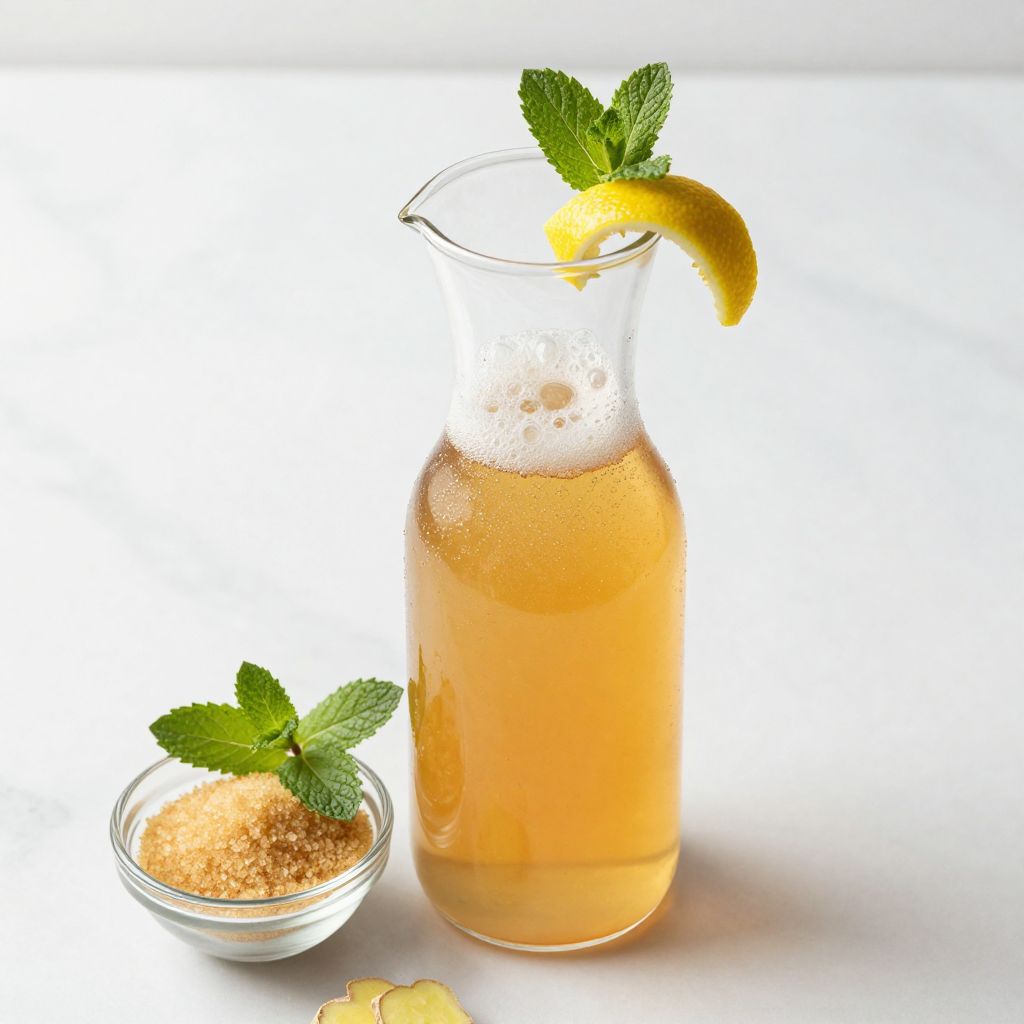
Ingredients
Equipment
Method
- Start with a clean quart sized glass jar. You do not need to sterilize it, but make sure no soap residue remains since soap can harm the beneficial bacteria.
- Roughly chop or grate 2 tablespoons of fresh ginger, keeping the skin intact. The skin houses the wild yeasts that will drive your fermentation, so scrub it clean but leave it on.
- Add the ginger, 2 tablespoons of sugar, and 2 cups of room temperature filtered water to your jar. Stir vigorously for about 30 seconds to dissolve the sugar and incorporate oxygen.
- Cover the jar with cheesecloth or a coffee filter and secure it with a rubber band. Place it in a warm area of your kitchen, ideally between 70 and 80 degrees Fahrenheit, away from direct sunlight.
- Every day for the next 5 to 7 days, add 1 tablespoon of fresh ginger and 1 tablespoon of sugar. Stir vigorously each time to introduce oxygen and distribute the new food.
- After 2 to 3 days, you should notice tiny bubbles forming at the surface and along the sides of the jar. The mixture will smell pleasantly yeasty and gingery, not foul or moldy.
- Your ginger bug is ready when it bubbles actively within minutes of stirring and has a slightly cloudy appearance. You should see consistent effervescence and hear a faint fizzing sound when you bring your ear close to the jar.
- When your bug is active, strain out the ginger pieces through a fine mesh strainer if desired, or leave them in for continued feeding. Use the liquid to ferment homemade sodas, or store the bug in the refrigerator for later use.
Notes
Always use organic ginger when possible since conventional ginger is often irradiated and lacks the wild yeasts needed for fermentation. Stir your bug vigorously at least once daily to introduce oxygen. Keep the jar in a consistently warm spot, as temperatures below 65 degrees dramatically slow fermentation. Never seal your ginger bug with an airtight lid during active fermentation, as pressure buildup can cause the jar to crack. If your ginger bug seems sluggish, move it to a warmer spot and add a pinch of dried ginger along with your daily feeding to jump start the yeast activity. A well fed ginger bug can live in the refrigerator for weeks or even months when fed once a week.