Mango sago is the refreshing Southeast Asian dessert you need this summer. This creamy, tropical treat combines ripe mangoes, chewy tapioca pearls, and coconut milk into pure bliss. Whether you’re hosting a dinner party or craving something sweet after a spicy meal, this recipe delivers every single time.
The best part? You can whip it up in under 30 minutes with just a handful of ingredients. Let me walk you through everything you need to know to make the most incredible mango sago at home.
Why You’ll Love This Recipe
This mango sago recipe hits all the right notes for a perfect dessert. It’s light, fruity, and impossibly satisfying without being overly heavy.
- Ready in under 30 minutes with minimal hands on time
- No baking required, perfect for hot weather when you refuse to turn on the oven
- Naturally gluten free and easily adaptable for dairy free diets
- The contrast between silky mango puree and bouncy tapioca pearls is absolutely addictive
- Impressive enough for guests yet simple enough for a Tuesday night treat
My Experience Making This Recipe
I first made mango sago during a scorching July afternoon when the thought of turning on my oven made me want to cry. The cool, creamy result was so satisfying that it became my go to summer dessert instantly.
The aroma of ripe mangoes filling my kitchen while I blended the puree was intoxicating. My family devoured the entire batch before it even had a chance to properly chill, which I took as the highest compliment.
What surprised me most was how the tapioca pearls transformed from hard little balls into these gorgeous, translucent gems. The texture contrast against the smooth mango cream is something you genuinely have to experience yourself.
Recipe Overview
- Recipe Name: Mango Sago
- Servings: 4
- Prep Time: 10 minutes
- Cook Time: 20 minutes
- Total Time: 30 minutes plus chilling
- Course: Dessert
- Cuisine: Southeast Asian, Hong Kong
- Calories per Serving: 285
Equipment You Will Need
- Medium saucepan with lid
- Fine mesh strainer or colander
- Blender or food processor
- Mixing bowls
- Measuring cups and spoons
- Serving glasses or bowls
- Spatula
Ingredients for Mango Sago
For the Tapioca Pearls
- 1/2 cup small tapioca pearls (sago)
- 4 cups water for boiling
For the Mango Layer
- 3 large ripe mangoes (about 2 pounds total)
- 1 cup coconut milk (full fat for best results)
- 3 tablespoons sugar (adjust to taste)
- 1/2 cup evaporated milk
For Serving
- 1/2 cup diced fresh mango for topping
- Fresh mint leaves (optional)
- Pomelo segments (optional)
Ingredient Notes and Substitutions
- Tapioca pearls: Small pearls work best here because they create a delicate texture. You can use medium pearls, but cooking time will increase by 5 to 10 minutes.
- Mangoes: Ripe Ataulfo or Manila mangoes deliver the sweetest, most aromatic flavor. Canned mango puree works in a pinch, though fresh is noticeably superior.
- Coconut milk: Full fat coconut milk creates that luxurious creamy texture. Light coconut milk works but produces a thinner consistency.
- Evaporated milk: This adds richness and a subtle caramel note. Substitute with more coconut milk for a dairy free version.
- Sugar: Sweetness depends entirely on your mango ripeness. Taste and adjust, starting with less than you think you need.
How to Make Mango Sago
Step 1: Boil Water for the Tapioca
Bring 4 cups of water to a rolling boil in a medium saucepan over high heat. You want vigorously boiling water because it prevents the tapioca pearls from clumping together at the bottom.
Step 2: Cook the Tapioca Pearls
Add the tapioca pearls slowly while stirring constantly. Keep stirring for the first 2 minutes to prevent sticking, then reduce heat to medium and cook for 12 to 15 minutes.
The pearls are ready when they’re mostly translucent with a tiny white dot in the center. This residual white spot will disappear during the resting phase.
Step 3: Rest and Rinse the Tapioca
Remove the pot from heat, cover it, and let the tapioca rest for 10 minutes. This finishing step allows the pearls to become completely translucent and perfectly chewy.
Drain through a fine mesh strainer and rinse under cold water to stop the cooking and remove excess starch. Set aside in a bowl of cold water to prevent clumping.
Step 4: Prepare the Mangoes
While the tapioca rests, peel your mangoes and cut the flesh away from the pit. Set aside about half a cup of diced mango for topping, then place the remaining flesh in your blender.
Step 5: Blend the Mango Puree
Blend the mango flesh until completely smooth, about 30 to 45 seconds. You want a silky puree with no chunks whatsoever, so scrape down the sides and blend again if needed.
Step 6: Create the Mango Cream
Add coconut milk, evaporated milk, and sugar to the blender with the mango puree. Blend until everything is perfectly combined and the sugar has dissolved completely.
Taste and adjust sweetness now. Remember that chilling will dull the sweetness slightly, so aim for a touch sweeter than your final preference.
Step 7: Combine Everything
Drain the tapioca pearls thoroughly and add them to the mango cream mixture. Fold gently with a spatula to distribute the pearls evenly without crushing them.
Step 8: Chill and Serve
Transfer the mango sago to a container and refrigerate for at least 2 hours, or until thoroughly chilled. The flavors meld beautifully during this time and the texture becomes even more luxurious.
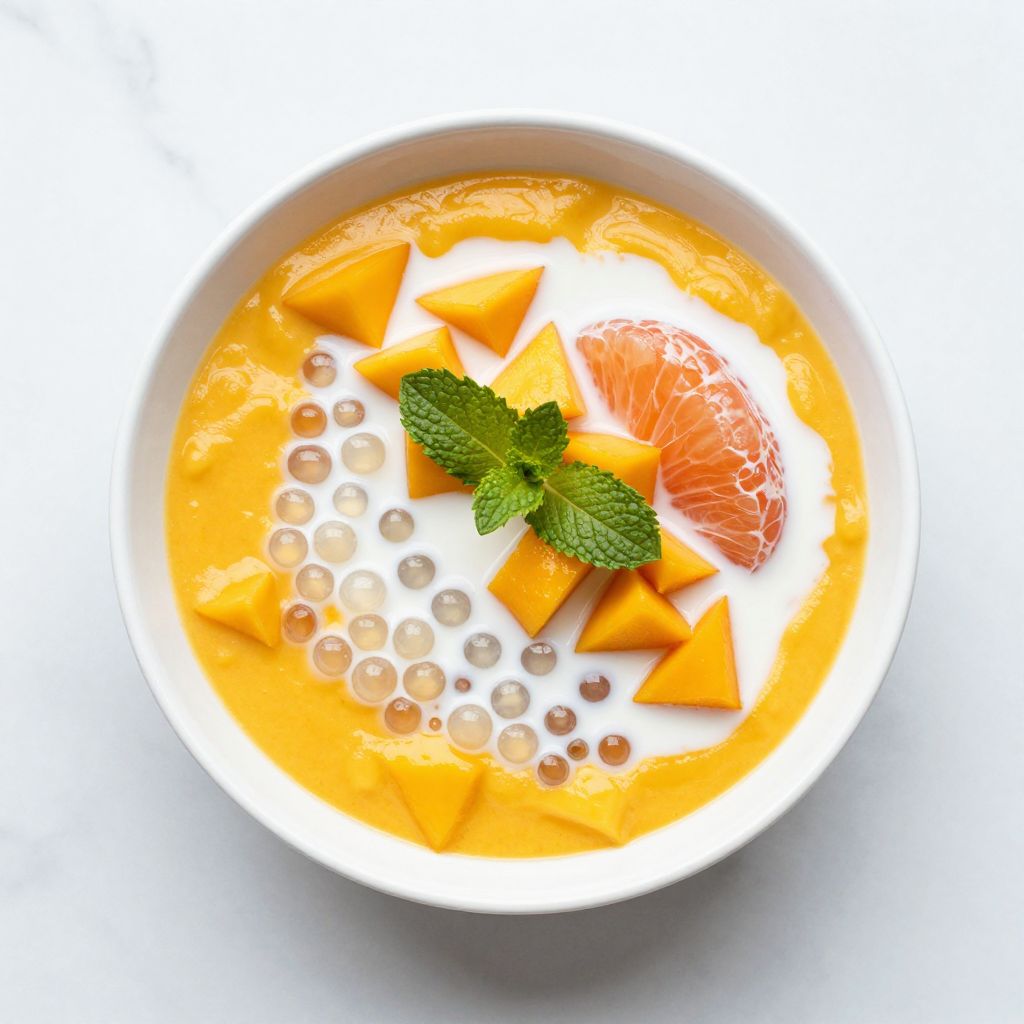
Serve in glasses or bowls, topped with diced fresh mango and mint leaves if desired. A drizzle of extra coconut milk on top looks absolutely stunning.
Pro Tip: For restaurant quality presentation, layer the components separately in clear glasses with mango puree at the bottom, tapioca in the middle, and coconut cream on top, then stir just before eating.
Tips for the Best Mango Sago
- Use the ripest mangoes you can find because they’re the star of this dessert. Fragrant mangoes that give slightly when pressed will deliver the best flavor.
- Stir the tapioca constantly during the first few minutes of cooking to prevent a gluey mess at the bottom of your pot.
- Rinse cooked tapioca immediately under cold water to achieve that perfect bouncy texture instead of mushy pearls.
- Chill the dessert for at least 2 hours before serving. Patience pays off with more developed flavors and better consistency.
- Make sure your coconut milk is well shaken or stirred before measuring. The fat tends to separate and you want it evenly distributed.
- Taste your mango puree before adding sugar. A perfectly ripe mango might need barely any additional sweetness.
Common Mistakes to Avoid
- Adding tapioca to water that isn’t boiling vigorously: This causes the pearls to sink and stick together in a disappointing clump.
- Overcooking the tapioca: Pearls become mushy and lose their signature chewy bounce if cooked too long.
- Skipping the resting step: Those white centers won’t disappear without the covered resting period, leaving you with undercooked pearls.
- Using unripe mangoes: The dessert will taste flat and require excessive sugar to compensate for lackluster fruit.
- Serving immediately: Warm mango sago lacks the refreshing quality that makes this dessert so special.
Serving Suggestions
Mango sago shines as a standalone dessert, but pairing it thoughtfully takes your meal to the next level. The cool, creamy sweetness balances beautifully with bold flavors.
- After a spicy Thai or Sichuan dinner when you need something to cool your palate
- Alongside dim sum for a traditional Hong Kong dessert experience
- At summer barbecues as a refreshing alternative to heavy pies and cakes
- Brunch gatherings where it doubles as a fancy fruit parfait
- As individual servings at dinner parties for an impressive no fuss finale
Variations to Try
- Mango pomelo sago: Add fresh pomelo segments for a burst of citrusy tartness that cuts through the sweetness beautifully.
- Coconut cream topping: Skip the evaporated milk entirely and float a layer of thick coconut cream on top for an extra tropical punch.
- Mixed fruit version: Combine mango with papaya or passion fruit puree for a more complex tropical flavor profile.
- Matcha swirl: Drizzle matcha cream on top for a stunning green and orange presentation with earthy contrast.
- Frozen mango sago: Blend the finished dessert and freeze in popsicle molds for a hot weather treat that kids absolutely love.
Dietary Adaptations
- Gluten free: This recipe is naturally gluten free as written, just verify your tapioca pearls are certified if you have celiac disease.
- Dairy free: Replace evaporated milk with additional coconut milk or coconut cream for an equally delicious result.
- Vegan: Use the dairy free adaptation above and confirm your sugar is processed without bone char.
- Low sugar: Reduce or eliminate added sugar and rely on very ripe mangoes, or use a sugar substitute like monk fruit.
Storage and Reheating
Refrigerator
Mango sago stores wonderfully in the fridge for enjoying throughout the week.
- Store in an airtight container for up to 3 days
- The tapioca may absorb some liquid overnight, which is normal
- Stir gently before serving to redistribute everything
Freezer
Freezing changes the texture somewhat but remains a viable option for longer storage.
- Freeze for up to 1 month in freezer safe containers
- Thaw overnight in the refrigerator
- Expect slightly softer tapioca pearls after freezing
Reheating
This dessert is meant to be served cold, so reheating isn’t recommended.
- Simply remove from refrigerator and stir well
- Let sit at room temperature for 5 minutes if too cold
- Add fresh mango topping just before serving for best texture
Nutrition Information
| Nutrient | Amount |
|---|---|
| Calories | 285 |
| Total Fat | 12g |
| Saturated Fat | 10g |
| Carbohydrates | 45g |
| Fiber | 2g |
| Sugar | 32g |
| Protein | 3g |
| Sodium | 35mg |
| Cholesterol | 5mg |
Nutrition values are estimates based on typical ingredients and may vary depending on specific brands and mango ripeness.
Frequently Asked Questions
Can I use canned mango instead of fresh?
Canned mango in juice works in a pinch, though fresh mangoes deliver superior flavor and aroma. Drain canned mangoes well and reduce the added sugar since they’re already sweetened.
How far ahead can I make mango sago?
You can prepare this dessert up to 2 days ahead without any quality loss. In fact, the flavors actually improve after sitting overnight in the refrigerator.
Why did my tapioca pearls turn mushy?
Mushy pearls usually result from overcooking or not rinsing under cold water immediately. Next time, check doneness earlier and rinse promptly to stop the cooking process.
Can I use large boba pearls instead of small tapioca?
Large boba creates a different texture experience but absolutely works. Cooking time increases significantly to 25 to 30 minutes, and you may want to serve the boba on the side.
Is mango sago the same as mango pudding?
They’re related but different desserts. Mango pudding uses gelatin for a firmer set texture, while mango sago features tapioca pearls in a creamier, more liquid consistency.
Final Thoughts
This mango sago recipe proves that incredible desserts don’t require complicated techniques or fancy equipment. Just a few quality ingredients and 30 minutes of your time deliver restaurant worthy results that will impress everyone at your table.
Give this recipe a try the next time you spot gorgeous ripe mangoes at the market. Trust me, once you taste homemade mango sago, you’ll understand why this dessert has captured hearts across Southeast Asia and beyond.
Mango Sago
Ingredients
Method
- Bring 4 cups of water to a rolling boil in a medium saucepan over high heat.
- Gradually add the tapioca pearls, stirring constantly for 2 minutes to prevent sticking, then reduce heat to medium and cook for 12–15 minutes until the pearls are mostly translucent with a small white center.
- Remove the pan from heat, cover, and let the tapioca rest for 10 minutes so the centers finish cooking and turn fully translucent.
- Drain the pearls through a fine-mesh strainer and rinse under cold running water, then transfer them to a bowl of cold water to keep them from clumping.
- Peel the mangoes, reserve 1/2 cup diced pieces for topping, and place the remaining mango flesh in a blender.
- Blend the mango until completely smooth (about 30–45 seconds), then add coconut milk, evaporated milk, and sugar; blend again until the sugar dissolves and the mixture is uniform.
- Drain the tapioca pearls thoroughly and fold them gently into the mango cream mixture until evenly distributed.
- Transfer the mango sago to a container, cover, and refrigerate for at least 2 hours until well chilled.
- To serve, divide the chilled mango sago among 4 glasses or bowls, top with reserved diced mango, mint leaves, and pomelo segments if desired, and drizzle with extra coconut milk for garnish.