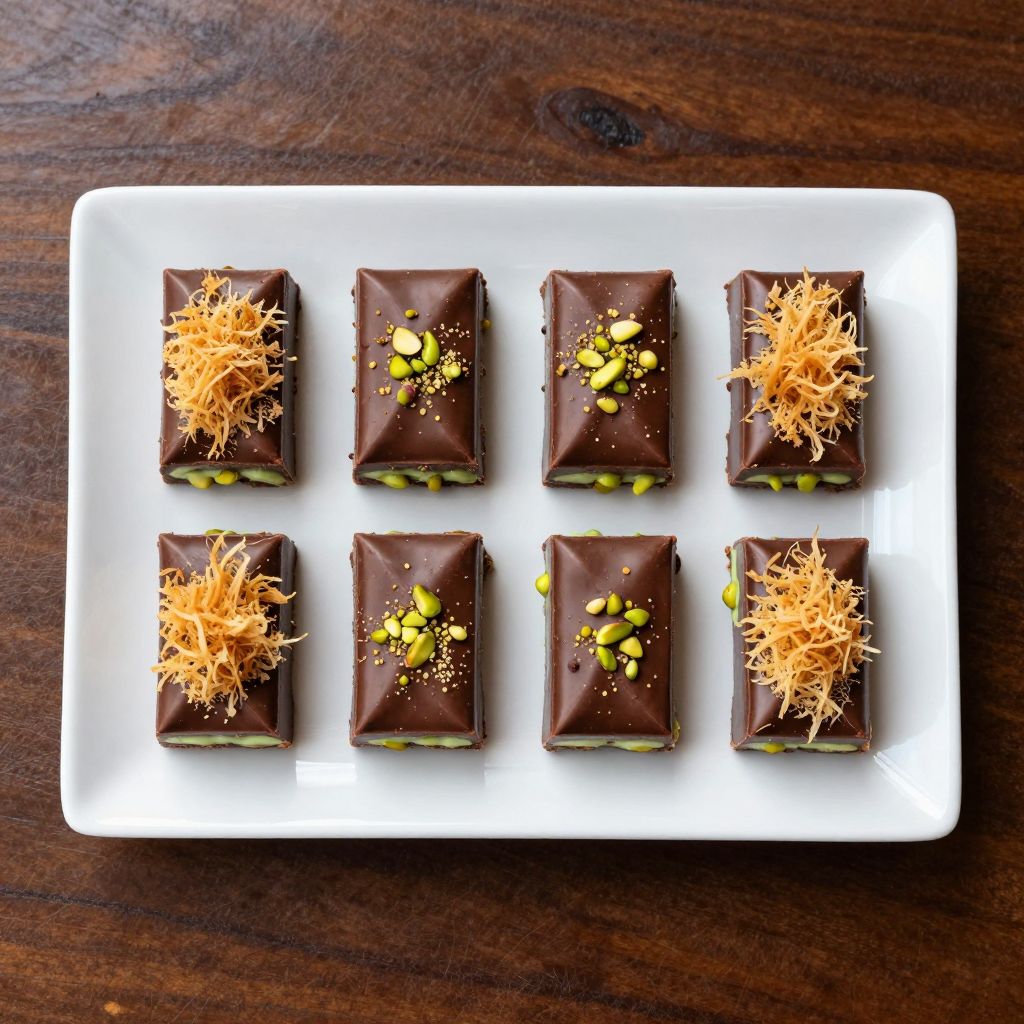
Dubai chocolate is the viral sensation that took social media by storm, and honestly, it lives up to the hype. This luxurious treat combines rich milk chocolate with crunchy knafeh pastry and creamy pistachio filling for a texture experience unlike anything else.
What started as a creation from Fix Dessert Chocolatier in Dubai has become a global obsession. The good news? You can make this showstopper at home with surprisingly simple ingredients.
Whether you want to impress dinner guests or satisfy your own curiosity about this famous candy bar, this recipe delivers authentic results. Let me walk you through every step to create your own batch of this Middle Eastern masterpiece.
Why You’ll Love This Recipe
This homemade Dubai chocolate delivers the same incredible textures and flavors as the original without the hefty price tag or international shipping wait. Once you taste that first bite, you will understand why people went absolutely wild for this treat.
- The contrast between smooth chocolate and crunchy knafeh creates an addictive texture combination
- Each bar costs a fraction of what you would pay for the imported version
- The pistachio tahini filling adds a rich, nutty depth that balances the sweetness perfectly
- You can customize the filling thickness and chocolate type to your personal preference
- Makes an impressive homemade gift that looks professionally made
My Experience Making This Recipe
I will admit I was skeptical when I first saw Dubai chocolate flooding my social media feeds. Another overhyped food trend, I thought. But curiosity got the better of me, and I decided to try making it myself.
The moment I took my first bite, I understood everything. That satisfying crunch from the knafeh, the creamy pistachio layer, and the snap of quality chocolate created something truly special.
My family devoured the entire batch within two days, and my kids have requested it for every special occasion since. The smell of toasted knafeh and pistachios filling my kitchen has become one of my favorite cooking memories.
Recipe Overview
- Recipe Name: Dubai Chocolate
- Servings: 8 chocolate bars
- Prep Time: 30 minutes
- Cook Time: 15 minutes
- Total Time: 2 hours 45 minutes (including setting time)
- Course: Dessert, Confection
- Cuisine: Middle Eastern, Emirati
- Calories per Serving: 485 calories
Equipment You Will Need
- Chocolate bar molds (rectangular, approximately 6 x 3 inches)
- Large baking sheet
- Medium saucepan
- Heat safe bowl for double boiler
- Food processor or high powered blender
- Silicone spatula
- Kitchen thermometer
- Parchment paper
- Offset spatula
Ingredients for Dubai Chocolate
For the Chocolate Shell
- 400g high quality milk chocolate, finely chopped
- 1 tablespoon coconut oil
For the Knafeh Layer
- 150g knafeh pastry (also called kataifi or shredded phyllo)
- 3 tablespoons unsalted butter, melted
- 2 tablespoons granulated sugar
- Pinch of salt
For the Pistachio Filling
- 200g raw pistachios, shelled
- 3 tablespoons tahini
- 2 tablespoons neutral oil (such as vegetable or grapeseed)
- 3 tablespoons powdered sugar
- 1/4 teaspoon salt
Ingredient Notes and Substitutions
- Milk chocolate: High quality chocolate with at least 33% cocoa content gives the best flavor and snap. You can substitute dark chocolate if you prefer less sweetness, but the flavor profile will change significantly.
- Knafeh pastry: This shredded phyllo dough creates the signature crunch that makes Dubai chocolate special. If unavailable, shredded wheat cereal (crushed) works as a substitute, though the texture differs slightly.
- Pistachios: Raw, unsalted pistachios produce the most vibrant green color and fresh flavor. Roasted pistachios work but will give a deeper, nuttier taste and less vivid color.
- Tahini: This sesame paste adds creaminess and a subtle nutty undertone to the filling. Substitute with pistachio butter or cashew butter for a nut only version.
- Coconut oil: A small amount helps the chocolate coating stay smooth and release easily from molds. Cocoa butter is a premium alternative that adds no coconut flavor.
How to Make Dubai Chocolate
Step 1: Toast the Knafeh Pastry
Preheat your oven to 350F (175C) and spread the knafeh pastry on a parchment lined baking sheet. Break apart any large clumps with your fingers so the strands toast evenly.
Drizzle the melted butter over the pastry and toss to coat. Toasting the pastry before adding it to the chocolate prevents sogginess and develops a deep, nutty flavor that raw pastry simply cannot match.
Step 2: Bake Until Golden and Crispy
Bake the buttered knafeh for 10 to 12 minutes, stirring every 3 to 4 minutes to ensure even browning. The pastry should turn golden brown and feel completely dry and crispy to the touch.
Remove from the oven and immediately sprinkle with sugar and salt, tossing while warm so the sugar adheres. Let cool completely before using, as any residual heat will affect your chocolate later.
Step 3: Prepare the Pistachio Filling
Add the pistachios to your food processor and blend until they form a fine meal, about 30 seconds. Continue processing until the nuts begin releasing their oils and the mixture becomes slightly paste like.
Add the tahini, oil, powdered sugar, and salt. Process for another 2 to 3 minutes until you achieve a smooth, spreadable consistency similar to thick peanut butter. Scrape down the sides as needed.
Step 4: Combine the Filling and Knafeh
Transfer the pistachio mixture to a bowl and fold in the cooled toasted knafeh. Use a spatula to gently combine without crushing too many of the crispy strands.
The ratio of creamy filling to crunchy knafeh matters here. You want enough paste to bind everything while still maintaining distinct pockets of crunch throughout.
Step 5: Temper the Chocolate
Set up a double boiler by placing a heat safe bowl over a pot of barely simmering water. The bowl should not touch the water, as direct heat causes chocolate to seize.
Add two thirds of your chopped chocolate to the bowl and stir constantly until melted and the thermometer reads 115F (46C). Remove from heat and add the remaining chocolate, stirring until fully melted and cooled to 88F (31C). This tempering process gives your chocolate that professional snap and glossy finish.
Step 6: Coat the Molds
Spoon approximately 2 tablespoons of tempered chocolate into each mold cavity. Use the back of the spoon or a small brush to push the chocolate up the sides, creating an even shell about 2mm thick.
Place the molds in the refrigerator for 5 minutes until the chocolate sets completely. A properly set shell will release cleanly from the mold and provide structural support for the filling.
Step 7: Add the Filling
Remove the molds from the refrigerator and spoon the pistachio knafeh mixture into each chocolate shell. Press down gently but firmly to eliminate air pockets and create an even layer.
Leave about 3mm of space at the top for the final chocolate layer. Overfilling makes sealing difficult and can cause the bars to crack when you unmold them.
Step 8: Seal and Set the Bars
Rewarm your tempered chocolate gently if it has thickened. Spoon chocolate over the filling to completely seal each bar, using an offset spatula to smooth the surface and remove excess.
Tap the mold firmly on your counter several times to release any trapped air bubbles. Refrigerate for at least 2 hours or until the chocolate has hardened completely before unmolding.
Pro Tip: For the cleanest release, let the molds sit at room temperature for 5 minutes after removing from the refrigerator. The slight temperature change helps the chocolate contract away from the mold walls.
Tips for the Best Dubai Chocolate
- Use high quality chocolate with a high cocoa butter content for the best texture and snap. Cheap chocolate contains vegetable fats that never set properly.
- Make sure your knafeh is completely cool and crispy before mixing with the pistachio filling. Any warmth or moisture creates a soggy final product.
- Do not skip the tempering process if you want that satisfying crack when you bite into the bar. Untempered chocolate stays soft and develops white bloom spots.
- Taste your pistachio filling before assembling and adjust sweetness to your preference. Some brands of tahini are more bitter than others.
- Work quickly when coating molds, as tempered chocolate begins setting at room temperature. Keep a warm water bath nearby to maintain fluidity.
- Store finished bars in a cool, dry place rather than the refrigerator for the best texture. Refrigerated chocolate can develop condensation when brought to room temperature.
Common Mistakes to Avoid
- Getting water in your chocolate: Even a single drop causes chocolate to seize into a grainy, unusable mess. Ensure all equipment is completely dry.
- Burning the knafeh: Those thin strands go from golden to burnt in seconds. Set a timer and check frequently during the last few minutes of baking.
- Using cold filling: Pistachio filling straight from the refrigerator is too stiff to spread and can crack your chocolate shell. Let it reach room temperature first.
- Rushing the setting time: Unmolding too early results in fingerprints, smudges, and bars that crack. Patience here makes the difference between amateur and professional results.
- Overprocessing pistachios: Processing too long turns your filling into pistachio butter rather than a textured paste. Stop while you can still see tiny nut pieces.
Serving Suggestions
Dubai chocolate makes a stunning dessert course or afternoon treat that needs no accompaniment. However, if you want to create a full experience, these pairings elevate the moment even further.
- Serve alongside strong Arabic coffee or espresso to balance the sweetness
- Pair with fresh berries for a pop of acidity that cuts through the richness
- Include on a Middle Eastern dessert platter with baklava and ma’amoul cookies
- Crumble over vanilla ice cream for an indulgent sundae topping
- Gift in a decorative box for birthdays, holidays, or hostess presents
Variations to Try
- Dark chocolate version: Swap milk chocolate for 70% dark chocolate for a more sophisticated, less sweet bar with deeper cocoa notes.
- White chocolate Dubai bars: Use quality white chocolate for the shell. The sweetness pairs beautifully with the nutty filling and adds visual contrast.
- Rose water infusion: Add half a teaspoon of rose water to the pistachio filling for a classic Middle Eastern flavor combination.
- Hazelnut adaptation: Replace pistachios with hazelnuts and add a tablespoon of cocoa powder for a chocolate hazelnut twist reminiscent of a famous spread.
- Spiced version: Mix a pinch of cardamom and cinnamon into the pistachio filling for warm, aromatic notes that complement the nuts perfectly.
Dietary Adaptations
- Gluten free: Most knafeh contains wheat. Substitute with gluten free shredded phyllo or crispy rice cereal for a safe alternative with similar crunch.
- Dairy free: Use dairy free chocolate chips and replace butter with coconut oil in the knafeh layer. Check your chocolate label carefully for hidden milk ingredients.
- Vegan: Combine the dairy free adaptations above and verify your chocolate and tahini are vegan certified. The filling is naturally plant based.
- Low carb and keto: Use sugar free chocolate sweetened with stevia or monk fruit and replace powdered sugar with a keto friendly sweetener. Net carbs will still be moderate due to pistachios.
Storage and Reheating
Refrigerator
Store Dubai chocolate bars in an airtight container in the refrigerator for up to two weeks. The filling stays fresh and the chocolate maintains its structure.
- Separate layers with parchment paper to prevent sticking
- Bring to room temperature for 10 minutes before eating for best texture
- Keep away from strong odors as chocolate absorbs smells easily
Freezer
For longer storage, freeze the bars for up to three months. Wrap each bar individually in plastic wrap, then place in a freezer safe container.
- Thaw overnight in the refrigerator for best results
- Avoid thawing at room temperature to prevent condensation on the chocolate surface
- Frozen bars can be eaten straight from the freezer for an extra crunchy experience
Reheating
Dubai chocolate is best enjoyed at cool room temperature and does not require reheating. If bars have been refrigerated, simply let them sit out briefly.
- Ten to fifteen minutes at room temperature restores ideal texture
- Never microwave, as this melts the chocolate shell
- If the chocolate develops white bloom from temperature changes, it is still safe to eat and tastes the same
Nutrition Information
| Nutrient | Amount |
|---|---|
| Calories | 485 |
| Total Fat | 32g |
| Saturated Fat | 14g |
| Carbohydrates | 42g |
| Fiber | 4g |
| Sugar | 34g |
| Protein | 9g |
| Sodium | 85mg |
| Cholesterol | 18mg |
Nutritional values are estimates based on standard ingredients and may vary depending on specific brands and products used.
Frequently Asked Questions
Can I use store bought pistachio butter instead of making my own filling?
Yes, you can use about 250g of store bought pistachio butter mixed with the tahini. The texture will be smoother and less rustic than homemade, but it saves significant time.
Where can I find knafeh pastry?
Look in the freezer section of Middle Eastern grocery stores, international markets, or order online. It is sometimes labeled as kataifi or shredded phyllo dough.
Can I make these bars ahead of time for a party?
Absolutely, and they actually taste better after a day or two as the flavors meld. Make them up to a week in advance and store in the refrigerator until ready to serve.
Why did my chocolate turn white and spotty?
This is called chocolate bloom and happens when chocolate experiences temperature fluctuations. It affects appearance only and does not impact taste or safety.
My filling seems too thick and dry. How can I fix it?
Add more tahini or oil, one teaspoon at a time, until you reach a spreadable consistency. Different pistachio batches have varying oil content, so adjustments are sometimes needed.
Final Thoughts
Making Dubai chocolate at home might seem intimidating at first, but the process is genuinely straightforward once you break it down. The combination of textures and flavors in each bite explains exactly why this treat became a worldwide phenomenon.
I hope this recipe brings the same joy to your kitchen that it brought to mine. Give it a try, share it with people you love, and prepare to become the most popular person at every gathering you attend.
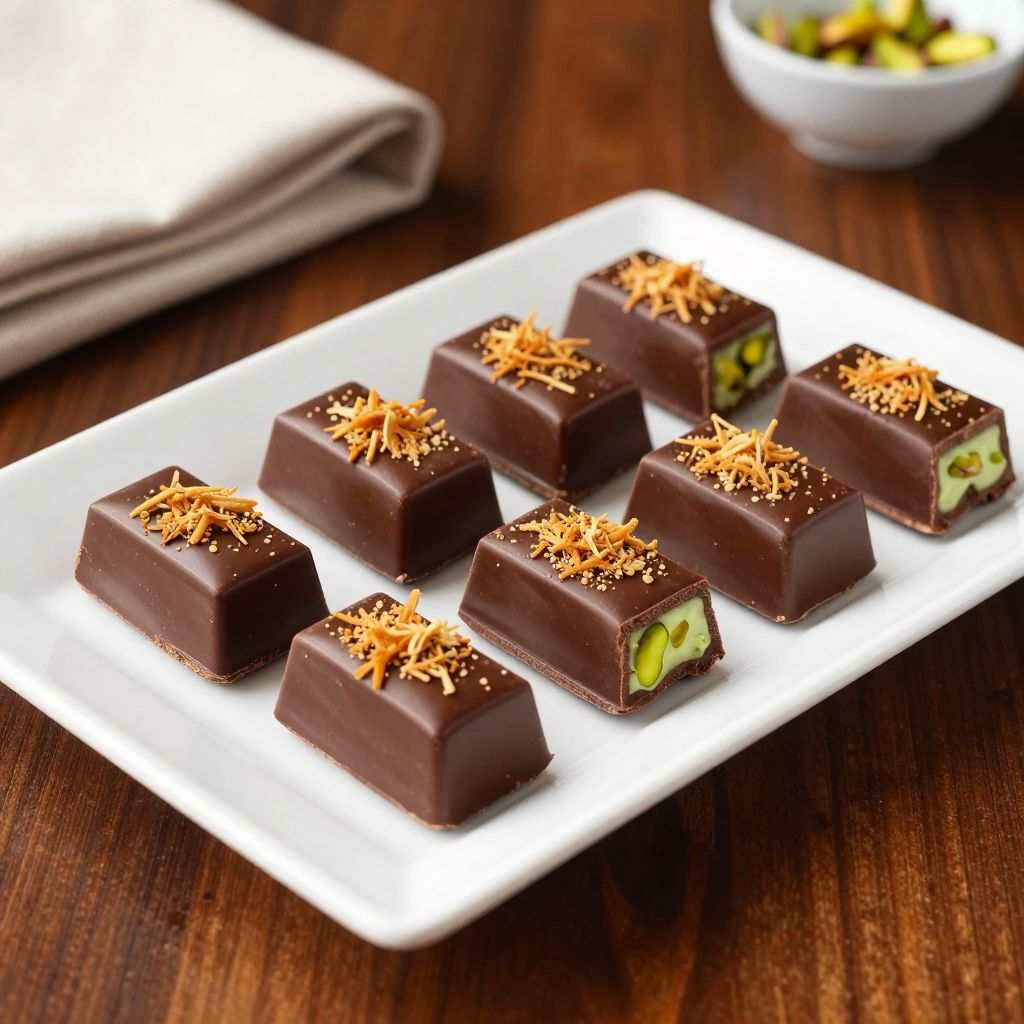
Dubai Chocolate Bars
Ingredients
Method
- Preheat oven to 350°F (175°C). Line a large baking sheet with parchment paper and spread the knafeh pastry evenly, breaking up clumps.
- Drizzle the melted butter over the knafeh and toss to coat all strands.
- Bake for 10–12 minutes, stirring every 3–4 minutes, until the knafeh is golden brown and completely crispy. Remove from oven, sprinkle with granulated sugar and a pinch of salt, then let cool fully.
- Place pistachios in a food processor and pulse to a fine meal. Add tahini, neutral oil, powdered sugar, and 1/4 teaspoon salt; process 2–3 minutes until smooth and spreadable.
- Transfer pistachio mixture to a bowl and fold in the cooled toasted knafeh, keeping as much crunch as possible.
- Set up a double boiler. Melt two-thirds of the chopped chocolate, stirring until it reaches 115°F (46°C). Remove from heat, add remaining chocolate, and stir until temperature drops to 88°F (31°C). Blend in coconut oil.
- Spoon about 2 tablespoons tempered chocolate into each bar mold and coat sides evenly. Refrigerate molds for 5 minutes until shells set.
- Fill each chocolate shell with the pistachio-knafeh mixture, pressing gently and leaving 3 mm at the top.
- Cover filling with more tempered chocolate, smoothing with an offset spatula and tapping molds to release air bubbles.
- Refrigerate at least 2 hours until chocolate is completely firm. Unmold bars and let sit 5 minutes at room temperature before serving.