
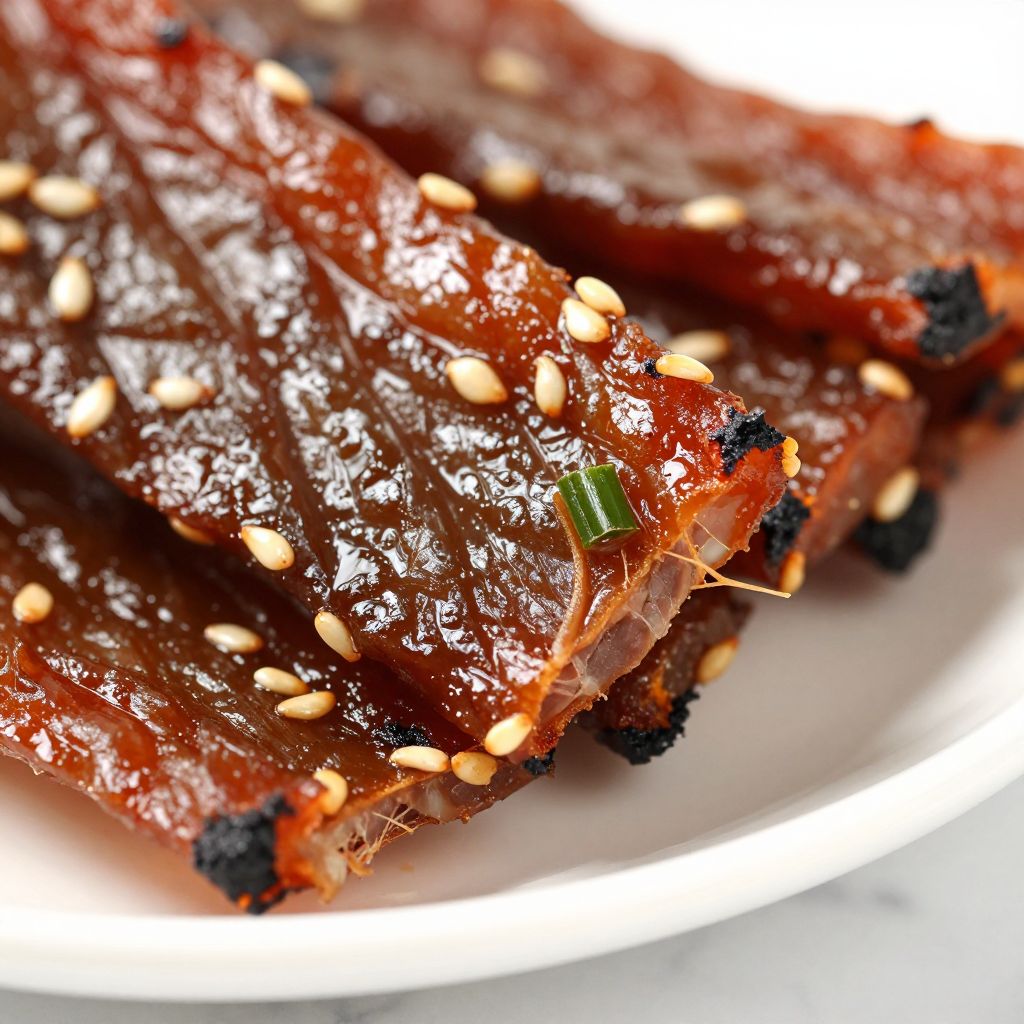
The smell of teriyaki glazing in your oven is pure magic, turning strips of beef into something chewy, savory, and addictively sweet all at once. Teriyaki jerky sits somewhere between a homemade snack and a restaurant-quality treat, requiring minimal hands-on time but delivering maximum flavor that will make everyone ask what you’re cooking.
This recipe skips the commercial jerky maker and uses your regular oven or food dehydrator, making it accessible for any home cook. The combination of soy sauce, ginger, and a touch of honey creates that signature umami-forward taste you crave, with a tender chew that beats most store-bought versions by miles.
Why You’ll Love This Recipe
Homemade teriyaki jerky gives you complete control over the marinade, the thickness of your slices, and how much sugar goes into your snack. You’ll save money compared to specialty jerky brands while impressing anyone who tastes it.
- Rich umami flavor from soy sauce, ginger, and garlic that improves after drying
- Chewy texture that satisfies without being tough or rubbery
- Made with real whole ingredients you recognize and can pronounce
- Great for meal prep, road trips, or anytime hunger strikes
- Customizable heat level and thickness to match your preference
My Experience Making This Recipe
The first time I made this jerky, I sliced the meat too thin and watched it turn into beef chips rather than chewy strips. That taught me the importance of thickness, and now I keep my slices between a quarter and half inch for perfect texture.
What surprised me most was how the flavors deepened during the drying process. The marinade tastes good in the raw beef, but once it sits in the oven for hours, the soy sauce and ginger become concentrated and almost addictive.
My friends started requesting it after I brought some to a game night, which tells you everything about how good this tastes. Now I make a batch every month and store it in airtight containers because it somehow disappears faster than anything else I cook.
Recipe Overview
- Recipe Name: Homemade Teriyaki Beef Jerky
- Servings: 6 to 8 servings
- Prep Time: 20 minutes (plus marinating time)
- Marinating Time: 8 to 12 hours
- Cook Time: 4 to 6 hours
- Total Time: 12 to 18 hours
- Course: Snack
- Cuisine: American with Asian-inspired flavors
- Calories per Serving: 120 calories
Equipment You Will Need
- Sharp knife for slicing meat
- Cutting board
- Large mixing bowl
- Measuring spoons and cups
- Oven or food dehydrator
- Oven-safe wire racks or dehydrator trays
- Paper towels
- Airtight container or glass jar for storage
- Meat thermometer (optional but helpful)
Ingredients for Teriyaki Jerky
- 2 pounds lean beef (flank steak, eye of round, or sirloin tip), partially frozen
- 1/2 cup low-sodium soy sauce
- 3 tablespoons honey
- 2 tablespoons rice vinegar
- 1 tablespoon sesame oil
- 4 cloves garlic, minced
- 2 teaspoons fresh ginger, grated or minced
- 1 teaspoon red pepper flakes (adjust to taste)
- 1/2 teaspoon black pepper
- 2 teaspoons cornstarch
- 1 tablespoon water
Ingredient Notes and Substitutions
- Lean beef: Flank and sirloin tip have just the right marbling and texture for jerky that chews but doesn’t crumble. If you prefer, venison works beautifully and creates a slightly gamier, more interesting flavor profile that some people find superior.
- Soy sauce: Low-sodium soy sauce prevents the jerky from becoming overly salty during the drying process. Tamari works as a gluten-free swap without changing the flavor much.
- Honey: This adds natural sweetness and helps create the signature teriyaki glaze as it caramelizes. Maple syrup or brown sugar dissolved in a tablespoon of water creates a similar effect with slightly different flavor notes.
- Sesame oil: The toasted variety adds an aromatic, nutty background that defines teriyaki flavor. Regular vegetable oil won’t provide the same depth, so it’s worth keeping on hand.
- Fresh ginger: Ground ginger works in a pinch at one-third the amount, but fresh ginger creates a brighter, more authentic taste.
How to Make Teriyaki Jerky
Step 1: Prepare the Beef for Slicing
Place your beef in the freezer for 2 to 3 hours until it’s firm but not completely frozen through. Partially frozen meat slices cleanly and uniformly, which ensures even drying and consistent texture throughout your batch.
Step 2: Slice the Beef Against the Grain
Remove the beef from the freezer and slice it against the grain into strips between one-quarter and one-half inch thick. Cutting against the grain makes the jerky more tender and easier to chew once it’s dried.
Step 3: Mix the Teriyaki Marinade
Combine soy sauce, honey, rice vinegar, and sesame oil in a large bowl and whisk until the honey dissolves completely. Add minced garlic, grated ginger, red pepper flakes, and black pepper, stirring well to distribute the flavors evenly.
Step 4: Marinate the Beef
Add the beef slices to the marinade and stir gently to coat every piece thoroughly. Cover the bowl with plastic wrap and refrigerate for 8 to 12 hours, stirring once or twice if you think of it to ensure even flavor absorption.
Step 5: Prepare Your Drying Setup
If using an oven, line racks with aluminum foil and place oven-safe wire racks on top. This setup allows air to circulate under the meat, promoting even drying and preventing any pieces from sticking to the racks.
Step 6: Arrange Beef on Racks
Remove beef slices from the marinade and place them on the prepared racks in a single layer without overlapping. Pat off excess marinade with paper towels so the pieces dry evenly and the teriyaki flavors concentrate rather than steam off.
Step 7: Dry the Jerky Low and Slow
Set your oven to 175 degrees Fahrenheit and place the racks inside, propping the door open slightly with a wooden spoon to allow moisture to escape. Dry for 4 to 6 hours, checking at the 3-hour mark; the jerky is done when it bends slightly but doesn’t break completely and no moisture leaks when you squeeze a piece gently.
Step 8: Cool and Store
Remove the jerky from the oven and let it cool to room temperature on the racks for about 30 minutes. Once cooled, store it in an airtight container with parchment paper between layers to prevent sticking.
Pro Tip: The jerky continues to dry slightly as it cools, so don’t over-dry it in the oven or it becomes too tough and loses that satisfying chew that makes this recipe special.
Tips for the Best Teriyaki Jerky
- Slice your beef as uniformly as possible so all pieces dry at the same rate and finish at the same time. Uneven slices create some pieces that are too dry and others that stay too moist.
- Don’t skip the marinating step or rush it with less than 8 hours. The flavors need time to penetrate the meat and create that deep teriyaki taste.
- Keep your oven temperature low and steady because high heat dries the outside too fast, trapping moisture inside and creating a tough, unpleasant texture.
- Test for doneness by bending a piece gently rather than breaking it completely, which ensures the jerky stays tender rather than becoming brittle and hard.
- Use a meat thermometer to confirm the internal temperature reaches at least 160 degrees Fahrenheit for food safety, though the drying process alone usually achieves this.
- Make a double batch because once word spreads that you make homemade jerky, it disappears faster than you’d expect.
Common Mistakes to Avoid
- Slicing the beef with the grain instead of against it creates jerky that’s tough and stringy rather than tender and chewy. Always identify the grain direction and slice perpendicular to it.
- Using fatty cuts of beef causes the jerky to go rancid quickly and creates a greasy mouthfeel. Stick with lean cuts like flank or sirloin tip for shelf stability and clean flavor.
- Drying at too high a temperature bakes the outside while leaving moisture trapped inside, resulting in jerky that looks done but tastes chewy in an unpleasant way. Low heat is worth the extra time.
- Skipping the excess marinade removal adds too much moisture, extending drying time dramatically and creating an uneven final product. Pat the meat dry before arranging it on the racks.
- Not cooling the jerky completely before storing it can trap steam inside the container and promote mold growth. Always let it reach room temperature first.
Serving Suggestions
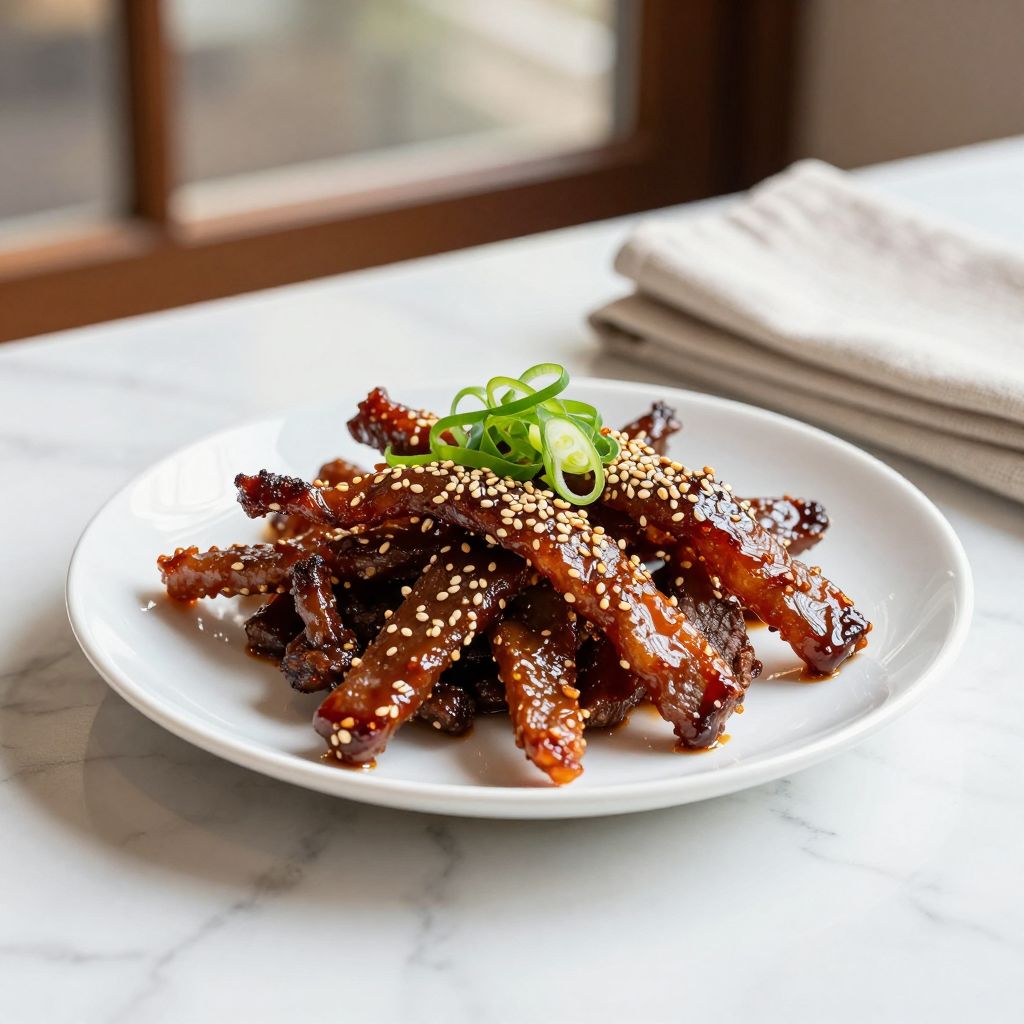
Serve teriyaki jerky on its own as a protein-packed snack, or pair it with other flavors to create interesting combinations. It works equally well at a casual gathering, in a lunch box, or as a pre-workout energy boost.
- With fresh fruit like mango or pineapple for a sweet and savory contrast
- Alongside nuts and dried cranberries for a homemade trail mix
- With crackers and sharp cheese for a sophisticated snack board
- Chopped and stirred into rice bowls with vegetables for added protein and flavor
- Packed in lunch boxes alongside vegetables and hummus for a complete portable meal
Variations to Try
- Spicy Garlic Teriyaki: Double the red pepper flakes and add one teaspoon of garlic powder for a jerky that packs serious heat. The extra garlic creates a bold, almost addictive flavor.
- Miso Teriyaki: Replace half the soy sauce with white miso paste for deeper umami and a slightly nutty background. This variation tastes more complex and restaurant-quality.
- Pineapple Teriyaki: Add one-quarter cup of pineapple juice to the marinade for tropical sweetness that complements the savory elements beautifully. The acidity also helps tenderize the meat slightly.
- Maple Bourbon Teriyaki: Substitute honey with pure maple syrup and add two tablespoons of bourbon for a mature, sophisticated flavor that’s perfect for gift-giving. The alcohol cooks off during drying, leaving only the warmth and depth behind.
- Five-Spice Teriyaki: Add half a teaspoon of Chinese five-spice powder for warmth and complexity that transforms the flavor profile. This version pairs beautifully with jasmine tea.
Dietary Adaptations
- Gluten-Free: Use tamari or coconut aminos instead of regular soy sauce, which contains wheat. The flavor stays nearly identical while keeping the recipe safe for gluten-sensitive eaters.
- Dairy-Free: This recipe is naturally dairy-free with no modifications needed. The entire marinade relies on soy, ginger, and garlic for flavor.
- Vegetarian or Vegan: Replace beef with extra-firm tofu or tempeh sliced into thin strips, keeping everything else the same. The drying time may decrease by an hour since plant-based proteins contain less moisture than meat.
- Low-Carb or Keto: Replace honey with monk fruit sweetener at the same amount to eliminate the sugar while maintaining sweetness. The texture and drying time remain unchanged.
Storage and Reheating
Refrigerator
Store cooled jerky in an airtight container or glass jar in the refrigerator where it keeps for up to 3 weeks. The cool temperature slows any mold growth and preserves the flavors without drying the jerky further.
- Place parchment paper between layers to prevent pieces from sticking together
- Keep the container in the coldest part of your fridge, away from the door where temperature fluctuates
- Check occasionally for any signs of mold or moisture accumulation and discard if either appears
Freezer
Frozen teriyaki jerky lasts up to 3 months when stored properly in an airtight container or freezer bag. The cold preserves the texture and flavor without any noticeable change when thawed.
- Remove as much air as possible from freezer bags to prevent freezer burn
- Thaw at room temperature for 30 minutes before eating, or enjoy it straight from the freezer
- Once thawed, consume within a few days or return unused portions to the freezer
Reheating
Reheating isn’t necessary since teriyaki jerky tastes great at any temperature, but you can briefly warm it if you prefer. Never use a microwave, which creates hot spots and ruins the texture.
- Warm gently in a low oven at 175 degrees for 10 to 15 minutes if desired
- Eat cold straight from the container for the best texture and flavor
- Room temperature pieces work perfectly for snacking or adding to dishes
Nutrition Information
| Nutrient | Amount |
|---|---|
| Calories | 120 |
| Total Fat | 4 grams |
| Saturated Fat | 1.5 grams |
| Carbohydrates | 8 grams |
| Fiber | 0 grams |
| Sugar | 6 grams |
| Protein | 16 grams |
| Sodium | 480 milligrams |
| Cholesterol | 45 milligrams |
These values are estimates based on USDA nutrient databases and may vary depending on exact cuts of meat and brands used. If you need precise nutrition information for dietary reasons, consult a registered dietitian.
Frequently Asked Questions
Can I use a food dehydrator instead of an oven?
Absolutely, and many people prefer dehydrators for more consistent results and better air circulation. Set your dehydrator to 160 degrees Fahrenheit and dry the beef for 4 to 6 hours, checking around the 4-hour mark for doneness.
How thin should I slice the beef?
Aim for slices between one-quarter and one-half inch thick for the perfect balance of chew and structure. Thinner slices dry faster and become crispier, while thicker slices stay chewier but take longer to dry.
What’s the best way to tell when the jerky is done?
Bend a piece gently and it should flex slightly without cracking completely in half. Squeeze a piece and no moisture should leak out, though it should still feel pliable rather than brittle and hard.
Can I make this with different types of meat?
Yes, venison makes exceptional jerky with a slightly gamier flavor that many people prefer, and chicken breast works for a leaner option though it dries faster. Turkey, pork loin, and salmon all work if you adjust the drying time accordingly.
How long does homemade jerky actually last?
Properly dried and stored jerky keeps for 3 weeks in the refrigerator or 3 months in the freezer. At room temperature in an airtight container, it lasts about 1 week if the air is dry, but refrigerating is safer.
Why is my jerky turning out tough instead of chewy?
Over-drying causes excessive toughness, so remove the jerky when it still bends slightly rather than waiting until it’s completely rigid. Also ensure you’re slicing against the grain and not using an overly fatty cut of meat.
Final Thoughts
Making homemade teriyaki jerky transforms a simple cut of beef into something special that tastes restaurant-quality and costs a fraction of commercial versions. The process takes patience, but the hands-on time is minimal and the reward is completely worth it.
Give this recipe a try and you’ll understand why homemade jerky becomes a regular habit rather than a one-time experiment. Share it with friends and family, and prepare for the requests that will inevitably follow.
Explore More Jerky Recipes
If you love making homemade jerky, you might also enjoy exploring other protein-forward snack recipes. Check out this venison jerky recipe for a gamier take, and don’t miss this honey glaze recipe that works beautifully on jerky and many other dishes.
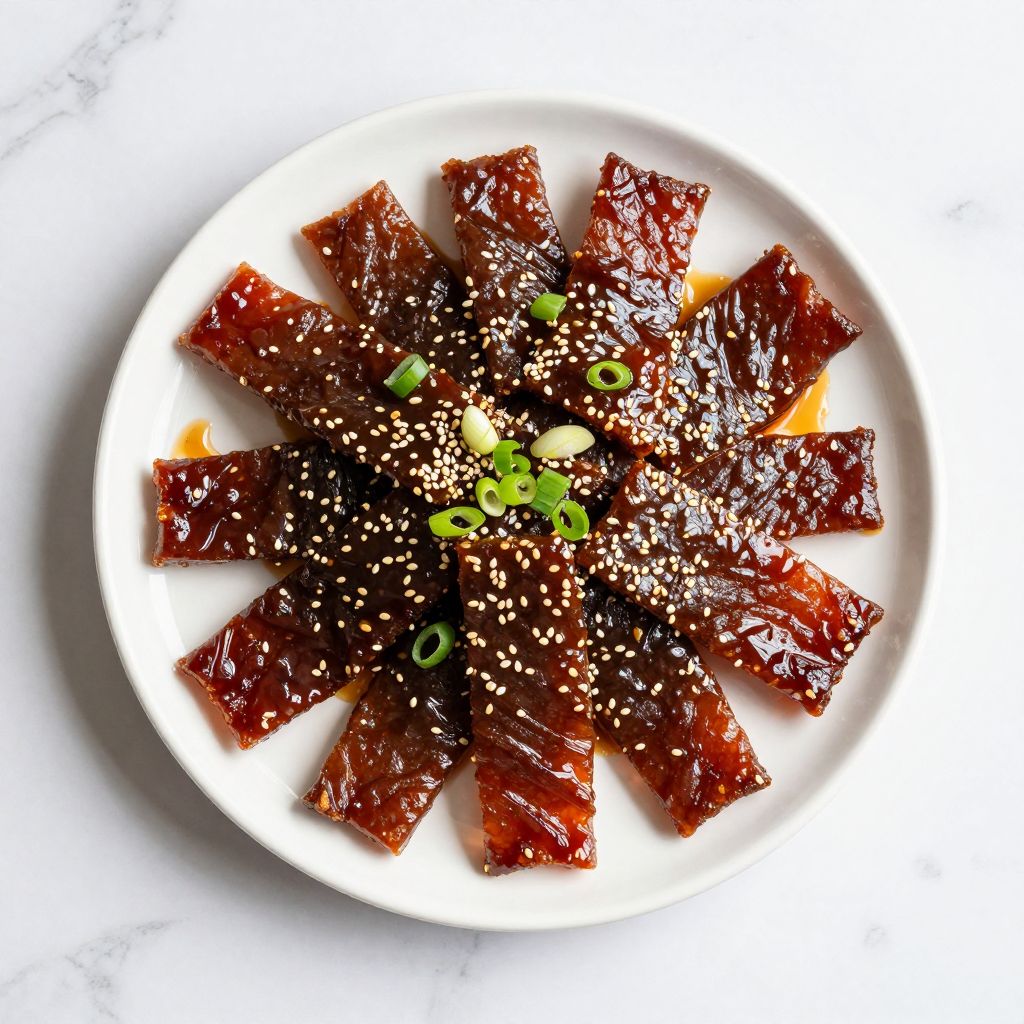
Homemade Teriyaki Beef Jerky
Ingredients
Equipment
Method
- Place the beef in the freezer for 2 to 3 hours until firm but not completely frozen.
- Remove beef and slice against the grain into 1/4 to 1/2 inch thick strips.
- Whisk soy sauce, honey, rice vinegar, and sesame oil in a bowl until honey dissolves.
- Stir in garlic, ginger, red pepper flakes, and black pepper until evenly combined.
- Coat beef strips in the marinade, cover, and refrigerate for 8 to 12 hours, stirring occasionally.
- Line baking sheets with foil, set wire racks on top, and preheat oven to 175°F, propping the door open slightly.
- Remove excess marinade from beef with paper towels and arrange strips in a single layer on racks.
- Dry jerky in the oven for 4 to 6 hours, checking at 3 hours; jerky is done when it bends without breaking and no moisture seeps out.
- Let jerky cool on racks for 30 minutes before storing in an airtight container with parchment layers.