
The first time you taste real bibimbap sauce, something clicks: that perfect balance of spicy, sweet, savory, and umami all hitting at once on your tongue.
Bibimbap sauce is the soul of the dish, transforming simple rice and vegetables into something genuinely craveable. This Korean condiment takes just minutes to make at home, tastes infinitely better than bottled versions, and unlocks the ability to build authentic bibimbap bowls whenever you want.
What makes this recipe special is its simplicity paired with serious depth of flavor. You are working with just six ingredients, most of which you probably have on hand already.
Why You’ll Love This Recipe
Homemade bibimbap sauce beats the store-bought stuff by miles, and you will taste the difference immediately. It comes together in under five minutes and keeps for weeks in your fridge.
- Takes only 5 minutes from start to finish
- Uses just 6 basic pantry ingredients
- One bowl, no special equipment needed
- Perfect for meal prep and batch making
- Works as a dip, marinade, or sauce base
My Experience Making This Recipe
I first made this sauce after a disappointing meal at a Korean restaurant where the bibimbap tasted flat and underseasoned. I decided right then to figure out the real recipe.
The moment I mixed gochujang with sesame oil and garlic, I knew I had cracked the code. The aroma alone transported me back to Seoul street food stalls.
Now I make a batch every Sunday and use it on everything from eggs to roasted vegetables to simple rice bowls. My partner has stopped asking what that amazing smell is because she knows exactly what is coming next.
Recipe Overview
- Recipe Name: Bibimbap Sauce
- Servings: Makes about 1/2 cup (8 servings)
- Prep Time: 5 minutes
- Cook Time: 0 minutes
- Total Time: 5 minutes
- Course: Condiment
- Cuisine: Korean
- Calories per Serving: 45
Equipment You Will Need
- Small mixing bowl
- Whisk or spoon
- Measuring spoons
- Garlic press or mincer (optional)
- Glass jar for storage
Ingredients for Bibimbap Sauce
- 3 tablespoons gochujang (Korean red chili paste)
- 2 tablespoons sesame oil
- 1 tablespoon rice vinegar
- 1 tablespoon honey or sugar
- 2 cloves garlic, minced
- 1 teaspoon toasted sesame seeds (optional but recommended)
Ingredient Notes and Substitutions
- Gochujang: This fermented red chili paste delivers the spicy, umami backbone of the sauce. If you cannot find it, mix 2 tablespoons sambal oelek with 1/2 teaspoon miso paste as a substitute, though the flavor will shift slightly toward Southeast Asian.
- Sesame oil: Toasted sesame oil provides the nutty, aromatic character that makes this sauce instantly recognizable. Regular vegetable oil will keep the sauce but lose its soul completely.
- Rice vinegar: This mild acid brightens the sauce and prevents it from tasting too heavy. Apple cider vinegar works in a pinch but will add a sharper tang.
- Honey: This balances the spice and saltiness with gentle sweetness. Maple syrup or agave work fine, though they will shift the flavor profile slightly.
- Garlic: Fresh minced garlic is non-negotiable for vibrant flavor. Garlic powder tastes stale and flat in this application.
- Sesame seeds: These add texture and toasted aroma but are purely optional.
How to Make Bibimbap Sauce
Step 1: Gather Your Ingredients
Measure out all six ingredients before you start mixing. Having everything ready ensures smooth, quick assembly and prevents you from missing anything halfway through.
Step 2: Add Gochujang to Your Bowl
Spoon the gochujang into a small mixing bowl. This fermented paste is thick and dense, so it needs a moment to loosen up with the other liquids.
Step 3: Pour in the Sesame Oil
Add the sesame oil directly to the gochujang. The oil starts breaking down the paste and creates the base for your emulsion.
Step 4: Add the Rice Vinegar
Pour in the rice vinegar next, which adds acidity and helps thin the mixture to a pourable consistency. The vinegar also cuts through the richness and prevents the sauce from feeling heavy.
Step 5: Stir in the Honey
Add honey to the bowl and whisk everything together. The honey dissolves quickly and balances the spice with subtle sweetness, rounding out the overall flavor profile.
Step 6: Add the Minced Garlic
Stir in your minced garlic vigorously for about one minute. Fresh garlic distributes better when you give it a solid mixing, ensuring it does not clump in the finished sauce.
Step 7: Taste and Adjust
Take a small spoon and taste your sauce carefully. If you want more heat, add another 1/2 tablespoon of gochujang; if you want more sweetness, add a touch more honey.
Step 8: Add Sesame Seeds and Store
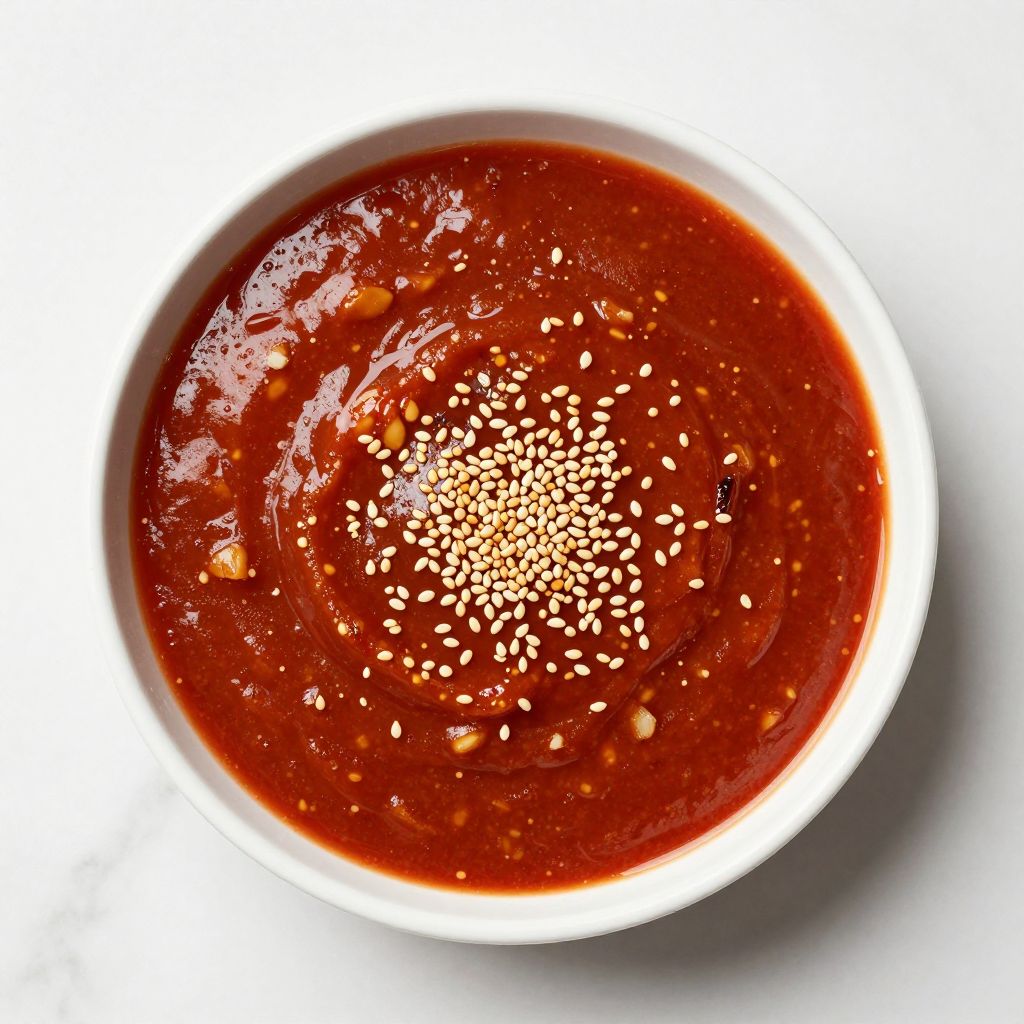
Sprinkle toasted sesame seeds on top if using, then transfer your sauce to a clean jar for storage. The sauce is ready to use immediately or can be refrigerated for up to three weeks.
Pro Tip: Let your sauce sit for 10 minutes before using it on bibimbap so the flavors meld and the garlic mellows slightly, giving you a more balanced, cohesive taste.
Tips for the Best Bibimbap Sauce
- Use fresh garlic every time because jarred garlic turns bitter and loses its punch after a few minutes of sitting. Fresh garlic keeps its brightness and spice.
- Toast your sesame seeds lightly in a dry pan for 2 minutes before adding them to amplify their nuttiness and aroma. This single step elevates the entire sauce.
- Whisk vigorously for at least one minute so the gochujang emulsifies fully into the oils and vinegar. This prevents a grainy, separated texture in the finished sauce.
- Make a double batch on Sunday and store it in the fridge for easy weeknight bibimbap bowls. The sauce keeps perfectly for three weeks and actually deepens in flavor by day three.
- Warm your sauce gently before serving if it has been refrigerated, as cold sesame oil can become cloudy and thick. A quick 30 seconds in the microwave brings it back to silky perfection.
Common Mistakes to Avoid
- Using jarred minced garlic instead of fresh causes the sauce to taste musty and one-dimensional. Fresh garlic is worth the 30 seconds it takes to mince.
- Under-mixing the gochujang leaves lumps throughout your sauce, creating an uneven, chunky texture. Whisk hard and long until everything is smooth and homogeneous.
- Skipping the sesame seeds removes half the aroma and complexity from the finished sauce. They are optional only in name, not in practice.
- Using regular vegetable oil instead of toasted sesame oil strips away the entire personality of the dish. This is the one non-negotiable ingredient swap.
- Making the sauce too far in advance and letting it sit at room temperature causes the garlic to turn sharp and unpleasant. Store it in the fridge within 30 minutes of making it.
Serving Suggestions
This sauce shines brightest on bibimbap bowls, but its uses stretch far beyond that single dish. Spoon it generously over warm rice, vegetables, and a fried egg, or use it as a dip for vegetable platters and grilled meats.
- Drizzle over a fried egg and rice bowl for instant breakfast upgrade
- Use as a dipping sauce for crispy spring rolls or tempura
- Mix into mayo for a spicy Korean-style sandwich spread
- Swirl into soft tofu or silken tofu for a quick appetizer
- Brush onto grilled vegetables or meats during the last minute of cooking
Variations to Try
- Spicy Version: Add 1/2 teaspoon of extra gochujang or a pinch of cayenne pepper for serious heat. This shifts the sauce toward the intense fire you find at Korean street stalls.
- Sweet and Tangy: Increase honey to 1.5 tablespoons and add 1/2 tablespoon more rice vinegar for a sauce that leans dessert-like and bright. This version pairs beautifully with grilled or fried foods.
- Nutty Sesame Version: Increase sesame oil to 3 tablespoons and add 1 tablespoon tahini for an ultra-rich, creamy texture. The tahini deepens the nuttiness and makes the sauce cling better to rice.
- Garlic Bomb: Double the garlic to 4 cloves for a pungent, garlicky punch that demands respect. This works best for seasoned heat-lovers and pairs well with milder accompaniments.
- Citrus Twist: Replace rice vinegar with lime juice or yuzu juice for a brighter, more tropical version. This variation bridges Korean and Southeast Asian flavor profiles beautifully.
Dietary Adaptations
- Gluten-Free: Check your gochujang label because some brands contain wheat; seek out certified gluten-free gochujang brands like Masung or those labeled specifically gluten-free, with no trade-off in taste.
- Dairy-Free: This recipe is naturally dairy-free, so no substitutions needed.
- Vegan and Vegetarian: This sauce is already vegan and vegetarian since it contains no animal products whatsoever.
- Low-Carb and Keto: Replace honey with a keto sweetener like erythritol or monk fruit in equal amounts, though the flavor will taste slightly sharper without the roundness of honey.
Storage and Reheating
Refrigerator
Transfer your sauce to a clean glass jar and seal it tightly. Homemade bibimbap sauce keeps for three to four weeks in the fridge.
- Store in a glass jar with a tight-fitting lid
- Keep away from strong-smelling foods because garlic absorbs odors easily
- The sauce may thicken slightly when cold, which is completely normal
Freezer
Freeze your sauce in ice cube trays for perfect single-serving portions. Once frozen, pop them into a freezer bag and store for up to three months.
- Freeze in silicone ice cube trays for easy removal
- Transfer frozen cubes to a labeled freezer bag
- Thaw overnight in the fridge or warm gently in the microwave
Reheating
Warm refrigerated or frozen sauce gently in the microwave in 15-second intervals, stirring between each burst. Never boil the sauce because high heat damages the sesame oil’s delicate flavor.
- Microwave for 15 to 30 seconds until warmed through
- Stir well and let sit for one minute before serving
- If separated after thawing, whisk again until smooth
Nutrition Information
| Nutrient | Amount |
|---|---|
| Calories | 45 |
| Total Fat | 3.5g |
| Saturated Fat | 0.5g |
| Carbohydrates | 4g |
| Fiber | 0g |
| Sugar | 2g |
| Protein | 0.5g |
| Sodium | 420mg |
| Cholesterol | 0mg |
Nutrition values are approximate and calculated per serving using standard USDA data. Your actual nutrition may vary slightly based on specific ingredient brands and measurements.
Frequently Asked Questions
Can I make this sauce without gochujang?
Gochujang is the star ingredient, so removing it fundamentally changes the sauce. You can substitute with sambal oelek mixed with miso paste, but the flavor becomes distinctly different and less authentically Korean.
How long does bibimbap sauce last in the fridge?
Your sauce keeps for three to four weeks when stored in a sealed glass jar. If you notice any mold or off-smells, discard it immediately.
Can I make a bigger batch and freeze it?
Absolutely, this recipe doubles or triples easily. Freeze in ice cube trays for grab-and-go portions that last up to three months.
What does bibimbap sauce taste like?
The sauce balances spicy heat from gochujang with sweet honey, savory garlic, nutty sesame oil, and bright acidity from rice vinegar. It tastes complex and layered rather than one-dimensional.
Is this sauce supposed to be thick or thin?
Your finished sauce should be thick enough to coat a spoon but thin enough to drizzle and mix into rice. If it is too thick, whisk in a touch more rice vinegar; if too thin, add more gochujang.
Does this work on other dishes besides bibimbap?
Yes, this sauce works beautifully on fried rice, grilled vegetables, roasted meats, egg dishes, and even as a dipping sauce for appetizers. Its versatility makes it worth keeping on hand at all times.
Final Thoughts
Making your own bibimbap sauce takes five minutes and transforms how you cook weeknight meals. Once you taste the real thing, store-bought versions will taste flat and one-dimensional forever.
Start a batch this week and watch it become a staple in your kitchen. Your rice bowls, grilled vegetables, and breakfast eggs will thank you for it.
Explore More Korean Flavors
Now that you have mastered bibimbap sauce, expand your Korean condiment collection with other essential sauces. Try making gochujang sauce for versatile heat and depth, or explore ssamjang recipe for a fermented dipping sauce that pairs perfectly with grilled meats and fresh vegetables.
Bibimbap Sauce
Ingredients
Equipment
Method
- Measure out all ingredients and have them ready.
- Spoon the gochujang into a small mixing bowl.
- Pour in the sesame oil and whisk to combine.
- Add the rice vinegar and mix until smooth.
- Stir in the honey until fully dissolved.
- Add the minced garlic and stir vigorously for about one minute.
- Taste and adjust seasoning: add more gochujang for heat or more honey for sweetness as desired.
- Sprinkle in the toasted sesame seeds, transfer the sauce to a clean glass jar, seal, and refrigerate for up to three weeks.