
There’s something magical about the aroma of Salvadoran Tamales wafting through the kitchen, transporting me to my grandmother’s home. These delightful bundles of masa, filled with savory goodness and wrapped in banana leaves, are a culinary hug that brings warmth and comfort to any gathering.
What makes this recipe so special is not just its rich flavor but also its versatility; you can fill these tamales with your choice of meats or vegetables and serve them at any festive occasion. With a lovely texture and a hint of spice, they are bound to impress everyone at your table.
Why You’ll Love This Recipe
This recipe is a keeper for many reasons.
- Flavor-packed with a variety of fillings.
- Can be made ahead of time for easy entertaining.
- Perfect for festive occasions or family gatherings.
- Versatile in fillings — customize to your taste.
- Hearty and satisfying for everyone!
My Experience Making This Recipe
Making Salvadoran Tamales takes me back to childhood memories of family gatherings where everyone pitched in. The laughter, the chatter, and the smell of masa cooking is a symphony that fills the air, making the whole experience enjoyable.
When I served these tamales at a recent family reunion, the compliments flowed like the salsa on the side. Everyone wanted to know my secret, and honestly, it was just love and a little patience.
Recipe Overview
- Recipe Name: Salvadoran Tamales
- Servings: 12 tamales
- Prep Time: 30 minutes
- Cook Time: 2 hours
- Total Time: 2 hours 30 minutes
- Course: Main Course
- Cuisine: Salvadoran
- Calories per Serving: 250
Equipment You Will Need
- Large mixing bowl
- Pot for steaming
- Banana leaves or parchment paper
- Cooking spoon
- Knife for cutting filling
Ingredients for Salvadoran Tamales
- 2 cups masa harina
- 1 cup chicken broth (or vegetable broth)
- 1 teaspoon baking powder
- 1 teaspoon salt
- 1/2 cup vegetable shortening
- 1 cup cooked chicken, shredded (or filling of choice)
- 1/2 cup diced potatoes, cooked
- 1/4 cup diced bell peppers
- Banana leaves, cut into 8×8-inch squares
Ingredient Notes and Substitutions
- Masa harina: This is key for the tamale texture. You can substitute with cornmeal but it may alter the flavor.
- Chicken broth: This adds richness. Vegetable broth works well for a vegetarian option.
- Vegetable shortening: It keeps the masa moist. You can use butter or lard for a different flavor.
- Filling: The classic choice is chicken. Feel free to use beef, pork, or vegetables for variety.
How to Make Salvadoran Tamales
Step 1: Prepare the Banana Leaves
Start by softening the banana leaves. You can do this by briefly heating them over a flame or steaming them, making them pliable and easier to work with.
Step 2: Make the Masa
In a large mixing bowl, combine the masa harina, baking powder, and salt. Slowly add the chicken broth while mixing with your hands until you achieve a smooth dough.
Step 3: Incorporate the Shortening
Next, add the vegetable shortening to the masa mix. Knead it in until everything is well combined and the mixture is fluffy.
Step 4: Prepare the Filling
In a separate bowl, mix the cooked chicken, potatoes, and bell peppers. Season to taste with salt and pepper for extra flavor.
Step 5: Assemble the Tamales
Take a piece of banana leaf and spread about 1/4 cup of masa in the center. Add a generous spoonful of filling on top and fold the edges over to enclose the filling.
Step 6: Wrap the Tamales
Wrap the tamales tightly in the banana leaves, folding the ends to secure the filling. This helps keep everything intact while cooking.
Step 7: Steam the Tamales
Place the wrapped tamales upright in a steamer pot. Steam for about 1 to 1.5 hours, or until the masa pulls away easily from the leaves.
Step 8: Let Them Rest
Once cooked, let the tamales rest for a few minutes. This helps the masa firm up and makes them easier to unwrap.
Pro Tip: Make sure to fully steam the tamales; undercooked masa is a sad situation.
Tips for the Best Salvadoran Tamales
- Use fresh banana leaves for the best flavor and aroma.
- Feel free to experiment with different fillings like cheese or vegetables.
- Make sure to season your filling well; flavors should pop.
- Don’t rush the steaming process; patience pays off in texture.
- Serve with salsa or a light salad for a complete meal.
Common Mistakes to Avoid
- Skipping the banana leaves can lead to dry tamales — they add moisture.
- Not kneading the masa enough results in a dense texture — fluffiness is key.
- Overfilling the tamales can cause them to burst during cooking — less is more.
- Not seasoning the masa can make the dish bland — flavor matters!
Serving Suggestions
Enjoy your tamales with a side of fresh salsa and a sprinkle of cilantro for added flavor. They also pair wonderfully with a light salad or rice.
- Fresh salsa
- Avocado slices
- Cilantro garnish
- Rice and beans
- Pickled vegetables
Variations to Try
- Swap chicken for shredded pork for a heartier option.
- Add green chilies for a spicy kick.
- Use black beans as a filling for a vegetarian version.
- Incorporate cheese for a creamy touch in any filling.
Dietary Adaptations
- Gluten-free: Use certified gluten-free masa harina.
- Dairy-free: Opt for vegetable shortening instead of butter.
- Vegan: Fill with vegetables and use vegetable broth.
- Low-carb/keto: Explore cauliflower-based masa alternatives.
Storage and Reheating
Refrigerator
Store tamales in an airtight container in the fridge for up to 5 days.
- Wrap them tightly to prevent drying out.
- Reheat in the microwave or steam them again.
Freezer
Freeze tamales for up to 3 months in an airtight container.
- Separate layers with parchment paper to avoid sticking.
- Thaw overnight in the refrigerator before reheating.
Reheating
Reheat tamales by steaming them for about 20 minutes until warmed through.
- Microwaving is also an option; just add a little water to keep them moist.
Nutrition Information
| Nutrient | Amount |
|---|---|
| Calories | 250 |
| Total Fat | 10g |
| Saturated Fat | 2g |
| Carbohydrates | 32g |
| Fiber | 4g |
| Sugar | 1g |
| Protein | 6g |
| Sodium | 300mg |
| Cholesterol | 25mg |
This nutritional information is approximate and can vary based on specific ingredients used.
Frequently Asked Questions
Can I make these tamales ahead of time?
Absolutely! Tamales can be prepared and frozen for later use, making them great for meal prep.
What can I substitute for masa harina?
You can use cornmeal, but the texture and flavor may differ from traditional tamales.
How do I store leftover tamales?
Store them in an airtight container in the fridge for up to five days, or freeze for longer storage.
Why is my masa not rising?
This can happen if the masa harina is not fresh or if you did not incorporate enough air while mixing.
What fillings work best?
Chicken, pork, beans, or cheese are popular, but feel free to experiment with your favorites!
Final Thoughts
Making Salvadoran Tamales is a rewarding experience that brings joy to the table and warms the heart. I encourage you to gather your loved ones and enjoy the process together.
For more delicious recipes, check out my tasty baleadas recipe and try the crunchy goodness of flautas next!
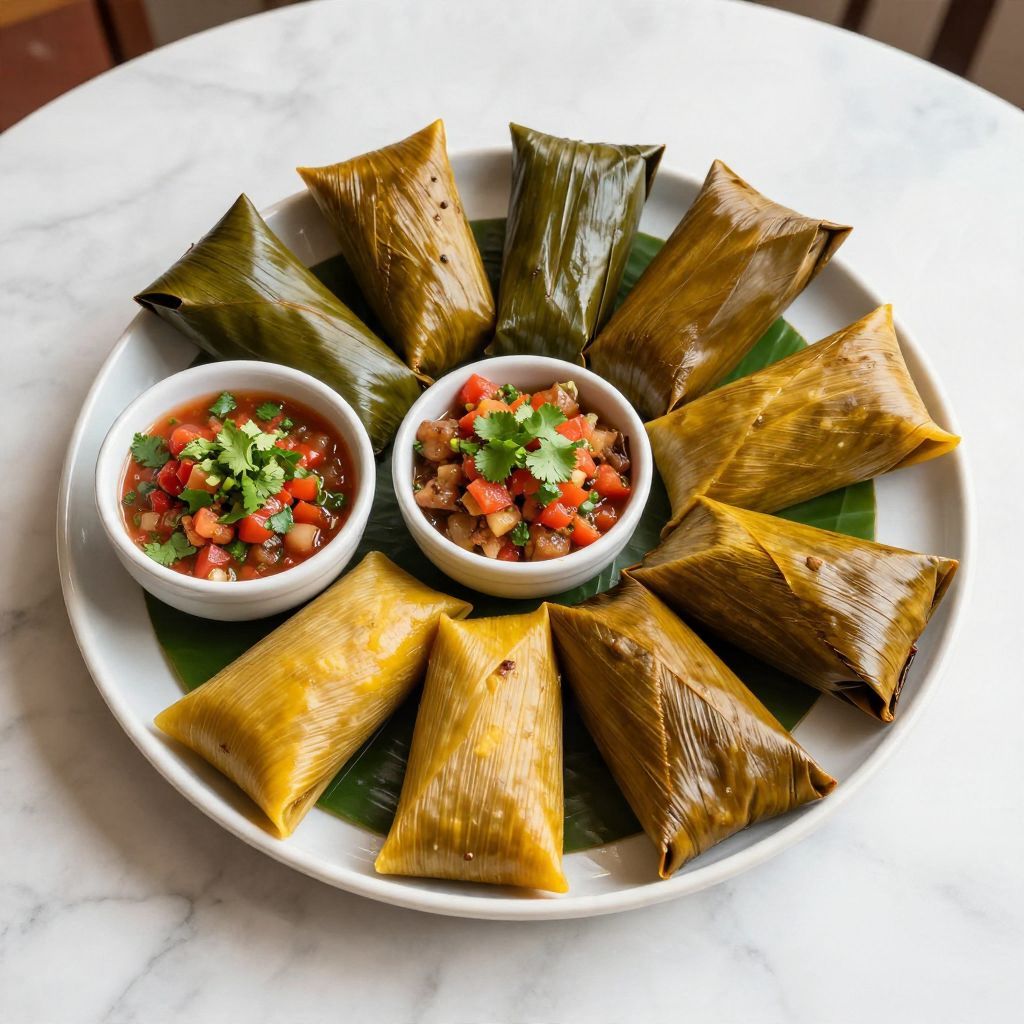
Salvadoran Tamales
Ingredients
Equipment
Method
- Start by softening the banana leaves. You can do this by briefly heating them over a flame or steaming them, making them pliable and easier to work with.
- In a large mixing bowl, combine the masa harina, baking powder, and salt. Slowly add the chicken broth while mixing with your hands until you achieve a smooth dough.
- Next, add the vegetable shortening to the masa mix. Knead it in until everything is well combined and the mixture is fluffy.
- In a separate bowl, mix the cooked chicken, potatoes, and bell peppers. Season to taste with salt and pepper for extra flavor.
- Take a piece of banana leaf and spread about 1/4 cup of masa in the center. Add a generous spoonful of filling on top and fold the edges over to enclose the filling.
- Wrap the tamales tightly in the banana leaves, folding the ends to secure the filling. This helps keep everything intact while cooking.
- Place the wrapped tamales upright in a steamer pot. Steam for about 1 to 1.5 hours, or until the masa pulls away easily from the leaves.
- Once cooked, let the tamales rest for a few minutes. This helps the masa firm up and makes them easier to unwrap.