
There’s nothing quite like the smell of freshly baked sourdough wafting through your home. This Sourdough Bread Loaf Pan Recipe is your ticket to creating a crusty, tangy loaf that is both satisfying and nourishing. The combination of crispy crust and soft, chewy interior makes it a star at any meal. Plus, baking in a loaf pan means you get perfectly shaped slices for sandwiches or toast. Ready to fill your kitchen with the aroma of baked bread? Let’s gather our ingredients and get started!
Why You’ll Love This Recipe
This recipe is a must-try for any bread enthusiast.
- Simple ingredients with a big flavor payoff.
- Perfect for sandwiches or toasted with butter.
- Great for beginners and experienced bakers alike.
- Flexible rise times to fit your schedule.
- Uses your homemade sourdough starter for authentic taste.
My Experience Making This Recipe
When I first tried this sourdough recipe, I was instantly drawn in by the way the dough transformed as it rose. Watching it bubble and grow was like witnessing a little miracle in my kitchen, and the taste was even better.
My family devoured the first loaf within hours, leaving only crumbs behind. It became a staple in our home, and now I bake it regularly, each time feeling a sense of accomplishment.
Recipe Overview
- Recipe Name: Sourdough Bread Loaf Pan
- Servings: 10 slices
- Prep Time: 30 minutes (plus rising time)
- Cook Time: 40 minutes
- Total Time: 4 hours (including rising)
- Course: Bread
- Cuisine: American
- Calories per Serving: 150
Equipment You Will Need
- Large mixing bowl
- Loaf pan (9×5 inch)
- Kitchen scale (optional, but recommended)
- Bench scraper
- Plastic wrap or a clean kitchen towel
- Sharp knife or bread lame for scoring
Ingredients for Sourdough Bread Loaf Pan
- 500g bread flour – for structure and chewiness.
- 350g water – hydrates the flour for gluten development.
- 100g active sourdough starter – provides flavor and leavening.
- 10g salt – enhances flavor and strengthens dough.
Ingredient Notes and Substitutions
- Bread flour: It gives the bread its chewy texture. You can substitute with all-purpose flour, but the texture may vary slightly.
- Water: Use filtered or bottled water for the best results. Tap water works, but avoid overly chlorinated water.
- Sourdough starter: A well-fed starter is key. You can use a store-bought starter if you do not have your own.
- Salt: Use fine sea salt for even distribution. Avoid table salt as it can contain additives.
How to Make Sourdough Bread Loaf Pan
Step 1: Mix the Dough
In a large mixing bowl, combine the bread flour and water. Stir until there are no dry bits left; this is called autolyse and helps with gluten development.
Step 2: Add Starter and Salt
Once the flour and water are well combined, add the sourdough starter and salt. Mix thoroughly until the salt is dissolved and everything is well incorporated.
Step 3: Knead the Dough
Transfer the dough to a floured surface and knead for about 10 minutes. This step develops the gluten, giving your bread structure.
Step 4: Bulk Fermentation
Place the kneaded dough back in the bowl and cover it with plastic wrap or a towel. Let it rise in a warm spot for 3 to 4 hours, or until it has doubled in size.
Step 5: Shape the Dough
Once the dough has risen, turn it out onto a lightly floured surface. Gently deflate it and shape it into a loaf by folding the edges towards the center.
Step 6: Second Rise
Place the shaped dough into the greased loaf pan. Cover it and let it rise for another 1 to 2 hours, until it has puffed up nicely.
Step 7: Preheat the Oven
About 30 minutes before baking, preheat your oven to 450°F (232°C). Preheating ensures a nice oven spring for a perfect crust.
Step 8: Score and Bake
Once the dough has risen, gently score the top with a sharp knife or bread lame. Bake in the preheated oven for 40 minutes, or until golden brown.
Pro Tip: Let your bread cool completely before slicing for the best texture.
Tips for the Best Sourdough Bread Loaf Pan
- Use a kitchen scale for accurate measurements, especially for flour and water.
- Make sure your starter is bubbly and active for the best rise.
- Keep the dough covered during rising to prevent it from drying out.
- Experiment with longer fermentation for more complex flavors.
- Use a baking stone if you have one, for even heat distribution.
Common Mistakes to Avoid
- Skipping the autolyse stage—it helps with gluten development.
- Not using an active starter which can lead to poor rising.
- Over-kneading the dough, making it tough instead of chewy.
- Not letting the bread cool before slicing, resulting in gummy texture.
Serving Suggestions
This sourdough bread pairs beautifully with a variety of dishes. Try it with:
- Homemade soups or stews
- Cheese and charcuterie boards
- Avocado toast topped with poached eggs
- Sandwiches filled with your favorite deli meats
Variations to Try
- Add herbs like rosemary or thyme for an aromatic twist.
- Mix in seeds such as sunflower or sesame for crunch.
- Incorporate dried fruits like cranberries or raisins for sweetness.
- Use a whole grain flour for a nuttier flavor and more nutrition.
Dietary Adaptations
- Gluten-free: Use a gluten-free flour blend, but the texture will differ.
- Dairy-free: The recipe is already dairy-free; no changes needed.
- Vegan: This recipe is vegan-friendly as it contains no animal products.
- Low-carb/keto: Substitute with almond or coconut flour for a keto version.
Storage and Reheating
Refrigerator
Store your sourdough bread in a paper bag or wrapped in a clean towel. This keeps the crust crisp while preventing mold.
- Best eaten within a week.
- Slice and freeze for longer storage.
Freezer
Wrap your bread tightly in plastic wrap and then in aluminum foil. This protects it from freezer burn.
- Can be frozen for up to three months.
- Slice before freezing for easy use later.
Reheating
To reheat, place slices in a toaster or warm in the oven at 350°F (177°C) for 5-10 minutes. This restores its crustiness.
- For whole loaves, wrap in foil and heat in the oven.
- Use within a few days for the best flavor and texture.
Nutrition Information
| Nutrient | Amount |
|---|---|
| Calories | 150 |
| Total Fat | 0.5g |
| Saturated Fat | 0g |
| Carbohydrates | 31g |
| Fiber | 1g |
| Sugar | 0g |
| Protein | 5g |
| Sodium | 200mg |
| Cholesterol | 0mg |
This nutrition information is an estimate and may vary based on specific ingredients used.
Frequently Asked Questions
Can I use all-purpose flour instead of bread flour?
Yes, but the bread may not have the same chewy texture. Bread flour has a higher protein content which helps with gluten development.
Can I make this recipe ahead of time?
Absolutely! The dough can be made and refrigerated overnight after the bulk fermentation. Just let it come to room temperature before shaping.
How do I store leftover bread?
Keep it in a paper bag at room temperature for up to a week. For longer storage, slice and freeze it.
Why is my bread dense?
A dense loaf can result from an inactive starter or not enough rising time. Make sure your starter is bubbly and give the dough ample time to rise.
Can I add ingredients like nuts or seeds?
Yes! Just fold them in gently during the shaping step. This adds flavor and texture to your loaf.
Final Thoughts
Baking your own sourdough bread is a rewarding experience that fills your home with warmth and deliciousness. Once you try this loaf, you’ll find yourself returning to this recipe time and again.
Enjoy the process, and don’t hesitate to experiment with flavors or variations. For more sourdough inspiration, check out this King Arthur Sourdough Recipe or try a Same Day Sourdough Bread Recipe for a quicker option.
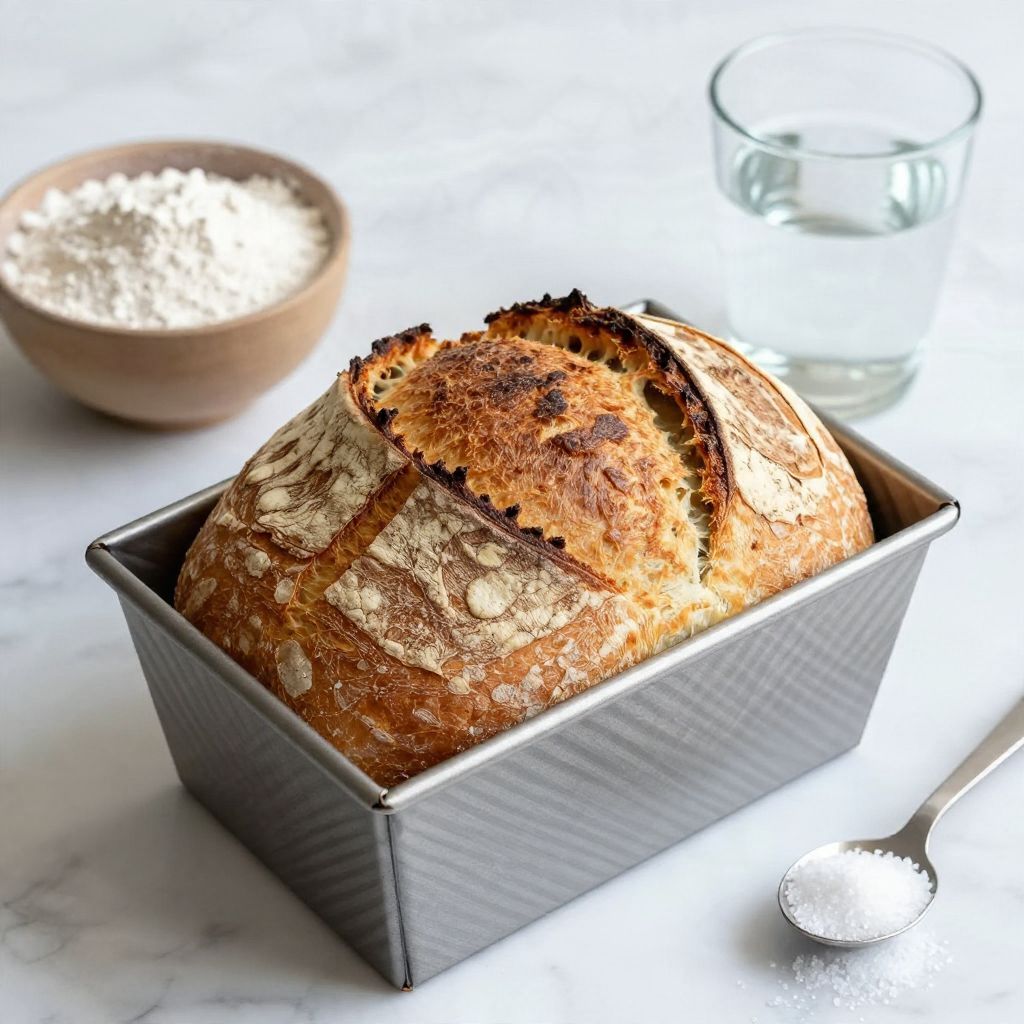
Sourdough Bread Loaf Pan
Ingredients
Equipment
Method
- In a large mixing bowl, combine the bread flour and water. Stir until there are no dry bits left and let sit for 30 minutes.
- Add the active sourdough starter and salt to the bowl. Mix thoroughly until the salt is dissolved.
- Transfer the dough to a floured surface and knead for about 10 minutes.
- Place the kneaded dough back in the bowl and cover it with plastic wrap or a towel. Let it rise in a warm spot for 3 to 4 hours, or until it doubles in size.
- Turn the risen dough out onto a lightly floured surface and gently deflate it. Shape it into a loaf by folding the edges towards the center.
- Place the shaped dough into the greased loaf pan. Cover it and let it rise for another 1 to 2 hours.
- Preheat your oven to 450°F (232°C) about 30 minutes before baking.
- Once the dough has risen, gently score the top with a sharp knife or bread lame.
- Bake in the preheated oven for 40 minutes, or until golden brown.
- Let your bread cool completely before slicing.